Laws for Paws: Evolving Dog Laws in California and Beyond
Dogs have stood beside humans for tens of thousands of years as protectors, hunters, herders, companions, healers, and family. Yet in California, the laws that govern dog behavior have barely evolved since 1931, when the state enacted Civil Code 3342, imposing strict liability for dog bites regardless of context, provocation, or circumstance.
That law made sense in a time when stray, poorly trained, and uncontained dogs posed risks in public spaces. But in 2025, it is outdated, unfair, and exploited. Today, dogs are not wandering predators. They are companions, guardians, and partners in daily life trained, bonded, and trusted. They warn, they protect, and they communicate, often with their mouths.
Yet the law makes no distinction between an attack and a warning, between a dog defending its owner and a dog acting aggressively without cause. This gap has created opportunities for insurance exploitation: dog bite claims are now the number one homeowners’ liability claim in the U.S, costing insurers over $1 billion annually, with many exaggerated or opportunistic.
Meanwhile, dogs have evolved their roles have expanded to include therapy, service work, police and military service, emotional support, and disaster rescue. Laws have not evolved with them.
This is not just about one dog, or one law. It is about fairness. It is about recognizing the true nature of dogs as companion protectors, not liabilities. It is about protecting responsible owners while still offering justice to true victims. And it is about ensuring that the law reflects our present reality a society where humans and dogs live, work, and evolve together.
Laws must evolve just as society evolves. Just as dogs evolved alongside us, our laws must adapt to recognize that partnership.
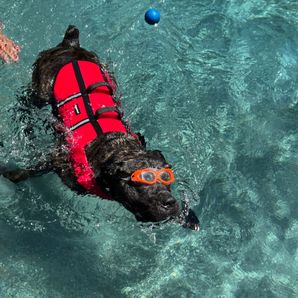
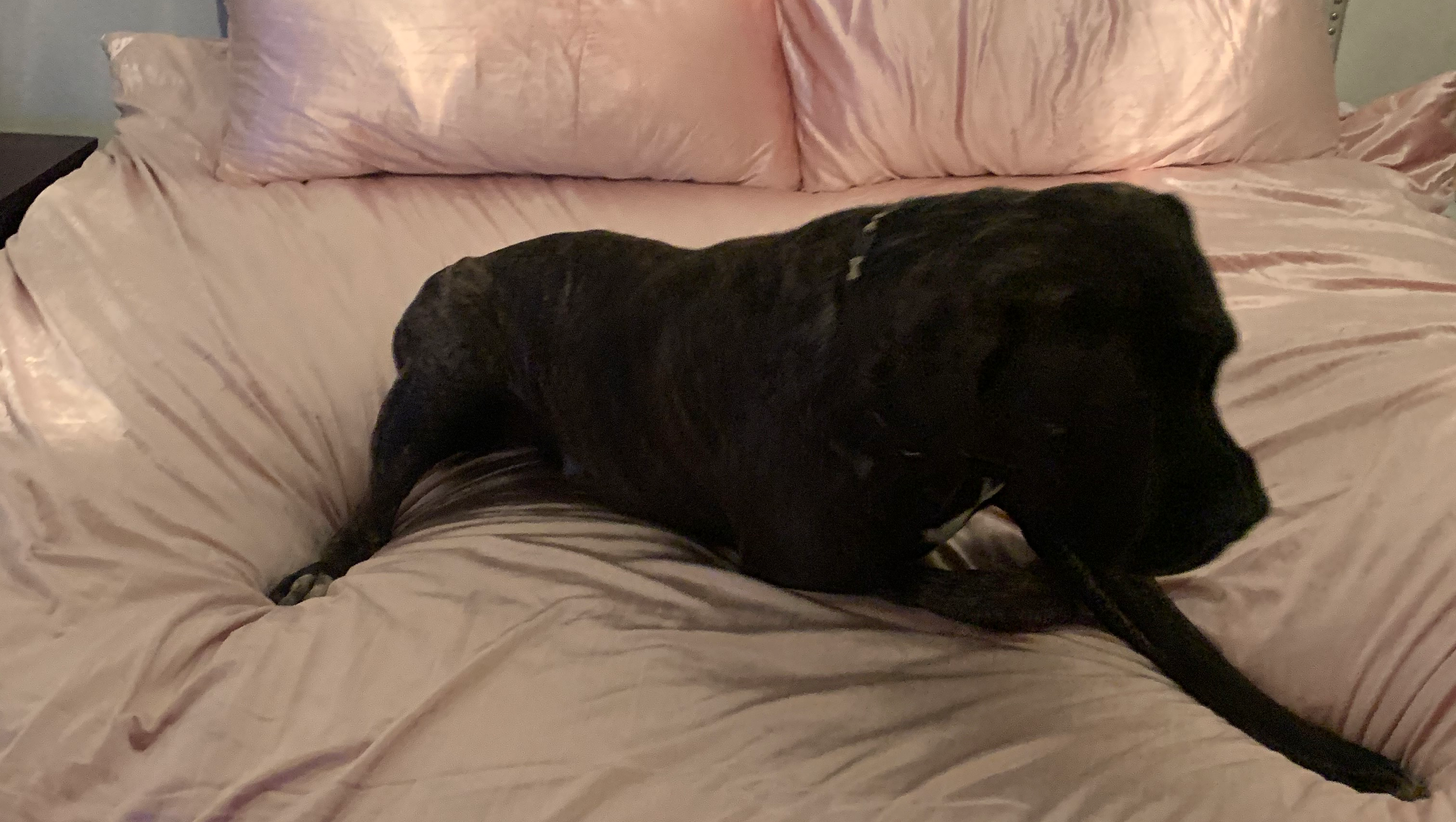
I live with a Cane Corso 140 pounds of loyalty, intelligence, and devotion. He is not a pet; he is my shield, my companion, my second heartbeat. Wherever I go, he goes. He is more than a dog. He is a guardian.
Over the years, there have been moments when strangers came too close unaware, careless, or simply not respecting boundaries. My dog, doing what he was born and bred to do, would warn them. Sometimes with a bark. Sometimes with a growl. Sometimes with a snap of his jaw that says, “This is too close. Back away. My human ismine to protect.”
Most people understood. They stepped back. They respected the message. They went on with their day. But not everyone.
Some saw opportunity.
Some twisted warning into attack.
Some claimed compensation where there was no injury.
It happened again recently: my car was parked at a shopping center. My windows were down. My dog was inside. He never left the vehicle. Another person parked next to me with plenty of space between us and still claimed they were “bitten” by my dog.
Impossible? Yes. But under California’s law, it doesn’t matter if it’s impossible. The law says any bite, any circumstance, the owner pays.
And that is the injustice.
My story is not unique. Any responsible dog owner with a protective companion has lived this. And every time, the law sides not with fairness, not with truth, not with context — but with a rigid rule written nearly 100 years ago.
The Law as It Stands
California Civil Code 3342, enacted in 1931, states:
“The owner of any dog is liable for the damages suffered by any person who is bitten by the dog while in a public place or lawfully in a private place, regardless of the former viciousness of the dog or the owner’s knowledge of such viciousness.”
This is called strict liability. Unlike in many other states, California offers no defenses.
It doesn’t matter if the person provoked the dog.
It doesn’t matter if the person trespassed.
It doesn’t matter if the dog gave a warning nip rather than an attack.
It doesn’t matter if the claim is exaggerated for insurance payout.
If a bite happens, the owner is liable no questions asked.
Other states are more reasonable. They recognize provocation and trespass as defenses. They require proof that the dog was dangerous, not merely protective. They allow context to matter. California does not.
The Insurance Exploitation Problem
Dog bites are now the number one liability claim on homeowners’ insurance in the U.S. In 2022 alone, insurers paid out over $1.13 billion in dog-related claims.
Some of these are legitimate. Many are not.
Opportunistic claims exploit strict liability. A nip that leaves no mark becomes a “severe bite.” A protective warning becomes an “attack.” People see dollar signs.
The law, instead of discouraging fraud, invites it.
This hurts everyone:
Responsible dog owners who face unfair lawsuits.
Dogs who may be labeled “dangerous” and even euthanized.
Insurance policyholders, whose premiums rise to cover fraudulent claims.
The law, as it stands, rewards dishonesty and punishes loyalty.
Part IV – Dogs Through Time
Dogs are not wild animals. They are human-made animals.
30,000 years ago, wolves began walking alongside humans. We selected for loyalty, intelligence, protection, and partnership. We shaped them. We raised them into guardians, hunters, herders, companions.
Today, dogs fill roles once unimaginable:
Police & Military – sniffing explosives, apprehending suspects, saving soldiers’ lives.
Search & Rescue – locating disaster victims when machines fail.
Therapy & Emotional Support – comforting the elderly, the sick, the grieving.
Service Animals – guiding the blind, detecting seizures, supporting veterans with PTSD.
Dogs are no longer “domesticated wolves.” They are co-workers, co-healers, co-guardians. They are part of our social fabric.
Yet the law still treats them as if they are untrained predators.
Communication vs. Aggression
Here is the truth: dogs communicate with their mouths. That is their language.
A nip is not an attack.
A snap is not violence.
A warning bite is no more aggressive than an electric fence, a taser, or barbed wire.
We accept these tools as legal deterrents. We even use them in law enforcement. Yet when a dog gives a warning — the only way it can, through its mouth — the law calls it aggression.
This is inconsistent. This is unjust.
Science shows that dog bite force levels vary dramatically. A warning nip is often less damaging than a taser shock or electric fence jolt — both legal, both accepted as “deterrence.”
If we recognize an electric fence as fair warning, why not a dog’s warning?
Why Laws Must Evolve
Laws are not sacred. They are tools. They must evolve with society.
Just as we have reformed laws on civil rights, technology, marriage, and medicine, so too must we reform laws governing dogs.
The current strict liability law is a relic of 1931. It ignores:
How dogs have evolved.
How humans have evolved with them.
How people exploit laws for profit.
How fairness demands context.
It is time for reform.
The Path Forward: Laws for Paws
Our vision is simple:
Redefine Liability – Introduce defenses for provocation, trespassing, negligence, and fraudulent claims.
Differentiate Between Attack and Warning – Recognize the spectrum of dog communication.
Protect Dogs and Owners – Ensure loyal protectors are not punished for fulfilling their role.
Educate the Public – Spread awareness about dog behavior, body language, and warnings.
Promote Fair Insurance Practices – Prevent exploitation while still protecting true victims.
Conclusion: Evolving Together
Dogs have given their lives for us. They have fought wars beside us, searched rubble for our loved ones, guided our blind, comforted our broken, and stood between us and harm.
And yet, the law still treats them as liabilities as if their loyalty is a crime.
It is time to evolve.
It is time to recognize dogs for what they are: companion protectors, not predators.
It is time for laws to reflect fairness, truth, and the reality of our bond with dogs.
Laws for Paws is not just a movement. It is a demand for justice. For dogs. For owners. For society. For evolution.
Laws for Paws: Protecting Dogs, Protecting Justice
For nearly a century, California’s dog laws have not changed.
Since 1931, the law has treated every dog bite the same — whether it’s an aggressive attack or a protective warning.
I live with a Cane Corso, 140 pounds of loyalty and love. He is my shield, my family, my protector. Like all dogs, he communicates with his mouth — a bark, a nip, a warning. But under current law, even a harmless warning can be twisted into a lawsuit. Opportunistic claims exploit the system, costing honest families and threatening the lives of good dogs.
⚡ The Problem:
California’s law is outdated — written in 1931.
Insurance companies pay over $1 billion a year in dog bite claims, many exaggerated.
Loyal, protective dogs are punished, labeled “dangerous,” and sometimes destroyed.
Dogs have evolved with us. They are not just pets they are guardians, service animals, therapy companions, and lifesavers. They deserve laws that reflect who they are today.
Our Mission: Laws for Paws
We are building a nonprofit movement to reform outdated dog bite laws. Our goals are simple:
Protect responsible dog owners.
Differentiate between a warning and an attack.
Prevent insurance exploitation.
Educate the public on real dog behavior.
Ensure the law reflects today’s society, not 1931.
How You Can Help:
Your donation will fund:
Legal research and lobbying to propose new legislation.
Educational campaigns to raise awareness.
Outreach to dog owners, lawmakers, and communities.
Every dollar brings us closer to fair laws for dogs and their people.
If you’ve ever loved a dog, been protected by one, or believe in fairness, join us.
Together, we can make history. Together, we can change the law.
Donate today. Stand for justice. Stand for dogs. Stand with Laws for Paws