Skip to content

What they care about

25 years asking, why do talented women leave senior leadership? Help fund research to reduce costly turnover, protect talent investment and improve performance.

Badges

    Recently, I shared my DBA research with a barrister who is a passionate advocate for helping capable women build and sustain careers at the highest levels. During our conversation, he observed that many women don't ask for help when they need it. Instead, they quietly carry the burden alone. He then asked me a simple question: "Would you ask for help, Jennifer? You're always helping others. It's not an offence to ask for help." His words stayed with me. This research is important, and so is the opportunity to complete it. As someone who has spent much of my career supporting the growth and success of others, I'm learning that accepting support can be just as important as giving it. Asking for help doesn't diminish determination or capability. Sometimes, it's what allows meaningful work to continue and create a wider impact. As I advance this research, that's a lesson I'm taking with me.
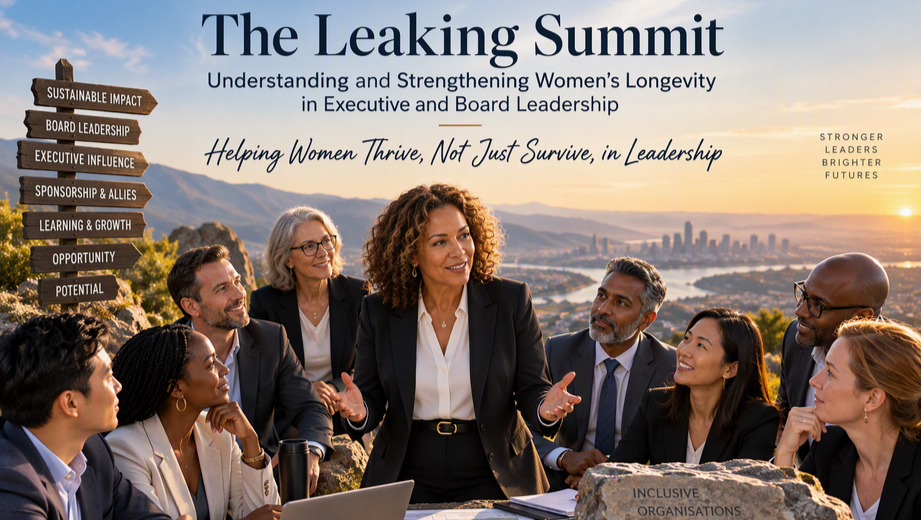
    When a senior male leader told me he wasn't interested in anything related to women, I realised the challenge wasn't resistance to women themselves. The challenge was helping leaders see that the loss of talented women from leadership pipelines affects everyone. The Leaking Summit is not about advancing women at the expense of others. It is about addressing a critical leadership and organisational performance challenge. When experienced women leave, organisations lose capability, institutional knowledge, leadership continuity, mentorship capacity, and the return on years of investment in talent development. The impact can be seen across key performance indicators: higher recruitment and onboarding costs, longer time-to-productivity for replacements, reduced succession-pipeline strength, lower employee engagement, increased turnover risk, and missed opportunities for innovation and growth. The Leaking Summit seeks to reframe the conversation. This is not a women's issue. It is a talent, leadership, and performance issue. By bringing senior men and women together, we can better understand the hidden causes of leadership attrition and develop solutions that strengthen retention, improve organisational performance, and ensure businesses fully realise the potential of the talent they have worked so hard to attract and develop. The question is not whether organisations can afford to invest in retaining women leaders. The question is whether they can afford the performance, productivity, innovation, and leadership losses that result when they don't.
    One senior professional told me, “I received tremendous support to secure a senior leadership position within a multinational organisation, but once I got there, I was on my own.” Despite her determination to make a meaningful contribution to organisational performance and the bottom line, she found herself without the networks, sponsorship, or support needed to succeed. Feeling isolated, vulnerable, and exposed, she left the role within twelve months. Sadly, her story is not unique. It highlights a critical issue that often goes unnoticed amid the focus on recruitment targets, representation metrics, and financial performance: helping women attain senior leadership positions is only part of the challenge. Ensuring they have the support, networks, and opportunities to thrive once they arrive is equally important. This hidden cost affects not only talented individuals, but also organisational performance, leadership continuity, and the return on investment organisations make in attracting, developing, and retaining diverse leadership talent. Understanding why talented women leave senior leadership roles, and what organisations can do to change this, is at the heart of my research. Through this work, I aim to identify the barriers that prevent women from thriving at the highest levels of leadership and develop evidence-based recommendations that support both individuals and organisational success. Confidentiality is paramount to this research. All participant data is anonymised and handled in accordance with ethical research and data protection standards. Any quotes or examples shared are presented in a way that prevents individuals or organisations from being identified, ensuring participants can share their experiences with confidence and trust.
    A 14-year-old girl asked me a question I couldn't ignore: "If I work really hard, will I get to the top of a legal firm, and will they be as supportive of me as they are of the men at the top?" No young person should have to wonder whether their gender will limit their opportunities. This research will examine the Leaking Summit phenomenon and develop practical solutions to help organisations retain and support talented women into the most senior leadership positions. The potential return on investment is significant. When organisations lose talented women before they reach senior leadership, they lose years of investment in recruitment, development and experience. They also miss out on the commercial benefits of diverse leadership teams, including broader perspectives, better decision-making and stronger organisational performance. By identifying practical interventions that improve retention and progression, this study aims to help organisations strengthen leadership pipelines, reduce talent loss and improve their bottom line. Together, we can help ensure the answer to her question is a confident "yes".
    Why Are Organisations Losing Exceptional Women Leaders After They Reach the Top? Every CEO knows the cost of losing a great leader. Not because they lacked talent. Not because they lacked ambition. But because, somewhere along the way, staying became harder than leaving. Every year, organisations lose exceptional women from senior leadership positions. These are leaders who have overcome barriers, delivered results, built influence and earned their place at the table. When they leave, the impact extends far beyond a single resignation. Teams lose a trusted leader. Future leaders lose a role model. Organisations lose years of expertise, hard-won wisdom, institutional knowledge and leadership continuity. In many cases, they lose talent they have spent years developing. Yet we have spent decades studying how women climb the leadership ladder. Far less attention has been paid to what happens when they reach the top. For organisations competing for leadership talent, the answer may be one of the most important leadership questions of our time. Hi, I'm Jennifer After more than 25 years working across business, education and consulting, I witnessed a pattern I could not ignore. Again and again, I watched remarkable women achieve what many aspire to, only to leave senior leadership sooner than expected. Intelligent, capable and accomplished leaders whose careers should have continued to flourish. For many women, reaching the summit of leadership is only part of the challenge. Remaining there, thriving there and leading authentically can be an entirely different journey. Each departure left me wondering: What happened? What did the organisation lose? What could have been done differently? Those questions became the foundation of my Doctor of Business Administration (DBA) research at Case Western Reserve University's Weatherhead School of Management. I call this research The Leaking Summit. My goal is simple: to uncover evidence-based insights that help organisations retain exceptional women leaders, strengthen leadership cultures, and stop the loss of talent they cannot afford to waste. Why This Research Matters This research is not about helping women get into leadership. It is about understanding what helps them stay there. The findings aim to help organisations: ✅ Retain exceptional leadership talent ✅ Strengthen succession pipelines and leadership continuity ✅ Reduce the loss of valuable expertise and institutional knowledge ✅ Build healthier, more sustainable leadership cultures ✅ Improve long-term organisational performance And help women leaders: ✅ Build more sustainable leadership careers ✅ Thrive at the highest levels of organisations ✅ Create stronger pathways for future generations ✅ Inform meaningful organisational change This is not simply a women's issue. It is a leadership, talent and business performance issue. If this research helps even a small number of organisations retain exceptional leaders for longer, the return on that knowledge could far exceed the cost of conducting the research itself. Why I'm Asking for Support This research is only possible because people who care about the future of leadership choose to invest in understanding it. To complete this research and bring its findings to organisations that can benefit from them, I am seeking to raise £30,000 to support doctoral residencies at Case Western Reserve University in Cleveland, Ohio, and the associated costs of conducting and completing the research. These residencies provide access to world-class faculty, researchers and doctoral colleagues who help challenge, strengthen and shape the quality of the work. Your support will help transform an important leadership challenge into practical knowledge that organisations can use to create environments where talented leaders can thrive, contribute and stay. How You Can Help ✅ Make a donation ✅ Share this campaign with your network ✅ Introduce me to leaders or organisations interested in the research ✅ Join the Founding Research Circle Every contribution helps move this research forward. A Final Thought Most organisations focus on how to attract great leaders. The most effective organisations also understand how to keep them. If you have ever watched a talented woman leave a senior leadership role and wondered, “What could we have done differently?” then you already understand why this research matters. Together, we can explore one of leadership's most important unanswered questions and generate insights that help organisations retain exceptional talent, strengthen leadership cultures and create better opportunities for future generations of women leaders. The organisations that succeed tomorrow will be those that not only attract outstanding leaders, but create the conditions for them to stay, grow and flourish. Thank you for believing in this work and for being part of this journey. Jennifer Francis Founder, Consultant & DBA Candidate Legal Notice This fundraiser is solely intended to support costs associated with doctoral study, academic residencies and research activities. Contributions are voluntary donations. Donors will not receive goods, services, financial returns or consultancy in exchange for their contribution. Anonymised research findings and insights will be shared with contributors as the research progresses and upon completion. Any future consultancy, advisory, speaking, training or commercial activities arising from the research will be conducted separately under formal contractual arrangements and are not part of this fundraising campaign.