Skip to content
    A LITTLE MORE ABOUT AUNTIE ELENA… ❤️‍ There’s something I forgot to share in my last update. I’ve made arrangements for a priest from St. Joseph’s to come to my auntie every day to pray with her, sit beside her, talk with her, and simply be there. Because right now, my auntie needs more than doctors. She needs people. She needs prayer. She needs comfort. She needs to know she is not alone. Some folks may not realize that most of our family is Catholic. Our faith is not something we pull out only when things get bad. It has carried many of us through some of the hardest moments of our lives. Sons #4 and #5 and I are Jesuits. We are Catholic, but we follow the Jesuit spiritual tradition of discernment, service, compassion, and finding Creator, especially in the middle of the messiness of real life. And believe me… this is messy. This is heartbreaking. We are watching someone we love suffer, and there are moments when you realize there simply aren't words big enough for what you're feeling. So we pray. We sit with her. We hold her hand. We cry when we need to. We laugh when we can. And we keep showing up. Because Auntie Elena is not just a diagnosis. She is not just a cancer patient. She is not just someone in a wheelchair or someone who needs care. She is our auntie. She is somebody’s sister. Somebody’s daughter. Somebody’s family. And she deserves to be surrounded by love, dignity, faith, and people who refuse to leave her alone in this. And while I am doing everything I possibly can to help care for her physically, emotionally, financially, and practically, I also know enough to understand that I cannot carry all of this by myself. So I'm grateful for the priest who has agreed to come. I'm grateful for the people praying. I'm grateful for the people checking in. I'm grateful for every person who has helped in any way. Right now, we are taking this one day at a time. And sometimes, honestly… one breath at a time. Please keep my Auntie Elena in your prayers. And please remember Auntie Norma, Auntie Fidela, Uncle Chuey, and everyone who loves Elena and is trying to figure out how to keep putting one foot in front of the other through all of this. We may not know what tomorrow brings. But today, she is loved. Today, she is prayed over. Today, she is not alone.❤️‍
    UPDATE ON MY AUNTIE ELENA — AND THE FAMILY SHE’S TRYING TO COME HOME TO I am still struggling to find the words for this update because this isn’t just about my Auntie Elena. It’s about an entire Morales family whose world is changing. Since 8/23, Auntie Elena has been in and out of the hospital because of severe, uncontrolled pain. 8/23: ER-pain medication and fluids. 8/26: Back to the ER-more morphine and fluids. 8/29: Back to the hospital again. A EMS personnel told us “we can’t keep coming to help.” After what felt like an eternity waiting in an ER hallway, she finally had a CT with contrast on 8/30. Admitted to hospital. The results broke my heart. Her pelvis is fractured. On 8/31, her doctor called me at 10a and explained that all her fractures were caused by her Multiple Myeloma, a blood and bone cancer with no known cure. The cancer has progressed. She has multiple pathological fractures in her spine, hip, pelvis and numerous ribs, along with new lytic bone lesions. Then came the question no family member ever wants to hear: ☠️Do we continue treatment, or do we begin preparing for end-of-life care? ⚰️ I authorized the full-body scans, imaging and blood work. I am asking the doctors to think outside the box because there is a BIG MAYBE that an experimental treatment could potentially be approved through Medicare and Medicaid. I need the biopsy results and all the information before making the next decisions. I’ve also met with PT, OT and palliative care person. Today 9/2/2026 I meet with WHOLE hospital team that’s helping care for my Auntie. However, while I’m sitting in hospital making these decisions, there are three other people at home waiting for their big sister, auntie and caregiver. Auntie Norma is 63. Developmentally, she functions somewhere between toddler age and about 4 years old. She has been crying because she wants her big sister Elena to come home. Auntie Fidela is 60. Developmentally, she is more like an adolescent girl and she has the personality and attitude of a teenage girl from the 1970s. ❤️ She doesn't always know how to process anxiety, depression or what is happening around her. She knows something is wrong, but she doesn't necessarily understand what all of this means. And then there is Uncle Chuey, at home trying to navigate all of this too. And hanging over all of us is another reality: Their house enters foreclosure on 9/7/2026. That means I now have even less time to find safe, appropriate housing for them. And now I’m facing another heartbreaking reality. If Auntie Elena has to be placed in intermediate care and eventually hospice, there will be a monthly co-pay. Even though she has long-term care coverage, changes and cuts to Medicare and Medicaid mean there will now be a “small monthly co-pay.” For a family already struggling to keep a roof over everyone’s heads, there is nothing “small” about another monthly bill. This is what people don't always understand about caring for medically fragile and developmentally disabled family members. It isn't just doctor's appointments. It isn't just medications. It isn't just transportation. It is trying to explain to a developmentally delayed adult why her sister isn't coming home. It is watching another adult cry because she doesn't understand why everything is changing. It is trying to keep everyone calm while you are terrified yourself. It is making medical decisions, fighting for answers, navigating insurance, looking for housing, worrying about hospice costs and somehow still being expected to hold everything together. And through all of this, I have to remember that Auntie Elena is scared too. She is legally blind, wheelchair and bed-bound, medically fragile and developmentally delayed. She is in tremendous pain. Imagine being a young child who doesn't understand why their body hurts, why strangers keep moving them around, why they're being poked and scanned, and why they can't just go home. That is the fear and confusion she is experiencing. So yes, I am still fighting. I am still asking: Is there another option? Is there another treatment? Can we think outside the box? But I am also beginning to prepare for the possibility that loving Auntie Elena may mean helping her transition into intermediate care and hospice. And at the same time, I have to figure out how to keep Norma, Fidela and Chuey safe and together. The plan has changed. The timeline has changed. And honestly, I will keep showing up. I will keep asking questions. I will keep advocating. I will keep fighting to make sure every single one of them is treated with dignity, compassion, patience and love. Because they aren't just diagnoses, disabilities, medical charts or numbers. They are my family. And right now, my heart is breaking for all of them.
    MY AUNTIE ELENA SHOULD NOT HAVE TO SUFFER THIS MUCH JUST TO BE HEARD. Once again, my Auntie Elena was taken to the hospital Saturday afternoon, arriving around 5:00 PM. This time, from the chest down, she could not move. This is the third time this week she has ended up in the hospital. She has a severe urinary infection and a broken pelvis. What makes this even harder to accept is that she may have been living with that broken pelvis since Sunday night, when she first went to the hospital. Nobody found it until imaging was finally done. So I have to ask: How much pain does an elderly, disabled woman have to endure before someone believes her? My Auntie Elena is not simply “an elderly woman.” She is a cancer patient. She is legally blind. She is wheelchair-bound and bedridden. She has a developmental disability and processes the world at approximately the developmental level of a young child. She is vulnerable, frightened, and dependent on others to help her communicate what is happening to her body. Yet, when she needed help, one of the EMS personnel who came to her home with the Medic 2 unit openly and rudely told her: “We can’t come out to just help.” Those words may have seemed like nothing to that person. But to my Auntie Elena, they were devastating. She was already scared. She was already hurting. She already struggles to understand why her body hurts and why she cannot do the things other people can do. Instead of being met with reassurance and compassion, she was made to feel like she was a burden for needing help. That is not acceptable. Let me be very clear: Calling EMS is not something we do because she wants attention. I am NOT looking for someone to “just help.” She is a medically fragile, disabled woman who cannot safely care for herself without assistance. And now we know she had a broken pelvis and a severe infection. So maybe the question shouldn't be: “Why do they keep calling?” Maybe the question should be: “Why is this woman suffering so much that her family keeps needing emergency help?” Because when we start looking at people through labels instead of seeing the human being in front of us, we stop asking the questions that could save them. “She’s old.” “She’s disabled.” “She’s bedridden.” “She has Medicaid.” “She has Medicare.” “She calls too often.” “She’s exaggerating.” “She just needs help.” Those assumptions become dangerous. And I cannot ignore the larger reality. Healthcare disparities and systemic bias have consequences. Racism has consequences. Ableism has consequences. Poverty has consequences. When someone is elderly, disabled, low-income, and a person of color, those barriers intersect in ways that make it even harder to be believed, heard, and treated with dignity. I am NOT saying every healthcare worker is racist. I am NOT saying every EMS worker is intentionally discriminatory. What I am saying is that bias exists within systems, and patients can suffer when assumptions are made about them before anyone takes the time to truly understand what is happening. Even I, who fights, advocates, asks questions, documents, and refuses to accept “that's just how it is”could not get some of the ER doctors to truly listen until late last night and early this morning. If I couldn't get them to listen while standing beside her, what happens to the person who has nobody there to fight for them? That is the part that scares me. Because my Auntie Elena is NOT a statistic. She is NOT a Medicaid patient. She is NOT a Medicare patient. She is NOT a bed number. She is NOT “just an old woman.” She is NOT a problem to be managed. She is Auntie Elena. She is a human being who deserves to be treated with dignity, patience, compassion, and respect. And when someone is vulnerable enough to depend on others for their basic care, our responsibility to protect their dignity should become greater, not smaller. I will continue to advocate for my Auntie. I will continue to ask questions. I will continue to document what happens. And I will continue to speak up not just for her, but for every elderly, disabled, poor, and marginalized person who has ever been made to feel like they were asking for too much simply because they needed help. Needing help does not make someone a burden. Being disabled does not make someone less worthy. Being poor does not make someone's pain less real. Being a person of color does not make someone's life less valuable. Being old does not mean someone has stopped deserving to be heard. My Auntie Elena matters. And she should never have had to suffer this much before someone finally listened.
    Earlier this week, I shared that my Auntie Elena was in the hospital Sunday evening. Auntie Elena is 68 years old. She is wheelchair-bound, legally blind, terminally ill with cancer, and developmentally delayed. In many ways, she experiences the world with the fear and vulnerability of a child. Last night, Tuesday, August 25, 2026, I had to call 911 again. She was in severe pain. Her legs were cramping and twitching. She had severe diarrhea, what I usually jokingly call having “frequent flyer miles to the bathroom”, but there was nothing funny about it last night. She could not keep anything down. She was severely dehydrated, and her sodium level was high. She was terrified. While I was on the phone with 911 trying to get an ambulance to her, she was crying and sobbing: “I don’t want to go. They’re going to hurt me. They’re going to poke me. I don’t like being poked. There’s just so much pain. I just want to stay with my siblings and be with you. I don’t want to be separated.” I cannot adequately explain what that did to my heart and soul. When the wonderful folks from the Salem Fire Department EMTs arrived, they did everything they could to calm her down. But you want to talk about a death grip? My auntie had the strongest grip on my arms and shoulders. She did not want anyone touching her. I eventually had to physically help lift and move her myself. My body was shaking. Tears were running down my face. I was terrified I would hurt her even more because she was already in so much pain. At the hospital, we waited. Her blood work was eventually described as “normal.” They administered fluids. At approximately 7:50 p.m., she was given morphine. By 8:15, she had received another dose of morphine while simultaneously receiving a dose of hydrocodone and even that amount of medication barely touched her pain. So I did what caregivers do. I held her while they inserted IV needles. Said the “Sana, Sana colita de rana,” child rhyme that many of us Latin mommas say. I also played Dolly Parton for her. I comforted her while she cried. I reassured her that she was safe. I stayed beside her. I held her like she was a frightened child because, in that moment, she needed someone to do exactly that. And this is the part people often do not see. The emotional toll of watching someone you love suffer is something I would not wish on anyone. Watching someone you love live in pain, knowing you cannot take that pain away, is heartbreaking. Watching someone you love slowly decline and knowing that, eventually, you may have to watch them die takes something out of you. You grieve while they are still here. You carry the fear while trying to make medical decisions. You stay calm because they need you to be calm. You hold them together while privately wondering how much longer you can hold yourself together. This is not me asking for pity. I am sharing this because people ask why I had to take FMLA while I continue fighting to reinstate the disability and Social Security income my family members depend on. This is my reality. I am a public employee for the State of Oregon. I am a union leader. I am a caregiver. I am a small-business owner. I am the eldest daughter. I am a family member with responsibilities that do not stop when my workday ends. And, as many of you know, I wear many other hats, including, but not limited to union leader campaign candidate, pain in the butt, workaholic, and a person with my own chronic health issues and invisible disabilities. But behind every one of those titles is a human being. A human being who is exhausted. A human being who is trying to work, advocate, lead, run a business, care for family, fight bureaucratic systems, file paperwork, attend appointments, answer calls, and still somehow make sure everyone has what they need. Some days, I am strong because I have no other choice. Other days when my chronic illness takes over, I am out recuperating by sleeping.  Other days, I am holding someone I love while they cry in pain and realizing that strength does not mean I am unaffected. This is why I took FMLA. Because sometimes the work that matters most is not done in an office, at a union meeting, or behind a desk. Sometimes the work is holding the hand of someone you love while they are terrified. Sometimes the work is fighting for people who are too vulnerable, too sick, too disabled, or too overwhelmed to fight for themselves. And sometimes the hardest work of all is watching someone you love suffer and slowly die while still trying to keep the rest of your world from falling apart. That is the part people do not always see. But it is my reality.
    The Morales Family Update: What a Monday. Thursday, before leaving for the SEIU 503 General Council Convention, I had an appointment with the Social Security Administration regarding my Auntie Elena. I am now having to prove that my auntie, who is elderly, medically fragile, disabled, and fighting cancer, is a United States citizen. So I have been digging through decades of paperwork, trying to locate birth certificates and documentation for all four siblings. I came home yesterday afternoon from the conference and immediately went back to work processing invoices and checking timesheets for farmers. Then last night, Auntie Elena, the one battling cancer; was taken to the hospital. Thankfully, she is stable and received fluids. And then came Monday. At 8:00 this morning, I received a call saying my aunties' appointments had been canceled. By 10:00 a.m., I was told that was a mistake and that I still needed to get them to their appointments by 1:30 p.m. Somehow, in the middle of all of this, we also received a blessing: someone donated $320 to pay off the cellphone bill. The old number had already been terminated, but my aunties now have a simple cellphone under my account so they can stay connected. There has also been some progress: *Psych NW will be providing neuropsychological evaluations for disability and specialized testing. * Referrals have been made for Fidela and Norma. * Fidela has also been prescribed Zoloft to help with her depression. * Son Number 3 has been working tirelessly to help me find a group home or assisted-living placement where all four siblings can remain together. But here is the heartbreaking reality: there is NOTHING available in the Salem/Keizer area that can accommodate all four of them without separating them. So far, Son Number 3 has identified eight facilities that may be able to accommodate them together. But they are anywhere from one hour to nearly five hours away from me. For most people, that may just sound like a long drive. For my aunties and uncle, it means something much bigger. Because of their developmental disabilities, medical needs, and emotional dependence, being separated from me or living hours away from the person who has been coordinating their appointments, paperwork, emergencies, transportation, and daily needs would be incredibly difficult for them. They have already lost so much independence. They have already lived through uncertainty, financial instability, medical emergencies, and the fear of losing their home. My greatest fear now is that in trying to save them, we may still have to ask them to leave behind everything familiar. I am exhausted. I am overwhelmed. But I am not giving up. I am still making calls. Still filling out paperwork. Still going to appointments. Still searching for a place where these four siblings can live together, safely and with dignity. Thank you to everyone who has donated, shared our story, prayed, checked in, or helped in any way. The $320 donation may seem like one bill to someone else, but today it means my aunties have a working phone and one less crisis hanging over us. Right now, every dollar, every share, every connection, and every lead matters. Because this family deserves more than simply surviving. They deserve to stay together. And my day is still not over. Now I am heading out to drop off coolers of water for the workers picking blueberries by machine, making sure they stay hydrated in this heat. After that, I still have to file certified payroll reports before I can finally think about going to bed. But wait…there is one more thing. I also need to make sure Son Number 5 has his school supplies and uniforms ready because he starts school on Monday, August 31. This is what life looks like right now. Caregiver. Daughter. Niece. Mother. Employer. Business owner. Advocate. Provider. Public State Employee. And somehow, I am expected to keep all of these worlds moving at the same time. I am not saying this for pity. I am saying it because this is the reality of what it takes to hold a family together when there is no safety net left underneath them. So tonight, I will keep going. Because tomorrow, there will be more phone calls. More paperwork. More appointments. More workers to take care of. More children who need their mom. And four siblings who still need someone fighting to keep them together. I am tired. But I am still fighting.
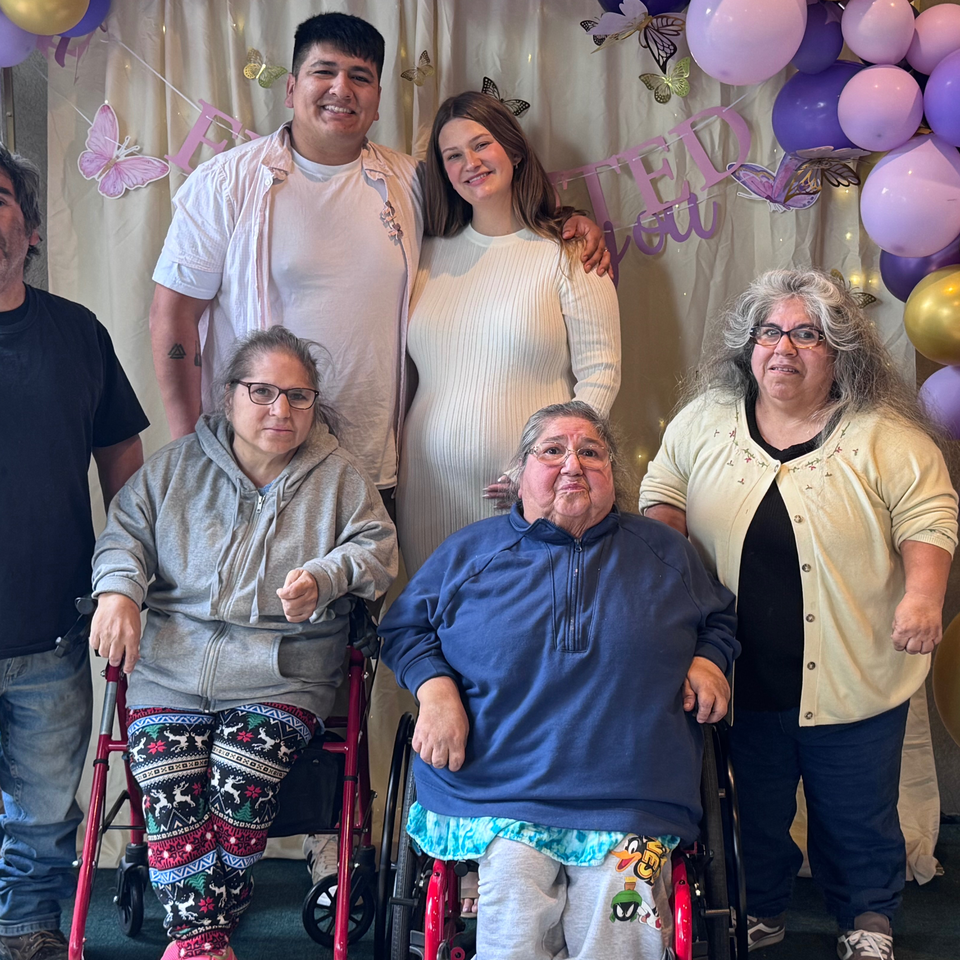
    Support for the Morales Elders: Keeping Our Family Safe, Warm, and in Their Home Our family is humbly reaching out for help something we never imagined doing, and something we do now with a very heavy heart. My momma, my sister, and I have always been fiercely protective of our elders: Auntie Norma, Auntie Fidela, Auntie Elena, and our Uncle Chewy. They’re the heartbeat of our family. They’re our responsibility. And we’ve carried that responsibility with pride, love, and determination. But today, the weight is heavier than what we can manage alone. Who They Are These four elders are extraordinarily resilient, funny, stubborn in the best way, and full of love. They are also special-needs adults who depend on each other and on us, and we do everything we can to help them live independently in the home they’ve had for decades. Uncle Chewy, a survivor of police brutality before Miranda rights even existed, has always been the rock of their household. He cooks, cleans, and helps care for his sisters, even while carrying his own trauma and disability. Auntie Fidela, who is high-functioning, does her best to help bathe her two older sisters, watch their medications, and manage small parts of their budget. Auntie Norma, age 59, walks with a walker and is developmentally about four or five years old. She loves her dolls, bright colors, and anything soft. She brings sweetness into every room she enters. She also LOVES singing and listening to music. Auntie Elena is currently in another fight with cancer. She is in a wheelchair, going through chemotherapy again, and developmentally about eight or nine years old. Through all this, she still laughs, still prays, and still shows up as a warrior. They have survived more hardship in one lifetime than most families face in three. Yet they continue living independently, taking care of each other, and staying rooted in their home a home filled with memories of all our elders who came before them. How We Got Here After the passing of two of their brothers Uncle Robert (October 2021) from COVID complications and a stroke, and Uncle Pancho (July 2023) from a massive heart attack; their Social Security disability was suspended because they received all of Uncle Robert’s pension and retirement benefits, which put them temporarily over income limits. Because of the sudden loss of their brothers, the cost of two funerals, a roof replacement, medical copays that Medicare and Medicaid do not cover, rising inflation, and ongoing federal budget cuts, their savings and pension funds have run out. Uncle Robert was a lifetime Teamster, and his pension and retirement benefits were split among the siblings. When both brothers passed away, the system put the surviving siblings’ benefits on hold. We have been fighting the government ever since to fix this. But with the shutdown, backlog, and delays in reopening, their income has been gone for months. We were forced to request a mortgage forbearance, and even with that, the bills kept coming: • past-due mortgage payments • utility bills • medical expenses • transportation costs for cancer treatment • the cost of seasoned firewood that heats their home Now, they are at the edge of losing the stability they’ve held onto for so long. What We Do as a Family We take care of them in every way we can: • mowing the lawn • cleaning gutters • grocery shopping when Uncle Chewy cannot drive due to illness or severe arthritis • paying small bills when we can • teaching them technology • navigating medical appointments • filing government paperwork • hauling and stacking firewood • guiding them through systems that honestly don’t understand families like ours My husband, my children, my sister, my brother-in-law, my niece and nephew, my mom, and my cousins Ricky and his wife we all pitch in. We do it with love. We do it without hesitation. But right now, love isn’t enough to cover the costs. What We Need We are trying to raise $5,000 to keep our Aunties and Uncle safe and stable while we wait for their disability income to be reinstated. The funds will go directly toward: • back mortgage payments • upcoming mortgage amounts • overdue utilities • medical-related needs • seasoned firewood to get them through the winter This will keep them in their home together, safe, warm, and cared for while we finish the fight with Social Security. Why We’re Asking It hurts to ask.
We were raised not to. But the reality is simple and unforgiving: without help, our elders will fall deeper into a financial crisis they did not create and cannot fix on their own. They deserve better.
They deserve dignity.
They deserve safety.
They deserve to remain in their home. If you are able to give anything, truly anything we will be grateful beyond words. If you cannot give, please share. Every act of support makes a difference. From our family to yours, thank you for seeing them, loving them, and helping us protect the people who once protected all of us. With gratitude, The Morales Family
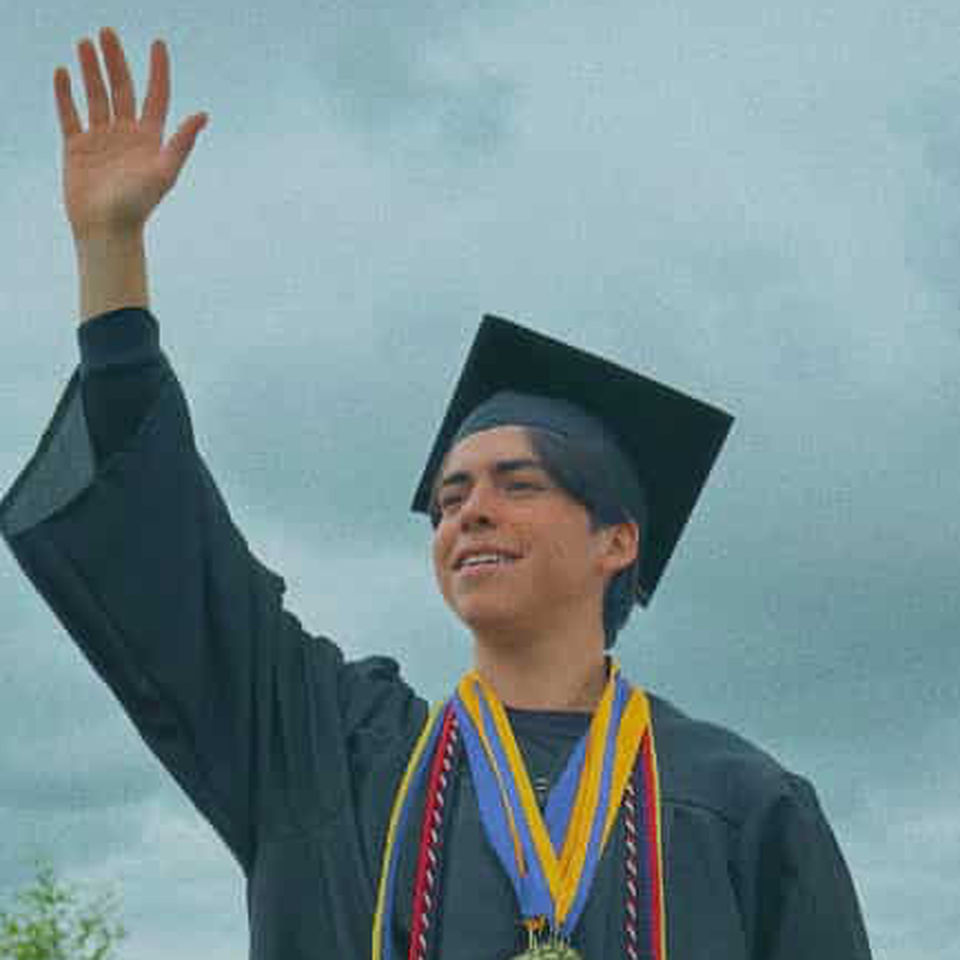
    Help Isaias Stay in School – Support a Future Storyteller “Your kindness today keeps a young artist’s dream alive.” Hi everyone, My name is Isaias Ardila, and I’m a freshman at Southern Oregon University, majoring in Theater Performance and Film with a minor in Business. I’ve always dreamed of becoming an actor and storyteller, someone who brings people together through shared emotion, truth, and creativity. Growing up in Salem-Keizer, my family taught me the values of resilience, kindness, and hard work. Acting became my way to express myself and to process the world it was my escape, my passion, and my purpose. Right now, I’m facing a difficult setback. I owe $2,500 for this term, and I can’t finish registering for my next classes until the balance is paid in full. I’ve been working, managing my expenses carefully, and applying for every scholarship, FAFSA opportunity, and student loan I can find. But even after doing all that, I’ve come up short. Recent federal budget cuts made by the U.S. Department of Education have reduced the amount of aid available to many college students like me. These cuts have made it harder for working-class and first-generation students to stay enrolled and focused on their goals. I’m anxious about what this might mean for my academic progress, but I’m not giving up. I believe in taking responsibility, finding solutions, and asking for help when it’s truly needed. Your support, in any amount, would help me pay off this balance, stay in school, and continue working toward my dream. Every dollar brings me closer to being able to keep studying, performing, and sharing stories that matter. Thank you for taking the time to read my story and for believing in students like me who are working hard to build a better future. With gratitude, Isaias Ardila Freshman – Southern Oregon University Theater Performance & Film | Minor in Business