I promised I would share another update after my appointment with Dr. Doug Jones at the Bateman Horne Center, and I finally have enough information — and enough energy — to do that.
First, I did make it to the appointment, and I’m very glad I went, huge shout out to Stacia Hood who graciously volunteered her time and energy to help make that trip happen!
Dr. Jones did a much deeper evaluation of my immune system, MCAS, POTS, Long COVID/ME/CFS picture, and the many overlapping issues I’ve been dealing with since COVID. He ordered an extensive immune and allergy workup, and some of those results are now starting to come back, although many are still pending.
Unfortunately, the trip itself came at a very high cost physically.
Since returning from Utah, I have been in a severe post-exertional malaise (PEM) crash. I briefly had a couple of better days where I was finally able to get out and have the labs drawn, but that activity was enough to trigger another crash, and I am back to spending most of my time in bed.
For anyone unfamiliar with ME/CFS, PEM is not simply being “tired.” Even relatively small amounts of physical activity, cognitive effort, sensory stimulation, prolonged upright time, travel, or other stress on the body can trigger a major worsening of symptoms that lasts days or weeks.
That has been one of the hardest realities of this illness: sometimes the medical care I need in order to get better can itself make me substantially sicker.
There have also been several important developments since that Utah trip.
At the end of September, I was formally diagnosed with hypermobile Ehlers-Danlos syndrome (hEDS).
This was an important piece of the puzzle. hEDS is generally considered to be a longstanding connective-tissue disorder, so it may have existed before I ever had COVID. But what is very important in my case is that I did not have POTS, dysautonomia, severe exercise intolerance, syncope, major vascular symptoms, or this level of multisystem illness before COVID.
I was working, functioning, and living a normal life.
COVID was the turning point.
So while COVID did not “cause” the underlying hEDS itself, it appears to have unmasked or dramatically exacerbated a previously compensated condition, and that may help explain why the combination of connective-tissue, autonomic, vascular, and neurologic problems has become so severe.
There have also been some newer lab findings. My ferritin is now 19, and my TSH is now elevated, so I am following up with my primary care provider and again requesting IV iron infusions.
One encouraging development is that my repeat microclot testing has improved. Earlier this year, my amyloid fibrin microclot burden had been reported around Stage 3.5–4 out of 4. My repeat testing on October 2 was reported as Stage/Grade 2.5–3 out of 4, or moderate.
I also repeated my COVID spike antibody level after Japan. On October 6 it measured 9,044 U/mL, compared with 11,203 U/mL in June. We do not yet know what that change means clinically, but it is another data point my doctors and I are following.
The vascular side of things has also continued to evolve.
I recently followed up with my local vascular surgeon, who felt the imaging looked reassuring and did not recommend further investigation.
Because I continued having severe abdominal and pelvic pain, I sought another opinion with Dr. David Dusseau at Oregon Vascular Specialists in Wilsonville.
I am so grateful that I did.
Dr. Dusseau was very knowledgeable about the overlap between POTS, hEDS, venous compression syndromes, and pelvic venous disease, and he felt that further evaluation was absolutely warranted. He also explained that standard imaging can be unreliable for diagnosing some of these problems.
I am now scheduled for a pelvic venogram at the end of October so he can evaluate the pelvic veins directly.
After feeling dismissed locally, it was such a relief to meet with a specialist who understood how complex these issues can be and was willing to keep investigating instead of stopping at an imaging report.
I also now have multiple new specialist referrals moving forward, including specialized neurologists, OB/GYN, and urology.
Neurology is evaluating the newer numbness and tingling, tremor, cognitive changes, neck symptoms, and other neurologic concerns.
OB/GYN is part of the workup for the severe recurrent pelvic and abdominal pain, including concern for possible endometriosis alongside the vascular causes being investigated.
And urology is continuing to evaluate the urinary retention and abnormal bladder testing, including whether there may be neurologic and/or pelvic-floor involvement.
My day-to-day function remains extremely limited.
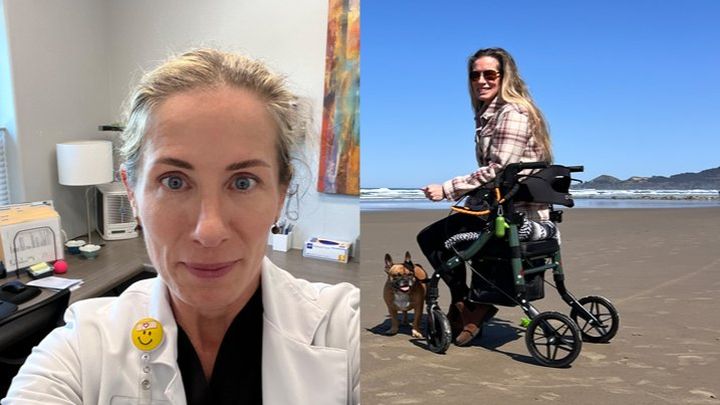
I spend most of my time in bed, use a wheelchair, and need substantial assistance with daily life.
I recently went through another in-home caregiver assessment through Lane County Senior & Disability Services, and I am finally getting more help at home. I have been able to bring on an additional caregiver, which has been a huge help and has taken some pressure off my family.
At the same time, I was recently denied Social Security Disability, despite being almost completely bedbound, unable to work, dependent on a wheelchair, and requiring substantial in-home care.
That has been incredibly discouraging and has added even more financial uncertainty.
I am also trying to make my two-story home more accessible so I can remain here safely. We are looking into a stair lift and other accessibility modifications.
All of this is why I continue to keep this fundraiser open.
The specialized care I need is still often out of state, out of network, or not covered by insurance, and the costs of appointments, testing, travel, treatment, medical supplies, equipment, home accessibility, and ongoing care continue to add up.
To everyone who has donated, shared, prayed, checked in, sent encouragement, or helped me get to these appointments — thank you.
You are helping me continue to pursue answers that I would not otherwise be able to access.
Right now, my focus is on recovering from this current PEM crash, completing Dr. Jones’s immune workup, addressing the low ferritin and thyroid abnormalities, getting through the pelvic venogram, and continuing the neurologic, gynecologic, urologic, vascular, and Long COVID evaluations.
One appointment at a time.
One answer at a time.
Thank you for continuing to stand beside me through all of this.
With love and gratitude,
Kelsey