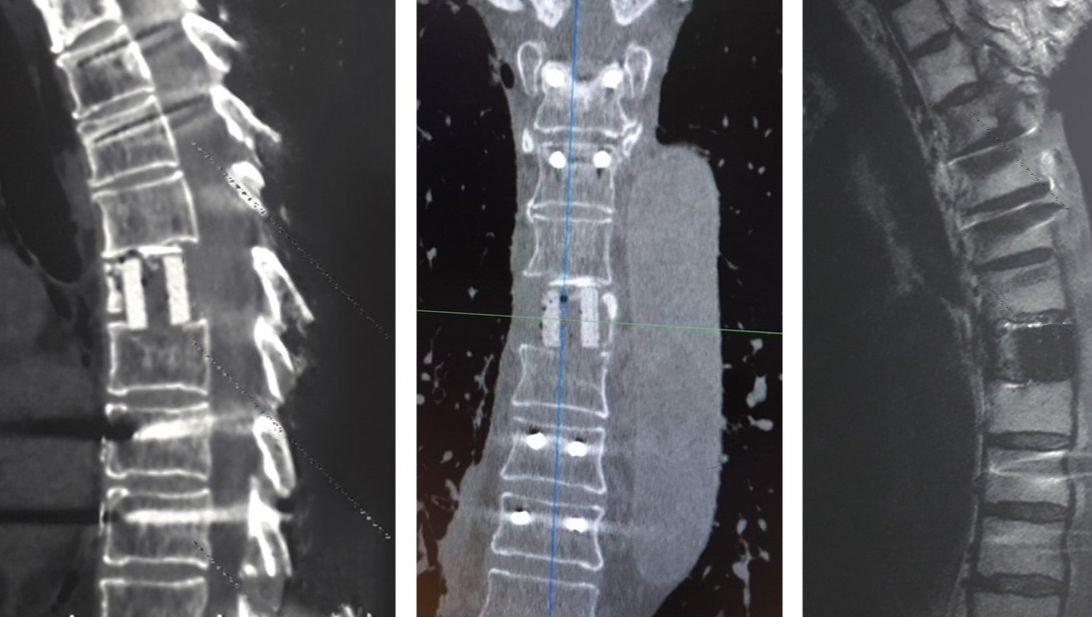
Metastatic spinal disease — a devastating condition that often leads to severe pain, loss of mobility, and, in many cases, loss of independence.
For these patients, surgery is not just about removing a tumor. It is about preserving dignity, the ability to walk, and quality of life during a very difficult stage of their illness.
However, traditional surgical approaches are often highly invasive. They can involve significant trauma, long recovery times, and increased risks — especially for patients whose health is already compromised by cancer.
Our project focuses on the use of minimally invasive thoracoscopic and endoscopic techniques to decompress the spinal cord and restore spinal stability with less surgical trauma. These methods aim to reduce complications, shorten recovery time, and allow patients to return to movement and daily life as quickly as possible.
In our clinical work and research, we have already seen promising results: reduced pain levels, improved neurological function in some patients, and better overall tolerance of surgery .
But this is only the beginning.
We need to expand this work — to study more patients, refine the technique, and make this approach more accessible to surgeons and patients worldwide.
Your support will help us:
conduct further clinical research,
collect and analyze long-term outcomes,
improve surgical techniques and protocols,
and train other specialists in minimally invasive spine oncology methods.
This project is about giving patients not just more time, but better time — with less pain, more mobility, and greater independence.
Every contribution helps us move closer to that goal.
Thank you for your support.