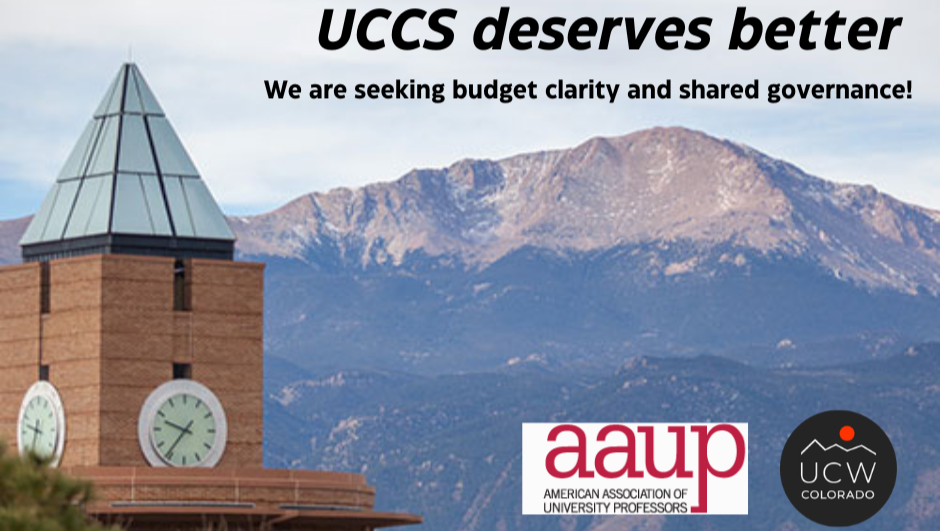
Who – The University of Colorado Colorado Springs (UCCS) chapter of the American Association of University Professors (AAUP) is working to ensure more stable, participatory governance and transparent accounting practices.
What – We aim to raise $6,000 to prepare for a range of challenges that the chapter has faced this year and will face in the near future. In response to significant “structural budget deficits,” faculty have tried to engage in discussions about the fiscal health of the campus with university leadership. Administrator responses proved so dissatisfactory to the faculty that a vote of censure (88% yes, 12% no) and a vote of no confidence (81% yes, 19% no) were held in Spring 2026. The results demonstrated overwhelming collective concern about the administration’s handling of our budget. Our AAUP chapter has consequently accrued significant legal fees as a result of fighting a Colorado Open Records Act (CORA) request seeking the names of faculty who signed onto a petition to hold the Spring 2026 vote of censure. The money we are raising will: 1) assist in offsetting the costs of retaining a lawyer who specializes in CORA as we respond to threatening requests from campus lawyers and administration, and 2) allow us to heed AAUP National’s recommendation that we hire a forensic accountant to independently analyze UCCS’s budgets for the past three years.
Why – In early Spring 2026, UCCS surprised campus by announcing that it would need to resolve a $12 million budget shortfall by the end of the semester–and that this was only the first year of a five-year plan to address a $27 million budget deficit. These challenges are occurring in a period of leadership instability. As part of addressing the budget deficit, the ELT is pushing for Program Discontinuance during a time when we do not have a permanent Provost (Chief Academic Leader) and we have lost over a quarter of our deans, including the sudden announcement of two deans parting ways with the university during the last week of the semester.
Faculty, staff, and students have not been adequately informed with reliable budgetary information in a timely manner during these decision making processes, yet we are the ones who are impacted the most by these decisions. The data we seek will provide a foundation for conversations around prioritizing funding allocations and identifying the appropriate metrics for budget allocation decisions (different from or confirming the data we have received). This, in turn, will create conditions allowing faculty and staff to better participate in shared governance, support our colleagues and new administrators, and ensure quality educational experiences for students.
When – Now through Fall 2026. We hope to have the analysis done this summer so we can share our results with faculty, staff, students, and administrators and prepare for continued discussions about budgetary planning that will build on the university’s academic mission rather than undermine it by slashing the budget.
Where – With the data in hand, we will have public forums, meetings, and discussions with faculty, staff, students, and administrators on campus this Fall.These events will align with the initiation of new round of proposed budget cuts and program discontinuance discussions and act as additional spaces for shared governance and open deliberation about our university’s organization, budget, and future.