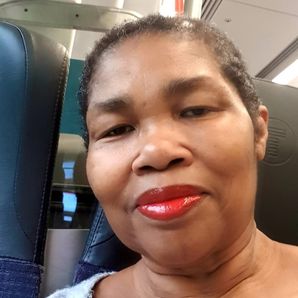
My name is Marva. I am a multidisciplinary artist - website designer, sound artist, writer, DJ, archivist, poet, and photographer - I live in rural Wales, originally from Jamaica and raised in rural Ontario, Canada.
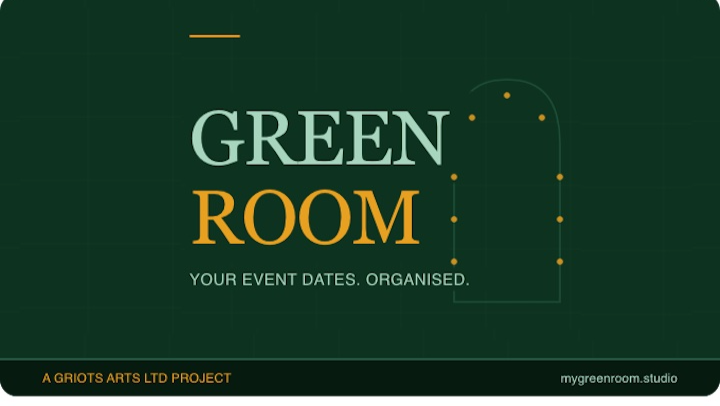
I have built a prototype for a web based app called Greenroom . The idea for the app is mine and I used Lovable and Claude as tools to help bring, what I hope will be a benefit to creatives, to life. Greenroom is currently free to use in exchange for feedback about how it can be improved to better support the needs of the creative. The fundraiser is to help raise funds to complete the project. My phase one goal is £15,000, with an initial milestone of £700. *Please note that GoFundMe fees are included from each donation, to support the platform.
A bit more about my background
I've spent over 25 years supporting artists and cultural organisations from Wales, England, Canada, France and the US, through Griots Arts Ltd, my UK-based digital media and consulting practice. Before that, I spent a decade at CKLN FM in Toronto as a DJ and host, in conversation with music performers, visual and film artists, writers and more - including dub poet Lillian Allen, funk legend George Clinton, feminist thinker bell hooks, hip hop original Queen Latifah, UK legend Linton Kwesi Johnson, filmmakers Julie Dash and Floyd Webb (Daughters of the Dust) to name just a few. You can find out more about me at: https://marva.fyi (my artist site) and https://griotsarts.com (webwork)
As a neurodivergent person, ADHD and Autistic, I know from the inside what it feels like when the tools that are supposed to help, create more friction than they remove. These experiences have shaped every decision in this app. Designing Greenroom for the most friction-sensitive users produces something that offers better solutions for everyone.
Think of it the way the roadside curb cuts work. Designed for wheelchair users. Transformative for everyone pushing a buggy, riding a bike, or pulling a suitcase. Good accessible design is just good design.
Built with working artists, not just for them
Before this campaign launched, the prototype went out to working artists across disciplines for real feedback - not a polished demo, but genuine testing against how they actually work.
Photographer Michael Chambers in Canada, musician and composer Sharron McLeod in France, and filmmaker Floyd Webb (blacknuss.net) in the United States have already tried out the prototype, giving feedback. That feedback is in the tool now.
More responses are coming in from artists across additional disciplines. Every round of feedback sharpens what Greenroom does and how it does it.
Different practices surface different needs. A filmmaker preparing for a festival screening has different logistics from a poet organising an online reading series. A visual artist coordinating a gallery opening works differently from a digital artist managing a commission deadline and a virtual launch. Building with that in mind - rather than assuming one checklist fits everyone - is the whole point.
This is not a finished product being handed to you. It is a tool that started with real working artists across 5 countries and is still being shaped by us.
What Greenroom does
Greenroom is a mobile-first progressive web app. It works on any device - Android, mobile Phone, Pad, desktop - with no app store download required. Fast, designed with care, and built to feel like it was made specifically for you.
The Greenroom is the space before the work - where artists gather, prepare, and get ready: the musician before a gig, the poet before a reading, the visual artist before an opening, the digital artist before a virtual or in-person launch, the theatre maker before a run. Physical space or digital space. In-person or online. The space needed for preparation is the same. That is what this tool is for.
1. It starts with you
You tell Greenroom what your primary discipline is, in your own words -- not selected from a dropdown of someone else's categories. You type freely: jazz pianist, documentary filmmaker, installation artist, spoken word poet, whatever fits. Greenroom reads your answer and loads an interface that reflects how you work. You choose your own colour palette and your choices are saved each time you return.
2. You decide what needs doing -- Greenroom surfaces it
When you add a date, you choose your event type. Greenroom generates a checklist tailored to that choice, with tasks organised by how urgent they are as your date approaches. An in-person festival date has different tasks from an online residency, which has different tasks from a literary reading or a digital commission delivery. You can add your own items, tick things off as you go, and the most time-sensitive tasks rise to the top automatically.
3. You keep your money clear
You enter your fees, your expenses, and your general costs. Greenroom shows you your net position at a glance - income against outgoings, per date and overall.
For international dates, you can request a plain-language summary of entry and visa requirements for each destination country. Greenroom is clear that you should always verify this information officially before you travel.
4. You choose when to hear from it
You receive a weekly digest email every Monday covering your upcoming dates, outstanding checklist items, and a financial summary. As dates approach, you receive urgency-triggered reminders - but only for items you have not yet ticked off. Email only. No push notifications, no interruptions you did not ask for.
Built with care - which makes it better for everyone
When you build for people who experience the most friction, you end up with something that works better for everybody. That is not a new idea. It is just consistently ignored.
Greenroom was designed with neurodivergent artists at the centre. The result is an app that is calmer, clearer, and more considered for any creative, regardless of how their brain works.
Focus mode -- you choose to see one task, one date, one action. Everything else disappears until you are ready for it.
Today view -- you ask the app one question: what is the single most important thing I need to do for my practice today? It answers based on what you have told it.
Quick capture -- a floating button on every screen. You tap it, type whatever you need to remember, and come back to it when you are ready.
Plain language -- no jargon. Every label tells you exactly what goes there, in the words you would use yourself.
Predictable layout -- every screen is in the same place every time. Nothing moves unexpectedly. We are aiming to build so that you always know where you are.
These are not features for a niche. They are features that once implemented will make the whole experience better.
Built for artists everywhere - including where tools usually forget to look
You tell Greenroom where you are based, and you add the locations of the dates you are participating in.
That information lets Greenroom give you relevant context - flagging when a date is international, noting the currency, and helping you think through the logistics of crossing borders with your work, whether that means getting on a plane or hosting an event that crosses time zones online.
Most planning tools assume a particular kind of artist doing a particular kind of work on a particular circuit. Greenroom does not.
You describe your practice in your own words, and the tool responds to what you tell it rather than slotting you into a predetermined category.
At launch: UK English, US English, and Canadian English. Phase two: French, Spanish, Portuguese, and Welsh - with human arts-community review for each language, not machine translation.
If we exceed our funding goal, a portion goes directly into a free access fund for artists from the Global South and underrepresented communities. This may include additional funds needed for more translations. That is a structural commitment, not an afterthought.
Who it is for
Any artist managing dates, deadlines, and the logistics that come with them - at any career stage, in any discipline, anywhere in the world, working in person, online, or both.
Performing artists, Literary artists, Visual and digital artists, Creative educators and facilitators, and anyone who does not fit neatly into one category - because most working creatives do not.
Phase one -- and why it matters
Greenroom launches as a progressive web app. That means it works on any device, installs from a browser, and requires no app store. For phase one, that is the right choice - the goal is to get the the tool into artists' hands quickly, across every platform.
But this is not where it ends.
Phase two will bring Greenroom to the iOS App Store and Google Play as a fully native app. That work requires additional funding - beyond what this campaign covers - and it will come through a combination of subscription revenue, further fundraising, and grant applications as the user base grows.
What this campaign builds is the foundation that makes all of that possible. A working production app with real users, real data, and a proven case for why it needs to exist. Without phase one done well, there is no phase two.
Every person who donates is part of that foundation. The £5 donor and the £500 donor are both in the room where this started. Most tools that artists rely on began exactly this way - with a small group of people who decided the thing was worth backing before anyone else could see it clearly.
Where the money goes
Funds raised go directly toward building and launching the production app.
A note on the build: The prototype was conceived and built by me using Lovable and Claude as development tools. The core logic is complete and working. You can try it free today at https://mygreenroom.studio.
What the funding covers is the production layer
Bringing in a specialist developer. They will work with me to build the robust backend infrastructure the prototype needs to become a fully functioning app. The developer works from a detailed technical brief that is already prepared. They are not starting from zero - they are building the foundation under something that already stands.
What different funding levels make possible
£6,000 -- Core app live: Supabase backend, data persistence, UK and US English, PWA complete. Artists can sign up and use Greenroom for real.
£8,500 -- Canadian English added, email system live (weekly digest and urgency reminders), full accessibility audit passed.
£10,500 -- Accessible UX review complete, French and Spanish translations live.
£12,500 -- Welsh translation, iOS and Android PWA polish, offline mode.
£15,000 -- Full goal reached: my time covered, contingency in place, project on stable footing.
Beyond £15,000 -- Free access fund for artists from the Global South and underrepresented communities, including further translations.
Every donor receives an update when each milestone is reached. You will know exactly where the project is and what just got built.
Risks and challenges
The prototype is built and working. You can use it today. The core logic is complete.
What the funding covers is the production layer - database, email system, PWA hardening, deployment - built by a specialist developer working from a detailed technical brief that is already prepared. They are hired on a fixed-price milestone contract, so payment is tied to delivered and reviewed work, not hours.
Development time - software takes longer than expected. Contingency is built in, the technical brief is detailed, and the stack is established. The developer is not scoping an unknown project; they are building to a clear spec on a platform they know.
Scope - Phase one has a clear boundary. Phase two features will not delay phase one. If something needs to move, it moves, and donors are told.
Infrastructure costs - researched carefully. Sustainable from a modest number of paying subscribers. The numbers are available to anyone who asks.
I have been working digitally for artists and cultural organisations for over 25 years, and has been the driving force behind every decision in this app.
A note on values of this initiative
Greenroom is built on the same principles that run through everything at Griots Arts Ltd.
Greenroom does not assume a particular kind of artist, a particular format, a particular circuit, or a particular geography.
You describe your practice and your context, and the tool responds to what you tell it rather than making you fit a predetermined category. That is what decolonised design looks like in practice - not a statement, a structural choice.
People-first. The tool serves the artist, not the other way around. Your data is yours. Greenroom does not exist to harvest or monetise your information.
It should feel good to use. Beautiful, calm, responsive, on your side.
And it is built to stay running without requiring venture capital or growth-at-any-cost. Pricing is transparent. Running costs are clear. The goal is a tool that lasts.
Every artist deserves a greenroom. Now you can carry yours.
Follow the project
mygreenroom
griotsarts
Greenroom is a Griots Arts Ltd project.