- T
- C
- L
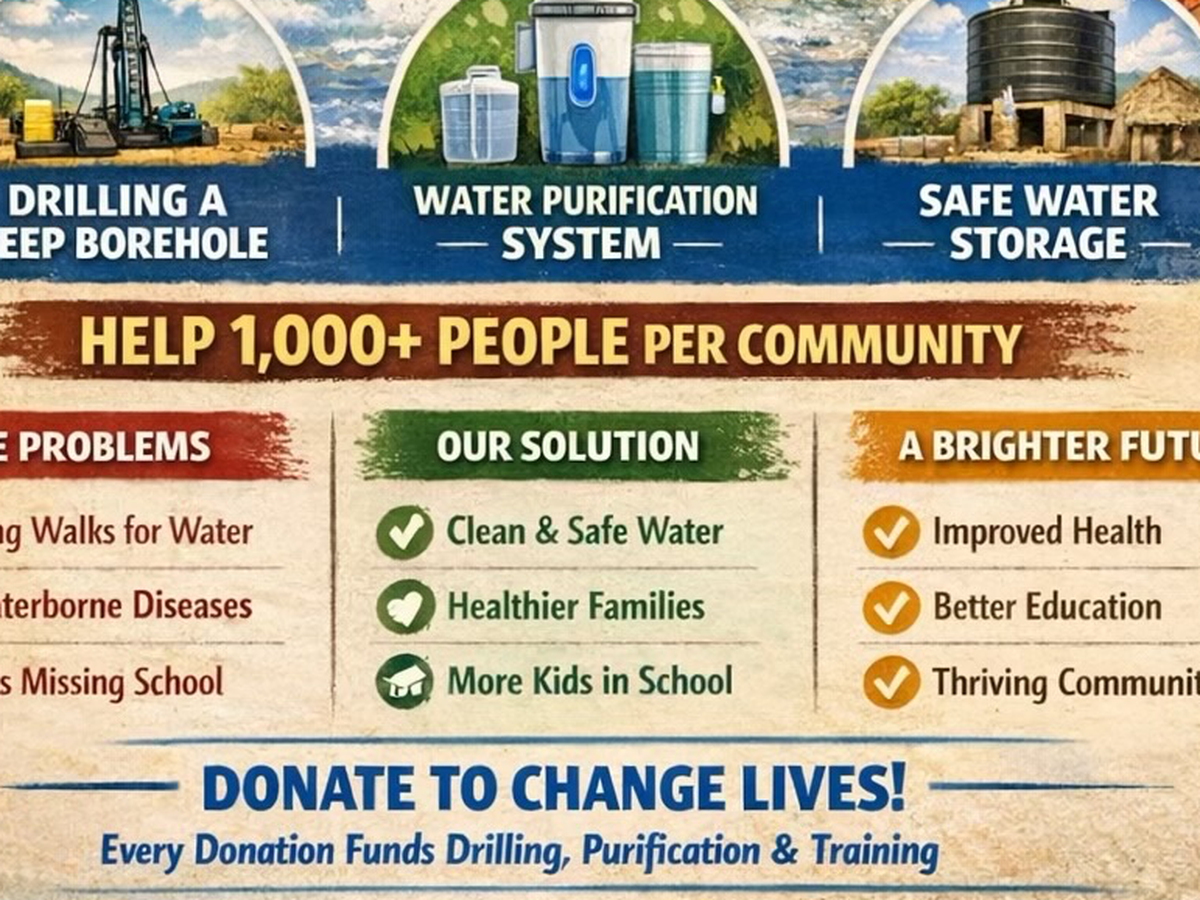
Tshanduko Africa Alliance is launching a Water Project to bring clean and safe water to communities in remote parts of Africa. Many families in these villages currently lack access to safe water, which forces them to spend hours each day just collecting it. With this project, we plan to drill a borehole, install water purification system, and set up a storage tank. By providing clean water, we will reduce waterborne diseases, improve health, and give children more time to attend school. Our goal is to help at least 1,000 people per community by providing them with reliable access to water. We have already received local council approval and are working with trusted engineers to ensure everything is done safely and sustainably. Every donation will directly fund drilling, purification, and training. Together, we can create lasting change and give hope for a healthier future.
Project Summary
This project proposes the drilling of a deep borehole to serve five densely populated rural villages in Eastern Uganda, where high birth rates have significantly increased population pressure on limited water sources.
Each village is estimated to have approximately 1,500–2,000 residents, resulting in a total beneficiary population of 7,500–10,000 people. Current water sources are insufficient for this growing population.
Major Challenges Caused by Water Scarcity
Due to rapid population growth and limited infrastructure, the communities face:
1. Severe Water Shortages
• Long queues at the few available water points
• Water sources drying up during dry seasons
• Daily walking distances of 3–6 km to fetch water
2. Increased Disease Burden
Overcrowded and contaminated water sources lead to:
• Cholera outbreaks
• Typhoid and dysentery
• Frequent diarrhea in children
• Skin and eye infections
High population density accelerates the spread of disease.
3. School Disruptions
With larger household sizes:
• Children spend more hours fetching water
• Girls are disproportionately affected
• School attendance and performance decline
4. Economic Hardship
Large families require more water for:
• Cooking and sanitation
• Livestock and small farming
Water scarcity limits productivity and deepens poverty.
5. Social Tensions
Competition for limited water sources has led to:
• Conflicts between villages
• Strained community relations
• Unsafe water-sharing practices
How the Borehole Project Will Eradicate These Challenges
The borehole will provide safe, reliable, year-round groundwater supply capable of supporting high population demand.
Expected Outcomes:
• Reliable clean water within walking distance
• Significant reduction in waterborne diseases
• Improved hygiene and sanitation
• Increased school attendance
• More time for farming and small businesses
• Reduced conflicts over water access
By centralizing access to a protected underground aquifer, the project eliminates dependence on unsafe surface water and seasonal sources.
Maintenance and Sustainability Plan
To ensure the project lasts over 15–20 years, the following measures will be implemented:
1. Community Water Committee
• Representatives from all five villages
• Responsible for management and accountability
2. Affordable Household Contributions
• Small monthly maintenance fees
• Funds reserved strictly for repairs and spare parts
3. Routine Technical Servicing
• Annual professional inspection
• Immediate repair system to prevent long-term breakdown
4. Durable Infrastructure
• High-quality hand pump or solar-powered system
• Proper drainage and concrete apron to prevent contamination
With strong community ownership and structured maintenance, the borehole will remain operational for decades, even with growing population demands
Conclusion
This borehole project will serve up to 10,000 people across five densely populated villages in Eastern Uganda. By eliminating water scarcity, the project will reduce disease, improve education, empower women, strengthen local economies, and restore dignity to thousands of lives.
This is not only a water project it is a long-term investment in community health, stability, and sustainable development.