THE LEGACY OF JUSTICE INITIATIVE
0% complete
$20 raised of
1 donation
There are children in Tennessee who enter state custody through no wrongdoing of their own.
They have not committed a crime.
They have not been sentenced by a court.
They may have experienced abuse, neglect, abandonment, parental incarceration, family instability, caregiver crisis, unsafe living conditions, or circumstances entirely beyond their control.
When Tennessee assumes responsibility for protecting a child, an immediate and critically important question follows:
Where does that child go?
The Law & Leadership School is developing the Legacy of Justice Initiative to become part of the answer.
Legacy of Justice is a proposed academic, residential, and youth-development initiative designed to expand the continuum of safe, supportive environments available to young people in Tennessee Department of Children's Services custody.
Our long-term vision is to develop a campus with capacity to serve approximately 50–100 youth, subject to facility feasibility, licensing, regulatory approval, staffing requirements, contractual arrangements, and all applicable Tennessee requirements.
The campus model is envisioned around five interconnected priorities:
- SAFE RESIDENTIAL PLACEMENT
- EDUCATIONAL STABILITY
- MENTAL & EMOTIONAL WELLBEING
- BEHAVIORAL & LIFE-SKILLS SUPPORT
- FAMILY, PERMANENCY & FUTURE READINESS
The Law & Leadership School is launching a $300,000 Phase One Capital Campaign to begin transforming this vision into an operationally and financially sustainable initiative.
We are inviting corporations, foundations, law firms, churches, healthcare organizations, universities, civic organizations, philanthropists, community partners, and individual donors to help us build.
This is not simply an investment in a facility.
It is an investment in stability.
It is an investment in education.
It is an investment in childhood.
THE NEED IN TENNESSEE IS DOCUMENTED.
Tennessee's child-welfare system serves thousands of young people whose circumstances require the State to intervene for their safety and wellbeing.
The challenge does not end when a child enters custody.
Tennessee must also have appropriate places for children to live, learn, stabilize, receive services, and prepare for reunification, kinship care, guardianship, adoption, independent living, or another permanent placement.
A Tennessee performance audit previously characterized the shortage of appropriate long-term placement options for children in state custody as a:
"CRISIS-LEVEL SHORTAGE."
Placement challenges can become particularly difficult for older youth, sibling groups, young people requiring specialized services, and children experiencing complex behavioral, emotional, developmental, or medical needs.
Tennessee has acknowledged these challenges and has made substantial investments toward expanding capacity.
In 2026, the Tennessee Department of Children's Services described a statewide $421 million Real Estate Initiative involving Welcome Places, Wellness Places, and Youth Development Campuses.
That investment demonstrates the magnitude of the need—and the importance of continuing to build appropriate infrastructure for Tennessee's children.
Legacy of Justice seeks to become part of that broader solution.
A COLLABORATIVE APPROACH
Legacy of Justice is designed to complement—not criticize or replace—the work of the Tennessee Department of Children's Services, Tennessee policymakers, courts, existing placement providers, foster families, and child-welfare professionals.
DCS cannot create a placement that does not exist.
Caseworkers cannot personally construct residential facilities.
Placement coordinators cannot manufacture qualified foster homes or specialized programs overnight.
And government alone should not be expected to carry every part of this responsibility.
Tennessee has made significant investments in placement capacity, foster-family recruitment, stabilization resources, facilities, provider partnerships, and child-welfare infrastructure.
Those investments matter.
Legacy of Justice represents a community-based response:
What can we build alongside those efforts?
This initiative is not organized around a political party, administration, individual legislator, government official, or criticism of a public agency.
It is organized around children.
We believe education, philanthropy, government, courts, nonprofits, businesses, faith communities, healthcare professionals, families, and local communities can work together to increase the number of safe and appropriate options available to young people.
Our objective is simple:
ADD CAPACITY. CREATE STABILITY. EXPAND OPPORTUNITY.
THE LEGACY OF JUSTICE CAMPUS MODEL
Legacy of Justice is envisioned as more than another temporary place for a child to sleep.
Our vision is an integrated campus where residential stability, education, wellness, life preparation, and supportive services exist within a coordinated youth-centered environment.
The long-term vision is to develop capacity for approximately 50–100 youth, implemented in phases and subject to all required Tennessee licensing, regulatory, contractual, staffing, educational, health, fire, safety, and child-welfare requirements.
FIVE PILLARS OF LEGACY
1. SAFE RESIDENTIAL LIVING
Youth-centered residential environments designed to provide stability, supervision, appropriate privacy, structured routines, recreation, study spaces, meals, and a sense of belonging.
The goal is not to create an institutional environment.
The goal is to create a safe environment that still feels like childhood.
2. EDUCATIONAL STABILITY
Young people should not have to choose between placement stability and educational stability.
Educational services will be structured consistent with each young person's placement requirements, Individualized Education Program when applicable, school-of-origin considerations, educational plan, and other governing requirements.
Programming may include:
Traditional secondary academics
Individualized academic intervention
Literacy and writing
Mathematics
Financial literacy
Computer and digital literacy
Law and legal literacy
Government and civic education
Leadership development
Career exploration
College preparation
Vocational exposure
Tutoring and academic recovery
Life-skills education
Experiential learning
3. MENTAL & EMOTIONAL WELLBEING
Removing a young person from an unsafe environment may protect physical safety.
It does not automatically heal what happened there.
Legacy of Justice intends to develop partnerships with appropriately qualified and licensed professionals for access to counseling, assessments, therapeutic services, trauma-responsive programming, behavioral-health resources, and other appropriate clinical services.
4. BEHAVIORAL & LIFE-SKILLS DEVELOPMENT
Behavior should be understood—not merely punished.
Programming is envisioned to support emotional regulation, healthy communication, conflict resolution, decision-making, accountability, financial literacy, cooking, transportation readiness, employment preparation, personal responsibility, and independent-living skills.
5. FAMILY, PERMANENCY & FUTURE READINESS
Legacy of Justice is not intended to replace families.
When reunification, kinship placement, guardianship, adoption, or another permanent arrangement is appropriate, our programming should support the permanency objectives established for that child.
Our responsibility is to create stability while the permanent solution is being determined.
WHY THE LAW & LEADERSHIP SCHOOL?
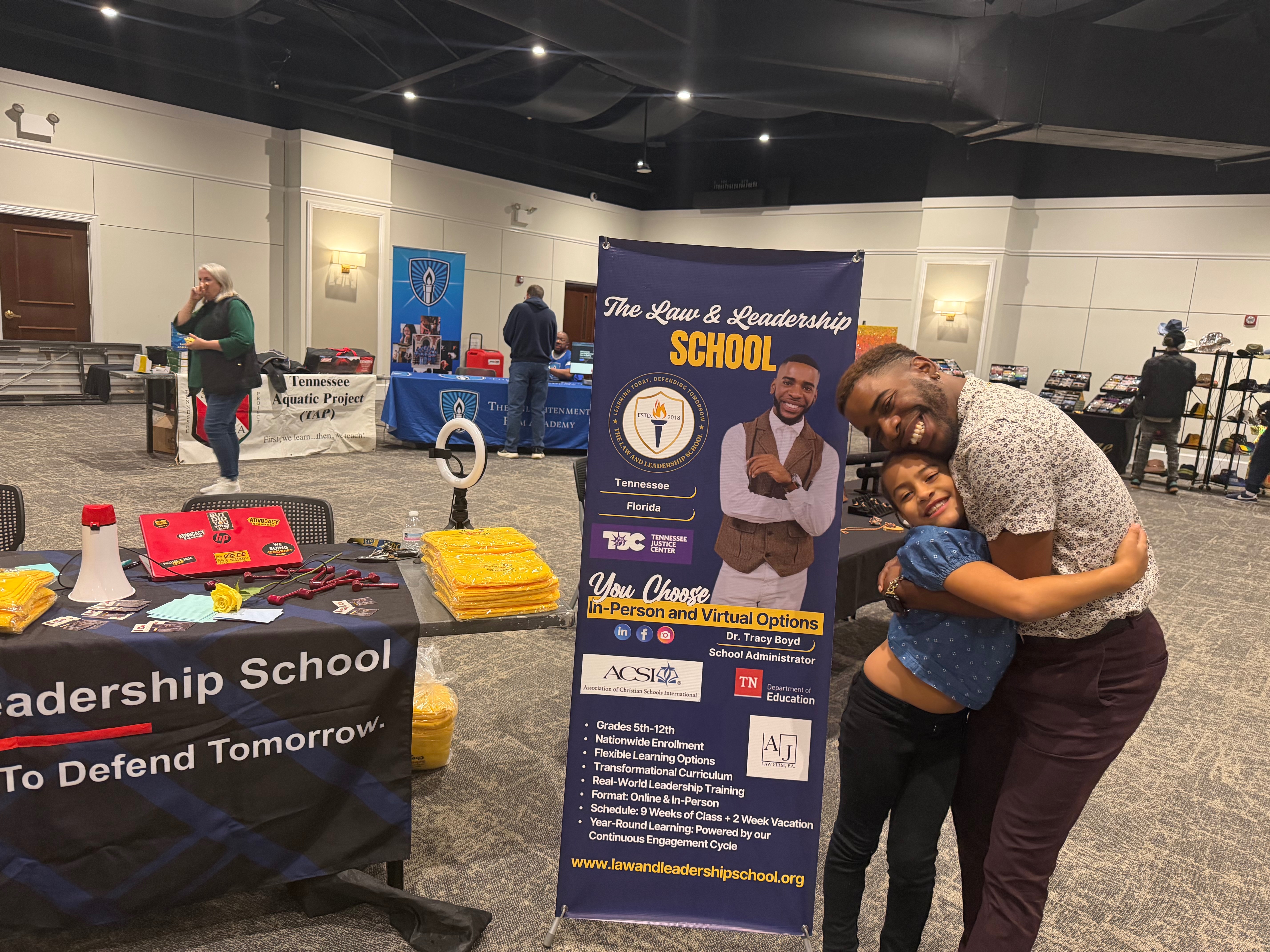
The Law & Leadership School is a Tennessee Category IV private school serving students in grades 7–12 through an educational model centered on academics, legal literacy, leadership, government, civic engagement, and experiential education.
Our philosophy is simple:
Education should prepare young people not only to graduate—but to understand and participate in the world around them.
Students learn beyond the walls of a traditional classroom.
They study government.
They examine legislation.
They observe courts.
They study constitutional principles.
They develop research and writing skills.
They learn advocacy and communication.
They develop leadership.
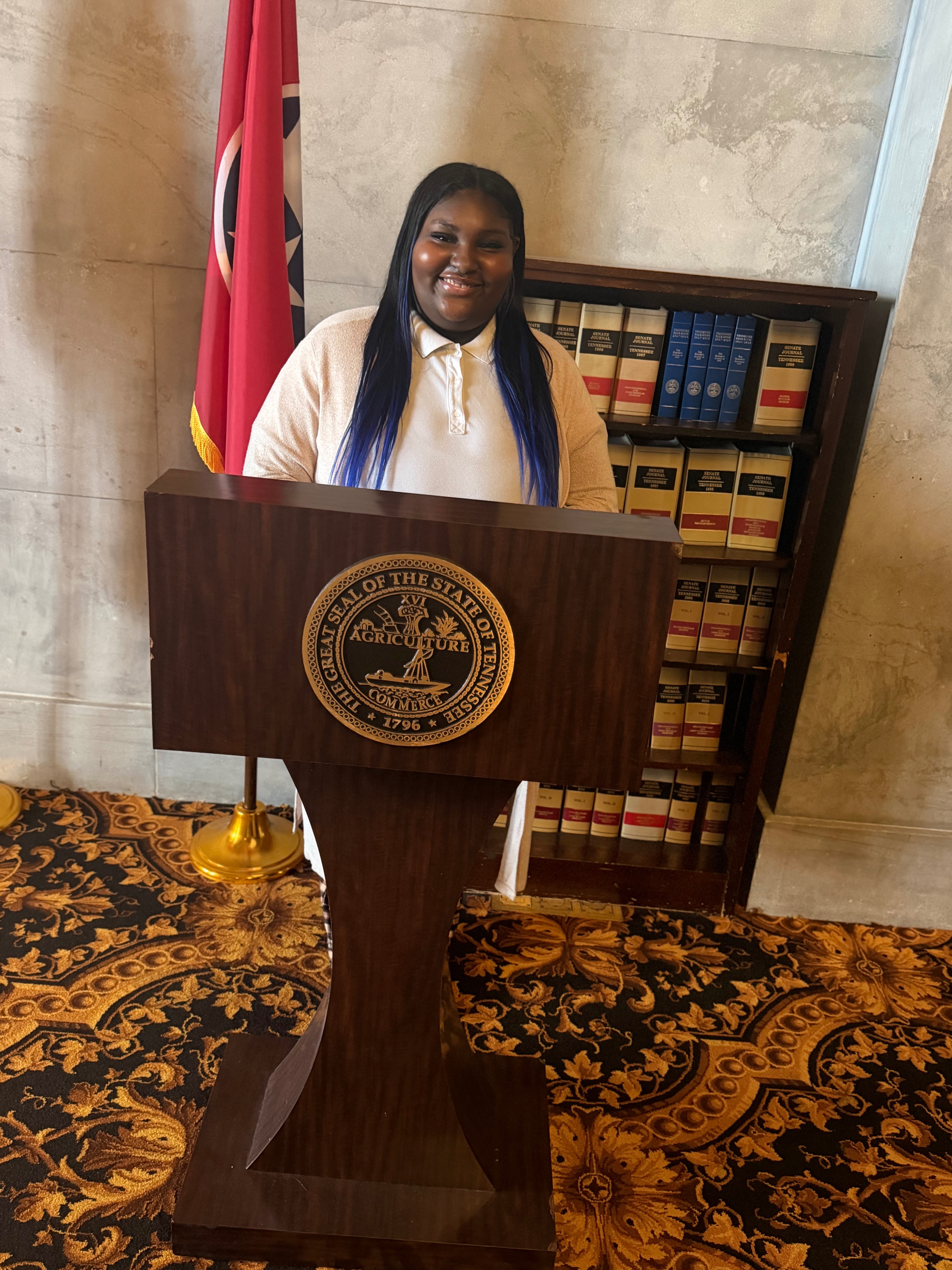
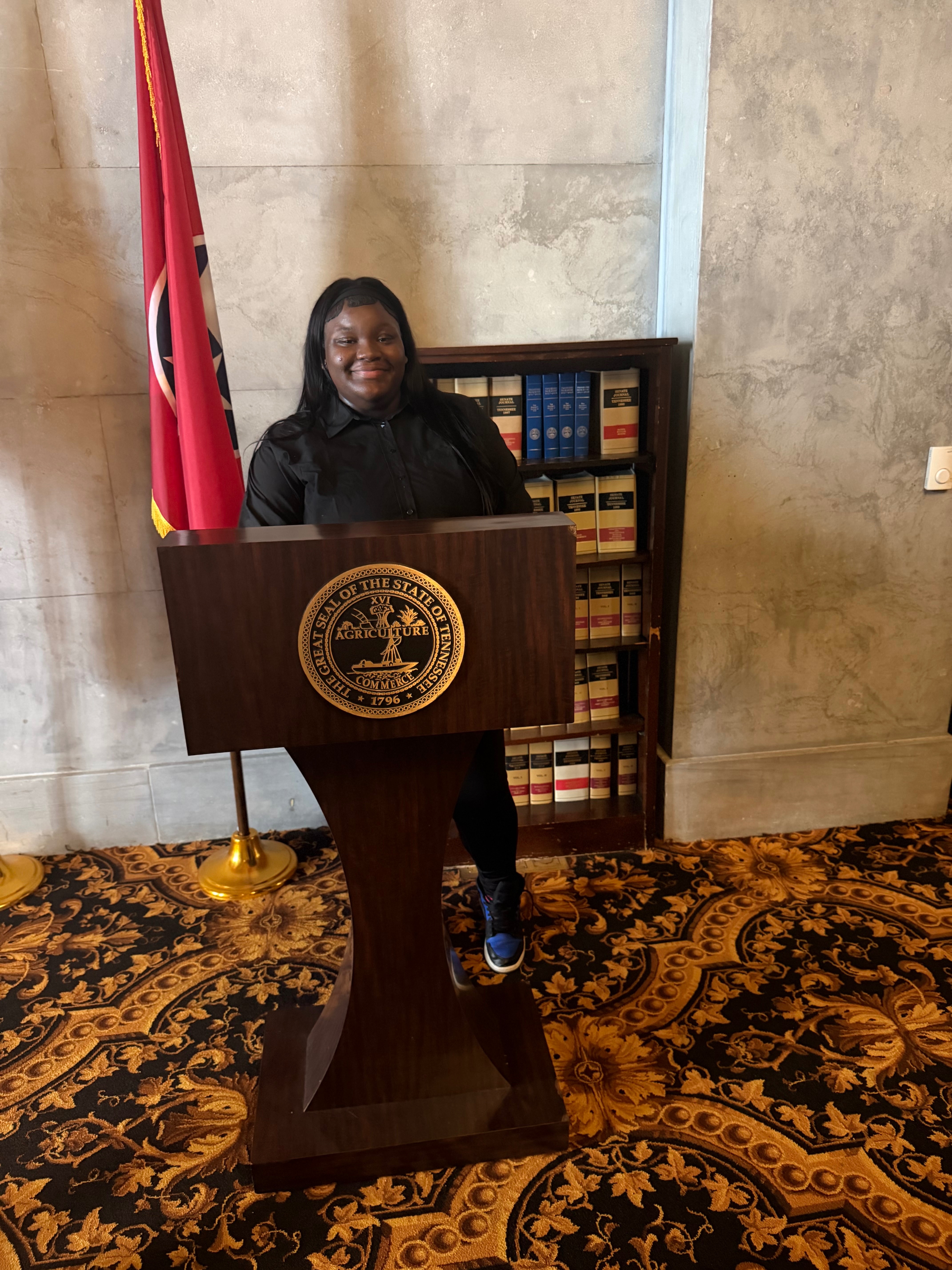
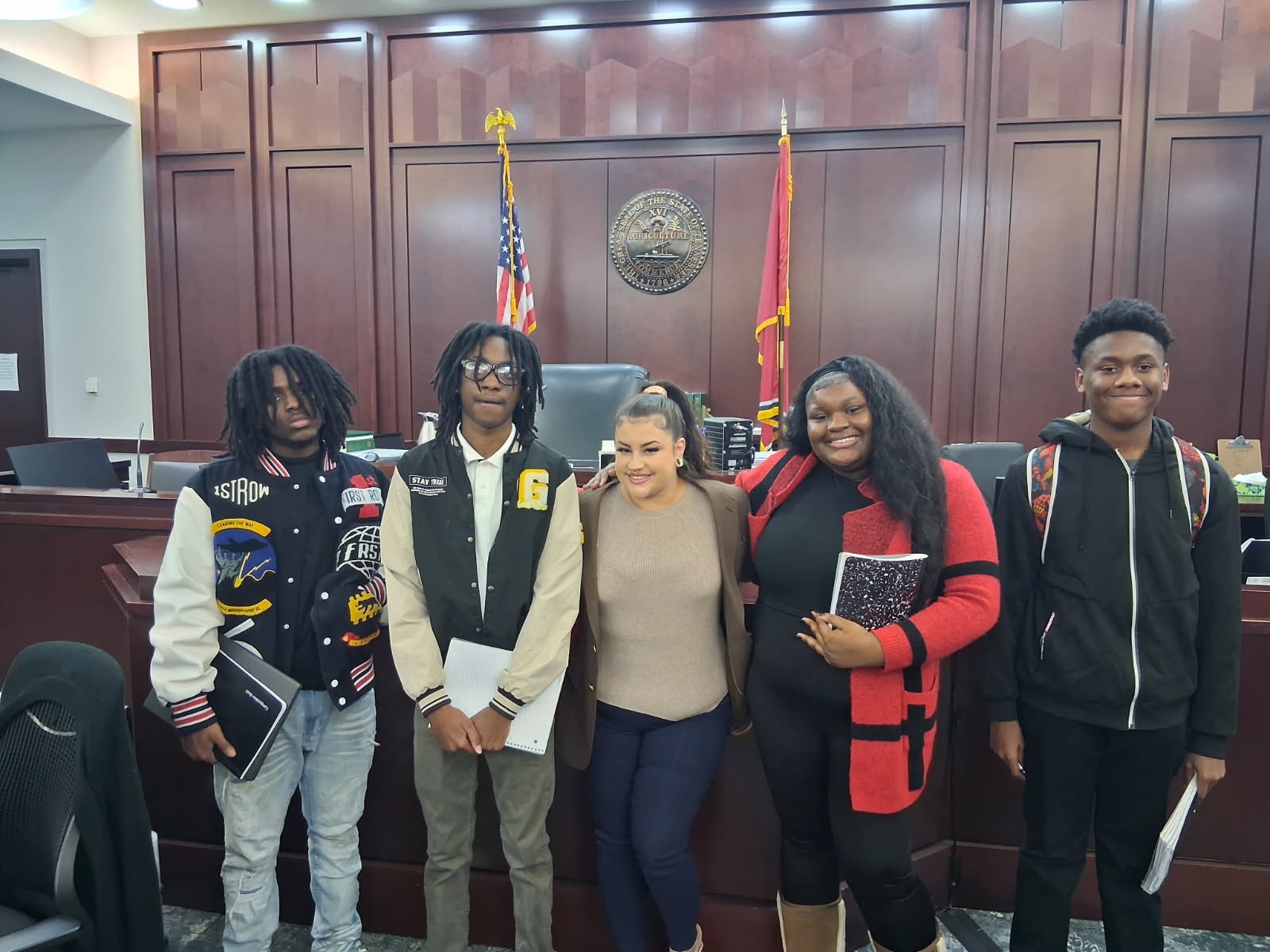
Through our Capitol Scholars Civic Education Initiative, students engage government and democratic institutions as living classrooms.
Through court-based educational experiences, students receive meaningful exposure to Tennessee's justice system and the people responsible for administering it.
Legacy of Justice is a natural extension of that philosophy.
If we teach young people how systems work, we must also be willing to help young people when those systems are responsible for protecting them.
OUR COMMUNITY & CIVIC ECOSYSTEM
The Law & Leadership School believes meaningful youth development requires meaningful community relationships.
Our educational ecosystem includes relationships across government, courts, education, and community leadership.
CAPITOL ADVISORS
Representative John Ray Clemmons
Representative Bob Freeman
Representative Bo Mitchell
Our Capitol Advisors help connect civic education with real-world understanding of Tennessee government, public policy, and public service.
COURTHOUSE ADVISORS
Judge Angelita Dalton-Blackshear
Judge Khadija Babb
Our courthouse-based educational relationships help expose students to the administration of justice, judicial institutions, civic responsibility, and careers within the legal system.
JUVENILE COURT COMMUNITY
The Law & Leadership School has also developed relationships and collaborative educational efforts within the juvenile-court community, including engagement with juvenile-court and clerk stakeholders.
These relationships reinforce an important principle:
No residential youth initiative should operate on an island.
Legacy of Justice is envisioned as a collaborative model connecting:
EDUCATION + CHILD WELFARE + COURTS + FAMILIES + MENTAL HEALTH + COMMUNITY + GOVERNMENT + PHILANTHROPY
Important Disclosure: Advisory, educational, professional, civic, or community relationships should not be interpreted as an endorsement of this fundraising campaign by any individual advisor, judge, legislator, clerk, court employee, governmental entity, or public agency. Formal Legacy of Justice partnerships will be separately established and identified as the initiative develops.
PHASE ONE FUNDING FRAMEWORK
OUR GOAL: $300,000
Phase One funding is expected to support seven major development areas:
FACILITY & PREDEVELOPMENT
Property identification, feasibility, professional assessments, deposits or acquisition-related expenses where appropriate, architectural consultation, engineering, zoning, inspections, and initial facility development.
LICENSING, COMPLIANCE & RISK MANAGEMENT
Professional consultation, licensing preparation, insurance, fire and life-safety requirements, policies and procedures, background-screening infrastructure, regulatory compliance, and accreditation planning where applicable.
RESIDENTIAL INFRASTRUCTURE
Beds, furniture, secure storage, dining and kitchen infrastructure, laundry facilities, residential common areas, recreation resources, safety equipment, technology, and study areas.
EDUCATIONAL INFRASTRUCTURE
Classroom development, computers, curriculum, student workstations, educational technology, books, academic assessments, tutoring resources, and specialized instructional materials.
MENTAL HEALTH & WELLNESS DEVELOPMENT
Program development, therapeutic and wellness spaces, qualified-provider partnerships, assessment infrastructure, and appropriate behavioral-health resources.
WORKFORCE DEVELOPMENT
Recruitment infrastructure, training development, background screening, trauma-responsive training, administrative systems, and startup workforce preparation.
TRANSPORTATION & STARTUP OPERATIONS
Transportation planning, communication systems, food-service preparation, youth supplies, security infrastructure, technology, and other launch-related operational requirements.
TRANSPARENCY ABOUT THE $300,000 GOAL
Phase One represents startup and development capital.
The $300,000 campaign is not intended to suggest that $300,000 alone will purchase, construct, renovate, license, staff, and permanently operate a residential campus serving 50–100 youth.
Building a sustainable program of this scale will require multiple funding sources and development phases.
- Future funding strategies may include:
- Foundation grants
- Government grants where available
- Corporate philanthropy
- Major individual gifts
- Capital campaigns
- Contracted services
- Faith-community partnerships
- Educational partnerships
- Healthcare partnerships
- In-kind contributions
- Community fundraising
- Sustainable operating revenue
As facility opportunities, professional estimates, regulatory requirements, and implementation costs become established, Phase One allocations may be refined accordingly.
We believe responsible fundraising requires being transparent about both the vision and the work required to achieve it.
CORPORATE & COMMUNITY SPONSORSHIP OPPORTUNITIES
Organizations may support Legacy of Justice through general Phase One contributions or targeted sponsorships.
FOUNDING LEGACY PARTNER
$50,000+
Provides transformational support toward the establishment of the Legacy of Justice campus.
Founding Legacy Partners may receive appropriate founding-partner recognition, organizational acknowledgment, impact reporting, campus recognition opportunities where appropriate, and opportunities for continued strategic engagement.
JUSTICE BUILDER
$25,000
Supports major facility, residential, educational, technology, wellness, or infrastructure development.
SAFE HARBOR PARTNER
$10,000
Supports the development of safe, youth-centered residential environments, furnishings, living spaces, safety resources, and residential infrastructure.
EDUCATION PARTNER
$5,000
Supports classroom technology, computers, books, curriculum, academic intervention, tutoring resources, and educational programming.
COMMUNITY PARTNER
$2,500
Supports youth resources, startup supplies, life-skills programming, educational materials, wellness activities, and other identified Phase One needs.
CUSTOM & IN-KIND PARTNERSHIPS
Not every meaningful contribution comes in the form of a check.
Legacy of Justice welcomes conversations regarding in-kind and specialized contributions, including:
- Property or facility support
- Construction services
- Architectural services
- Engineering
- Furniture
- Beds and residential furnishings
- Computers and technology
- Classroom equipment
- Transportation
- Professional services
- Food-service equipment
- Educational materials
- Recreation equipment
- Mental-health and wellness resources
- Workforce training
- Legal and compliance consultation
- Insurance and risk-management support
Organizations interested in sponsoring a specific classroom, residential area, technology initiative, wellness space, transportation need, or other component are invited to discuss a customized partnership.
WHAT $300,000 CAN BEGIN
$300,000 allows us to move beyond conversation.
- It allows properties to be evaluated.
- It allows architects and professionals to begin planning.
- It allows regulatory pathways to be developed.
- It allows residential spaces to be designed.
- It allows classrooms to be planned.
- It allows partnerships to be formalized.
- It allows infrastructure to begin taking shape.
And ultimately, it moves Tennessee closer to having another safe door available when a young person needs somewhere to go.
THESE CHILDREN ARE NOT CASE NUMBERS
Behind every statistic is a young person.
A teenager wondering where they will sleep.
A brother wondering whether he will remain with his sister.
A student worried about changing schools again.
A young person trying to understand why they cannot go home.
A child listening while adults make decisions that will change their life.
And somewhere in that process is a simple question:
"Where am I going?"
Legacy of Justice wants to become one possible answer.
Somewhere safe.
Somewhere stable.
Somewhere educational.
Somewhere healing.
Somewhere that still feels like childhood.
OUR COMMITMENT
- We will not use vulnerable children as political weapons.
- We will not build Legacy of Justice around attacking DCS.
- We will not build it around attacking policymakers.
- We will not pretend that one organization can solve Tennessee's entire child-welfare challenge.
- We will build around children.
- We will pursue appropriate licensing and professional standards.
- We will seek qualified partners.
- We will advocate for adequate resources.
- We will collaborate where collaboration is possible.
- We will demand accountability of ourselves.
- We will respect families, foster parents, caseworkers, courts, service providers, educators, healthcare professionals, public officials, and community organizations that have different responsibilities within the same system.
Above everything else:
WE WILL REMEMBER WHO THIS IS SUPPOSED TO BE ABOUT.
THE CHILD.
-DR. TRACY "TJ" BOYD
[phone redacted]
Organizer