
- C
- c
After barely escaping an ambush from the Taliban, Ali Reza fled to Indonesia, where he was placed in refugee prison.
Yet his love of learning and helping others remained strong. While still in detention, he started a program to lift up his fellow refugees – even as his own choices remained limited.
A person of his gifts deserves a second chance in Canada. We can help.
Name: Ali Reza
Profile: Hazara refugee living in Tanjung-Pinang, Indonesia
Place of origin: Jaghuri, Ghazni, Afghanistan
Risks: Being caught and killed by Taliban if being returned to Afghanistan.
The Opportunity: Private sponsorship to Canada
What’s Needed: $16,500 CAD or $17,200 AUD, the cost of privately sponsoring an adult to Canada. This is money that Ali will live on during his first year in the country.
NOTE: Ali Reza has been officially certified as a refugee by the UNHCR, which means he qualifies for Canada's private sponsorship program. Have you seen the joyous pictures of refugees arriving at the airport, ready to call Canada home? Well, this is how it starts.
His story
Ali Reza is 23 years old, was born on January 1, 1996, into an ordinary family in Jaghuri, Ghazni of Afghanistan. It was a life born in the flame of war, in an area where fear and danger stalked him for many years.
The reason: his family belonged to the Hazara ethnic group, which in Afghanistan made us a target for persecution and brutality. Hazaras are the third minority group and subject to the systematic attempts at ethnic cleansing in Afghanistan.
Despite that, Ali had dreams, and was passionate about learning, reading and writing. His hope was to work hard to achieve a positive future.
“No matter how tough my life goes on and how many challenges I might face, I was committed and believed, that I am going to turn my life around.”
His father was disabled and had a life of bed rest and making ends meet to afford basic life expenses. Despite his love of learning, he had to leave school in order to take his father’s place and work to take care of his parents and rescue his siblings from poverty.
Tragedy strikes
By the age of 18, Ali was doing well for his family. He owned a grocery shop and after 6 months he signed a contract to deliver the groceries to the local police stations and other sub-district government offices.
This is where the trouble started. Over time he was threatened and searched by the Taliban troops who saw the police and government as the enemy. One day he was singled out by the Taliban at a dangerous area located midway from Ghazni province and his hometown. He was labeled a traitor for cooperating with military and the police.
He suspected the danger beforehand and avoided the ambush, but his truck driver, who was transporting the goods between cities and his hometown, was caught and murdered by the Taliban the same day.
Before dying, the driver was forced to disclose his location. The truck full of the grocery supplies was burned, and that day he received a phone call from a Taliban agent after they had killed his driver.
Ali was immersed in fear. He had no choice but to abandon his family and country. Saying farewell to his parents, having no idea of where and how long he would go for, was a like a nightmare.
Leaving Home
After two days he took a truck to Kabul, where he hid in a house in the suburbs, in a state of fear of being caught and further persecuted. He called his father and asked him to sell anything he could to provide him with about $5,000, so he could get out of the country as soon as possible.
After a few days he flew from Kabul to Delhi India, and after three days was sent to Malaysia by plane. From Malaysia he went to Indonesia by boat.
He approached the stormy water at midnight into the dark night, forced by unknown men who were smugglers to enter the water and walk for 100 meters to reach the boat. He was freezing, as they were travelling at a high speed and it was raining heavily that night.
Finally they arrived at the Indonesian shoreline, a place called Pekanbaru. From Pekanbaru they were driven for nearly 60 hours and barely allowed stops to buy food or drink.
Life in Detention
After a few days he arrived in Jakarta Indonesia, Ali registered with the United Nation High Commission for Refugees (UNHCR). He was told to wait at least one and half or two years for his interview, when he would either be accepted under UNHCR rules for asylum seekers – or not.
With nowhere to stay or go, he decided to submit himself to the Immigration Detention Center (IDC). There he lived for more than three and half years in this state of imprisonment. He faced poor medical care, lack of proper food and drinking water, the horrible treatment of security guards, interrupted by demonstrations, hunger strikes and protests for basic human rights and freedoms.
Still Ali never allowed himself to surrender his goal of helping others.
Finding Hope
Having arrived in Indonesia with no English skills, he soon realized that knowing the language was the most important skill for his life and future. He started by finding a blue broken pen, and asking a friend who had some basic English skills for help, he started from ABC... forward.
He immersed himself in learning, and started helping his friends to improve their English skills and speaking confidently alongside his own classes and learning schedules. After two years of working hard he earned first place of public speaking among 250 immigrants and nearly 20 participants, held by the IOM. This honour gave him motivation and inspiration to work even harder than before.
“By the end of 2017 I was running 5 classes, 40 students and 5 days a week.”
Over one and half years he helped nearly 100 immigrants to improve their English language and helping them stay motivated and productive despite living in indefinite limbo.
Liberty in Limbo
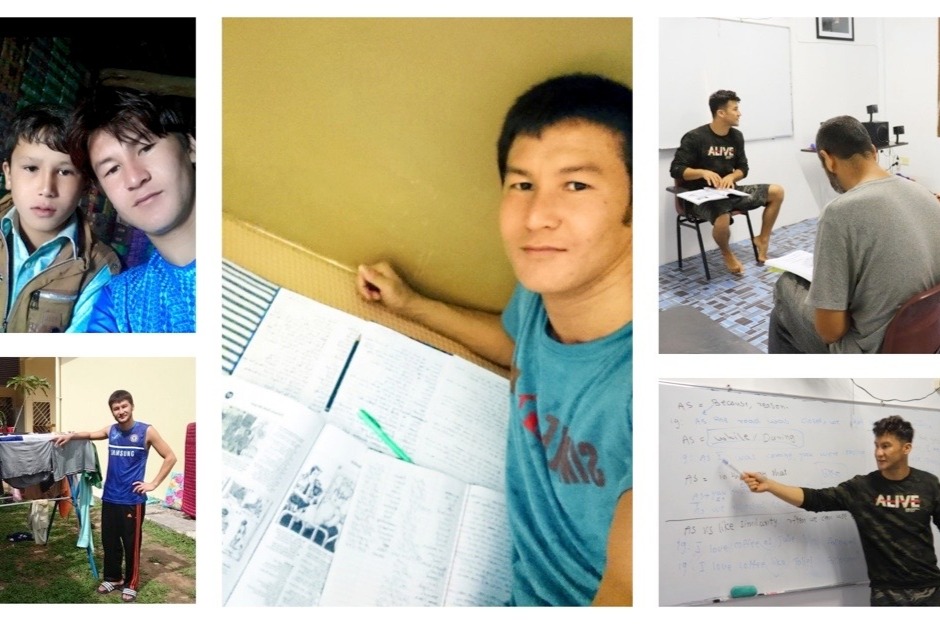
Luckily on early 2018 he was released from detention and was transferred to a community house, in Bintan Riau Island in Indonesia. Since February 2018, he has dedicated himself to learning and helping fellow refugees from different backgrounds – from Somalia, Sudan and Afghanistan – to learn language and other social and occupational skills.
He designed a new and more approachable way to learn language skills, and has attracted 40 refugees into a program of reading books and discussing their ideas. In addition to this work, he has served as a volunteer translator, community representative and speaker, and joined a number of activities hosted by the IOM.
You Can Help!
Ali is a special person. We are sharing his story with you in hope of raising the required funds to sponsor Ali to Canada. His dream is to start again in a country where he can escape discrimination and injustice.
A group of private citizens in Toronto have teamed up to bring Ali to a better life. Before we can submit an application, we need to confirm to the Canadian government that we have funds - $16,500 CAD or $17,200 AUD – placed in a secure account to support Ali’s first 12 months of life in Canada.
The funds raised will go entirely towards Ali for his 1st year of expenses. According to Immigration, Refugees Citizenship Canada the funds must be raised first and held in trust before the sponsorship application can move forward.
The Opportunity
Ali is a hard worker and a genuinely good person, and incredibly motivated to improve his own situation and the lives of others. He would make a wonderful addition to this country.
If you can help, please click on the “Donate” button. Every dollar brings us one step to our goal.
To learn more about Ali, read his profile on the Northern Lights website. You can also reach out to him directly by Facebook or email
Thank you for your support. And help spread the word by sharing this post!
If you'd like to know more about Ali Reza, or become part of the effort to bring him to Canada, feel free to reach out to his friend in Toronto: Stephen Watt. Help a good guy get a second chance!
Yet his love of learning and helping others remained strong. While still in detention, he started a program to lift up his fellow refugees – even as his own choices remained limited.
A person of his gifts deserves a second chance in Canada. We can help.
Name: Ali Reza
Profile: Hazara refugee living in Tanjung-Pinang, Indonesia
Place of origin: Jaghuri, Ghazni, Afghanistan
Risks: Being caught and killed by Taliban if being returned to Afghanistan.
The Opportunity: Private sponsorship to Canada
What’s Needed: $16,500 CAD or $17,200 AUD, the cost of privately sponsoring an adult to Canada. This is money that Ali will live on during his first year in the country.
NOTE: Ali Reza has been officially certified as a refugee by the UNHCR, which means he qualifies for Canada's private sponsorship program. Have you seen the joyous pictures of refugees arriving at the airport, ready to call Canada home? Well, this is how it starts.
His story
Ali Reza is 23 years old, was born on January 1, 1996, into an ordinary family in Jaghuri, Ghazni of Afghanistan. It was a life born in the flame of war, in an area where fear and danger stalked him for many years.
The reason: his family belonged to the Hazara ethnic group, which in Afghanistan made us a target for persecution and brutality. Hazaras are the third minority group and subject to the systematic attempts at ethnic cleansing in Afghanistan.
Despite that, Ali had dreams, and was passionate about learning, reading and writing. His hope was to work hard to achieve a positive future.
“No matter how tough my life goes on and how many challenges I might face, I was committed and believed, that I am going to turn my life around.”
His father was disabled and had a life of bed rest and making ends meet to afford basic life expenses. Despite his love of learning, he had to leave school in order to take his father’s place and work to take care of his parents and rescue his siblings from poverty.
Tragedy strikes
By the age of 18, Ali was doing well for his family. He owned a grocery shop and after 6 months he signed a contract to deliver the groceries to the local police stations and other sub-district government offices.
This is where the trouble started. Over time he was threatened and searched by the Taliban troops who saw the police and government as the enemy. One day he was singled out by the Taliban at a dangerous area located midway from Ghazni province and his hometown. He was labeled a traitor for cooperating with military and the police.
He suspected the danger beforehand and avoided the ambush, but his truck driver, who was transporting the goods between cities and his hometown, was caught and murdered by the Taliban the same day.
Before dying, the driver was forced to disclose his location. The truck full of the grocery supplies was burned, and that day he received a phone call from a Taliban agent after they had killed his driver.
Ali was immersed in fear. He had no choice but to abandon his family and country. Saying farewell to his parents, having no idea of where and how long he would go for, was a like a nightmare.
Leaving Home
After two days he took a truck to Kabul, where he hid in a house in the suburbs, in a state of fear of being caught and further persecuted. He called his father and asked him to sell anything he could to provide him with about $5,000, so he could get out of the country as soon as possible.
After a few days he flew from Kabul to Delhi India, and after three days was sent to Malaysia by plane. From Malaysia he went to Indonesia by boat.
He approached the stormy water at midnight into the dark night, forced by unknown men who were smugglers to enter the water and walk for 100 meters to reach the boat. He was freezing, as they were travelling at a high speed and it was raining heavily that night.
Finally they arrived at the Indonesian shoreline, a place called Pekanbaru. From Pekanbaru they were driven for nearly 60 hours and barely allowed stops to buy food or drink.
Life in Detention
After a few days he arrived in Jakarta Indonesia, Ali registered with the United Nation High Commission for Refugees (UNHCR). He was told to wait at least one and half or two years for his interview, when he would either be accepted under UNHCR rules for asylum seekers – or not.
With nowhere to stay or go, he decided to submit himself to the Immigration Detention Center (IDC). There he lived for more than three and half years in this state of imprisonment. He faced poor medical care, lack of proper food and drinking water, the horrible treatment of security guards, interrupted by demonstrations, hunger strikes and protests for basic human rights and freedoms.
Still Ali never allowed himself to surrender his goal of helping others.
Finding Hope
Having arrived in Indonesia with no English skills, he soon realized that knowing the language was the most important skill for his life and future. He started by finding a blue broken pen, and asking a friend who had some basic English skills for help, he started from ABC... forward.
He immersed himself in learning, and started helping his friends to improve their English skills and speaking confidently alongside his own classes and learning schedules. After two years of working hard he earned first place of public speaking among 250 immigrants and nearly 20 participants, held by the IOM. This honour gave him motivation and inspiration to work even harder than before.
“By the end of 2017 I was running 5 classes, 40 students and 5 days a week.”
Over one and half years he helped nearly 100 immigrants to improve their English language and helping them stay motivated and productive despite living in indefinite limbo.
Liberty in Limbo
Luckily on early 2018 he was released from detention and was transferred to a community house, in Bintan Riau Island in Indonesia. Since February 2018, he has dedicated himself to learning and helping fellow refugees from different backgrounds – from Somalia, Sudan and Afghanistan – to learn language and other social and occupational skills.
He designed a new and more approachable way to learn language skills, and has attracted 40 refugees into a program of reading books and discussing their ideas. In addition to this work, he has served as a volunteer translator, community representative and speaker, and joined a number of activities hosted by the IOM.
You Can Help!
Ali is a special person. We are sharing his story with you in hope of raising the required funds to sponsor Ali to Canada. His dream is to start again in a country where he can escape discrimination and injustice.
A group of private citizens in Toronto have teamed up to bring Ali to a better life. Before we can submit an application, we need to confirm to the Canadian government that we have funds - $16,500 CAD or $17,200 AUD – placed in a secure account to support Ali’s first 12 months of life in Canada.
The funds raised will go entirely towards Ali for his 1st year of expenses. According to Immigration, Refugees Citizenship Canada the funds must be raised first and held in trust before the sponsorship application can move forward.
The Opportunity
Ali is a hard worker and a genuinely good person, and incredibly motivated to improve his own situation and the lives of others. He would make a wonderful addition to this country.
If you can help, please click on the “Donate” button. Every dollar brings us one step to our goal.
To learn more about Ali, read his profile on the Northern Lights website. You can also reach out to him directly by Facebook or email
Thank you for your support. And help spread the word by sharing this post!
If you'd like to know more about Ali Reza, or become part of the effort to bring him to Canada, feel free to reach out to his friend in Toronto: Stephen Watt. Help a good guy get a second chance!
Organizer