- B
- C
- J
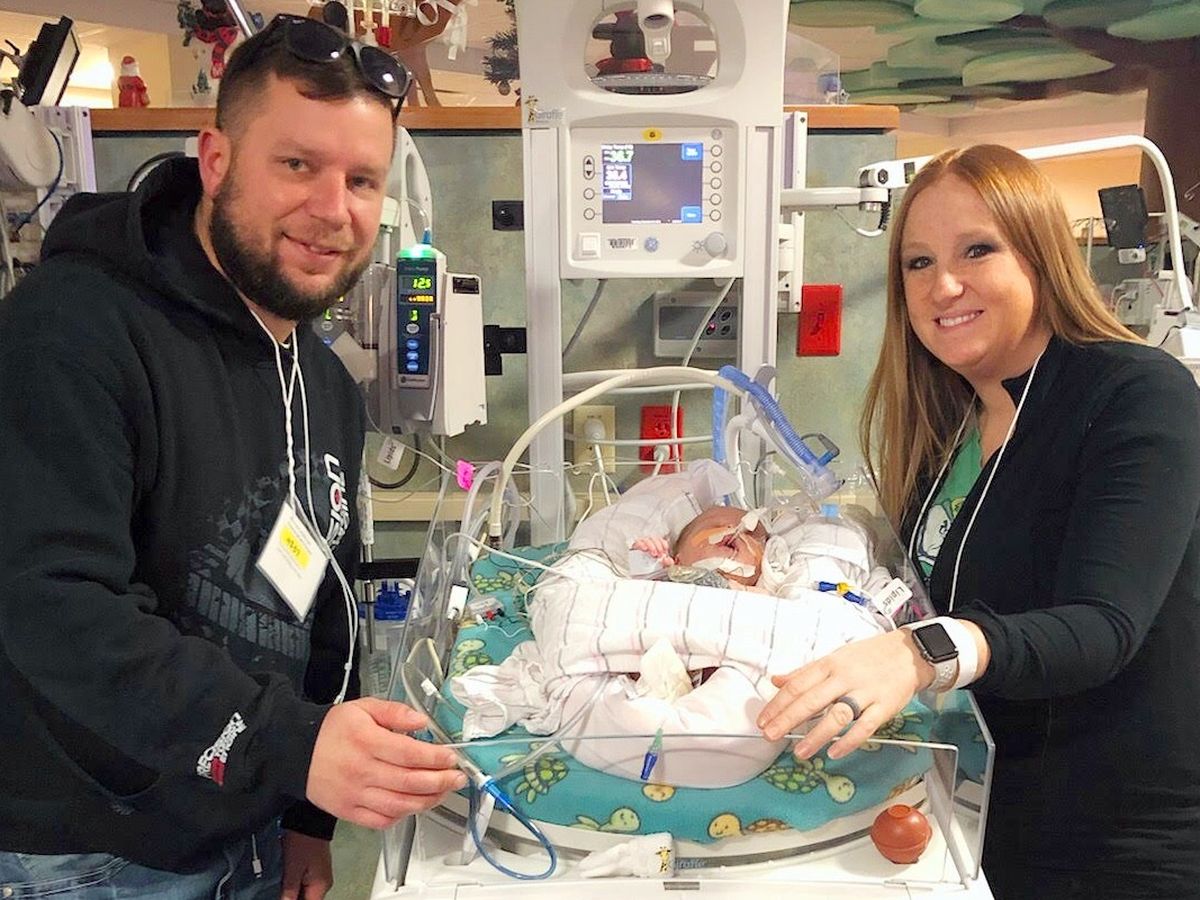
On Thursday, November 29th Jackie and Sean Arch headed to the hospital for a routine labor induction which had been arranged because their son was then 12 days overdue. Jackie’s pregnancy was as uncomplicated as any with all ultrasounds and screenings leading them and the medical professionals to believe that they would be settling in at home with their new baby in a few days’ time.
It was 11:00 Friday night and Jackie had been laboring for 26 hours when she was finally told to begin pushing. Jackie pushed for a total of 4 hours during which the doctors struggled and ultimately failed, to adjust the position of the baby as his head was tilted slightly trying to come down the birth canal. At 3:00 Saturday morning Jackie was rushed into the operating room for an emergency Caesarean delivery and at 3:13 Kyler (Kye) Joseph Arch was born (8 lbs. 4oz and 21.5”). Jackie and Sean’s shared sense of excitement, pride, and relief was fleeting as they watched doctors rush Kyler away rather than bringing him around the curtain to meet his parents.
In the fleeting moments following the delivery every test, every ultrasound, and every screening which had indicated a perfectly healthy baby boy would be proven wrong. Sean and Jackie were prepared for all the emotions one feels when the doctor lays the seconds-old infant on Mommy’s chest or the baby wraps his fingers around Daddy’s for the first time. What they endured instead is unfathomable.
Within hours of being delivered Kye was being taken to St. Vincent Hospital in Indianapolis where doctors will spend up to three months correcting the following complications:
- He was born with omphalocele, a birth defect in which an infant's intestine or other abdominal organs are outside of the body because of a hole in the belly button (navel) area. The intestines are covered only by a thin layer of tissue and can be easily seen. As the baby develops during weeks six through ten of pregnancy, the intestines get longer and push out from the belly into the umbilical cord. By the eleventh week of pregnancy, the intestines normally go back into the belly. If this does not happen, an omphalocele occurs. The omphalocele can be small, with only some of the intestines outside of the belly, or it can be large, with many organs outside of the belly. (1) So as far as Kye they are not exactly sure what organs are in his omphalocele and they don’t want to open it just yet. He has a wound vac on his omphalocele which is pressurized in hopes that it’ll be able to shrink or pressurize everything to go back inside. At which point the skin will start to grow over it without actually having surgery.
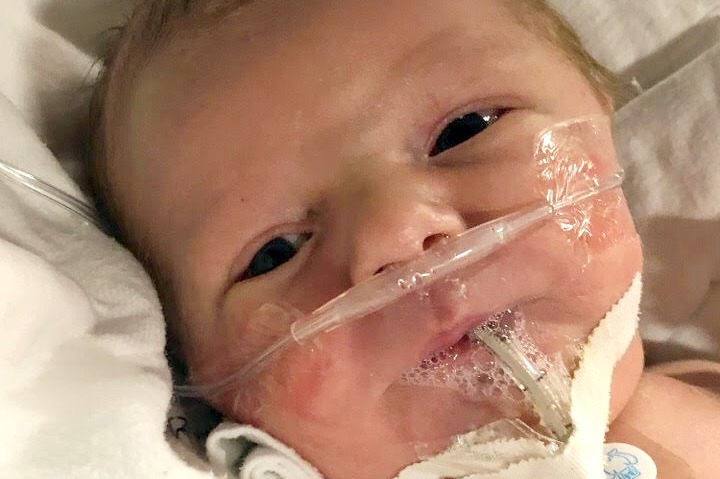
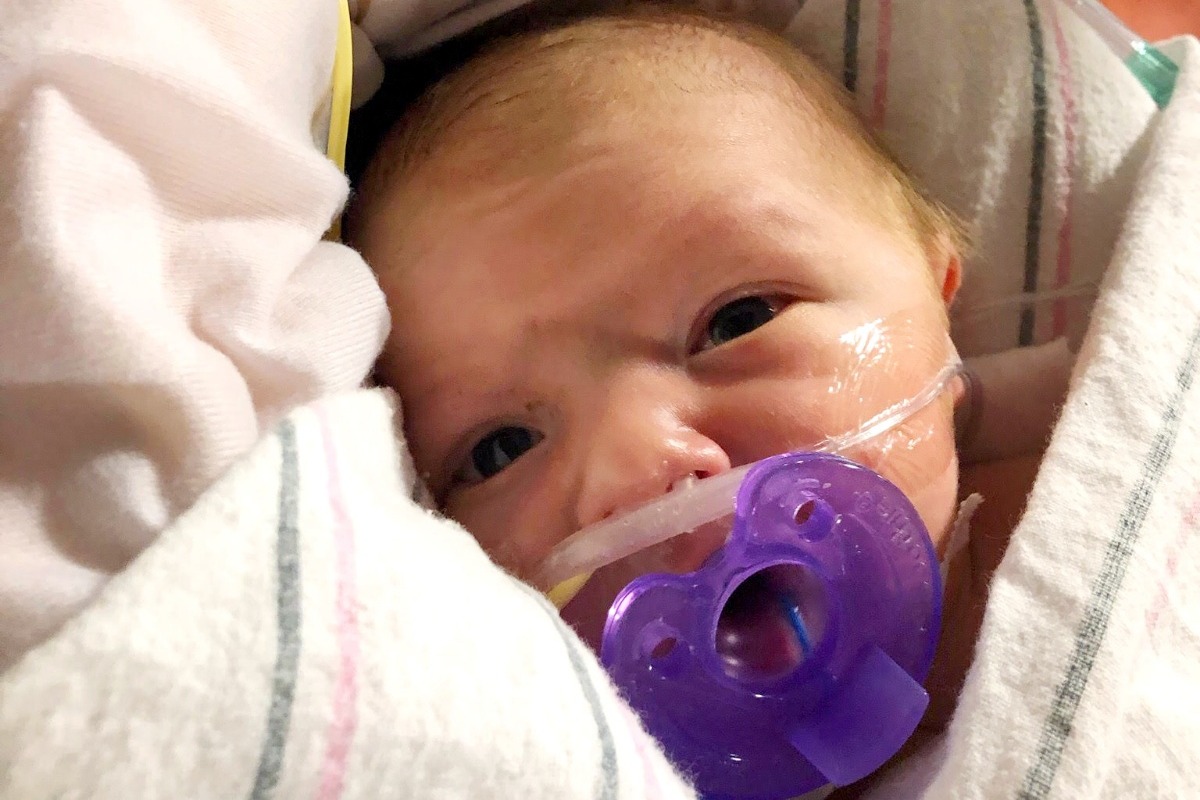
- He has a diaphragmic hernia which is an abnormal opening in the diaphragm. Because of this hernia, his stomach has moved up into the chest near the lungs. When his stomach is full it puts pressure on his lungs so he will need to be on a breathing and feeding tube until surgery to close the hole in his diaphragm.
- He has a small hole in his heart and should close with age and the blood flow is in the opposite direction. Meaning one of his little valves doesn’t close properly and blood leaks backward instead of moving the proper one-way flow. His heart is strong and more than likely he will not need surgery.
- Since everything in his little body has shifted around, he has also developed dextrocardia. Where his heart points toward the right side of the chest instead of the left. They say surgery won’t be needed to fix this.
The purpose of this campaign is to help Jackie and Sean with the long road they have ahead. Contributions made through this campaign will support the family by helping to cover their growing list of out of pocket medical expenses as well as the costs of the special care Kye will need once they bring him home. Jackie will be staying in Indianapolis with Kye until that day while Sean travels back and forth between Indianapolis and South Bend. So any contributions will also ease the burden of additional travel and living expenses.
As parents, Sean and Jackie have already shown that they’re willing to do anything and everything for their child.
As friends, we can make their sacrifices less burdensome by offering a helping hand. #KYESTRONG
(1) https://www.cdc.gov/ncbddd/birthdefects/omphalocele.html
It was 11:00 Friday night and Jackie had been laboring for 26 hours when she was finally told to begin pushing. Jackie pushed for a total of 4 hours during which the doctors struggled and ultimately failed, to adjust the position of the baby as his head was tilted slightly trying to come down the birth canal. At 3:00 Saturday morning Jackie was rushed into the operating room for an emergency Caesarean delivery and at 3:13 Kyler (Kye) Joseph Arch was born (8 lbs. 4oz and 21.5”). Jackie and Sean’s shared sense of excitement, pride, and relief was fleeting as they watched doctors rush Kyler away rather than bringing him around the curtain to meet his parents.
In the fleeting moments following the delivery every test, every ultrasound, and every screening which had indicated a perfectly healthy baby boy would be proven wrong. Sean and Jackie were prepared for all the emotions one feels when the doctor lays the seconds-old infant on Mommy’s chest or the baby wraps his fingers around Daddy’s for the first time. What they endured instead is unfathomable.
Within hours of being delivered Kye was being taken to St. Vincent Hospital in Indianapolis where doctors will spend up to three months correcting the following complications:
- He was born with omphalocele, a birth defect in which an infant's intestine or other abdominal organs are outside of the body because of a hole in the belly button (navel) area. The intestines are covered only by a thin layer of tissue and can be easily seen. As the baby develops during weeks six through ten of pregnancy, the intestines get longer and push out from the belly into the umbilical cord. By the eleventh week of pregnancy, the intestines normally go back into the belly. If this does not happen, an omphalocele occurs. The omphalocele can be small, with only some of the intestines outside of the belly, or it can be large, with many organs outside of the belly. (1) So as far as Kye they are not exactly sure what organs are in his omphalocele and they don’t want to open it just yet. He has a wound vac on his omphalocele which is pressurized in hopes that it’ll be able to shrink or pressurize everything to go back inside. At which point the skin will start to grow over it without actually having surgery.
- He has a diaphragmic hernia which is an abnormal opening in the diaphragm. Because of this hernia, his stomach has moved up into the chest near the lungs. When his stomach is full it puts pressure on his lungs so he will need to be on a breathing and feeding tube until surgery to close the hole in his diaphragm.
- He has a small hole in his heart and should close with age and the blood flow is in the opposite direction. Meaning one of his little valves doesn’t close properly and blood leaks backward instead of moving the proper one-way flow. His heart is strong and more than likely he will not need surgery.
- Since everything in his little body has shifted around, he has also developed dextrocardia. Where his heart points toward the right side of the chest instead of the left. They say surgery won’t be needed to fix this.
The purpose of this campaign is to help Jackie and Sean with the long road they have ahead. Contributions made through this campaign will support the family by helping to cover their growing list of out of pocket medical expenses as well as the costs of the special care Kye will need once they bring him home. Jackie will be staying in Indianapolis with Kye until that day while Sean travels back and forth between Indianapolis and South Bend. So any contributions will also ease the burden of additional travel and living expenses.
As parents, Sean and Jackie have already shown that they’re willing to do anything and everything for their child.
As friends, we can make their sacrifices less burdensome by offering a helping hand. #KYESTRONG
(1) https://www.cdc.gov/ncbddd/birthdefects/omphalocele.html