Support Mental Health Resources Nationwide
0% complete
$40 raised of
2 donations
More Good Days, Together
Look around at the adolescents surrounding you sometime as you’re going about your day. Consider what you think you may know or even remember about being that age. For some of you, that time is a distant memory, and for some of you, maybe that wasn’t that long ago. Think about the struggles you faced, the support you had, or didn’t, and the people you knew who were fighting invisible battles.
Think about the friends you knew who were in dangerous situations with no way to get out, or were struggling with addiction or depression, or just needed someone to listen. Now think about how access to the right support systems might have helped or even saved a life.
Today that need is even greater than ever. Children in the 8-10 age group report the highest rates of frequent suicidal ideation (62%), followed by ages 11-13 (57%), according to depression screens administered by Mental Health America in 2025 (MHA, n.d.). Our tweens and teens today are a part of an increasingly digitally connected community, and while digital platforms offer instant connection, they often amplify social comparison and cyberbullying, leading to higher rates of hidden anxiety and depression among youth. MHA is committed to meeting youth where they are to provide them with not only access to free mental health screenings, but also local resources for next steps, as well as general information on mental health they can use to advocate for themselves and others.
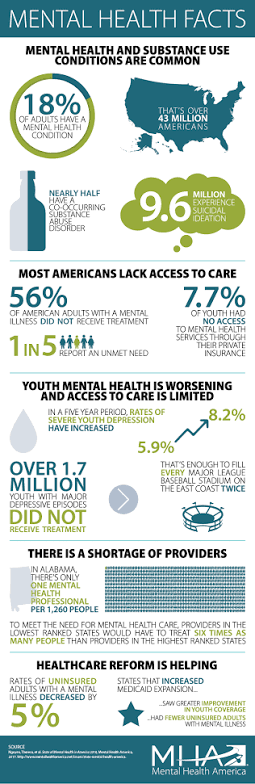
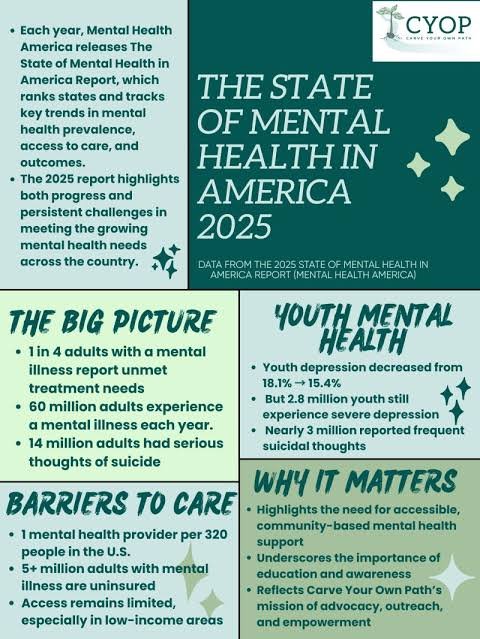
Among other demographics of Americans, many screeners reported lack of access to - or insurance coverage for - mental health care. See the graphics in the header for just a snapshot, but the full report can be found here: https://mhanational.org/the-state-of-mental-health-in-america/
Why Mental Health America
Our group of University of North Texas students has chosen to raise money for Mental Health America based on the connection mental health has to so many of the other systemic issues our country is dealing with today. Everyone has been touched in some way by mental health, whether it be our own, or that of a friend or loved one. We believe that mental health education starts early and is a lifelong learning process. Any money raised for MHA can be used toward advocating for improved access to mental health care, raising awareness and reducing mental health stigma, supporting public education programs, or even covering the cost of free online mental health screenings.
Their Origins and their Work Today
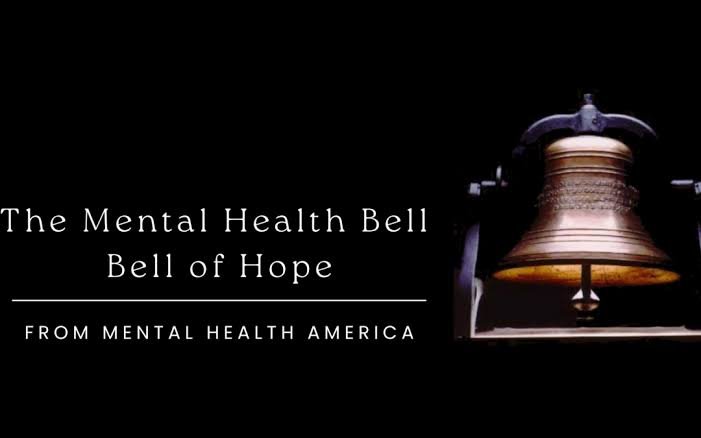
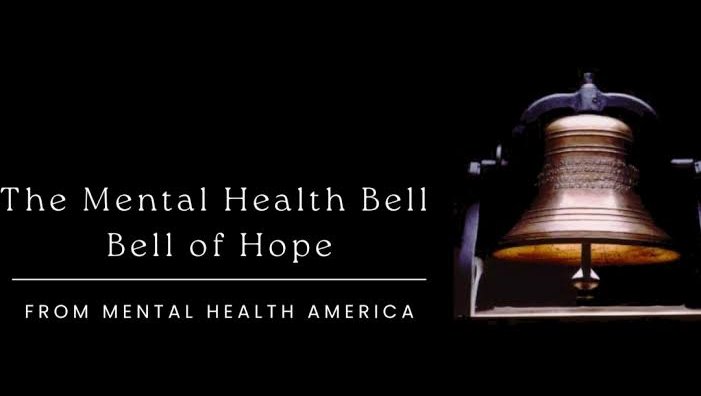
Mental Health America was established in 1909 by Clifford Beers, who, having been in institutions throughout his life, followed a call to reform the state of mental health in America. A few decades later, that manifested itself into physical form when MHA issued their own call to asylums to turn over the chains and shackles previously used on patients in their care. Once melted down they were made into the Mental Health Bell of Hope, seen in this photo, a powerful visual reminder of those chains of stigma and discrimination, serving as a powerful reminder of how civic engagement can actively dismantle social stigma and discrimination.
Watch a video about the Bell of Hope: https://youtu.be/ZpjcxKEs5FI?si=qvCwjArnFkBkQVvA
Today, Mental Health America works on many fronts to battle that same stigma and discrimination, despite our increasing knowledge, data, and understanding of mental health conditions and issues among humans.
Their network of more than 130 affiliates throughout the United States reaches across states to work at national and local levels, with efforts in public education and policy, research, advocacy, and direct service, all based on the work of those with lived experience. Their work centers around these areas of mental health, with an emphasis on prevention, access, and equity.
Public Education and Engagement
Educational Resources, Campaigns, Conferences, Workplace Wellness Programs, Clinical Trial Resources
Screening, Research, and Innovation
Mental Health Screenings, Mental Health Mapping, Research
Advocacy and Public Policy
Regional Policy Council, Young Leaders Programs
Direct Service
Affiliate Programs
When you’re looking at those adolescents around you, think of the unseen struggle that could be there, hiding behind each one of their faces, each smile, laugh or set of eyes. Then ask yourself: how far would you go to help the child you once were? That same compassion has the power to change someone else's story.
**988 Lifeline**
24/7 free, confidential mental health hotline that connects individuals in need of support with counselors across the United States and its territories. People do not have to be suicidal to call. Reasons to call include: substance use disorder, economic worries, relationships, culture and identity, illness, intimate partner violence, depression, mental and physical illness, and loneliness. Text or Call 988.
Helpful Links
This link will take you to a Power Bi dashboard we have created that summarizes key data we have researched throughout our campaign:
Mental Health America: https://mhanational.org/
Free confidential mental health screening: https://mhascreening.org/
Mental Health Learning Hub: https://mhanational.org/mental-health-learning-hub/
Workplace Wellness: https://mhanational.org/workplace/
Crisis Services: https://mhanational.org/crisis-services/
Get Involved: https://mhanational.org/get-involved/
Sources
What We Do. Mental Health America. (n.d.). https://mhanational.org/what-we-do/
About Mental Health America | Mental Health America. Mental Health America. (n.d.-a). https://mhanational.org/about-mha/
Lessons from MHA screening | Mental Health America. Mental Health America. (n.d.-b). https://mhanational.org/lessons-from-mha-screening-2025/
Co-organizers4

Mental Health America
Beneficiary