- E
- A
- K
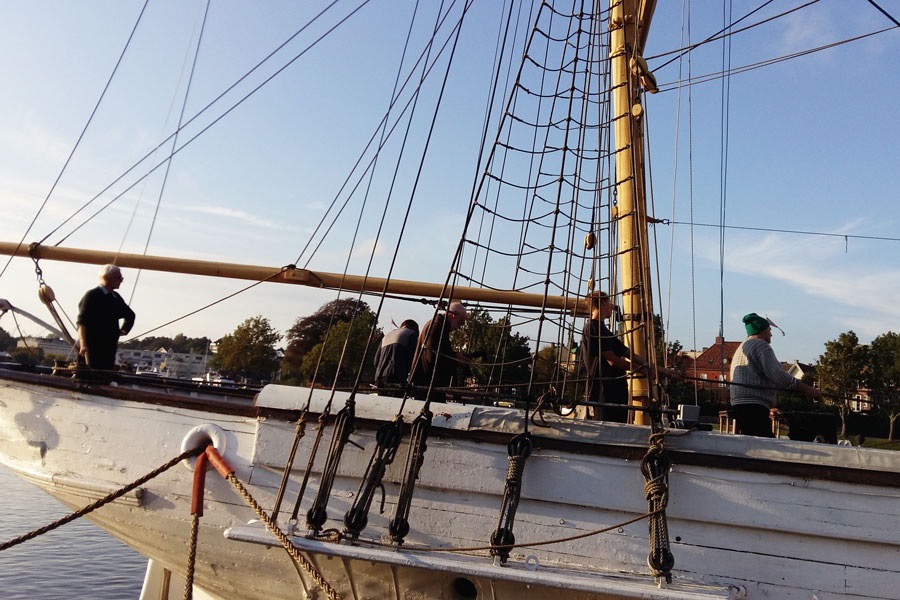 Voluntary work on Najaden
The small fully rigged ship Najaden is owned by a voluntary association with a team of enthusiasts. We works endless hours in our spare time with one common goal; to see Najden set sail in a Tall Ship Race.
RESTORATION OF THE FULL RIGGER «NAJADEN»
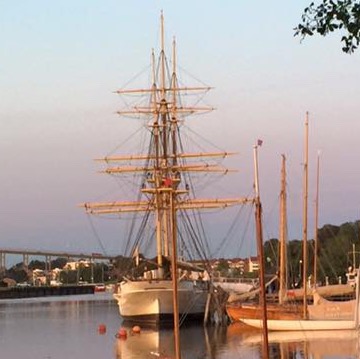
Najaden´s homeport is Isegran, a small island in the river Glomma, in the heart of the city of Fredrikstad In Norway. The island Isegran is a living coastal culture park and a center for the dissemination of traditions, history and experiences. Boats are restored in the same buildings they were once built in, and Isegran's unique history is continued in a green oasis at the intersection of the city and river. Isegran is also a museum port with a beautiful sight of traditional boats along the banks, most in private ownership. In the museum's maritime exhibition in the magazine you can follow the restoration of IOD (International One Design), designed in 1936 by regulator boat designers.
HISTORY
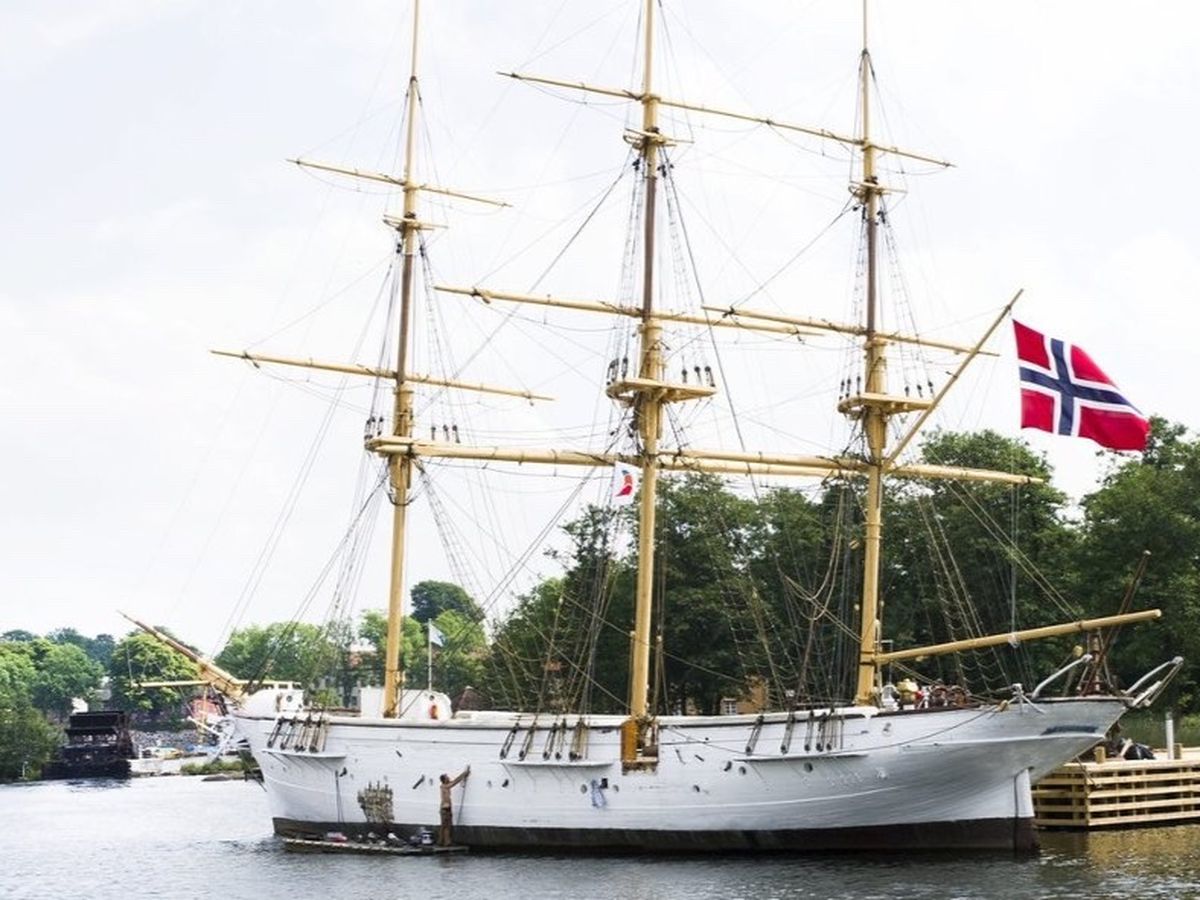
Najaden was built as a full rig in 1897 and taken out of service in 1938. The rig was unchanged throughout this period. It's one of the smallest full rigged ships in the world. In 1897, sailing ship technology was at its height, but the Najaden was built with an old-fashioned rig that needed greater manning and knowledge from an earlier era.
The starting point for the rig was frigates from the Swedish Navy from the early 1800s. Sailing ship technology in the second half of the 19th century was driven by improvements in materials, especially steel, and competition with steamships. The ships got bigger and bigger and the crew smaller and smaller. As an example, the mowing ship "Lightning" from 1856 sailed with a crew of 100 and a cargo capacity of 1500 tons. "Potosi" from 1895 had a crew of 40 and could last 6400 tons. Staffing was not a problem on a school ship and the complicated rig provided many opportunities for a more pedagogical approach to sailing. Najaden is one of the smallest full rigs built. The sailing area was divided into many relatively small sails that could be handled by 15-year-old boys under expert supervision and taking into account the safety requirements of the time. Najaden had a crew of 126 divided into 100 sailors and a professional crew of 26.
The rig on Najaden differs from the other Norwegian school ships in some important respects. The sails are not divided into an upper and lower sails that can be handled separately. Instead, the crew must climb out on the pipes and tear the sail to reduce the area in severe weather. Najaden had a set of lightweight sails that were set from deck in light winds. These consisted of 10 reading sails, which were placed on booms outside the usual raw sails, and barge sails which were hoisted from the deck up to the mast top. Pictures of the dismantling of Jarramas and Najaden from the early 1940s show the sail sails mounted, but they are removed in pictures from 1936. The last commercial ship with a read sail was built in the late 1860s and the knowledge about the use of these sails was disappearing already when the Najad was built.
In 1945, the Najaden was restored as a museum vessel and the rig that was set up was adapted to the ship's new role as a non-sailing vessel. The rig lacked sails and a running rig apart from fireplaces, top slopes and falls to the pipes. Because the ship was not to sail, some shortcuts were taken to rebuild the rig. For example, it is not possible to take down the mers and bram rods without the help of a mobile crane because pulleys and attachment points are missing
This simplified rig was continued during all subsequent restorations. There is little documentation of what was done on the rig in the period 1945 to 2014. The submast was replaced in 1990 and the standing rig in 2014.
GENERAL CONDITION
The rig for Najaden is characterized by a lack of maintenance over a long period of time. Since the vessel's arrival in Fredrikstad, the sub - pipes, the jib bar, the jib bar and the splitter boom have been dismantled for maintenance. The roundwoods have been painted and oiled, and all associated rigs have been refurbished. Fokkeråen had a serious rot damage and a new one is under construction.
Lack of maintenance has so far mostly affected paint and varnish, but it is likely that the wood has begun to be damaged in exposed areas. Acrylic paint has been used on all painted surfaces and Chinese heavy wood oil on the oiled surfaces.
The standing and running rig was replaced in 2014 and is still in good condition, but in need of surface treatment on wire and cladding.
The cross mast has a joint at the top which is held in place with steel fittings and is not glued. Many of the original forged fittings are retained, but not all are in good enough condition to be used for sailing.
THE RESTORATION PROCESS
The shortcomings of the rig in order to put the Najaden in navigable condition are so great that it is necessary to dismantle the entire rig and obtain an overview of necessary repairs and defects. The pier where Najaden is located is inaccessible to mobile cranes and the ship must move about 200m to the quay at the yard. All rigs are lifted ashore with a crane for dismantling and documentation before it is moved under a roof.
DOCUMENTATION AND SOURCE MATERIAL:
A basic search of the archives of the Karlskrona Marine Museum and the War Archive in Stockholm is assumed, but only original drawings for the rig have been found. These are a sail drawing and a drawing showing the dimensions of the roundwood. It is necessary to use different sources to recreate a complete picture of the rig. Najaden's sister ship, "Jarramas", is being restored at the Karlskrona Marine Museum as a museum vessel. The rig is mounted but, like the Najaden, many parts are missing for sail control. Good contacts have been established with the rigs in Karlskrona who were responsible for rebuilding the rig for Jarramas and it is natural to use their experiences and knowledge.
USE OF FUNDING
The funds will be used only for restoration of Najaden. The ship benefits from a great amount of voluntary work, but the main and most important work that Najaden needs must be performed by professionals.
NAJADEN AS A CULTURAL ARENA
Najaden can be booked as a cultural event arena, and both upper and lower deck can be used for the purpose. The income from booking goes straight back to restoration. In the summer the ship is open for guided tours. Najaden is also used for free events for kids, with focus on seamanship and environment.
We sincerely hope to see Najaden set sail in 2032, and participate in The Tall Ship Races, where she truly belongs.
https://najaden.no