- C
- M

THIS FUNDRAISING HAS ENDED.
While necessary funding for the February 2026 diving mission has been secured, Kizamu Kai is warmly accepting further donations to their account: https://www.chouseitankou.com/%E3%83%9B%E3%83%BC%E3%83%A0-home/%E6%94%AF%E6%8F%B4%E3%81%AE%E6%96%B9%E6%B3%95/
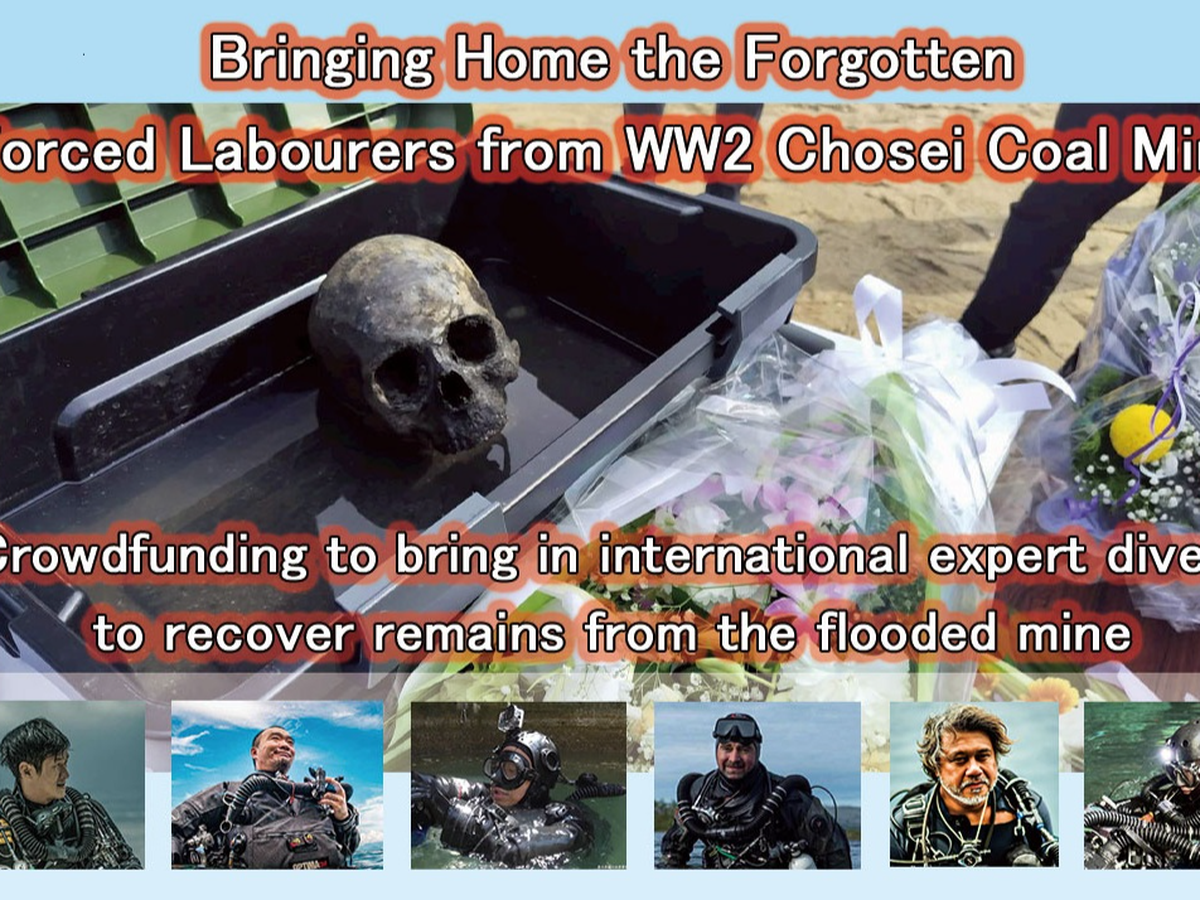
On 3 February 1942, an undersea coal mine in Japan flooded, killing 183 workers. Most were Korean forced labourers. Their bodies remain entombed in the dark tunnels beneath the sea.
For over 30 years, Japanese activists have fought to memorialise and recover them. The Japanese government, which created the wartime forced labour system, has not provided support.
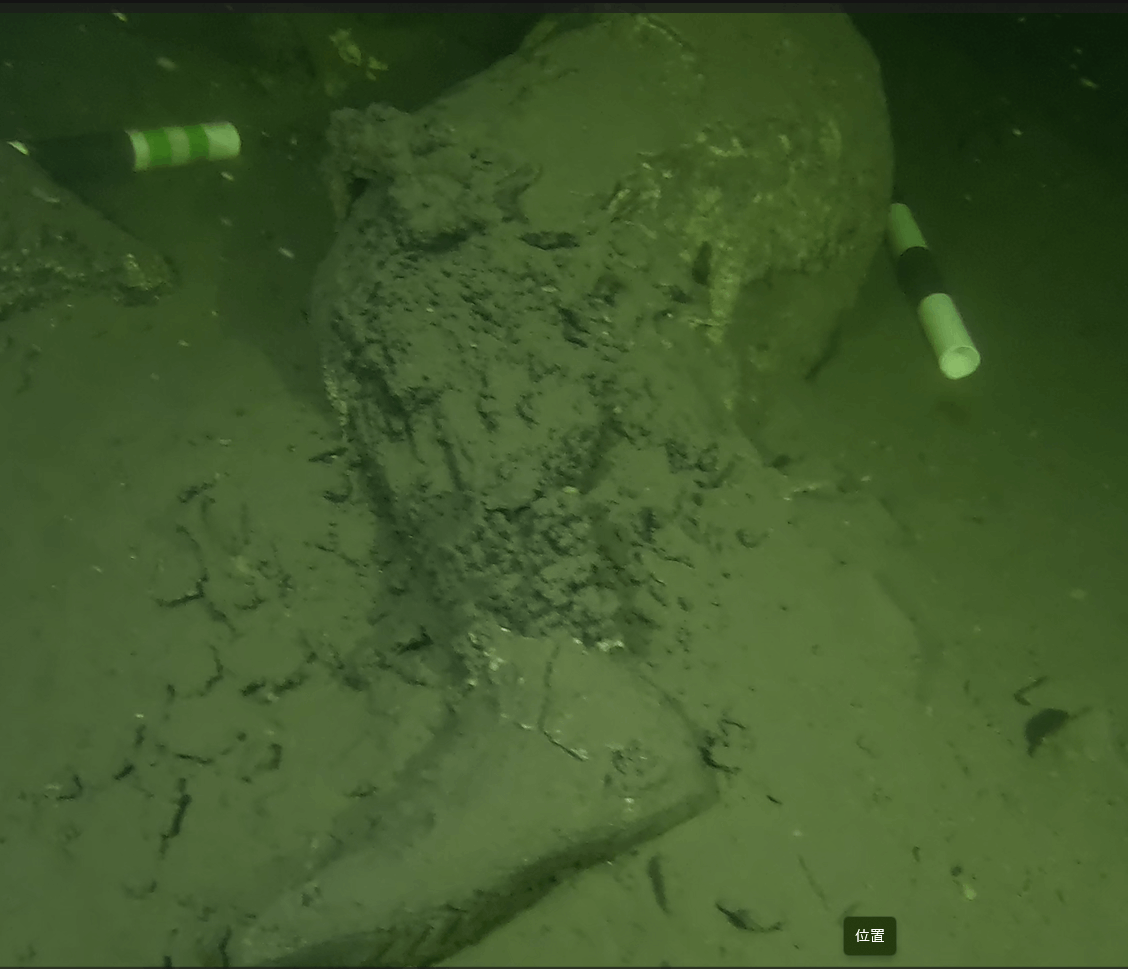
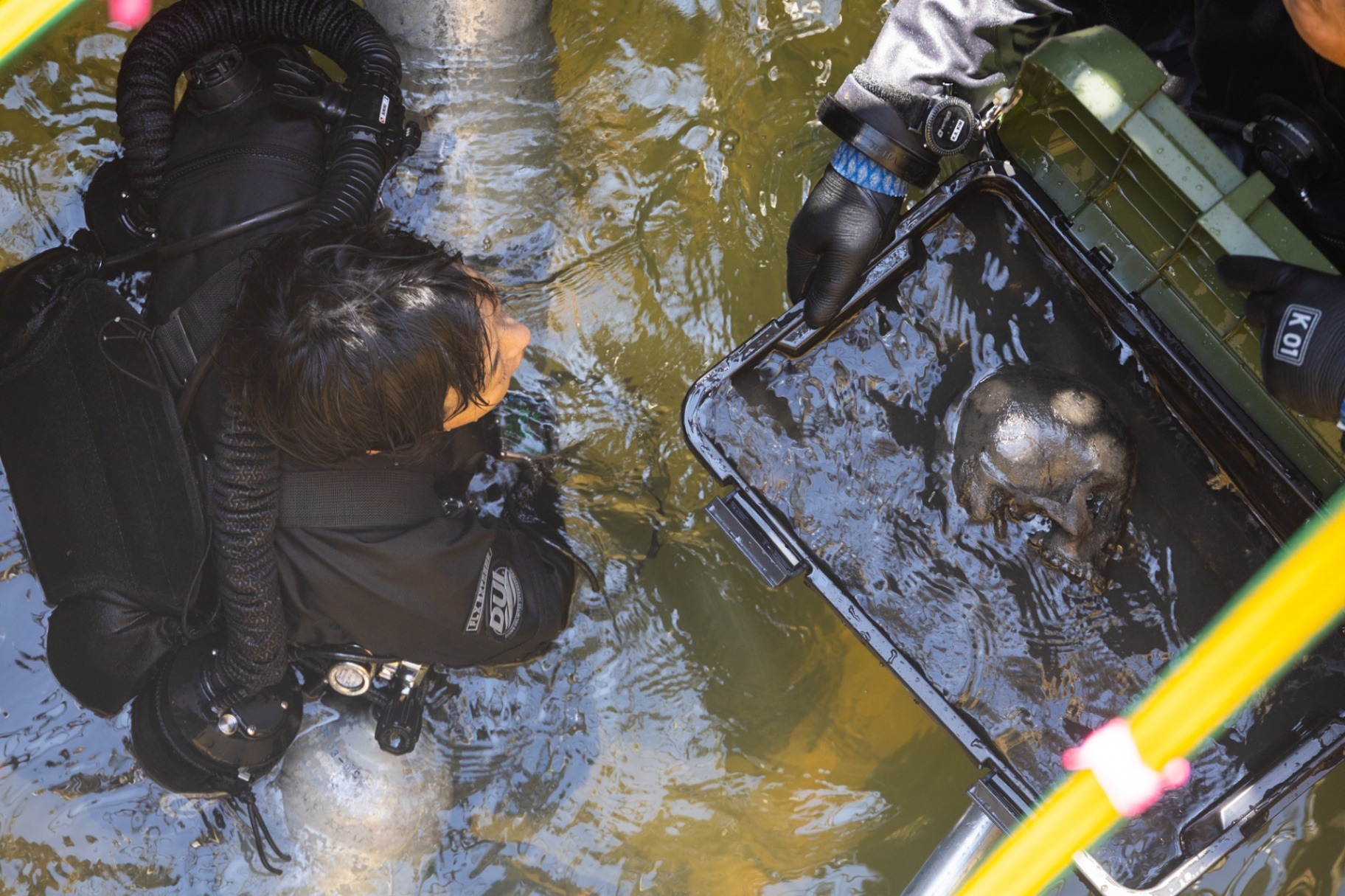
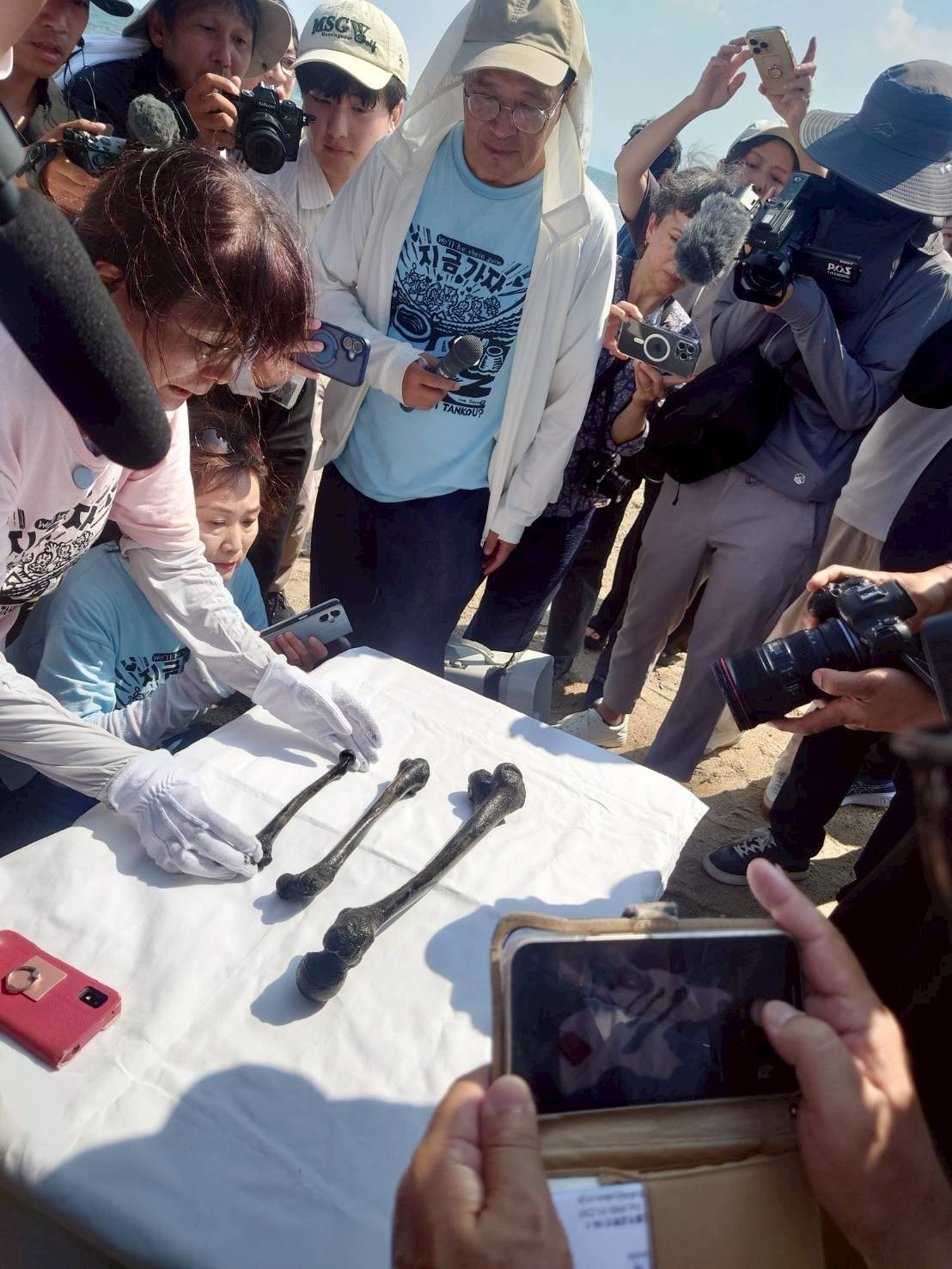
In August 2025, activists succeeded where officials claimed it could not be done: expert divers recovered the first remains of several forced labourers from the flooded mine. Remains from at least four individuals were discovered. Yet government support has not been forthcoming, with officials citing safety concerns despite not having conducted safety assessments.
In February 2026, an international team of expert divers will spend two weeks attempting to recover the remaining victims. They need our support.
A total of 27 million Japanese Yen (£135,000 / €155,000 / $182,000 USD) is needed, with the majority expected to be raised domestically in Japan, as was the case with previous smaller-scale diving missions.
The Mission
At least seven international expert divers from Finland, Thailand, Indonesia, and Taiwan will descend into the flooded mine in addition to the Japanese, including Mikko Paasi (Finland), who participated in the 2018 Thai cave rescue
The mission is led by Kizamu Kai (Association for Commemorating the Chōsei Coal Mine Flooding Disaster), a Japanese grassroots group established in 1991 that has continuously worked with bereaved Korean families to memorialise and recover the victims.
Your Impact
100% of funds raised will be transferred directly to Kizamu Kai to cover removal of underwater obstacles blocking the mine tunnel, travel costs for the divers, safety equipment, diving gear, and technical equipment for the February 2026 mission. During this two-week mission, the discovered remains of the four or more individuals will be collected and the divers will proceed deeper into the mines to find and potentially recover remaining victims.
The South Korean government and Kizamu Kai have already collected DNA samples from families of about 80 victims, making identification possible once remains are recovered.
Why This Matters
An estimated 800,000 Koreans were forced to work in brutal conditions in Japan from 1939 to 1945 as colonial subjects. The Chōsei coal mine, located in undersea tunnels near Ube City in Yamaguchi Prefecture, had about 1,000 workers in 1942 of which the majority were Korean forced labourers. Because of this, it was often called the “Korea mine.” Workers had to be recruited from other prefectures and from Korea because locals understood the grave dangers: the tunnels ran perilously close to the seabed, violating safety standards. The government bears heavy responsibility for approving the deployment of labourers to this mine despite the illegal proximity of its tunnels to the seabed.
On the morning of 3 February 1942, the thin ceiling collapsed. Within hours, 136 Korean and 47 Japanese labourers drowned. They had been working around the clock to meet wartime coal demands. The flooded mine became their mass grave.
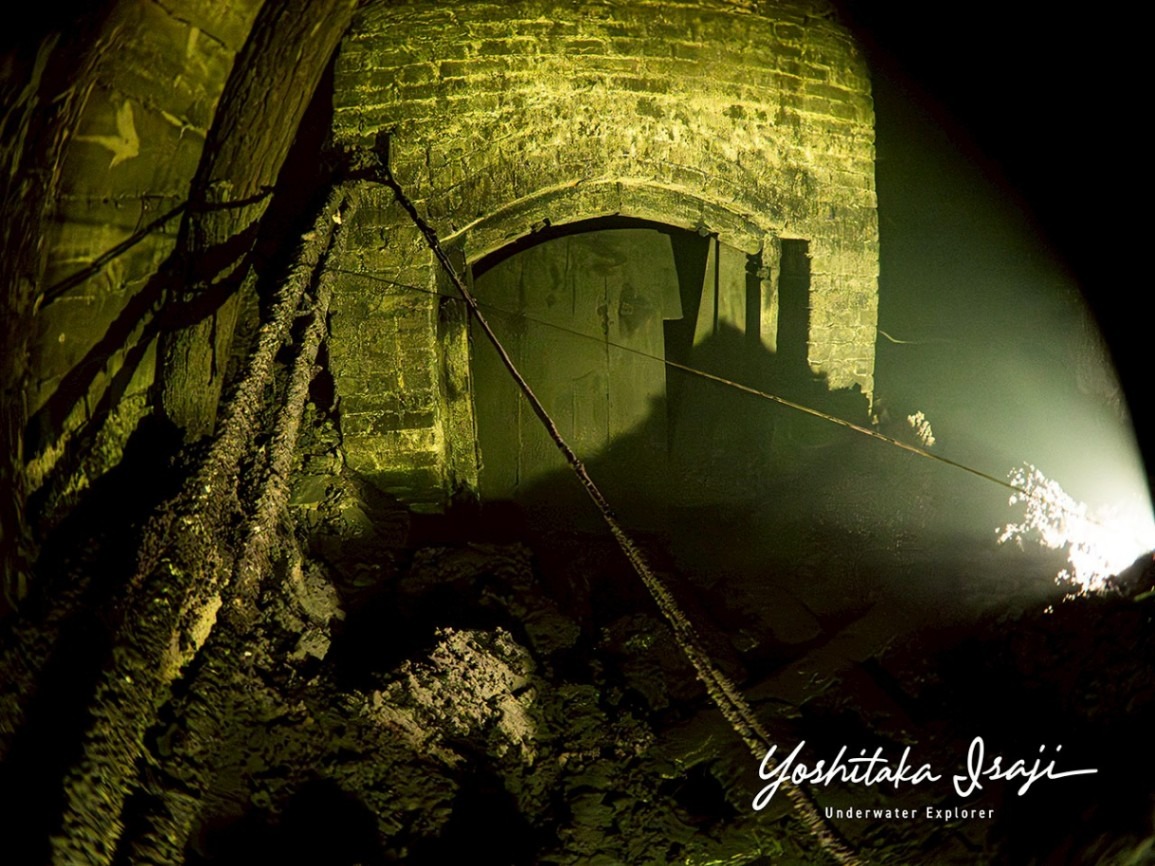
For 83 years, the Japanese government has claimed that recovery is too dangerous because they don't know where to search. However, Japanese expert diver Yoshitaka Isaji proved otherwise. Working with two Korean divers over the course of six diving surveys beginning in July 2024, they successfully recovered the first remains on August 25-26, 2025: a skull and three bones including a femur. By carefully removing dangerous debris from the ventilation pier standing in the sea and creating a new entry point, they moved closer to their goal with each dive.
On 18 September 2025, Isaji met with Ministry of Labour representatives, addressing their concerns about “unidentified dangers”. He proposed starting with borehole surveys and underwater drones to properly assess risks. The government did not indicate any intentions to pursue these suggestions.
The Broader Impact
Recovering these remains will:
• Give families closure after more than eight decades without graves
• Challenge the silence surrounding colonial forced labour in Japan
• Raise awareness of marginalised colonial history and support decolonisation efforts
• Create precedent for recovering other forgotten victims across Japan
• Contribute to international movements demanding accountability for colonial exploitation
About This Campaign
Dr Nikolai Johnsen started this GoFundMe crowdfunding to help raise awareness and collect donations for Kizamu Kai. He is a British Academy Postdoctoral Fellow at SOAS University of London, conducting a three-year research project on Korean and Japanese citizens’ groups and East Asian colonial memory, and he is in close contact with Kizamu Kai through his ethnographic fieldwork.
As GoFundMe does not support direct transactions to Japan, all donations will be transferred by Johnsen in full to Kizamu Kai before the February 2026 diving mission.
By contributing, you are supporting grassroots efforts to acknowledge the victims of imperialism and urge those in power to recognise the legacies of their imperial predecessors.
English language news article from The Mainichi, 4 September 2025: https://mainichi.jp/english/articles/20250905/p2a/00m/0op/013000c
Detailed account from divers:
Japanese Crowdfunding site by Kizamu Kai:
Organizer
Nikolai Johnsen
Organizer