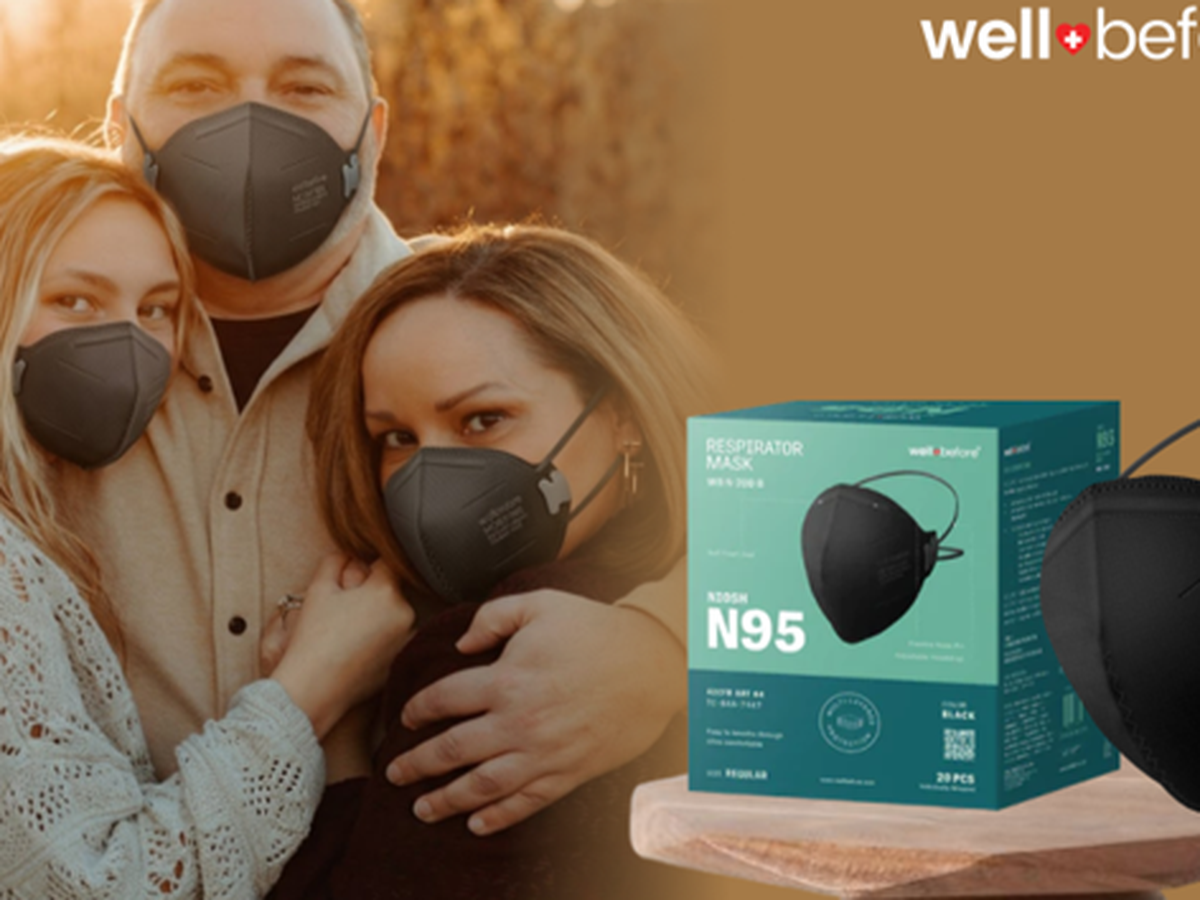
N95 Masks for Families: What I Wish I Knew Before Buying
Be the first to donate
Inspire others and help Laura build momentum.
1st donor
Picking up a box of masks at the store used to feel simple. Then I started actually reading the labels, and the questions piled up fast.
● What is the difference between an N95 and a KN95?
● Does my kid need a different kind?
● Does it matter where I buy them?
If you have ever stood in the pharmacy aisle staring at a wall of masks and felt completely lost, this is for you. I want to break this down in plain language so you can make a confident choice for your family without spending hours researching.
Why Mask Quality Matters More Than Most Parents Realize
Not all masks filter the same way. A basic disposable mask offers some protection, but it mainly acts as a physical barrier against large droplets. An N95 respirator is a completely different product. It is designed to filter at least 95 percent of airborne particles, including much smaller ones that a standard mask would let through.
The difference matters most when you are in crowded indoor spaces, traveling, waiting in a pediatrician's office, or caring for someone at home who is sick. For everyday low-risk situations, a basic mask is fine. But when the risk goes up, your protection level should go up as well.
N95 vs KN95 for Kids and Families
This is the one that confuses almost everyone.
An N95 is certified under US standards and approved by NIOSH, the National Institute for Occupational Safety and Health. It meets strict American testing requirements and is the standard required in healthcare and clinical settings.
A KN95 meets Chinese certification standards and filters the same percentage of particles. It is not approved for use in US medical settings, but for everyday family use, it works just as well. The fit is often more comfortable, especially for extended wear.
Both are far more protective than standard surgical or cloth masks. For your family at home, either works well. If you are buying for a healthcare worker or someone in a clinical environment, stick with NIOSH-approved N95 masks .
One more thing worth knowing: NIOSH does not approve any N95 for children.
If you see packaging that claims a mask is NIOSH-approved for kids, that is actually a red flag that the product is counterfeit. What you want for children is a KN95 specifically sized for smaller faces, which gives solid everyday protection with a proper fit.
What to Actually Look for When Buying N95 or KN95 Masks
Here is what I check before buying any mask for my family:
1. Certification is listed clearly. A real N95 will say NIOSH Approved and include a TC approval number printed directly on the mask. You can verify any N95 on the NIOSH Certified Equipment List on the CDC website. If the packaging just says "95% filtration" without a certification number, that is a red flag.
2. The fit is right for the face size. This matters more than people realize. A mask that gaps at the sides is not filtering properly, no matter how good the material is. Kids especially need masks sized for smaller faces. Adjustable ear loops and a moldable nose wire make a big difference.
3. The source is transparent. Some brands are vague about where their masks are made or what tests they have passed. Honest companies will tell you exactly where the masks are manufactured and make lab results available if you ask.
Where I Buy Masks for My Family Now
After going through a few different brands with mixed results, I landed on ordering through WellBefore . A few things stood out.
They publish filtration information and TC approval numbers for every product and will send you lab results on request. No guessing, no vague claims.
The masks I ordered for myself and my husband fit well, arrived quickly, and cost less than what I was paying at the pharmacy for a lower-quality product. Their NIOSH-approved N95 collection is certified and verifiable, which matters to me since my husband works in a clinical environment.
They also carry KN95 masks in kids' sizes, which is genuinely hard to find without sacrificing quality. You can browse their full mask range at wellbefore.com, where the certification details are listed right on each product page.
A Quick Guide to Choosing the Right Mask by Situation
To make this as practical as possible, here is how I think about it:
● School drop-off, grocery runs, or low-risk errands: a KN95 is more than enough. Comfortable, affordable, and effective.
● Crowded events, doctor visits, flights, or any confined space with poor ventilation: upgrade to an N95. The tighter seal is worth it.
● Caring for a sick family member at home: use an N95 and replace it after each exposure session. Reusing the same mask for too long defeats the purpose.
● Masks for kids in school or group settings: a KN95 sized for children is the right balance of protection and comfort. An adult mask worn loosely on a small face gives almost no real protection.
One Thing Most Parents Skip: Checking the Nose Wire and Seal
The nose wire on a mask is not just for comfort. It is what creates the seal at the top of the mask where most gaps occur. When you put on a mask, press the nose wire firmly against the bridge of your nose with two fingers and shape it to your face. Skipping this step means you are losing a significant portion of the mask's protection.
Once the mask is on, do a quick seal check: place both hands over the mask covering as much of it as possible and breathe out. If you feel air escaping around the edges or your glasses fog up, the seal is not right. Adjust the nose wire and try again. The CDC recommends doing this every single time you put on an N95.
Most N95s have a built-in metal or firm plastic nose wire that holds its shape well. KN95s vary. Check before you buy and look for one with a sturdy wire rather than a flimsy one.
How to Spot a Fake N95 Before It Reaches Your Family
Counterfeit masks are a real and ongoing problem, especially on third-party online marketplaces. Since the start of the pandemic, US Customs and Border Protection seized more than 34 million counterfeit masks designed to look like N95 or KN95 respirators, with over 20 million of those caught in 2021 alone.
A few things to watch for: no TC approval number on the mask itself, ear loops instead of head straps on an N95, spelling errors on the packaging, claims that the mask is NIOSH approved for children, and prices that seem too good to be true.
Buying from established retailers who are transparent about certifications and supply chains removes most of this risk. It is also worth choosing sellers who carry authorized products from recognized brands rather than unknown manufacturers with no documentation.
The Bottom Line for Parents
You do not need to become a mask expert to protect your family well. You just need to know a few basics: look for certified filtration, make sure the fit is right for the face wearing it, buy from a brand that is honest about what they are selling, and use the right type of mask for the situation.
Masks are not exciting to think about, but having the right ones at home when you need them is genuinely valuable. Keep a supply at home, toss a few in your bag, and you will not have to scramble the next time you need them.