MIGRANT SHELTER - STEADY, PERMANENT QUALITY
0% complete
$23,693 raised of $30K
207 donations
October 10, 2026
For July-September, demand started high and slowly went down - we gave 397 nights of service. Thus, through September 30, we have provided 1372 nights of service (again, as compared to 810 nights of service in all of 2025). When there are few migrants in the shelter, we reduce costs maximally (still about $15US per night of service), but keep our service available 24/7. This is super important! Recently, late one night, we received ten young men, central Americans (age 17-23), who had escaped from human traffickers (their coyote had tricked them and sold them to a local group). The young men wanted to go home and we were ready to help. After two nights with us they were safely on their way, with paperwork and transportation in order. In summary, the shelter has been very, very quiet. Much of our challenge is patience, preparation, maintenance.
We continue to help deportees, but few are arriving with us thus far. Many can be accepted by family. Those who do not have family sometimes need to stay with us even for a few weeks, to re-orient themselves, and especially to find work and figure out how to support themselves. Though we are mainly a 4-5 night shelter, we have helped many such people.
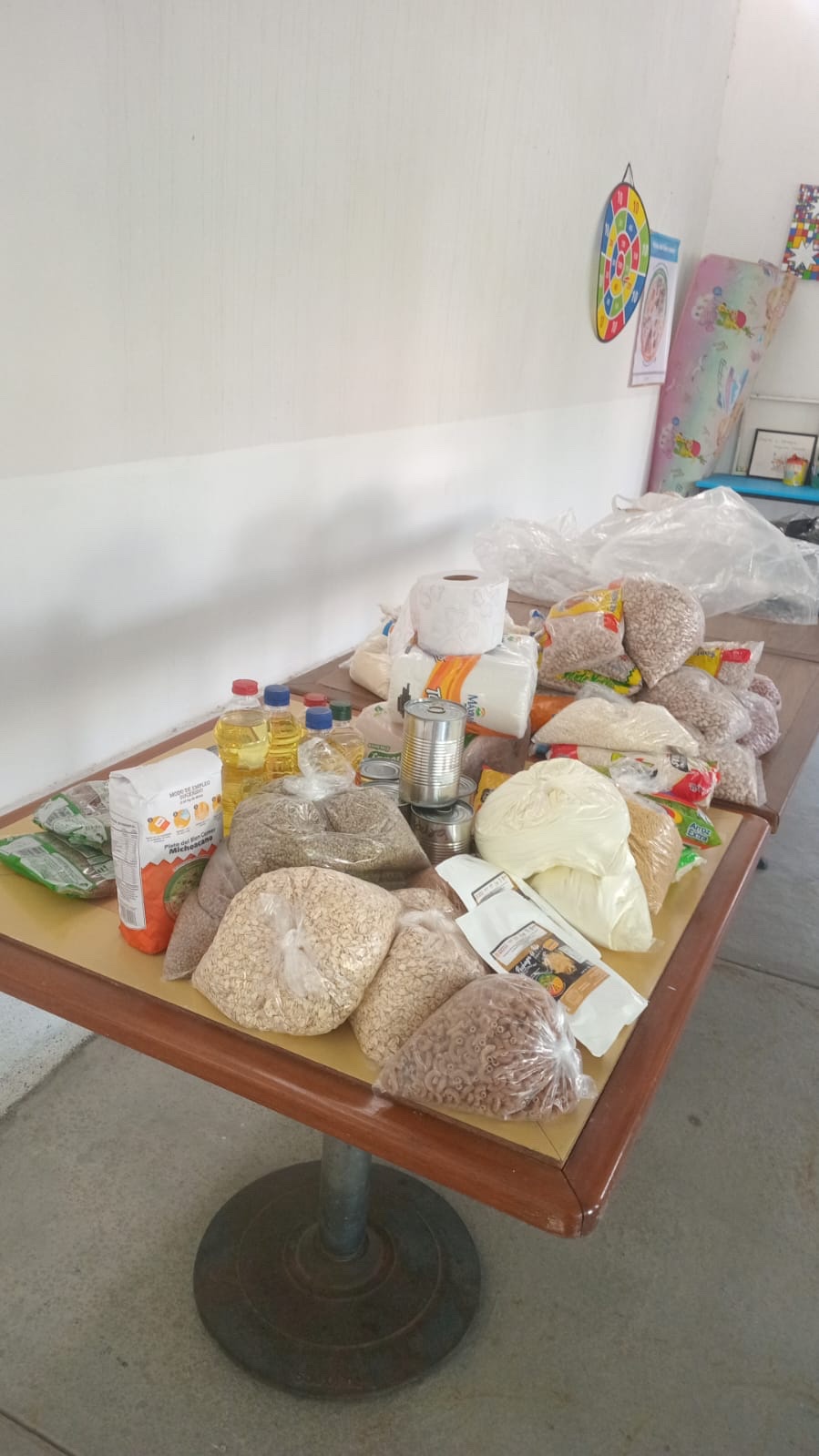
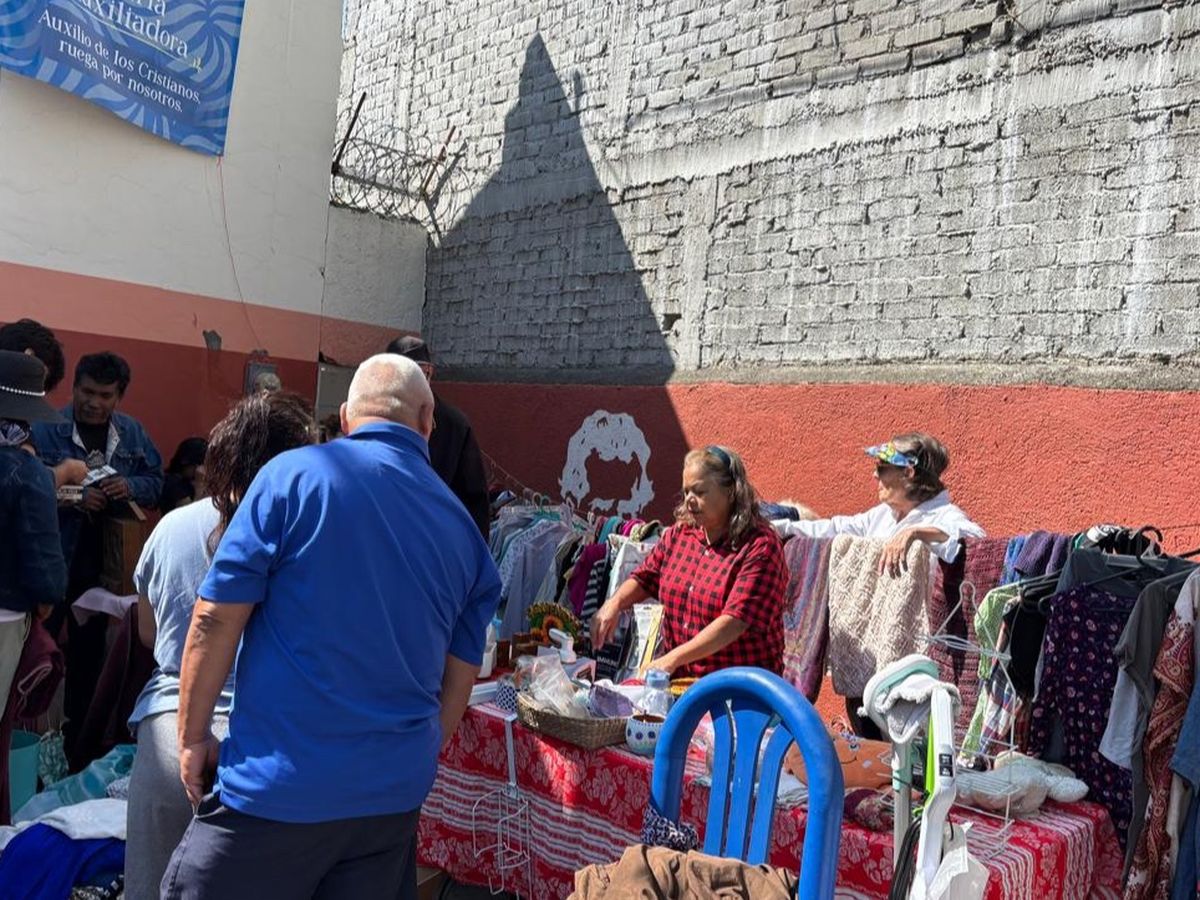
Finally, our work in institution-building continues: 1. broadening our base of support in Morelia - We had booth at a state conference of non-profit helping institutions we attended in the Morelia city center. We won first prize! 2. pursuing each avenue of outreach to migrants - In our state, the area in which gang violence has caused the most people to leave their homes is near the city of Apatzingan. We are reaching out to groups that protect those migrants, to improve our coordination and offer our services. 3. strengthening links to other local groups that help people - The main local church in our barrio allows us to conduct our bazaars in front of the church doors during mass on Sundays (the photo you see here is of one of our bazaar days, in August), and recently sent a nice donation of food and goods (see photo in updates). 4. investigating how international processes are affecting Morelia - Since January 2025, the US has formally deported over 300,000 Mexicans — roughly two-thirds by bus to the border, some 100,000 by plane, in more than 600 flights this year alone. Every passenger, whatever their background, is handcuffed, shackled, humiliated, and afraid. Schedules and destinations are secret, never announced. Each plane carries 80 to 150 people.
At least ten such flights have landed in Morelia this year, all but one from El Paso. We are not permitted to witness the arrivals. ICE appears not to place Michoacanos on these planes; the passengers come from distant parts of Mexico, and most are whisked from the airport to the bus station. Some find their way to us. This situation is growing, and we are learning to meet it. This is a developing and perhaps rapidly growing situation that we will learn to adapt to. Learn more through Human Rights First at https://www.humanrightsfirst.org/ice-flight-monitor-interactive-dashboard.
As you see, there is much to digest. Your help is important. We do some other fund-raising, all local in Morelia, but your part in our community remains fundamental. Thanks, from all us!
July 23, 2026
(Our goal is for operating expenses. It therefore climbs with needs.)
DEMAND UP SHARPLY, AND OUR EFFICIENCY
We now have statistics for the first half of 2026, and the numbers tell a remarkable story.
Demand has more than doubled compared to last year. Through June 30, we provided 975 nights of service — already surpassing all of 2025, when we provided 810 nights for the entire year. In May we provided 266 nights; in June, 362. July remains strong.
Our core service unit is one night of lodging — including three meals, clothing, showers, medical attention, legal assistance, security, and warmth. We have welcomed migrants from Argentina, Colombia, El Salvador, Guatemala, Honduras, Mexico, the United States, and Venezuela. Some nights we have sheltered as many as seven children among 17 migrants.
Here is what makes us especially proud: our cost per night has dropped sharply. In 2025 we spent 719 pesos per night. This year, through June 30, we have spent only 255 pesos per night (249,349 pesos total / 975 nights). Three salaries providing 24/7 coverage plus a cook, all utilities, and everything else — for 255 pesos a night (US $15). We are doing extraordinary work with very little.
Beyond lodging, we are building a permanent institution. From February through April, we worked directly with undocumented migrants settled in Morelia, learning their stories and needs. Our volunteers show up every day. We collaborate regularly with UNHCR and the Norwegian Refugee Council. We work alongside more than a dozen Morelia organizations. Authorities bring us migrants fleeing violence. Other shelters share clothing with us. A young mother who fainted was admitted — free of charge — to one of Morelia's finest hospitals, thanks to our relationships in this city. In four years, we have become genuinely woven into the fabric of Morelia.
We serve deported Mexicans returning after decades away, people fleeing violence, undocumented residents, and those still hoping to reach the north. The US government just approved $70 billion for migrant expulsion — the flow of deportees into Mexico will likely increase significantly. We remain the only migrant shelter in the state of Michoacán.
We are extremely short of funds. We have never received a government grant or church money. We depend entirely on people like you. Our costs cannot come down much further. A recent breakfast benefit was a success — but it is not enough.
Please commit to a monthly contribution. We are doing the work. Your support has meant everything.
Thank you.
June 5, 2026
Morelia Migrant Shelter - Demand Surges
Recently, demand at the shelter has risen substantially - triple the rate of last year. Last night, June 4, we had nine migrants, from 5 countries. In May alone May, we provided 266 nights of service to 14 migrants from 4 countries. This reduces the cost per person significantly. We provided clean rooms, hot showers, good food, clothing, security, internet, and dignity to everyone, for approximately $15US per night. Though our links to civil society groups and government organizations continue to strengthen, we still receive no church money or government money. We are dependent on our benefactors. Please commit to a monthly contribution in the checkout.
The US government just approved 70 billion dollars extra for expelling migrants. We are helping migrants of several types: those who are deported into Mexico, those who flee violence, those who must stay in Mexico without documents, and even, still, those who are headed north. We are still the only migrant shelter in this state. You support has meant everything to us. Thank you.
April 16, 2026
Meeting Migrants Where They Are: What We Learned from Two Months on Morelia's Streets
As we have reported, there are now no migrants coming from the south. We do help deported Mexicans, with damaged lives, who come to us to help them make it back in Mexico. We also continue to help Mexicans fleeing violence, and non-Mexicans who live here without full documents. Our shelter is healthy, but still very young, and making it be permanent and useful means continuing to learn about how to serve.
Between February 3 and April 10, 2026, eight volunteers from the Morelia Migrant Shelter—Clay, Olga, Jaime, James, Natalia, Margaret, Mike, Pedro, and Ely—drove through the city with 6-pound bags of dry goods, looking for migrants asking for help at street corners. We wanted to understand: Who are these families? What do they need? How can we better serve them?
The map you see shows every place we went. Green markers represent successful deliveries. Amber markers show where we searched but found no one. The colored lines trace highway routes where Ely drove regularly for two months, looking for migrants along roads leaving the city.
Over 66 days, we documented 30 encounters and tries across Morelia. We delivered 15 packages of dry goods to Honduran and Haitian families. But just as importantly, we had conversations. We learned names. We heard about chronic shoulder pain needing treatment, children who should be in school, and the 13,000 pesos it costs per person to regularize immigration status—an impossible sum for families surviving on street-corner donations.
We also learned from our failures. Twelve times we went looking and found no one. Mike drove past the same intersection every morning for five weeks without seeing anyone—until Margaret stopped by one afternoon and met Kiron and his 5-year-old son. Timing matters.
The migrants we encountered are overwhelmingly from Honduras—mothers with young children, fathers working street corners, teenagers helping their parents. Most have been in Morelia for 3 to 8 months, living in borrowed houses in neighborhoods like Villas de la Loma.
We met Reina multiple times. In February, she was very reserved. By March, she remembered Jaime's name and told him about her shoulder problem. She wants to visit the shelter but doesn't know how to get there. We met Fanny twice with her children. We met a Haitian family of four, a 15-year-old boy and his 12-year-old sister, and Kiron, whose 5-year-old son should be in school but isn't.
Several people told us there were many more migrants visible last August. Some have moved to cities like Celaya. Morelia´s migrants cluster in a few specific locations—street corners near San José del Cerrito, along Morelos Norte near the train tracks, and on Avenida Solidaridad. Ely drove Highway 43 two to three times a week for two months and never saw a single migrant on either highway. They're in the city, not on the roads leaving it.
Trust takes time. When Jaime met Reina the first time, their conversation was brief. By the third visit, she was opening up about her health and immigration struggles. Repeated contact with the same person makes all the difference. Transportation is a real barrier—several migrants want to visit the shelter but don't know how to get there. And children are falling through the cracks. We met multiple school-age children who aren't in school, spending their days at street corners instead of in classrooms.
We now know which street corners to prioritize and will continue visiting them regularly. We're exploring ways to help migrants reach the shelter. We want to help families navigate the regularization process, but that may be beyond our abilities. We're strengthening relationships with health centers and working to get children into school. Because migrant populations are mobile, we'll keep tracking who's where, who's new, and who's moved on.
This project cost very little cash — just 15 bags of dry goods and gas. But it gave us something invaluable: information. We now have a clearer picture of who needs our help, where they are, and what barriers they face. Your donations make this kind of learning possible. They let us experiment, try new approaches, and figure out what actually works. They let us meet people like Reina and Fanny and Kiron where they are, rather than waiting for them to find us.
This is good stewardship: not just providing services, but understanding the people we serve. Not just reacting to whoever walks through our door, but actively seeking out the families who need us most.
Thank you for making this work possible.
With gratitude,
The Team at Morelia Migrant Shelter
April 2026
February 9, 2026
The past few weeks have been stable and productive. In January we welcomed 11 migrants from four countries, totaling 99 migrant nights of service.
Everyone’s basic needs were met—beds, showers, meals, and internet—but most required additional support. This included coordination with embassies and families for travel and funding, legal assistance with documents, medical care, clothing, and activities for children. For one young deportee, we helped secure employment to begin rebuilding a life in Mexico, a country he left at age four.
Our outreach has expanded to food distribution among migrant groups across the city. Some are documented and others are not, but they are sharing information within their communities. They are getting to know us, and we are learning from them.
We receive strong in-kind support in Morelia, but very little cash. Local incomes are low, and while generosity is real, funds are limited. The shelter is permanent, and we expect increased need, as Michoacán is one of the leading states for deportations. Volunteers do much of the work, but to remain open 24/7—with three meals, security, utilities, and staffing—we must cover core expenses.We spend the money extremely carefully. Ask any time. Monthly donations from the U.S. matter greatly, and we need more; even $10 a month helps sustain this work. You can make your $10 per month contribution automatic in the check-out box of Go Fund Me.
December 22, 2025
ANNUAL REPORT FROM ALBERGUE, SAGRADO CORAZÓN PRO MIGRANTE I.A.P.
This has been a year of significant change, development, and growth for the Morelia Migrant Shelter—Albergue, Sagrado Corazón Pro Migrante, I.A.P.—and the team dedicated to its work. Policy changes on immigrating to the USA have meant that our original target group has changed significantly. However, our core aims and principles—provision of temporary care to vulnerable migrants while they are passing through Michoacan—remain steadfast. Below, we summarize for all interested parties the work we have been able to achieve this year.
The Migration Landscape in 2025
Migratory patterns in Mexico shifted constantly during 2025. Flows from the south dropped by 90%, leaving many Mexican shelters with a far lower flow of migrants. U.S. political uncertainty created unpredictable conditions. Massive U.S. government anti-immigrant activities began and continue to grow. Migrants across North America “hunkered down,” fearful of detention and deportation. Many migrants seeking asylum or humanitarian protection in Mexico began looking for stable support, and many of them have sought to return to their countries of origin.
In all this, we stayed open, professional, and ready: the only overnight migrant shelter in the state of Michoacán. At the beginning of the year, authorities notified us that large numbers of deported migrants—many of them families with children born in the U.S.—might begin arriving in Morelia by bus and plane, and we prepared for large waves. So far, the number of deportees reaching us has been limited, but we expect that this group will increase considerably over the coming years. Meanwhile, we have used the time to actively develop new kinds of activities and to deepen and broaden those we were already doing on behalf of migrants.
Who We Served in 2025
Although we have seldom filled out the dorms, the service we gave was deep and impactful.
Across the year, we provided hundreds of “migrant-nights” of care. People stayed anywhere from four nights—our original limit—to several weeks as conditions worsened and administrative processes slowed. We did not send families or vulnerable people back to the streets.
Of the numberous migrants, each is an individual case. Over the course of the last year, for example, we helped: (a) three Guatemalan farmers, who were tricked by their coyote and dumped in mid-Mexico, to obtain safe transportation home; (b) a young Venezuelan amputee on his way home to obtain a plane ticket home; (c) a Venezuelan family with three children, who were stranded for six weeks by paperwork delays, and who had passed through our shelter months earlier, heading north, and now were returning, to get plane tickets home; (d) a Honduran mother and baby to obtain plane tickets for her safe return; (e) a Belizean man seeking help to return home; (f) an El Salvadoran man to travel by bus to Ciudad Juarez to reunite with his family; (g) a young Venezuelan man who needed legal protection for almost 4 months; (h) two Cuban migrants who chose to stay in Mexico to by securing legal status, employment, and housing; (i) a Mexican family fleeing lowland violence, now safely resettled; (j) a Mexican man who was deported to Mexico after 31 years in the U.S., to stabilize and return to his pueblo; (k) a single Mexican woman, 79 years old, who suddenly was deported from San Diego after living there for 30; and (l) multiple deportees in transit, arriving in Morelia and moving on the same day.
We also assisted migrants elsewhere in the city, met stranded families, and supported people applying for asylum in Mexico or seeking voluntary repatriation. In several of these cases, we worked with embassies and other institutions to secure safe passage. All of these people make voluntary decisions to travel where they want to go—human rights don’t require a passport.
As months-long stagnation increased, children arrived having missed months or years of school. We created a children’s activity corner and assembled learning materials. We also created recreation and play opportunities, a stable, calm, safe environment with support for young parents. We are presently working with UNICEF to expand this work and strengthen our abilities to protect and nourish children.
Organizational Progress
2025 was a year of major structural consolidation. First, as regards staff, we maintained a lean, highly committed paid staff: one on-site daytime coordinator, one full-time cook, and one night watchman / coordinator. All positions have written contracts and clear responsibilities.
Volunteers—local / national, and expatriate—were essential.
More than 50 volunteers participated this year, with 12–15 active at any time. They staffed shifts, cleaned, organized clothing, helped with legal orientation, ran fundraisers, participated in trainings, and built community with our guests.
Concerning infrastructure and certification, we completed or advanced the following: full health and safety certification for our buildings (a major accomplishment, with smoke and gas detectors, fire extinguishers, window screens, etc.), reinforcement of our back security wall, laundry-area improvements, children’s activity space, security cameras and fencing upgrades, and improvements to administrative, interview, and sleeping spaces.
In addition, we prepared for module two, which will double capacity from 25 to 50 beds. At the present time, the shelter is clean, dignified, and prepared for future increases in need. Our excellent dining area is often used for city-wide events focused on migrants.
We also strengthened accounting, government documentation, record-keeping, database construction in NGO management software, our website, Facebook, WhatsApp, and telephone systems, and expanded local outreach through print, interviews, and media. These foundations now allow steady growth of our supportive local community and accountability.
Partnerships and Institutional Collaboration
We have built an impressive, statewide and national network of partnerships. Governmental partners now include the Secretaría del Migrante (state), the Instituto Nacional de Migración (federal), the (new) Office of the Migrant (city government), the Secretaría de Salud, DIF (state and municipal), state police and local police agencies, as well as local bus and airport authorities. These collaborations secure transportation, documentation, health services, food support, vaccinations, and joint programs for returning families.
We have also cooperated with international agencies such as UNHCR (United Nations High Commissioner for Refugees), which works with us on our multiple capacity-building workshops including international human rights training, legal orientation about Mexican law, prevention of sexual abuse in migrant contexts, data management for people fleeing violence, and psychological and social self-care.
Civil society partners include other migrant shelters across Mexico. One of our directors is developing contact and establishing academic partnership with institutions such as UNAM and the Universidad Michoacana, women’s defense groups, and expat organizations such as Morelia United, and the Casa Michoacán in Chicago, with whom we share materials and coordinate support. We have also established contacts with European Union programs to help migrants.
In November, our president, Pedro Beltrán, began serving on the state committee that issues recommendations to the legislature on migration policy, giving the shelter a direct voice in shaping humane public policy. This creates an important leadership role for the shelter.
Training & Capacity-Building
We have completed and will continue to ensure rigorous health and safety certification, and we are taking advantage of training provided by the government, as well as multiple UN-sponsored workshops. UNESCO is starting child-centered training for our team, including volunteers. This is in addition to new specialized training for asylum support, which will assist in professionalization of staff roles and volunteer orientation.
This year, we started a new and very important initiative for Mexican families who have relatives in the USA. We hosted our first large workshop for these families, providing them with information on how to act quickly if a loved one is detained by ICE. This project includes online materials, printed guides to be distributed across all 113 municipalities of Michoacán, workshops and presentations to be conducted through the Secretaría del Migrante. At the beginning of December, a pilot event was held in the town of Coeneo, Michoacán.
Fund-Raising in 2025
From the first weeks of the year, we faced significant financial uncertainty. Then and now, we operate with extraordinary efficiency. We spend about $89 per day, which covers all expenses—salaries, fixed and emergency costs of utilities (expensive water, electricity, gas, internet), cleaning supplies, accountant, insurance, basic maintenance, regular expenditures for fresh food and consumables, events such as trainings (sometimes with invitees from the entire city) and meetings with other institutions, and workshops for families of migrants.
We receive in-kind, material donations from various sources and these are very important to us, especially non-perishable items. We receive no money or material donations from the church, although we occupy land that is owned by the diocese on a rent-free, 30-year contract. However, several government agencies donate non-perishable food, clothing, blankets, and consumables. Individual families and charitable organizations have also helped with material donations. A fully volunteer board and several other highly active volunteers are foundational to our work.
This year we secured tax-deductible status in Mexico and achieved significant progress toward U.S. deductibility. In addition, we built a professional donor database and submitted proposals to the Canadian Embassy, the French Embassy, European Union refugee programs, local corporations (Oxxo, Femsa, Pepsi), and the local chambers of commerce. These proposals have thus far not been successful, but we are confident that an income stream will materialize in the future.
We have had steady success, locally, with raffles, bazaars, and a benefactor breakfast, and are planning a dance in January 2026. We have continued building monthly donor support through PayPal, Stripe, and GoFundMe. At this point, twenty-eight people make small monthly contributions, and we received helpful gifts from others throughout the year on an ad-hoc basis. Mainly, we benefit from the extraordinary generosity of Morelia residents and expatriates.
Despite all this, we still do not raise enough to fully cover our basic operating costs. We are stable but fragile. Permanent funding remains one of our most important goals for 2026.
Looking Ahead to 2026
Conditions may shift at any moment. Projections indicate a strong potential for mass deportations over the next two to four years. We intend to be ready.
Our goals include completing module two, increasing capacity to 50 beds, securing more stable monthly donors, achieving U.S. tax-deductible status through Global Giving, expanding workshops for families across Michoacán, strengthening partnerships with shelters nationwide, continuing to professionalize staff and volunteer systems, and ensuring long-term sustainability.
With Deep Gratitude – and a Courteous Request
To all who have contributed money, goods, time, skills, or compassion, thank you. You are the reason the Morelia Migrant Shelter exists. You are the reason migrants this year slept indoors, ate well, healed, learned, and found their paths forward with dignity.
As we enter 2026, we humbly and respectfully ask you to consider becoming, or increasing your gift as, a monthly donor. Monthly contributions—small or large—help us plan, stabilize operations, and meet urgent needs with confidence. You can set up automatic monthly donations in MXN pesos through PayPal or Stripe, or in USD dollars through GoFundMe.
Every recurring gift strengthens the shelter and directly supports migrants in crisis, and we, and they, thank you for it.
With determination and hope,
Pedro Luis Beltrán Cisneros
President of the Board of Directors
Clay Slate
Treasurer of the Board of Directors