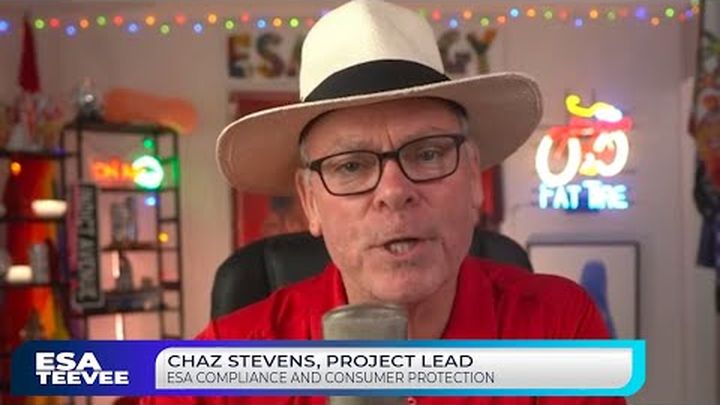
A public-interest initiative supporting compliance with disability and consumer-protection law
The Problem
Across the United States, some online providers offer rapid-turnaround Emotional Support Animal (ESA) letters, sometimes issued with minimal interaction and unclear clinical grounding.
These documents are frequently marketed as legally sufficient for housing accommodations. In practice, many fail to meet statutory or regulatory standards when reviewed by housing providers, regulators, or courts.
The downstream effects are predictable:
- Individuals with legitimate disabilities face increased skepticism
- Housing providers encounter unnecessary legal risk and confusion
- Consumers rely on documentation that may not withstand scrutiny
- Public confidence in disability-accommodation processes erodes
When documentation fails, people often find out at the worst possible moment—during a housing review, renewal, or dispute—when there’s little time to fix it.
This initiative addresses a systemic compliance gap, not individual disputes.
The Evidence Base
This effort is grounded in documented, repeatable observations rather than speculation.
Over time, consistent patterns have been identified through lawful, consumer-standard interactions and records review, including:
- Standardized ESA letters generated through automated workflows
- Marketing representations that conflict with statutory requirements
- Assertions of evaluation or personal knowledge unsupported by the process used
- Collection of sensitive personal data without clear disclosure or safeguards
These issues have been examined through:
- Consumer-standard test interactions
- Public-records and compliance research
- Statutory and regulatory analysis
- Independent media reporting on ESA documentation practices
The concern is not isolated error, but repeatable process design.
The Enforcement Approach
This initiative does not target individuals, encourage harassment, or substitute for government authority.
Its purpose is to support lawful enforcement pathways already recognized by statute, including consumer-protection and fair-housing mechanisms.
The work focuses on:
Documentation & Preservation
Capturing how ESA documentation is offered, marketed, and generated in ordinary consumer contexts.
Regulatory & Records Engagement
Using public-records laws and compliance analysis to assess whether practices align with legal requirements.
Administrative & Civil Reporting
Submitting documented findings to appropriate authorities where potential violations appear.
Public Transparency
Supporting accurate reporting and corrective disclosure so consumers understand the limits of ESA documentation.
Compliance Notification
Informing relevant oversight and compliance bodies of documented practices, consistent with their established procedures.
The objective is alignment with the law, not disruption for its own sake.
Use of Funds
This is a public-interest enforcement project, not a business and not a personal legal defense fund.
There are no guaranteed outcomes and no compensation tied to results.
Funding goal: $22,000
Projected use of funds:
- Legal filing, service, and procedural costs: $5,000
- Public-records requests and compliance research: $2,000
- Evidence documentation, secure hosting, and technical operations: $3,000
- Media documentation and educational materials: $5,000
- Legal contingency reserve for court-directed or responsive actions: $5,000
- Third-party professional services (independent compliance review, document verification, and administrative support): $2,000
Funds are used to cover external, task-specific costs that exist regardless of who performs this work.
Accountability & Updates
This initiative does not promise specific enforcement outcomes, which depend on regulators, courts, and third parties.
Supporters will receive periodic updates documenting:
- When administrative or civil submissions are made
- When regulatory or court engagement occurs
- When independent reporting or public guidance is published
- Updates will focus on process and status, not speculation or commentary.
Why This Matters
Disability-accommodation law depends on credibility.
When unreliable documentation becomes widespread:
- Legitimate requests are questioned
- Housing providers become defensive
- Consumers are misled about their rights and risks
Improving compliance benefits:
- Individuals with disabilities
- Housing providers acting in good faith
- The integrity of the legal framework itself
This initiative supports lawful alignment, not exclusion.
How You Can Support the Work
- Contribute to support documented, lawful enforcement efforts
- Share to raise awareness of compliance standards
- Follow updates as the work proceeds through established channels
Effective consumer protection is rarely loud.
It is methodical, documented, and grounded in law.
Thank you for supporting accountability done carefully and correctly.
Organizer
