- M
- R
- A
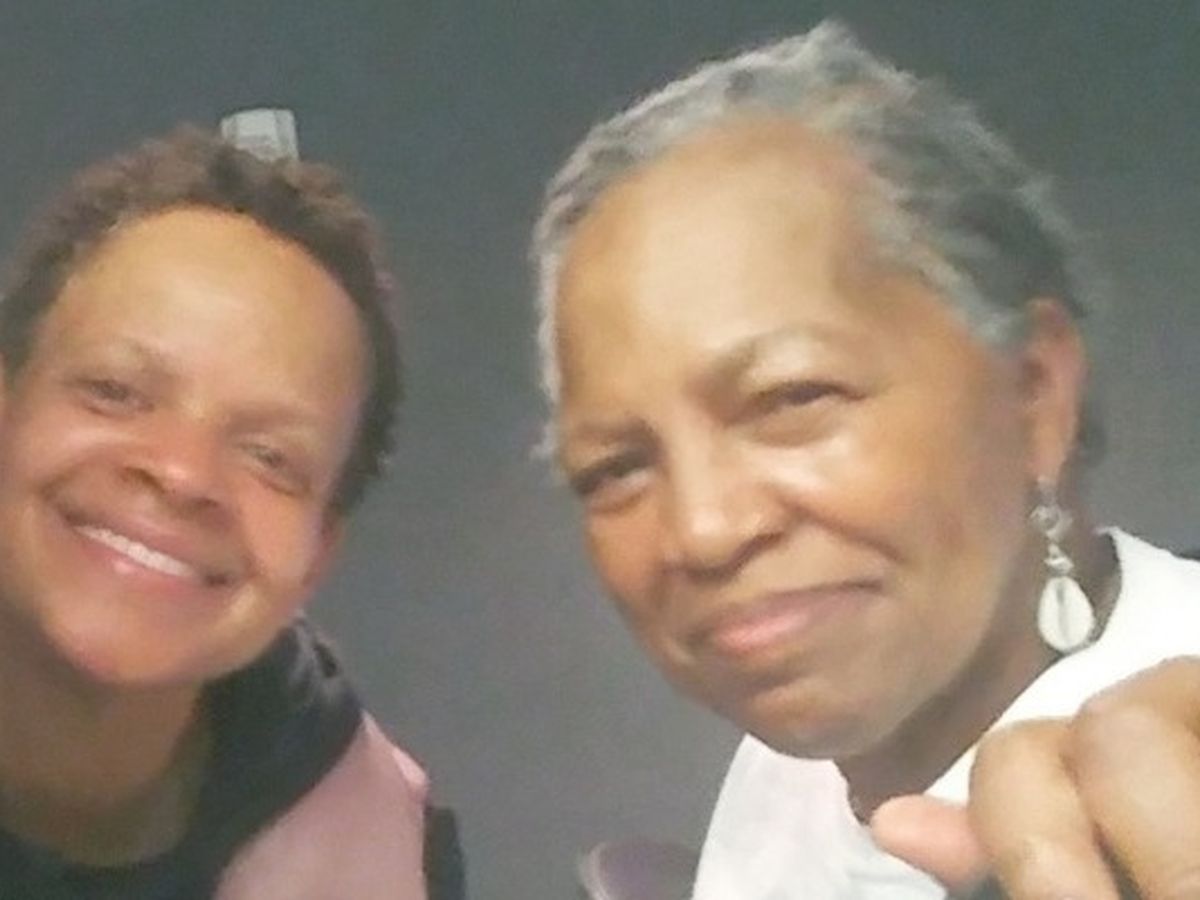
The Future Historical Society is helping our dear member Phyllis Roker raise money for a motorized wheelchair. Let's get Ms. Phyllis be-boping around Brooklyn again.
Here's a little bit about Phyllis as seen through the eyes of another FHS member, Desiree Rucker:
Mona Lisa move over. Phyllis Roker also has a beautiful smile. Their smiles are similar in that they are at once, welcoming and yet, secretive. For this profile, Phyllis was willing to talk about herself, yet reticent on some details, like names and dates. She warned me that her memory doesn’t work like other peoples, due to time and also due to circumstances that will be addressed here later.
While specific details might be absent, it is clear how the choices and the paths Phyllis has taken have shaped her artistic expression and output. For Phyllis, as with many artists, the mystery of who they are is revealed in their work.
When she speaks one hears a myriad of influences: there’s Bahamianese, a Southern lilt, New Yawk talk, and I heard some Chi-town in there too.
Phyllis was born in Miami, Florida in 1950. It was Miami at its meanest, a time when Blacks had to carry work IDs to enter the city limits and Whites segregated themselves from Jews. Phyllis remembers none of this, as she was busy having a somewhat idyllic early childhood. She was raised in Miami and in The Bahamas, West Indies. Her fondest childhood memories are being in The Bahamas basking in her grandmother’s love and climbing Mango trees to watch the planes flying to and from the island. She spent many an hour in the lush canopies of tropical trees dreaming of the day when she would see her mother again. Her mother left the family of seven children with two aunts in Florida to go work in Brooklyn, New York and establish their new home. It was at ten years old that Phyllis made the long-awaited trip up North with her grandmother on the railroad. She said her strongest image of that journey was of black people selling oranges from bales at the train depots.
Phyllis remembers being shocked on her first day of school in Brooklyn when a boy in her class, exclaimed,” Now we have a nigger!” The comment hurt more than any corporal punishment she received while in the Florida school system. While any evidence of the rulers that struck her hands has faded, she still feels the sting of that classmate’s remarks. Nevertheless, she settled into her new school and urban environment with no issues that she can recall. She was awestruck later in that year though, when she saw her first snowfall.
In the 4th grade, Phyllis discovered her love of running and competed at track meets. However, by the 6th grade, she had developed asthma and stopped running.
Phyllis was a good student. She graduated from Eli Whitney Vocational High School and was hired as a data processor at Bankers Trust. During this time, Phyllis gave birth to a beautiful, baby girl, who she named Tenya.
She attended NYC Community College to study liberal arts. While at NYC Community College she was a photographer on the school newspaper, covering concerts and political protests.
Phyllis completed her Bachelor’s degree at Hunter College and became a NYC elementary school teacher. Phyllis taught 2nd and 5th grade in Queens, NY. She became a Community Access Producer at Queens Public Television. Her program, Focus On Our Children aired for many years on their cable network.
Phyllis moved to Chicago to be near her Mother and daughter. She lived there for five years. She moved to Brooklyn where she became a member of the BRIC Free Speech TV family. Selected to receive training and mentorship in BRIC's Documentary Workshop she produced two documentaries. One of her documentaries, a profile of the visual artist, Nanette Carter, “Nanette Carter: In The Abstract” screened at festivals and won a B Free Award. She is also a founding member of the Future Historical Society, and has participated in the collection of oral histories of people who work and live in Fort Greene.
Phyllis has endured two brain surgeries over the past decade. She accounts some of her memory loss to the procedures, but is grateful for all that remains. She intends to produce more documentaries. Currently, she is in pre-production on a documentary about her genealogy and extended family. However, her mobility is an issue. Recent injury to her feet makes the use of her current wheelchair injurious. In the past she would often use her feet to boost her arm strength in moving her chair forward. This simple pushing maneuver that has become instinctual is now painful and likely injurious, in the long term. As is far too prevalent in our community, Phyllis’s health needs are being downplayed due to the cost. Her request for a new chair has been denied twice by her medical insurance provider. Her creative circle has rallied to raise funds for a motorized chair that will allow Phyllis to move with greater ease and maintain her active, creative life.
Here's a link to a podcast FHS member Beryl Benbow created to celebrate Phyllis:
Phyllis Roker Podcast by fellow FHS member Beryl Benbow
Here's Phyllis being interviewed on Brooklyn Free Speech:
Here's a little bit about Phyllis as seen through the eyes of another FHS member, Desiree Rucker:
Mona Lisa move over. Phyllis Roker also has a beautiful smile. Their smiles are similar in that they are at once, welcoming and yet, secretive. For this profile, Phyllis was willing to talk about herself, yet reticent on some details, like names and dates. She warned me that her memory doesn’t work like other peoples, due to time and also due to circumstances that will be addressed here later.
While specific details might be absent, it is clear how the choices and the paths Phyllis has taken have shaped her artistic expression and output. For Phyllis, as with many artists, the mystery of who they are is revealed in their work.
When she speaks one hears a myriad of influences: there’s Bahamianese, a Southern lilt, New Yawk talk, and I heard some Chi-town in there too.
Phyllis was born in Miami, Florida in 1950. It was Miami at its meanest, a time when Blacks had to carry work IDs to enter the city limits and Whites segregated themselves from Jews. Phyllis remembers none of this, as she was busy having a somewhat idyllic early childhood. She was raised in Miami and in The Bahamas, West Indies. Her fondest childhood memories are being in The Bahamas basking in her grandmother’s love and climbing Mango trees to watch the planes flying to and from the island. She spent many an hour in the lush canopies of tropical trees dreaming of the day when she would see her mother again. Her mother left the family of seven children with two aunts in Florida to go work in Brooklyn, New York and establish their new home. It was at ten years old that Phyllis made the long-awaited trip up North with her grandmother on the railroad. She said her strongest image of that journey was of black people selling oranges from bales at the train depots.
Phyllis remembers being shocked on her first day of school in Brooklyn when a boy in her class, exclaimed,” Now we have a nigger!” The comment hurt more than any corporal punishment she received while in the Florida school system. While any evidence of the rulers that struck her hands has faded, she still feels the sting of that classmate’s remarks. Nevertheless, she settled into her new school and urban environment with no issues that she can recall. She was awestruck later in that year though, when she saw her first snowfall.
In the 4th grade, Phyllis discovered her love of running and competed at track meets. However, by the 6th grade, she had developed asthma and stopped running.
Phyllis was a good student. She graduated from Eli Whitney Vocational High School and was hired as a data processor at Bankers Trust. During this time, Phyllis gave birth to a beautiful, baby girl, who she named Tenya.
She attended NYC Community College to study liberal arts. While at NYC Community College she was a photographer on the school newspaper, covering concerts and political protests.
Phyllis completed her Bachelor’s degree at Hunter College and became a NYC elementary school teacher. Phyllis taught 2nd and 5th grade in Queens, NY. She became a Community Access Producer at Queens Public Television. Her program, Focus On Our Children aired for many years on their cable network.
Phyllis moved to Chicago to be near her Mother and daughter. She lived there for five years. She moved to Brooklyn where she became a member of the BRIC Free Speech TV family. Selected to receive training and mentorship in BRIC's Documentary Workshop she produced two documentaries. One of her documentaries, a profile of the visual artist, Nanette Carter, “Nanette Carter: In The Abstract” screened at festivals and won a B Free Award. She is also a founding member of the Future Historical Society, and has participated in the collection of oral histories of people who work and live in Fort Greene.
Phyllis has endured two brain surgeries over the past decade. She accounts some of her memory loss to the procedures, but is grateful for all that remains. She intends to produce more documentaries. Currently, she is in pre-production on a documentary about her genealogy and extended family. However, her mobility is an issue. Recent injury to her feet makes the use of her current wheelchair injurious. In the past she would often use her feet to boost her arm strength in moving her chair forward. This simple pushing maneuver that has become instinctual is now painful and likely injurious, in the long term. As is far too prevalent in our community, Phyllis’s health needs are being downplayed due to the cost. Her request for a new chair has been denied twice by her medical insurance provider. Her creative circle has rallied to raise funds for a motorized chair that will allow Phyllis to move with greater ease and maintain her active, creative life.
Here's a link to a podcast FHS member Beryl Benbow created to celebrate Phyllis:
Phyllis Roker Podcast by fellow FHS member Beryl Benbow
Here's Phyllis being interviewed on Brooklyn Free Speech: