Help me publish a book about surviving institutions
Be the first to donate
Inspire others and help will build momentum.
1st donor
Dear friends and colleagues,
The gruesome way in which black autistic Professor Jason Arday died has become international news but these extreme cases of institutional violence are very common and have been happening for decades in institutionalized spaces such as museums and universities. For years, I have been investigating the cases of creatives including Macuxi Jaider Esbell, Antoinette Candia-Bailey, Prishani Naidoo, Selamawit D. Terrefe and many others who have died under this kind of working conditions imposed and sanctioned by institutions on marginalized creatives that lead to burn out, injuries, exhaustion, depression, substance abuse, cancer and voluntary death.
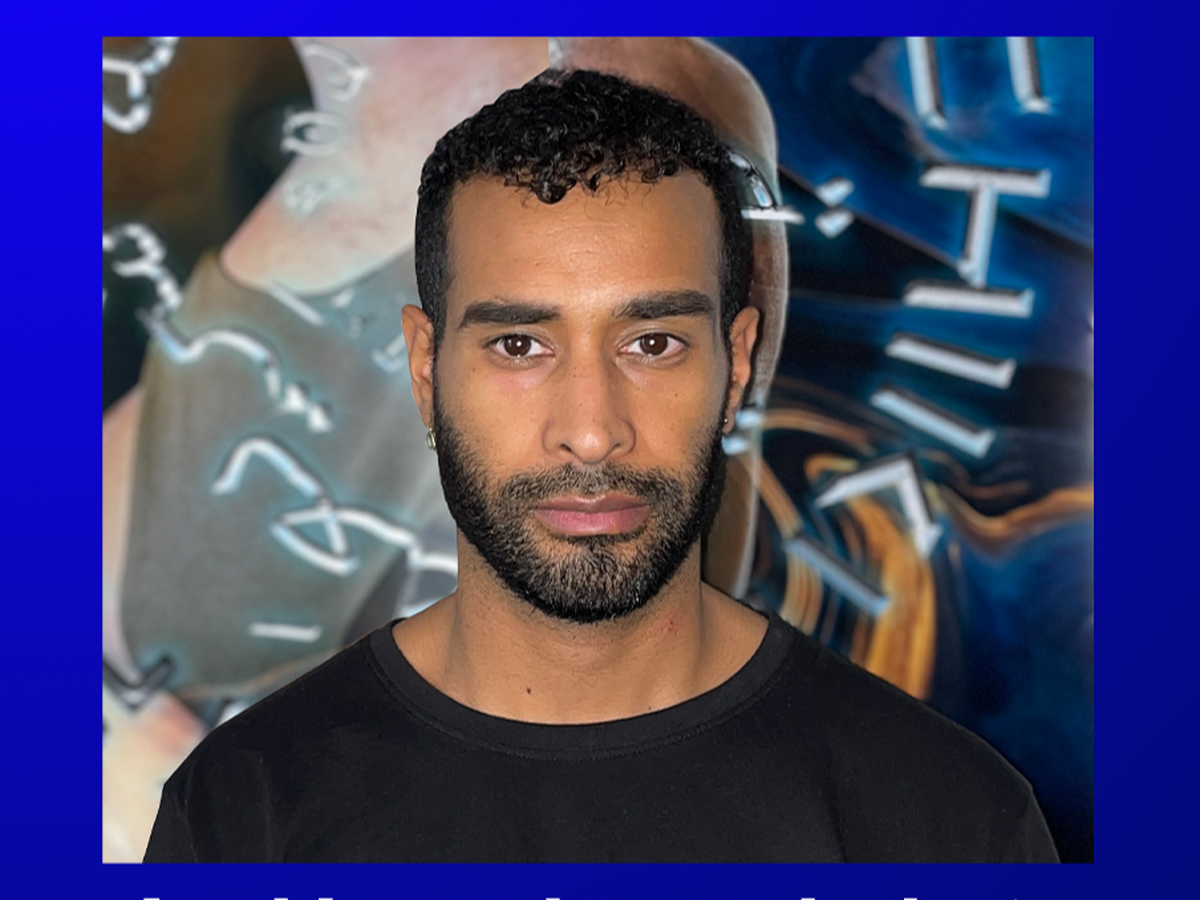
My name is Will Fredo Furtado and have been working in the arts for over 10 years and like many of you I have for many years been witnessing several of my marginalized friends and colleagues being mistreated by the violent structures of institutions, that neglect them them to the point of suicide in the worst cases. As an artist, writer and journalist I have been investigating these cases and making research on how we as marginalized people can protect ourselves and our peers against the violence that institutions inflict upon us.
This is where I need your help! I am collecting funds in order to get this book published to equip the people who are most vulnerable to institutional violence with tools for awareness and regeneration. The funds will go into the production costs such as research, editing, proofreading, printing, and design.
These are some of the international artists whose deaths I have been investigating and reporting on and whom I want to honor in the book:
Macuxi Jaider Esbell was an indigenous artist from Brazil who described his practice as artivism aimed at defending indigenous rights and environmental justice. He also curated several exhibitions featuring indigenous perspectives and created a gallery for Contemporary Indigenous Art. He died aged 41 in 2021 in his apartment at a time of wide professional recognition, intense workload and unrelenting predatory requests by western institutions to “save the world”. “This fake-white-success,” his friend Denilson Baniwa said, “was becoming a burden day by day” until he couldn’t take it anymore.
Antoinette Candia-Bailey was the vice-president of student affairs at Lincoln University of Missouri, USA, a historically black college, which at the time was led by a white president, John Moseley who reportedly “appeared heartless” and “hurt people intentionally”. The cruelty Candia-Baley endured began with a harsh performance evaluation, after which she asked for accommodations for her depression and anxiety, only for Mosley to make jokes about it and reveal her condition to peers. She filed a formal complaint to no avail and was fired after. In her final email and suicide note, Candia-Bailey rebuked Moseley for harassment and bullying. She added: “My mom worries and had so many sleepless nights because of my stress from this job”. She died aged 49 in 2024.
Prishani Naidoo was a South African sociologist, activist, and academic whose work significantly influenced the fields of social justice, labor rights, and higher education reform. She became the Director of the Society, Work and Politics Institute at the Sociology Department at Wits in 2019. Her research encompassed political subjectivity, resistance, social movements, labor, poverty, neoliberalism, and higher education. Particularly it highlighted the precarious conditions of workers in post-apartheid South Africa. She explored how the shift towards flexible, neoliberal work environments perpetuated racial and gender inequalities. She died at the age of 51 in 2024 of a heart attack that was reported to be fueled by her academic working environment and stress.
Selamawit D. Terrefe was a scholar, educator, and activist whose work profoundly influenced the fields of African American literature, critical theory, and psychoanalysis. Dr. Terrefe was an Assistant Professor of African American literature and culture at Tulane University. Her last book, Impossible Blackness: Violence and the Psychic Life of Slavery investigates the enduring psychological impacts of slavery and the persistent nature of anti-Black violence in contemporary society. She was also known as a dedicated mentor and a strong presence in her community. During her last year of life, while undergoing intensive chemotherapy, Selamawit published four articles, delivered five talks, and completed two forthcoming works. She died of neuroendocrine pancreatic cancer aged 51 in 2024. She is survived by her wife.
After researching the backstories of these cases, interviewing dozens of colleagues and professionals and juxtaposing that with research on the matter, it became clear that these are not accidental cases but happened due to systemic oppression inside institutions. We have been conditioned to ignore or to not believe this and the increasingly popular and highly funded far-right ideology exacerbates this ignorance.
Due to copyright and AI I cannot share details of the proposed chapters. Please contact me if you’d like to read the full proposal.
Why this book is important:
- In order for structural oppression to be overcome it has to be named and studied first and there is far too little being published on this
- Most people working in institutions don’t realize they are conditioned to reproduce institutional violence upon themselves, their colleagues and subordinates
- Marginalized people in institutions are not given the tools to protect themselves or the people around them
- Culture-Majority people aren’t always aware of the harm they cause
- Our tax money funds our institutions and therefore they must be scrutinized
- My writing is precise, accessible and jargon-free
Why it’s important that it takes a book form:
- Research requires several editors and that’s an infrastructure publishers already have and can provide
- Work on epistemic violence must happen in a conversation, therefore it can’t be self published
- Published books reaffirm marginalized people’s realities and legitimise our struggles
- Books make it easier to pass on vital information
- Books can make invisible violent structures visible and perceptible
- Books can have a big influence on policy change within institutions
Some of my references:
- On Being Included: Racism and Diversity in Institutional Life by Sara Ahmed, 2012, Duke University Press; NO! by Sara Ahmed, 2026, Feminist Press
- We See Things They’ll Never See: Love, Hope and Neurodiversity by Jason Arday and Chantelle Jessica Lewis, 2025, Princeton University Press
- A Programme of Absolute Disorder: Decolonizing the Museum by Françoise Vergès, 2024, Pluto Press
- The Brutish Museums: The Benin Bronzes, Colonial Violence and Cultural Restitution by Dan Hicks, 2021, Pluto Press
- Inflamed: Deep Medicine and the Anatomy of Injustice by Rupa Marya and Raj Patel, 2021, Farrar
I’ve never published a book before, nor has anyone in my family, nor in my immediate social circle. Therefore I’m asking my wider network for support.
About me:
My name is Will Fredo Furtado. I’m an Afro-Indigenous non-binary artist, writer and editor with 10+ years of experience in the culture industry. Currently the Editor-in-Chief of Contemporary And América Latina, a magazine about international art and culture in English, Spanish, French, Portuguese and Creole. I have given critical thinking workshops in Europe, Africa and the Americas and have given lectures at institutions including the Royal College of Art, Central Saint Martins, Inclusartiz Rio de Janeiro, Tasawar Tunis, UdK, NYU Berlin, ZHdK, HGB Leipzig, Leuphana University Lüneburg and Berlin Biennale.
More on my work:
Instagram: @willwalidfredo
will247.medium.com
willfredo.cc
contemporaryand.com/en/america-latina-magazine
With love and gratitude
Will