- R
- M
- N
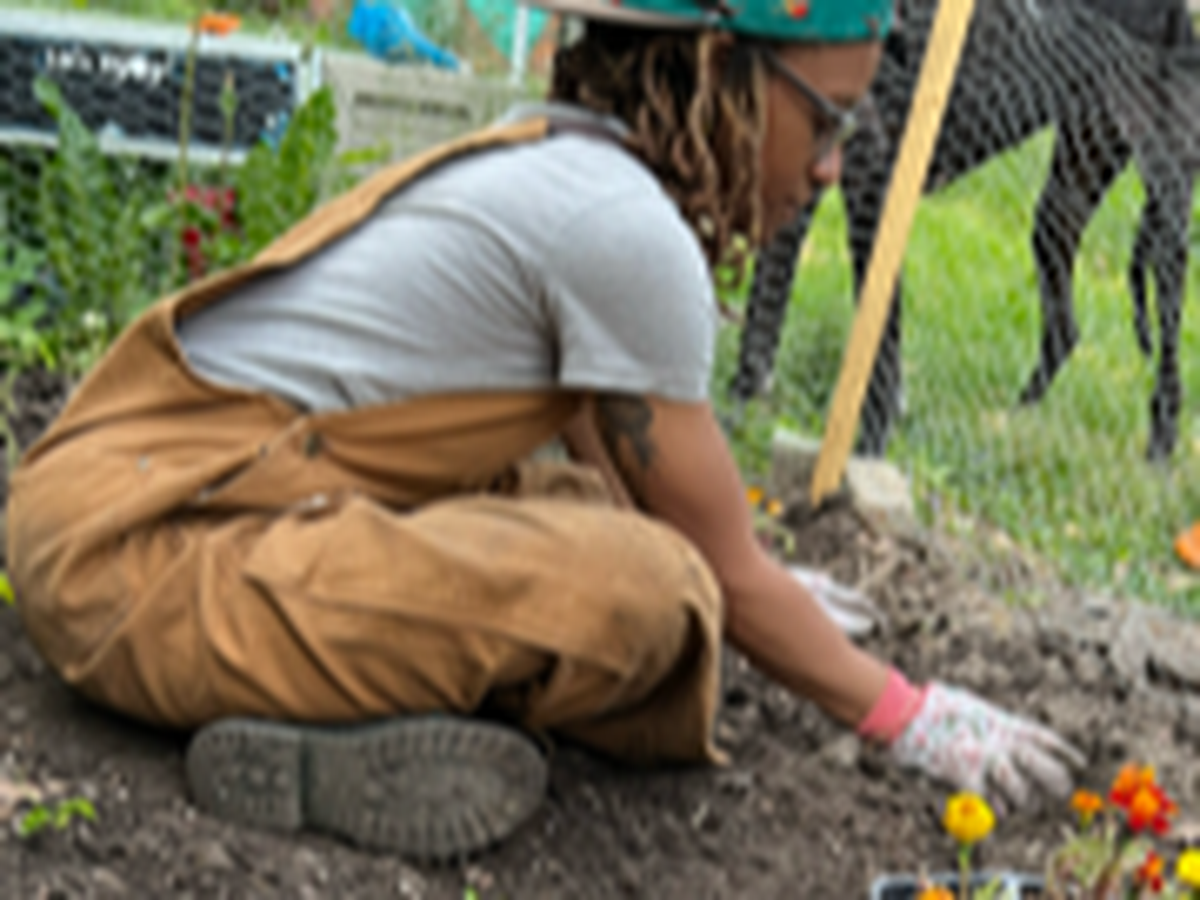
Help me create intentional space in my old hood!
0% complete
$2,676 raised of $4.5K
52 donations
Hey, I’m Rukiya – also known as Ru! I’m raising funds to purchase four side lots in my childhood neighborhood after receiving initial funding of $1,500 from the Detroit Black Farmer Land Fund for land cultivation in Detroit. Because this is a costly process, those funds covered my Earnest Money Deposit ($500) and title search fee ($200) for each lot. I’m now a month (May 29!) away from closing on my purchase and in need of additional funds of $2,000 for purchase price and ~$2,000 for closing costs to make it happen. An additional $500 will help me get started with essential tools and supplies to prepare the space for its intended vision.
I’m currently a writer and a leader of an emerging collective, The Solutionaries Collective while supporting many grassroots spaces across the city.
Read below to understand why I’m purchasing these lots and why it’s important to me.
I grew up on Alma St. which is in the 48205 zip code; also known as the Red Zone on Detroit’s east side. This area was my home from 1995-2014 and over time I have watched it face a scary amount of decline and divestment. I however reminisce on times when greater sense of community was had because of block clubs, block parties, and genuinely looking out for neighbors.
As a former resident of Alma St., I plan to foster a gathering space for growing produce, herbs, and native plants while welcoming opportunities for camaraderie and community togetherness. I believe in the importance of connecting the relationship between land, organizing/education, and creativity. As an organizer, journalist, and caregiver to land and my loved ones, it is my intention to pour such unwavering love back into my childhood neighborhood with emphasis of such connections in mind.
A little bit more about why…
In 2014, my family and I lost our childhood home of nearly 20 years to foreclosure like many others in Detroit at that time. I was enraged and sad knowing we’ve endured that lost, leaving me to wonder what will become of the neighborhood as I looked around and saw blocks that sat full of lots where homes once stood. Funny enough, I purchased a Land Bank home that same year in a nearby neighborhood which allowed me to house me and my mom shortly after facing such loss. However, the question of how to intentionally reconnect with my childhood neighborhood still remained and stuck with me for years to come.
Fast forward to 2018, I became a graduate student studying urban planning at Wayne State. My anger toward gentrification and the continuous divestment of neighborhoods such as mine, but many others in Detroit was fueled into my studies as I worked to understand more deeply how I could affect change in my hometown and possibly even where I grew up.
A conglomeration of internships, jobs, people met, scholarly journals and political education books read, led me to finding my purpose in such which is where I land today. As I am now an organizer, journalist, and caregiver among land and loved ones, I have returned to the thought of what home has meant for me and how it pours into my vision of obtaining land in my childhood neighborhood.
My why is more so rooted in the understanding for the need to find ways to not only create access to resources and material needs, but to also lead the way into inciting greater curiosity and growth in any given space, especially as we continue to face detriment of systemic racism, economic and social decline, climate crises, alongside health crises at a more rapid rate. With my project, I am answering the question of wnat it looks like to move past providing for basic needs and further pouring into my community for a greater sense of self-determination and self-sufficiency.
My project does not solve the overarching problem as I understand that systemic oppression will take generations of undoing to fix. I am however intending to be a part of the dent of the solution by fostering a space that provides education around land sovereignty through urban agriculture. Furthermore, my project will also serve as a communal space; a space where safety is modeled and taught while curating programming that is relevant to our immediate neighbors.
Rather than pondering of how and when resources will reach this community, my space and project will be used to hold meetings of minds, understanding how we can create such opportunity ourselves in a more self-reliant way while introducing the multiple ways in which mutual aid should manifest in our most divested areas that many of us still call home despite lack of resources.
I believe that it is important for Black people to reclaim the land that leaves harsh memories for us, though our ties to land long before that was rooted in healing and sustenance. Our relationship to land goes far beyond enslavement and it's important to me to emphasize that narrative while using land and farming to rebuild and empower my hood. Will you support me in this endeavor?
- What does it look like to support (collective) self-determined actions of growing healthy produce in the hood?
- How do we get back to teaching those skills among ourselves?
- What does it look like to practice mutual aid in ways that extend beyond the misunderstanding of simply being charity?
Supporting me means supporting the cultivation of such questions being answered. Thanks in advance for supporting!