- C
- C
- L
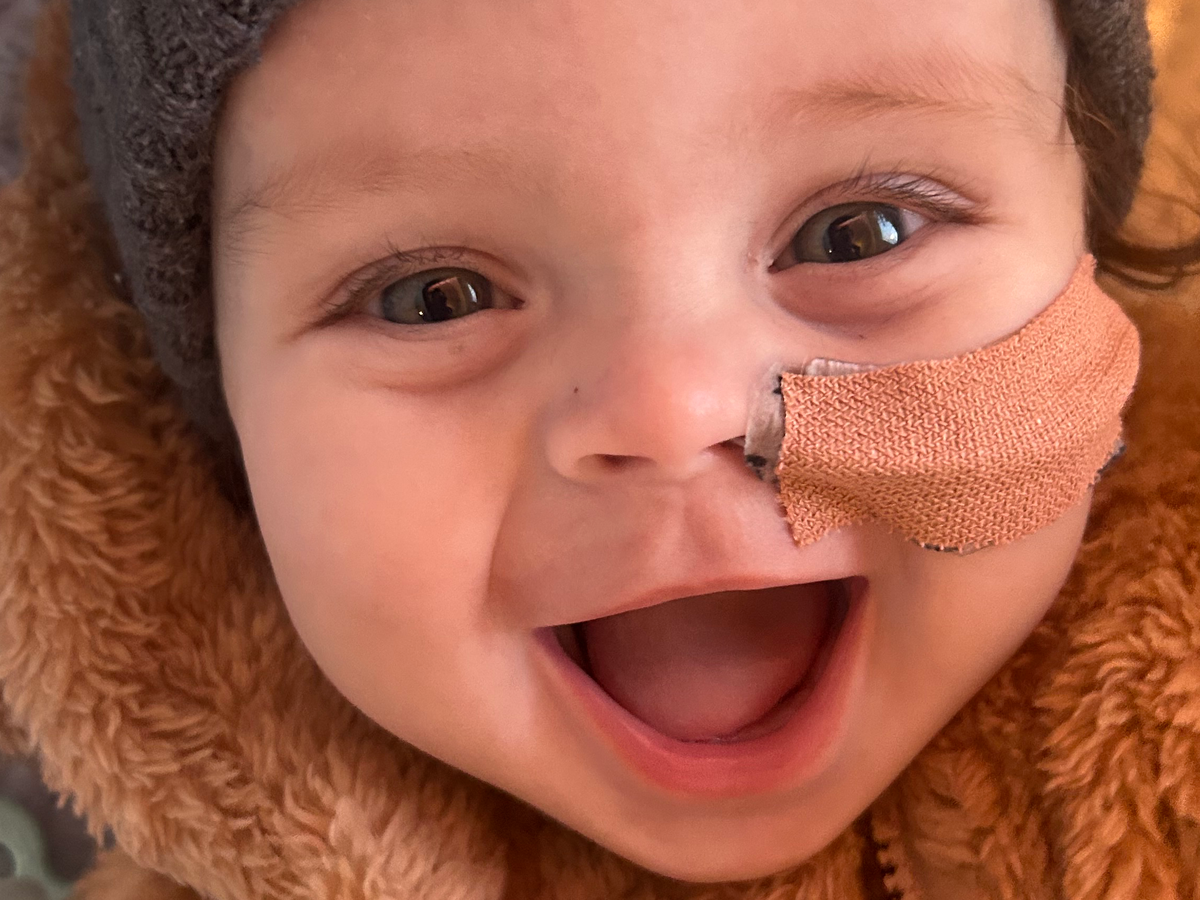
Supporting our Archie boy
0% complete
£20,041 raised of £20K
286 donations
My name is Lucy, and I am asking for help for my son, Archie.
Archie has an exceptionally rare and complex medical condition. Specialists have confirmed there is currently no known medical literature describing his specific combination of a PTEN-related condition alongside congenital hypothyroidism caused by thyroid agenesis. As a result, there is no established treatment pathway and very limited specialist experience in managing a child with his particular combination of diagnoses.
Archie requires ongoing and intensive medical care, including hospital admissions, feeding support, multiple specialist appointments and continuous monitoring. He is unable to feed and gain weight in a typical way and relies on specialist formula and tube feeding. His condition is medically fragile, unpredictable and affects multiple areas of his health and development.
We have been advised, including through discussions with leading PTEN teams at Boston Children’s Hospital and Children’s Hospital of Philadelphia (CHOP), alongside Archie’s immediate care team, that Archie would benefit from further specialist assessment. This continues to be explored alongside efforts to meet his current needs within the UK.
Following concerns regarding his care and the complexity of his condition, Archie has now been referred for quaternary-level assessment due to the need for the highest level of specialist oversight.
We wish to be completely transparent about the purpose and use of this fundraiser, including how it has developed over time as Archie’s condition and needs have evolved.
When this fundraiser was first created, our primary aim was to explore the possibility of taking Archie overseas, particularly to America, to access specialist expertise and investigate opportunities that may help us better understand or manage his condition.
At the time, we were navigating overwhelming uncertainty and desperately searching for answers. We spoke about the hope of accessing “life-saving treatment” overseas because, as parents facing an exceptionally rare and medically complex diagnosis, we were trying to explore every possible avenue that might help our son.
Like many parents of children with rare diseases, we immersed ourselves in the research. We spent countless hours reading medical literature, following PTEN research programmes and learning about work being undertaken by some of the world’s leading centres, including Boston Children’s Hospital and Children’s Hospital of Philadelphia, alongside discussions with Archie’s immediate care team.
We learned about studies investigating the PTEN pathway, targeted therapies and treatments such as everolimus, which has been studied in PTEN Hamartoma Tumour Syndrome to explore whether it may improve aspects of neurodevelopment, cognition, behaviour and overall functioning. We also followed natural history studies designed to better understand how PTEN-related conditions develop over time, alongside broader research exploring the biological mechanisms behind PTEN disorders and potential future therapeutic approaches.
As parents who had been told there was no cure, no established treatment pathway and very little information available about children like Archie, seeing active research, specialist programmes and clinical trials dedicated to PTEN-related conditions gave us hope. We understood these studies did not offer a cure and that there were no guarantees. However, we also understood that medical progress comes from research and that future breakthroughs only happen because researchers continue asking questions and testing new approaches.
That is why we originally used the term “life-saving”.
At the time, this reflected how we were interpreting what we were learning about Archie’s condition and the research landscape surrounding PTEN-related disorders. Alongside understanding that Archie has a complex, multi-system condition with ongoing medical instability and a known increased risk of complications, including tumour development, we were also reading about active clinical research, surveillance strategies and specialist programmes in the United States.
From our perspective as parents facing a diagnosis filled with uncertainty and unknowns, these programmes represented more than academic study. They represented the possibility that earlier identification of risks, improved monitoring or future treatment breakthroughs could one day change outcomes for children like Archie. In the context of uncertainty surrounding his prognosis and long-term health, that felt profoundly significant.
It was this interpretation that led us to describe the opportunities we hoped to access as “life-saving”, not because there was a guaranteed treatment for Archie, but because we believed that engagement with leading specialists and ongoing research in this area could, in time, be crucial in identifying complications earlier, improving management and potentially influencing outcomes in a condition where so many unknowns remain.
That hope has not changed.
However, over time, our understanding of just how medically fragile and medically complex Archie is has changed significantly.
As time has gone on, Archie’s condition has become increasingly complex and, in many ways, more has continued to unfold than we ever anticipated. New medical challenges, unanswered questions and additional care needs have continued to emerge, often requiring further investigations, specialist input and changes to how he is supported.
What we understood at the beginning of this journey is very different from what we understand now. As Archie’s complexity has become clearer, so too has the reality of the level of care, coordination and support he requires.
What began as a fundraiser focused primarily on accessing overseas specialist expertise has naturally evolved to include the immediate realities of caring for a medically vulnerable child with highly complex needs.
In December 2025, Archie became severely malnourished due to significant feeding difficulties and required NJ tube feeding.
In January 2026, he was admitted to hospital for six weeks. During that admission, he required Total Parenteral Nutrition (TPN), a form of intravenous nutrition used when adequate nutrition cannot be maintained through the digestive system. He also developed sepsis, a serious and potentially life-threatening complication.
These events highlighted just how medically vulnerable Archie is and reinforced the seriousness of his condition.
In April 2026, we were told doctors could not provide a definite prognosis due to the rarity and complexity of Archie’s condition. Whilst specialists have explained that his condition is serious and likely life-limiting, they have also said there are many unknowns and that they cannot accurately predict what the future will look like for him.
In June 2026, Archie’s PTEN specialist told us he is the most severely affected PTEN patient she has personally encountered. We were also informed that his case has been discussed at national specialist meetings due to its rarity and complexity.
The appointment reinforced concerns we have been raising for some time regarding Archie’s care within the UK.
Perhaps the most significant part of the discussion was the specialist’s view that Archie should be under the oversight of a specialist quaternary paediatric centre. Given the complexity of his medical needs and the number of specialties involved, she felt strongly that Archie requires coordinated care from a centre experienced in managing highly complex children.
Unfortunately, this remains an ongoing challenge.
Since March 2026, we have been working to have Archie accepted under the care of a quaternary centre. Whilst professionals consistently acknowledge the complexity of his case and the need for specialist input, progress has often been slow and we have repeatedly encountered delays, fragmented communication and uncertainty regarding who should ultimately oversee Archie’s care.
Archie’s complexity is recognised by the very professionals assessing him, yet accessing the level of coordinated oversight recommended by multiple specialists has proven difficult. His conditions interact and overlap, affecting multiple body systems and requiring specialists to work together and consider him as a whole child rather than through the lens of an individual specialty.
We are incredibly grateful to the many professionals who continue to advocate for Archie and support him. However, navigating repeated referrals, fragmented services and uncertainty over responsibility has often left us fighting to secure care that experts agree he requires.
These experiences reinforced something we were already beginning to realise. Whilst seeking specialist expertise overseas remains an important goal, Archie cannot simply wait for America.
His needs exist now.
He requires ongoing medical care, feeding support, hospital admissions, specialist equipment, travel to appointments and adaptations to ensure he can be cared for safely.
As a result, the purpose of this fundraiser has naturally evolved.
Whilst one of our long-term goals remains accessing specialist expertise overseas and continuing to explore opportunities in America, we have also had to focus on the immediate realities of caring for a medically fragile child with an uncertain future.
All funds raised are used solely for Archie’s benefit and to meet the additional needs created by his condition. This includes specialist medical input, medical-related travel, hospital stays, specialist feeding requirements, equipment and necessary adaptations within the home environment. Funding has also supported an urgent move to more suitable accommodation to ensure Archie’s safety and better meet his medical requirements.
The support received has also helped relieve some of the practical and situational pressures our family has faced during periods of significant uncertainty, allowing us to focus on responding appropriately to Archie’s needs and ensuring he remains safe and supported.
We continue to look towards the possibility of taking Archie overseas, particularly to America, should appropriate opportunities arise. Whilst we understand there are no guarantees, we remain committed to exploring every possible avenue, connecting with specialists and researchers around the world and ensuring that no stone is left unturned in our search for answers.
Our priority is to ensure Archie remains safe, comfortable and appropriately supported at all times whilst continuing to seek the best possible care, expertise and opportunities for his future.
We will continue to provide updates as things progress.
Thank you for taking the time to read Archie’s story and for your support.
Lucy, Keiron, Jamie & Archie ❤️
Keiron Kershaw, Archie’s Dad, is listed as the beneficiary. All funds, when transferred, go into Archie’s NS&I account. As Archie is under 18, this cannot be set up automatically. Thank you.
Organizer and beneficiary
Keiron Kershaw
Beneficiary