Help 77-Year Sal Come Home After Two Years on a Park Bench
Be the first to donate
Inspire others and help Dino build momentum.
1st donor
Help Sal Come Home After Two Years on a Park Bench
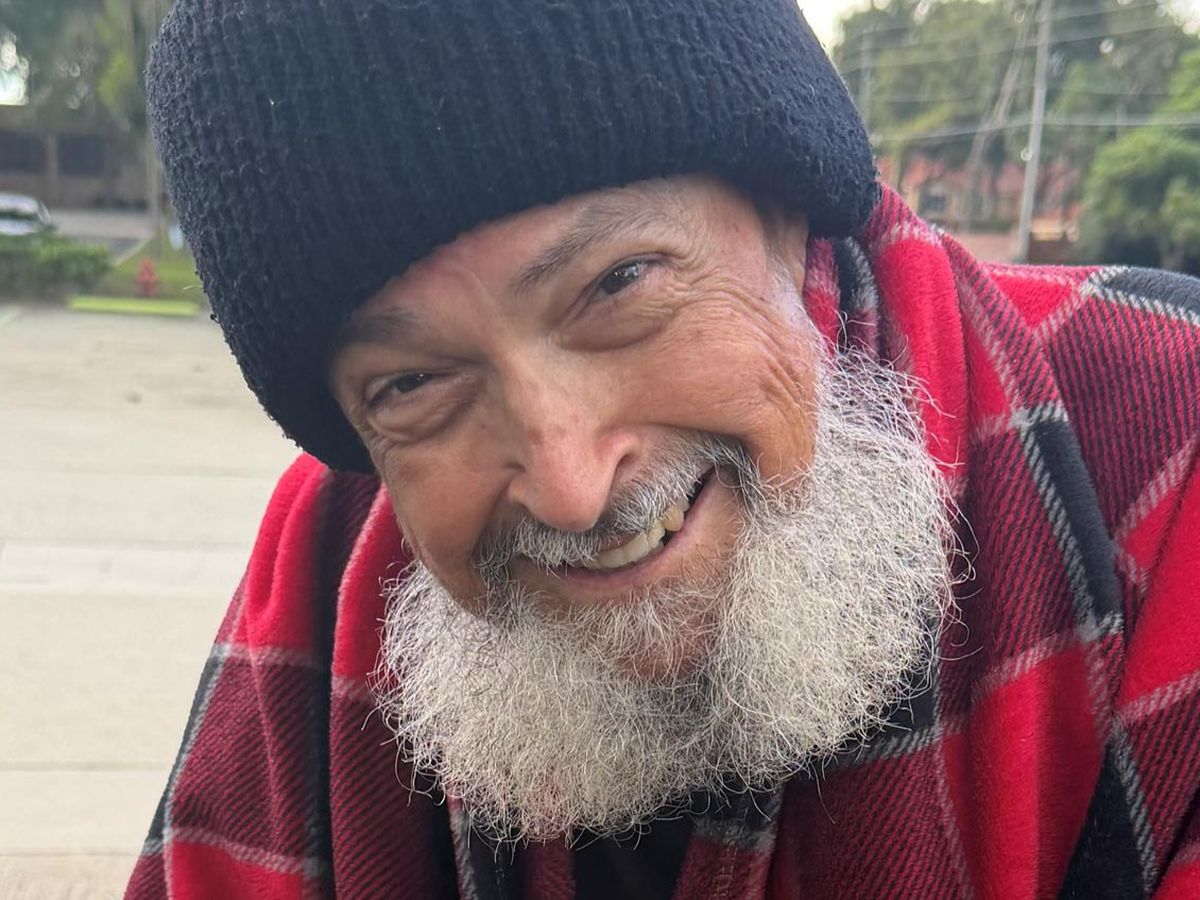
For nearly two years, 77-year-old Sal has slept on a park bench in downtown Apopka, Florida. On September 20, he will turn 78.
Sal never imagined he would become homeless.
He worked throughout his life, including as a hotel manager. He lived responsibly, was frugal, and saved money so he could take care of himself in retirement.
As Sal approached 70, the hotel where he worked was sold. Employees were told the hotel would close for several months while the new owners completed extensive renovations. Sal believed he had saved enough to retire and decided the time had come.
Then he became seriously ill.
Without adequate health insurance, hospital stays, doctors and medical expenses began consuming the savings he had spent a lifetime accumulating.
As Sal watched his savings disappearing, he realized he needed to return to work.
He tried.
Despite his years of experience and willingness to work, Sal says he couldn't find anyone willing to hire him. He became concerned that his age was working against him and even consulted an attorney about possible age discrimination. He says he was advised that proving age discrimination in hiring could be extremely difficult.
Still, Sal kept trying.
The work never came.
Eventually, his savings were gone.
The man who had worked, saved and believed he had prepared for his later years found himself homeless.
For almost two years, his bed has been a park bench in downtown Apopka.
I recently asked Sal what it was actually like to sleep there night after night.
He paused and told me, "I don't want to get into too much detail because I think you would find it very disturbing."
He then told me enough.
During those two years, Sal says he has been assaulted multiple times, often by young men. He has also been robbed repeatedly. Money has been taken from him. Even his clothing has been stolen.
And yet, every evening, this 77-year-old man has had to return to that same park bench because he had nowhere else to go.
When it rains, Sal props up a large umbrella and tries to stay dry. When the storms become too severe, or the nights become too cold, the manager of a nearby Waffle House has allowed Sal and several other homeless people to come inside, sit quietly, and stay safe until the weather passes.
They aren't required to buy anything.
During the day, Sal goes to a small storage unit where he keeps what remains of his belongings. Each morning and evening, he changes what he carries with him depending upon what he will need for the day or for another night outside.
He isn't permitted to sleep there, so every evening he leaves and returns to his park bench.
Everything most of us accomplish in minutes can take Sal hours.
Doing laundry means gathering his clothes, carrying them on public transportation to a laundromat where he feels welcome, washing everything, and carrying it all back.
A 30-minute doctor's appointment can consume four or five hours because he has to travel there and back by bus, sometimes transferring between buses.
But what struck me most about Sal wasn't that he was homeless.
It was who he was.
Several months ago, I was leaving physical therapy early one morning and told my Tesla to take me home.
There was a very simple way out of the parking lot. Instead, the car backed up, turned in the opposite direction and drove around behind a Chick-fil-A.
That is where I first saw Sal.
He was near a dumpster with a small cart containing his belongings. He had something resembling a blanket wrapped around him.
Something told me I needed to stop.
Traffic behind me made it difficult, so I drove on, circled through the large parking lot and managed to find him again.
I rolled down my window, introduced myself and asked his name.
Then I said, "Sal, tell me about yourself."
His answer stopped me.
"Nobody's ever asked me that before."
We talked for quite some time.
Before leaving, I reached for the few dollars I kept in my car to give to someone who might need help.
I had three $1 bills.
When I tried to give them to Sal, he refused.
He told me that money wasn't for him. It was for my family, and I should keep it.
Here was a man sleeping on a park bench who was concerned that accepting three dollars from me might take something away from my family.
Eventually, after we talked some more, he agreed to let me help him.
I thought that might be the end of our encounter.
It wasn't.
A couple of weeks later, I was driving on a main road near the same area with my Tesla navigating me to my destination.
The route displayed on the screen showed that I should continue straight.
The car didn't.
It unexpectedly turned into the same enormous parking lot where I had first met Sal.
This time it didn't go behind Chick-fil-A.
Instead, it began traveling very slowly up and down the rows of the parking lot. There were countless empty parking spaces. I couldn't understand what the car was doing.
This continued for several minutes.
Then it headed toward an exit I would ordinarily never use because traffic there can make it extremely difficult to get onto the road, particularly during morning rush hour.
But that morning, when the car reached the exit, there were no cars blocking the way.
And directly in front of me, crossing the street, was Sal.
We were both astonished and genuinely happy to see one another.
Sal told me that morning that he was normally a very positive person, but for some reason he had awakened feeling down.
Then he said, "You have just made my day."
I gave him my business card and asked him to please stay in touch.
He didn't call.
Weeks passed. I continued looking for him whenever I drove through the area.
Then, during a board meeting at Loaves & Fishes, a local food pantry where I have volunteered for many years, I told the other board members about Sal. I told them I hadn't seen him in quite some time and couldn't find him.
The very next morning, while driving down that same road, I saw Sal again.
When I asked why he hadn't called me, his answer revealed even more about the kind of man he is.
He had been in and out of hospitals and seeing doctors.
He didn't want to burden me with his problems.
I asked Sal to imagine that our situations were reversed.
"If I were you and you were me, and I didn't call because I didn't want to burden you, how would that make you feel?"
He told me he would be hurt.
So I said, "Then you need to stop hurting me. I want to help you."
During that same meeting, I told Sal I had been carrying some money in my car for him.
I reached for my wallet and realized I had accidentally left it at home.
All I could find in the car were six $1 bills.
I apologized and handed him the six dollars.
I didn't think anything more about those six dollars.
Until yesterday.
After learning that Sal had been sleeping outside for almost two years, I couldn't stop thinking about him.
Friday night, thunderstorms were approaching Apopka.
I was home with a roof over my head and a comfortable bed waiting for me. Somewhere nearby, this 77-year-old man was preparing to spend another night on a park bench.
I knew I wasn't going to be able to sleep without trying to find him.
I went out around 9:00 that night and searched the parks and streets of Apopka.
I couldn't find him.
At approximately 11:30 that night, I went to the Apopka Police Department. I showed an officer a photograph of Sal, explained what I was trying to do and asked if the officers on patrol could help me find him.
We still couldn't find him.
I reluctantly went home.
The next morning, I started searching again.
I returned to the police department, and an officer suggested something I hadn't considered.
I had mentioned that Sal went to a storage facility every morning and evening to change the belongings he carried with him.
The officer asked whether I had ever considered that Sal might spend part of the day there.
I hadn't.
I drove directly to the storage facility.
When I mentioned Sal's name to the manager, his face lit up.
"Sal?"
He knew exactly who I was talking about.
The people there had grown very fond of him.
And Sal was there.
The manager walked ahead of me and told Sal that a gentleman was there asking to see him.
Before Sal even saw me, he asked:
"Is his name Dino?"
When the manager said yes, Sal came out and gave me a hug.
I told him, "Sal, I'm here to pick you up."
We spent much of the day together. He had previously told me that he had visited my company's website and would someday love to see where we make our sinks, so I took him to our shop and showed him around. We had lunch together and spent time simply talking.
I had also arranged a hotel room for him.
For the first time in almost two years, Sal was going to have a door he could close behind him and a bed to sleep in.
But before we got there, Sal told me he wanted to show me something.
He reached into the upper-left pocket of his shirt and pulled out a small package.
It was carefully wrapped in thick white paper and secured with rubber bands.
Inside were the six $1 bills I had given him weeks earlier.
He had not spent a single one.
Sal told me he would never spend them.
He said they were too valuable to spend.
Then he explained why he carried them in his upper-left shirt pocket.
It is the pocket closest to his heart.
He told me those six dollars would be beside him on his deathbed.
This is a man who had been sleeping on a park bench, riding buses for hours to see doctors, carrying his belongings with him, being robbed and assaulted, and wondering where his next safe night would come from.
And he wouldn't spend six dollars because of what those six pieces of paper represented to him.
Last night, for the first time in almost two years, Sal didn't have to wonder what might happen to him while he slept.
He didn't have to protect his belongings.
He didn't have to worry about being robbed or assaulted.
He didn't have to watch the sky for another storm.
He closed a door behind him, slept in a bed, and had a roof over his head.
But one week in a hotel doesn't solve Sal's problem.
We are now working to secure permanent housing for him. A possible home has already been identified - a small shared home where Sal could finally have a permanent place to live.
Sal receives Social Security, but his limited income also goes toward medical and other existing obligations. Housing is only the beginning. He needs enough stability that an unexpected medical expense or other setback doesn't send him back to that park bench.
My hope is that this fundraiser can help provide Sal with stable housing, basic living necessities, transportation to his many medical appointments, and a financial cushion so that he doesn't have to live every day wondering what happens next.
There is one other hope.
Years ago, when his savings were disappearing and he was desperately trying to survive, Sal pawned some of the possessions that meant the most to him - treasured 18-karat gold jewelry and an 18-karat gold watch belonging to his father.
His father had those pieces made many years ago, before the family's life in Cuba changed under Castro.
Sal has continued making payments because those pieces are much more than jewelry to him.
They are part of his father.
He still owes approximately $11,000 to recover them.
If this fundraiser raises enough after Sal's immediate housing and basic needs are secured, I would love to see this 77-year-old man get his father's belongings back.
But first, I want to see Sal safe.
I am organizing this fundraiser, but this isn't my story.
It is Sal's.
Nothing will move forward without his knowledge and permission.
Sal has spent much of his life believing that his problems were his burden to carry. Even when he had almost nothing, accepting help was difficult for him.
I hope we can show him something different.
That accepting another person's kindness doesn't make you a burden.
Sometimes it simply gives another human being the opportunity to care.
If Sal's story has touched you and you are in a position to help, any amount will help us give him something most of us rarely have to think about - a safe place to sleep, some financial stability, and the chance to spend the rest of his life without wondering whether he will once again have to call a park bench home.
And if you aren't in a position to donate, sharing Sal's story would mean just as much.
I keep thinking about the first question I asked him that morning behind Chick-fil-A.
"Sal, tell me about yourself."
And the answer I never expected:
"Nobody's ever asked me that before."
Organizer