- A
- A
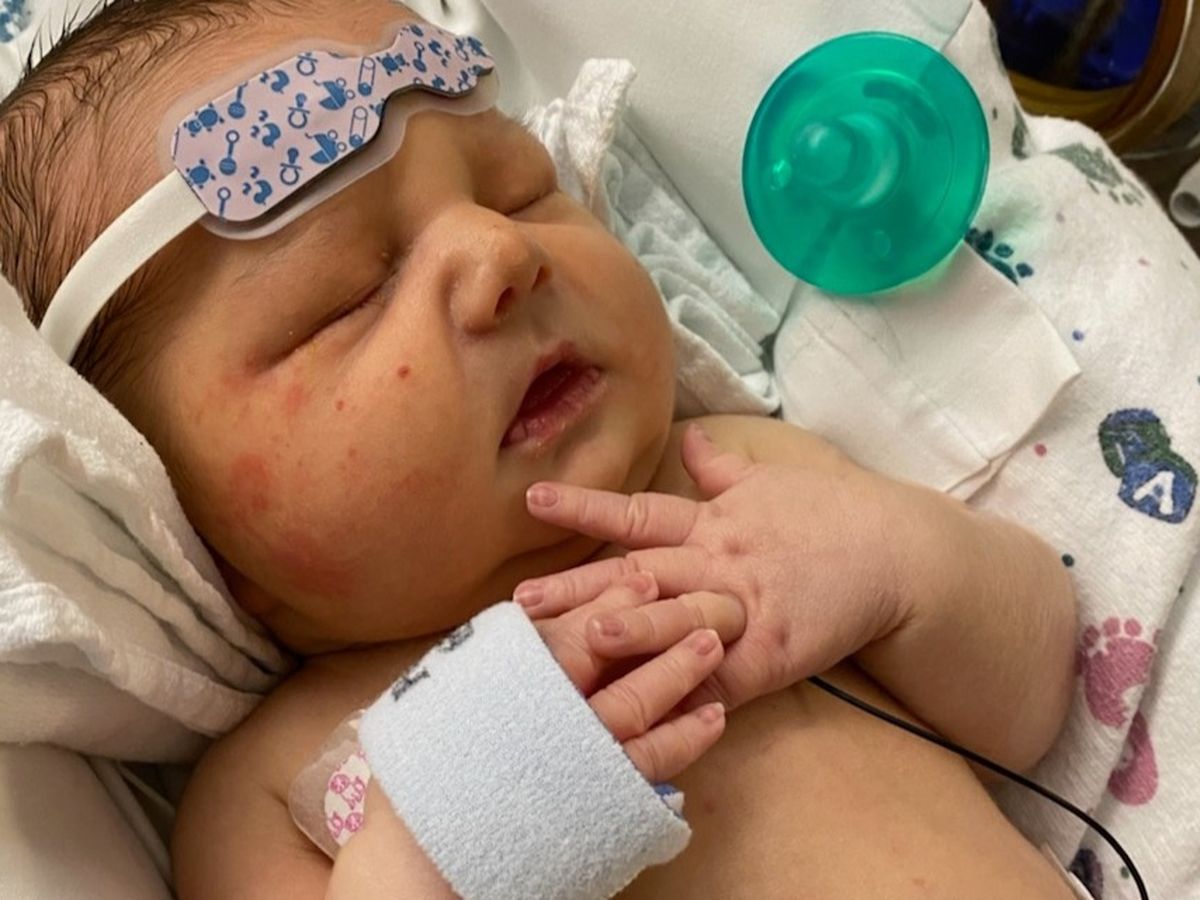
On Friday, May 15th at 12:31 PM Blythe, Jon and Zachary welcomed a new addition to their family Milo Louis Olson. Milo was born at the University of Nebraska Medical Center, weighing 8 lbs. 8 oz. and is 21 inches long. He looks just like his older brother! Milo and mom were thought to be doing well.
On Saturday and Sunday Milo began experiencing some heart, lung, and blood pressure related issues. Blythe also experienced these same issues although until now we thought they were related to her premature birth. Due to these health concerns, Milo was transported to Omaha Children’s Hospital Neonatal Intensive Care unit on Sunday afternoon for evaluation and treatment.
Like his mom, Milo was diagnosed with a Ventricular Septal Defect (VSD) of the heart as well as a coarctation of the aorta and pulmonary hypertension. On Sunday evening at Children’s they performed a procedure to reopen his Patent Ductus again (normally this closes after birth) to allow them to better control his blood pressure and oxygenate his body. Their plan at this time is to do heart surgery sometime within the next week. They will have to repair the VSD, the coarctation, and then close the PDA.
Just so you know, the Patent Ductus Arteriosus (PDA) is an extra blood vessel found in babies before birth and just after birth. In most babies who have an otherwise normal heart, the PDA will shrink and close on its own in the first few days of life. If it stays open longer, it may cause extra blood to flow to the lungs. Basically, a PDA is an unclosed hole in the aorta. Before a baby is born, the fetus's blood does not need to go to the lungs to get oxygenated. The ductus arteriosus is a hole that allows the blood to skip the circulation to the lungs. However, when the baby is born, the blood must receive oxygen in the lungs and this hole is supposed to close. If the ductus arteriosus is still open (or patent) the blood may skip this necessary step of circulation. The open hole is called the patent ductus arteriosus.
So, for Milo in this case they want to attempt to re-open the PDA which will allow the doctors to better control his blood flow and blood oxygenation. The next few days will allow his cardiologists to decide what procedures Milo will need to deal with both the PDA and VSD.
A VSD like Blythe’s and Milo’s is a fairly common heart defect and is a hole in the wall separating the two lower chambers of the heart. In normal development, the wall between the chambers closes before the baby is born, so that by birth, oxygen-rich blood is kept from mixing with the oxygen-poor blood. When the hole does not close, it may cause higher pressure in the heart or reduced oxygen to the body. Normally, the left side of the heart only pumps blood to the body, and the heart's right side only pumps blood to the lungs. In a child with VSD, blood can travel across the hole from the left pumping chamber (left ventricle) to the right pumping chamber (right ventricle) and out into the lung arteries. If the VSD is large, the extra blood being pumped into the lung arteries makes the heart and lungs work harder and the lungs can become congested.
To complicate matters, due to COVID19, things are even more difficult. Only one parent is allowed to be with their child at the hospital. As a result even though Blythe is still recovering from her c-section, she wants to be with her baby so she can continue to bond and breast feed him, but Jon naturally also wants to be there. I imagine that they’ll test just how strongly that COVID19 restriction is enforced.
As for Milo’s big brother Zach, his extended family is trying to keep him occupied. We’re trying to keep our worry from Zach so we’re not releasing much on social media but he’s old enough to know that things are exactly right either. He’s also not been able to meet his brother in person yet (COVID19 rule) but he’s been face timing with his parents and been able to see him and his parents that way.
At this time all we’re asking from friends and family is to keep our whole family in your prayers. We’ll keep you posted as we know more.
On Saturday and Sunday Milo began experiencing some heart, lung, and blood pressure related issues. Blythe also experienced these same issues although until now we thought they were related to her premature birth. Due to these health concerns, Milo was transported to Omaha Children’s Hospital Neonatal Intensive Care unit on Sunday afternoon for evaluation and treatment.
Like his mom, Milo was diagnosed with a Ventricular Septal Defect (VSD) of the heart as well as a coarctation of the aorta and pulmonary hypertension. On Sunday evening at Children’s they performed a procedure to reopen his Patent Ductus again (normally this closes after birth) to allow them to better control his blood pressure and oxygenate his body. Their plan at this time is to do heart surgery sometime within the next week. They will have to repair the VSD, the coarctation, and then close the PDA.
Just so you know, the Patent Ductus Arteriosus (PDA) is an extra blood vessel found in babies before birth and just after birth. In most babies who have an otherwise normal heart, the PDA will shrink and close on its own in the first few days of life. If it stays open longer, it may cause extra blood to flow to the lungs. Basically, a PDA is an unclosed hole in the aorta. Before a baby is born, the fetus's blood does not need to go to the lungs to get oxygenated. The ductus arteriosus is a hole that allows the blood to skip the circulation to the lungs. However, when the baby is born, the blood must receive oxygen in the lungs and this hole is supposed to close. If the ductus arteriosus is still open (or patent) the blood may skip this necessary step of circulation. The open hole is called the patent ductus arteriosus.
So, for Milo in this case they want to attempt to re-open the PDA which will allow the doctors to better control his blood flow and blood oxygenation. The next few days will allow his cardiologists to decide what procedures Milo will need to deal with both the PDA and VSD.
A VSD like Blythe’s and Milo’s is a fairly common heart defect and is a hole in the wall separating the two lower chambers of the heart. In normal development, the wall between the chambers closes before the baby is born, so that by birth, oxygen-rich blood is kept from mixing with the oxygen-poor blood. When the hole does not close, it may cause higher pressure in the heart or reduced oxygen to the body. Normally, the left side of the heart only pumps blood to the body, and the heart's right side only pumps blood to the lungs. In a child with VSD, blood can travel across the hole from the left pumping chamber (left ventricle) to the right pumping chamber (right ventricle) and out into the lung arteries. If the VSD is large, the extra blood being pumped into the lung arteries makes the heart and lungs work harder and the lungs can become congested.
To complicate matters, due to COVID19, things are even more difficult. Only one parent is allowed to be with their child at the hospital. As a result even though Blythe is still recovering from her c-section, she wants to be with her baby so she can continue to bond and breast feed him, but Jon naturally also wants to be there. I imagine that they’ll test just how strongly that COVID19 restriction is enforced.
As for Milo’s big brother Zach, his extended family is trying to keep him occupied. We’re trying to keep our worry from Zach so we’re not releasing much on social media but he’s old enough to know that things are exactly right either. He’s also not been able to meet his brother in person yet (COVID19 rule) but he’s been face timing with his parents and been able to see him and his parents that way.
At this time all we’re asking from friends and family is to keep our whole family in your prayers. We’ll keep you posted as we know more.
Organizer and beneficiary
Blythe Olson
Beneficiary