- J
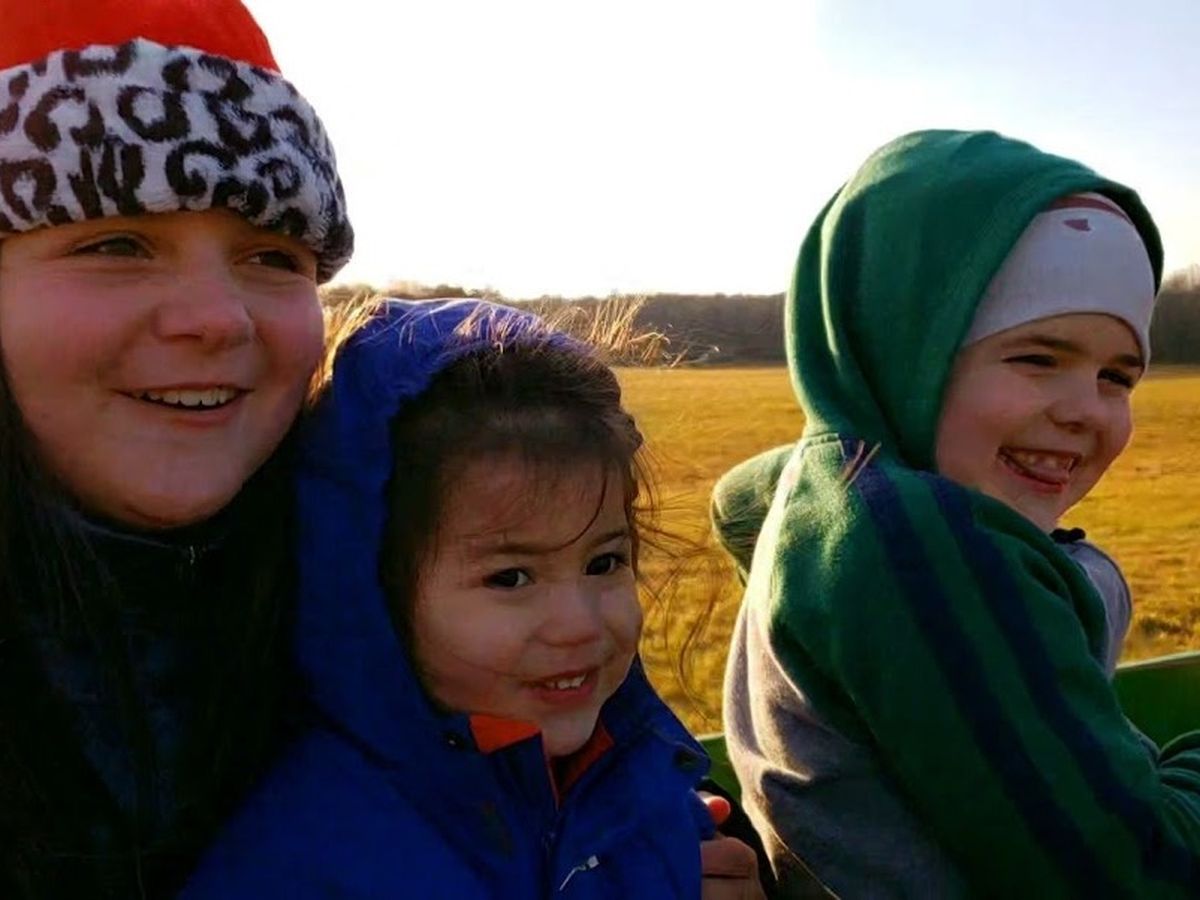
As most of you know, my name is Mahala, a 35 year old single mom of three phenomenal children: Haddie (11), Malachi (9), and Layla (3.5). What many don’t know is I am expecting a baby boy in mid-December, and I am utterly exhausted, emotional, and completely terrified... but not in the ways normal in pregnancy. My family and I have no place to call home, we have no steady income, and with my recent diagnosis of narcolepsy, we lack options to overcome challenges on our own. My family and I need a home, and we need your support to do so.
The Backstory
In 2017, the three kids, our cat, Autumn and I moved to Massachusetts to surround ourselves with family. I imagined that I would find stability in our day-to-day lives, with more family support and a wealth of education and professional experience to help me secure a job to support my family.

Unfortunately, a consistent and debilitating fatigue prevented me from maintaining a job. This was horribly confusing to me - as I had once valued being on time, found excitement in my work, felt good about working no matter what the job was. And since medical professionals continuously associated my tiredness with previous diagnoses or situational stress, I just dealt with it, assuming I was getting progressively lazier and sleepier in my old age. Even though I was sleeping through a life I loved living with my kids.

I reached a breaking point in June of this year, when my symptoms skyrocketed and I could no longer excuse sleeping so much to anything else in my life. I had started a job that I was certain I could handle - a part-time development position that required a great deal of writing, and one that aligned with my own interests and passion. But I found myself unable to make it to work on time, dropping the ball on a number of responsibilities. I found myself horribly confused by tasks that were once second nature to me. And I would doze off at my desk or during meetings.
I could sleep for 15 hours, wake up still exhausted, then fall asleep while driving the kids to school. Or I would come home with the intention of taking a 30 minute nap, and wake up 7 hours later when the kids walked through the front door.
In July, I had a sleep study done, which consisted of measuring my brain waves and breathing overnight, and then how fast I fell asleep during scheduled naps throughout the next day.
I had my typical night's sleep, experiencing a few terrifying nightmares, episodes of sleep paralysis and hallucinating, and then waking up at 6am. I fell asleep for every nap I was asked to take. The results came back, I met with a neurologist, and received a diagnosis of narcolepsy.
Narcolepsy
Narcolepsy is a neurological sleep disorder with the trademark symptoms of Excessive Daytime Sleepiness (EDS) and daytime sleep attacks (falling asleep while performing other activities and/or during attempts to not fall asleep). But there’s other symptoms as well, including sleep paralysis , vivid hallucinations, insomnia, disrupted nighttime sleep, automatic behaviors (continuing to perform activities while sleeping), and for some, cataplexy (involuntary paralysis under extreme emotions).
People who have narcolepsy tend to spend more time than usual in rapid eye movement (REM) sleep stage, resulting in sleep that is not restorative. During my sleep study, I spent more than ¾ of the night in REM sleep, and immediately entered into this stage upon falling asleep for all of the naps I took. It helps to explain why I can sleep for upwards of 18 hours and wake up ready to go back to sleep for another 18.
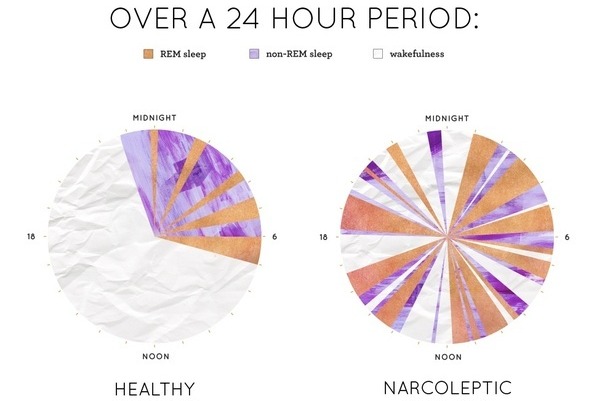
Have you ever stayed awake for 48-72 hours? Were you able to function in any meaningful capacity after being awake for that long? According to Wake up Narcolepsy , that horrendous feeling you have is equivalent to what those with Narcolepsy experience on a daily basis. When I received my diagnosis, I was relieved to no longer feel quite so guilty about not being able to hold down a job. It helps to know that I am not lazy or incompetent, but rather suffer from a neurological disorder requiring ongoing treatment. Nonetheless, this is an excruciating loss - my identity has always been very much dependent on the work I was doing, and the feelings of accomplishment that go along with that. Until I am able to get treatment, I have to accept that I am not capable of working to provide the financial resources our family needs.
The (unobtainable) Solution
Those diagnosed with narcolepsy are able to work, but with extreme cases like mine, it is possible only with treatment through prescription medication. Sadly, the two prescriptions that could help me (Xyrem, aka the date rape drug, and stimulants) are not safe to take while pregnant. Because of this, I am not able to treat my symptoms effectively until after my pregnancy.
The (obtainable) Solution
Until the time where I can receive the most effective treatment and manage my own financial security again, we are relying on the generosity and compassion of our friends and family to help us find stability. With donations, we’ll obtain a home and cover our everyday living expenses. In 4 months (though, let’s be honest - with a new baby, I am going to be unimaginably tired) I will explore treatment that works - treatment that allows me stay awake, spend time with my kids, and find a source of steady income
Move in costs: $7,500.00*
Rent: $10,000.00*
Storage costs: $500.00
Phone costs: $400.00
Insurance: $680.00
Transportation: $800.00
Prescription/medical: $400.00
* estimated @ $2,500 monthly rent, though I am hoping to find something less expensive. Any additional funds will be used to secure a temporary housing option (airbnb, hotel, etc.)
Other Ways You Can Help
Our family needs a wide range of support, and we'd also appreciate:
Foster Parents for our two cats:
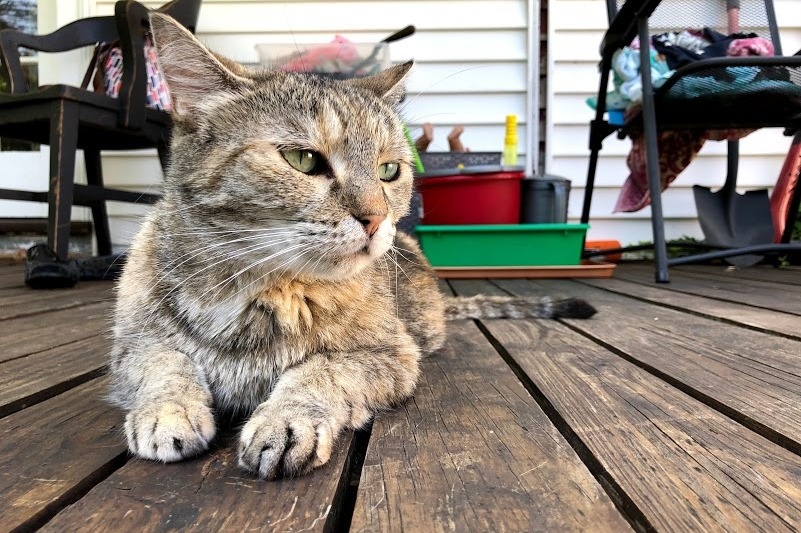
Autumn is a female cat we adopted from a rescue shelter in Washington State. When we adopted her, she was around 3 years old and she is now approaching 10. She is a very tolerant cat- never exhibiting any violent behavior towards the children. Autumn spends her time both outdoors and indoors. She is not fond of other cats.
UPDATE: Thank you to our wonderful animal-loving friends, the Hambeltons, for taking Patch in and quite possibly not giving him back!
Patch is a male long haired cat who came to live with us in December 2018. He is likely 2 or 3 years old. He is painfully clumsy, inexplicably snuggly, and extraordinarily un-cat like (he never lands on his feet). He is playful, wonderful with children, and highly entertaining. Patch spends his time indoors only, and would likely parish at the hands of a ladybug should he ever venture outside.

The cats do not interact with each other, therefore they don’t need to go to the same foster home.
Emotional Support for the Kids:
If you are close to our current location (Wenham, MA), the kids would really benefit from time with their friends. I have refrained from reaching out to parents because I am embarrassed that I cannot necessarily contribute (no home, no stable transportation).
Educate yourself, and help spread awareness!
This disorder has absolutely wreaked havoc on the life I had planned on living. Unfortunately, even with a diagnosis (medical professionals validating the severity/existence of my symptoms), those around me struggle to make sense of the behaviors they see, and often equate these symptoms to laziness, drug use, irresponsibility, and low drive. This has created tension and conflict in my life, and played a large role in our current housing crisis.
You can read more about narcolepsy and help spread awareness to reduce the harmful stigma associated with it.
Narcolepsy Network
Wake up Narcolepsy
National Institute of Neurological Disorders and Stroke
National Sleep Foundation
Thank you so much for reading our story, and for helping us to get back on our feet! Your support will make a world of difference for us.
The Backstory
In 2017, the three kids, our cat, Autumn and I moved to Massachusetts to surround ourselves with family. I imagined that I would find stability in our day-to-day lives, with more family support and a wealth of education and professional experience to help me secure a job to support my family.
Unfortunately, a consistent and debilitating fatigue prevented me from maintaining a job. This was horribly confusing to me - as I had once valued being on time, found excitement in my work, felt good about working no matter what the job was. And since medical professionals continuously associated my tiredness with previous diagnoses or situational stress, I just dealt with it, assuming I was getting progressively lazier and sleepier in my old age. Even though I was sleeping through a life I loved living with my kids.
I reached a breaking point in June of this year, when my symptoms skyrocketed and I could no longer excuse sleeping so much to anything else in my life. I had started a job that I was certain I could handle - a part-time development position that required a great deal of writing, and one that aligned with my own interests and passion. But I found myself unable to make it to work on time, dropping the ball on a number of responsibilities. I found myself horribly confused by tasks that were once second nature to me. And I would doze off at my desk or during meetings.
I could sleep for 15 hours, wake up still exhausted, then fall asleep while driving the kids to school. Or I would come home with the intention of taking a 30 minute nap, and wake up 7 hours later when the kids walked through the front door.
In July, I had a sleep study done, which consisted of measuring my brain waves and breathing overnight, and then how fast I fell asleep during scheduled naps throughout the next day.
I had my typical night's sleep, experiencing a few terrifying nightmares, episodes of sleep paralysis and hallucinating, and then waking up at 6am. I fell asleep for every nap I was asked to take. The results came back, I met with a neurologist, and received a diagnosis of narcolepsy.
Narcolepsy
Narcolepsy is a neurological sleep disorder with the trademark symptoms of Excessive Daytime Sleepiness (EDS) and daytime sleep attacks (falling asleep while performing other activities and/or during attempts to not fall asleep). But there’s other symptoms as well, including sleep paralysis , vivid hallucinations, insomnia, disrupted nighttime sleep, automatic behaviors (continuing to perform activities while sleeping), and for some, cataplexy (involuntary paralysis under extreme emotions).
People who have narcolepsy tend to spend more time than usual in rapid eye movement (REM) sleep stage, resulting in sleep that is not restorative. During my sleep study, I spent more than ¾ of the night in REM sleep, and immediately entered into this stage upon falling asleep for all of the naps I took. It helps to explain why I can sleep for upwards of 18 hours and wake up ready to go back to sleep for another 18.
Have you ever stayed awake for 48-72 hours? Were you able to function in any meaningful capacity after being awake for that long? According to Wake up Narcolepsy , that horrendous feeling you have is equivalent to what those with Narcolepsy experience on a daily basis. When I received my diagnosis, I was relieved to no longer feel quite so guilty about not being able to hold down a job. It helps to know that I am not lazy or incompetent, but rather suffer from a neurological disorder requiring ongoing treatment. Nonetheless, this is an excruciating loss - my identity has always been very much dependent on the work I was doing, and the feelings of accomplishment that go along with that. Until I am able to get treatment, I have to accept that I am not capable of working to provide the financial resources our family needs.
The (unobtainable) Solution
Those diagnosed with narcolepsy are able to work, but with extreme cases like mine, it is possible only with treatment through prescription medication. Sadly, the two prescriptions that could help me (Xyrem, aka the date rape drug, and stimulants) are not safe to take while pregnant. Because of this, I am not able to treat my symptoms effectively until after my pregnancy.
The (obtainable) Solution
Until the time where I can receive the most effective treatment and manage my own financial security again, we are relying on the generosity and compassion of our friends and family to help us find stability. With donations, we’ll obtain a home and cover our everyday living expenses. In 4 months (though, let’s be honest - with a new baby, I am going to be unimaginably tired) I will explore treatment that works - treatment that allows me stay awake, spend time with my kids, and find a source of steady income
Move in costs: $7,500.00*
Rent: $10,000.00*
Storage costs: $500.00
Phone costs: $400.00
Insurance: $680.00
Transportation: $800.00
Prescription/medical: $400.00
* estimated @ $2,500 monthly rent, though I am hoping to find something less expensive. Any additional funds will be used to secure a temporary housing option (airbnb, hotel, etc.)
Other Ways You Can Help
Our family needs a wide range of support, and we'd also appreciate:
Foster Parents for our two cats:
Autumn is a female cat we adopted from a rescue shelter in Washington State. When we adopted her, she was around 3 years old and she is now approaching 10. She is a very tolerant cat- never exhibiting any violent behavior towards the children. Autumn spends her time both outdoors and indoors. She is not fond of other cats.
UPDATE: Thank you to our wonderful animal-loving friends, the Hambeltons, for taking Patch in and quite possibly not giving him back!
Patch is a male long haired cat who came to live with us in December 2018. He is likely 2 or 3 years old. He is painfully clumsy, inexplicably snuggly, and extraordinarily un-cat like (he never lands on his feet). He is playful, wonderful with children, and highly entertaining. Patch spends his time indoors only, and would likely parish at the hands of a ladybug should he ever venture outside.
The cats do not interact with each other, therefore they don’t need to go to the same foster home.
Emotional Support for the Kids:
If you are close to our current location (Wenham, MA), the kids would really benefit from time with their friends. I have refrained from reaching out to parents because I am embarrassed that I cannot necessarily contribute (no home, no stable transportation).
Educate yourself, and help spread awareness!
This disorder has absolutely wreaked havoc on the life I had planned on living. Unfortunately, even with a diagnosis (medical professionals validating the severity/existence of my symptoms), those around me struggle to make sense of the behaviors they see, and often equate these symptoms to laziness, drug use, irresponsibility, and low drive. This has created tension and conflict in my life, and played a large role in our current housing crisis.
You can read more about narcolepsy and help spread awareness to reduce the harmful stigma associated with it.
Narcolepsy Network
Wake up Narcolepsy
National Institute of Neurological Disorders and Stroke
National Sleep Foundation
Thank you so much for reading our story, and for helping us to get back on our feet! Your support will make a world of difference for us.