- S
- S
Empower Women Waste Workers in Nairobi!
0% complete
€3,035 raised of €5K
33 donations
Empower Waste Workers in Nairobi — Building Prosperity Together
Who this is for
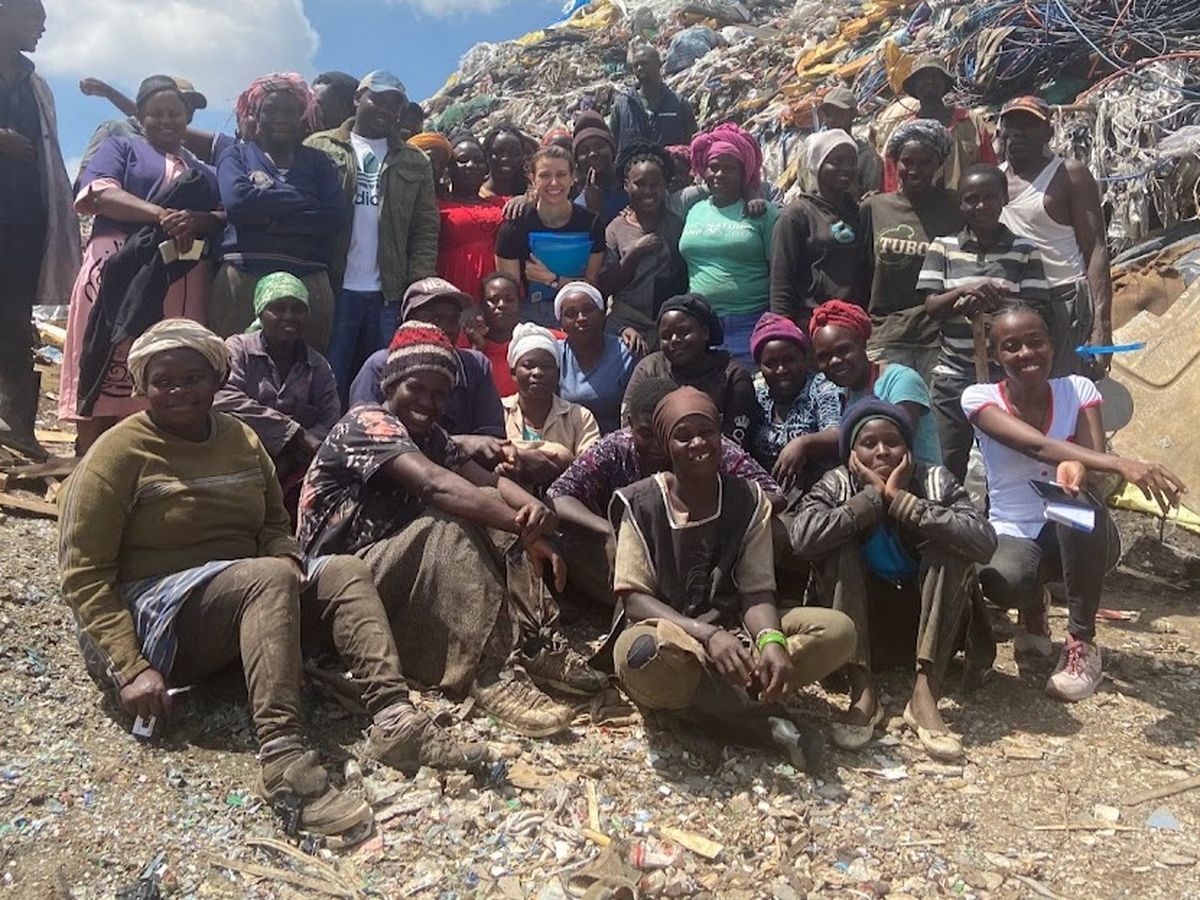
At the Mukuru dumpsite in Nairobi, hundreds of people recover plastic and other materials that would otherwise pollute rivers, neighbourhoods, and land. They are key contrubutors in Kenya’s informal plastic recycling ecosystem: skilled, resilient, and essential to the circular economy.
Through my PhD research at University College London, I spent years listening to these workers define what prosperity means to them: sufficient income, good health, recognition, community, and the chance to grow their work. Their message was clear: They do not want to be rescued. They want fair income for the service they provide, health, dignity, and a voice.
The reality they face
Life at the dumpsite provides survival, but rarely allows people to thrive. Prices for recovered materials are low and unpredictable. Many earn around $10 per week. Health risks are constant, and protective equipment is often unaffordable. Women face additional burdens: sanitary products, diapers, and no toilets or washing facilities on site.
And yet they keep going — supporting their families, each other, and the work that keeps Nairobi cleaner. And generates the recycled materials we all want to see in our packaging.
What we have built: Tabo Mabo
From this research grew Tabo Mabo (Taka Bora, Maisha Bora — “better waste, better life”): a community-owned initiative to improve waste work on fairer terms.
After a teporary shut-down from governemtn officials, the Mukuru dumpsite is operating again. And its workers have formed a Communty Based Organization (CBO) - with the ongoing support of the CBO Latewa Arts, ensuring local leadership and accountability on the ground.
Donations have already provided diapers, sanitary pads, gum boots, gloves, and other essentials to more than 100 women during 2024/2025 — practical support that workers themselves identified as priorities.
Get an impression:
Why your donations matter
Prosperity data for almost 200 people at Mukuru lets us trace what support actually changes in people’s lives. Donations through this campaign are part of that accountable chain of impact.
The research also showed that even when broader conditions worsen, direct, community-linked support can still buffer hardship and strengthen confidence among the most marginalised workers.
Two steps forward, one step back
Progress is rarely linear. We have seen real steps forward: workers organising, trust building, a shared vision for a fairer system, and a CBO giving the community a formal anchor at Mukuru.
We have also faced setbacks — including the dumpsite’s temporary closure in 2025, which disrupted hundreds of livelihoods. That is why continued support is crucial. One-off help matters; steady partnership is what makes it possible to adapt and keep workers at the centre of the solution.
This round of support: who it reaches
The next round of support targets 117 women and 78 men — and their children — with essentials that make safer, more dignified work possible:
1. Gum boots and gloves — protection against injury and illness
2. Sanitary pads — dignity and health during menstruation
3. Diapers — keeping babies dry so families can focus on work
Providing sanitary pads and diapers also ensure that the limite dincome stretches further as these items are expensive even on nornal incomes.
The sanitary toilets (long planned for) will be installed once the dumpsite has been cleared of ab overflow of waste — material that is currently being transported to Dandora, Nairobi’s only official dumpsite. Further ahead, we plan to purchase equipment to increase valorisation, helping workers move up the value chain and earn more from the materials they recover.
Why support them?
These workers are among the unsung heroes of the circular economy. Supporting them means recognising their contribution — and investing in a model where they are agents of their own change, not subjects of charity.
Every contribution counts. Every repeat contribution helps us stay the course when the path turns difficult.
**Donate today** and stand with the waste workers of Mukuru.
Learn more:
Packaging Europe podcast on packaging and human rights: https://www.packagingeurope.com/podcast/packaging-and-human-rights
Organizer bio (optional)
I am Alina Marm. My PhD at UCL’s Institute for Global Prosperity focused on pathways to prosperity for marginalised waste workers in Nairobi. Tabo Mabo grew directly from that work — co-created with anf for workers. I volunteer my time and own resources; donations support people on the ground - a 100%
Organizer