- A
- B
- L
Water of Hope Project for Burkina Faso
0% complete
$2,535 raised of $4K
35 donations
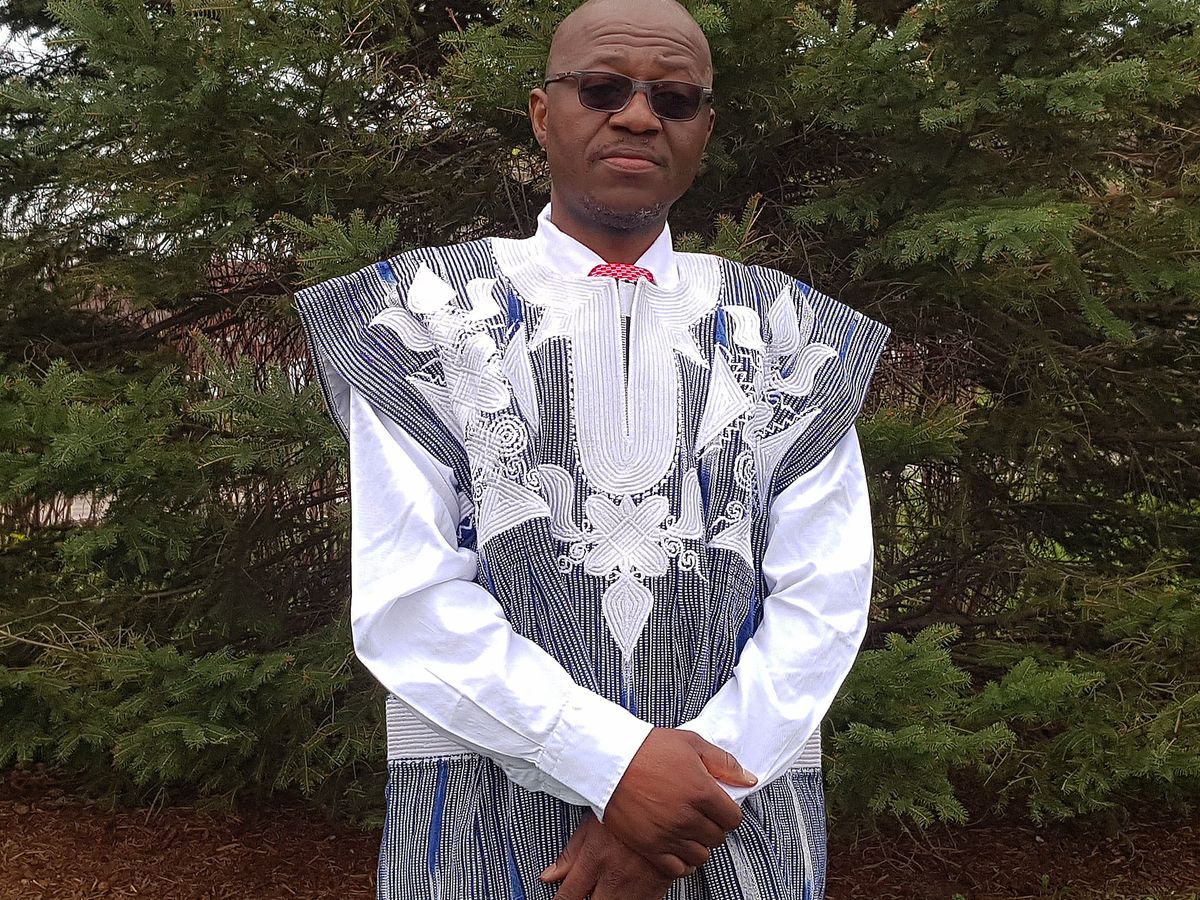
My name is Domebera Somda. I am originally from Burkina Faso (BF) but am now living in Vermont, USA. I am also a fellow of the Clinton Global Initiative University (CGI U) 2021. CGI U helps college students across the world to take action and tackle the world’s most pressing challenges in many areas through their Commitment to Action (CTA). For my fellowship with CGI U, my CTA, Water of Hope (WOH), is to help rural communities in BF access clean water and use the water infrastructure to start entrepreneurial activities. WOH is committed to leveraging solar technology, installing water towers, and building community gardens to improve the living conditions in rural communities in BF. Baakounteng will be the first community to benefit from my CTA with CGI U. Baakounteng is a small rural community in Koper municipality, Ioba, BF where my spouse is originally from.
Context
My in-laws in Baakounteng, Koper, Burkina Faso (BF), and other families in this community lack access to clean water for their daily needs compared to people living in urban areas, such as Ouagadougou, the capital city of BF. Access to clean water is a human right yet to be achieved in resource-limited settings. Rural communities in BF also lack small entrepreneurial opportunities, which will enable them to utilize their untapped resources to fight hunger and poverty.
Baakounteng is a small rural community of around 1350 inhabitants located in Koper municipality, Ioba, BF. In this community, the lack of access to drinkable water for daily needs is one of the most pressing challenges. Some inhabitants have to travel more than 3 miles (5km) back and forth to reach the nearest clean water infrastructure. This is unacceptable. The lack of easy access to clean water violates basic human rights including the rights to life, liberty, and security. In Baakounteng, this challenge adds an unnecessary burden to a community that is already vulnerable to poverty due to limited economic opportunities.
Problem
“Water is life, and clean water means health”, as A Hepburn (1929-1993) rightly put it. I remember growing up in my native village, Kpai, where my late mother did not have to walk far for water because the big family had an unprotected well in the front yard. However, that water was unsafe. I drunk unsafe water at home and school as a child in Koper municipality. I completed my primary school education there drinking unsafe water from the unprotected wells and surface water from the nearest water stream to my school in Babora. I experienced water-borne diseases, such as diarrhea, amoebiasis, and bacillary dysentery for drinking unsafe water. This story is not unique because many children still suffer from the lack of clean water in rural communities in BF. WOH wants to tackle this challenge.
In BF, many rural communities do not have easy access to potable water and small entrepreneurial activities to enhance their living conditions. Their drinking water comes from rivers and unprotected water wells, which can lead to getting water-borne diseases.
The lack of drinkable water infrastructure in rural areas in BF like Baakounteng makes women and girls walk long distances to collect the water and carry it in containers on their heads back to their houses. Walking long distances to fetch clean water is burdensome and reduces the time women and girls dedicate to more activities that are productive for themselves and society. For example, the additional time spent fetching water will be used for educational and entrepreneurial activities that will benefit hundreds of families. It will prevent girls attending school from wasting their study and homework time by waiting hours for their turn to get the water at the well or borehole.
Baakounteng and many other rural communities in BF have untapped resources but lack viable opportunities to transform these through small-scale entrepreneurial activities to help alleviate poverty. Consequently, many young girls and men leave their communities for the big cities like Ouagadougou and Bobo-Dioulasso. Others join the growing artisanal mining sites around the country for the hope of a better life despite all the dangers associated with artisanal mining. Access to small entrepreneurial activities in rural communities will motivate young adults to stay in their communities and contribute to their development in the long term. In WOH view, the best way forward starts with access to clean water.
Providing access to clean water to rural communities in BF like Baakounteng will bring many societal and economic benefits. It will help individuals improve their health, overall wellbeing, and save time for more productive activities. More concretely, the water pump and wells will support a community garden built nearby for women and young adults to grow vegetables. This endeavor will enable beneficiaries to initiate small entrepreneurial activities and contribute to alleviating poverty. Small-scale entrepreneurial activities such as the community garden can help improve the living conditions and provide fresh and nutritious food to families. The women and young adults will also generate small revenues from selling part of the harvests to support their families financially.
Project
WOH believes that clean water is a human right that all communities should enjoy and that communities thrive when working together on viable and empowering projects. Therefore, WOH commits to leveraging solar technology, installing water towers, and building community gardens. The project in Baakounteng will directly benefit the 1350 inhabitants and indirectly benefit the neighboring communities in the municipality. The success of this project will lead to its replication in other rural communities in the country that have similar challenges.
The Baakounteng project has three phases. Phase 1 is completed. Now I need your support to complete phases 2 and 3.
Phase 1 consisted of drilling two wells and installing a water pump, which costed $7,500. The community members contributed up to $3,000 for phase 1. Donors covered the remaining cost of phase 1 with $4,500. Phase 2 is underway and consists of creating a community garden that provides small entrepreneurial opportunities to the population, particularly women and young adults, from growing vegetables to small-scale agri-food processing. The harvests will provide nutritious food to the families in Baakounteng and neighboring communities. In addition, the beneficiaries will sell part of the products to generate revenues for other needs. Phase 3 aims at acquiring and installing a small water tower powered by solar energy to collect, store, and distribute the water. The water tower, backed up by wells dug in the soil, will continuously supply the water needed to grow the vegetables in the community garden.
The estimated budget to complete phases 2 and 3 and bring the project to life is $31,200 (approx. XOF15, 600,000). The budget allocation is as follows: around $12,000 (XOF6, 000,000) for the community garden arrangement and $19,200 (XOF9, 600,000) for the water tower equipped with solar technology. By launching this first fundraising initiative, my goal is to raise the total amount of $31,200 to cover the remaining cost of this project to contribute to improving the life of 1000+ Baakounteng community members and neighboring communities. WOH invites individuals and organizations who support this project for rural communities in BF to donate funds to this GoFundMe account.
WOH thanks in advance all the generous donors, including individuals and organizations that believe and share its goal of improving the livelihoods of rural communities in BF. For accountability and transparency purposes, a report on the utilization of the funds received and the project progress will be available after completing each phase on this GoFundMe account.
I, Domebera Somda, am supporting this project because I have relations there. On a more personal note, I have ties with the Baakounteng community. My spouse is originally from there. I am aware of all the efforts they are undertaking to make access to clean water a reality there. Additionally, this approach will be particularly helpful to raising children out of poverty to meet the United Nations Sustainable Development Goals (SDGs) # 1, 2, 3 & 6.
You should support the work of WOH in this village because it leverages work already started and needs funding to implement phases 2 and 3. This project has a high likelihood of success. Working with WOH will mean that success and gained experience will be transferred to other communities in BF and Africa.