- A
Help Bring Music Education to Community Centers Nationwide
0% complete
$11,510 raised of
42 donations
After 9 years of providing free music education to schools worldwide, Practicing Musician tested our program at a YMCA. It worked. Now we need your help to bring it to community centers across the country.
Click "Read more" to see what we're fighting for — and why the next 5 weeks matter. ▼
Why This Matters Right Now:
AI wants to replace the work of making music
Mikey Shulman, the CEO of Suno AI, one of the largest AI music generation companies in the world, said in an interview on the 20VC podcast: "It's not really enjoyable to make music now." He went on to say that most people "don't enjoy the majority of the time they spend making music" because learning an instrument "takes too much time and practice." When the backlash hit, he said he wished he'd "chosen different words." He never walked back the idea. Suno's entire business model is built on replacing the process of learning and playing music with a text prompt.
We have 9 years of proof that people love learning music
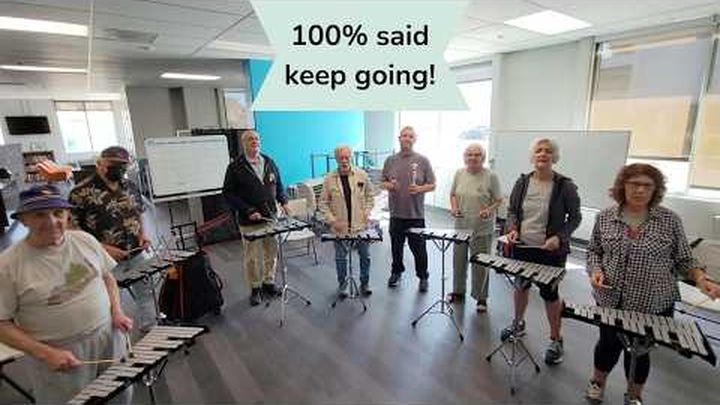
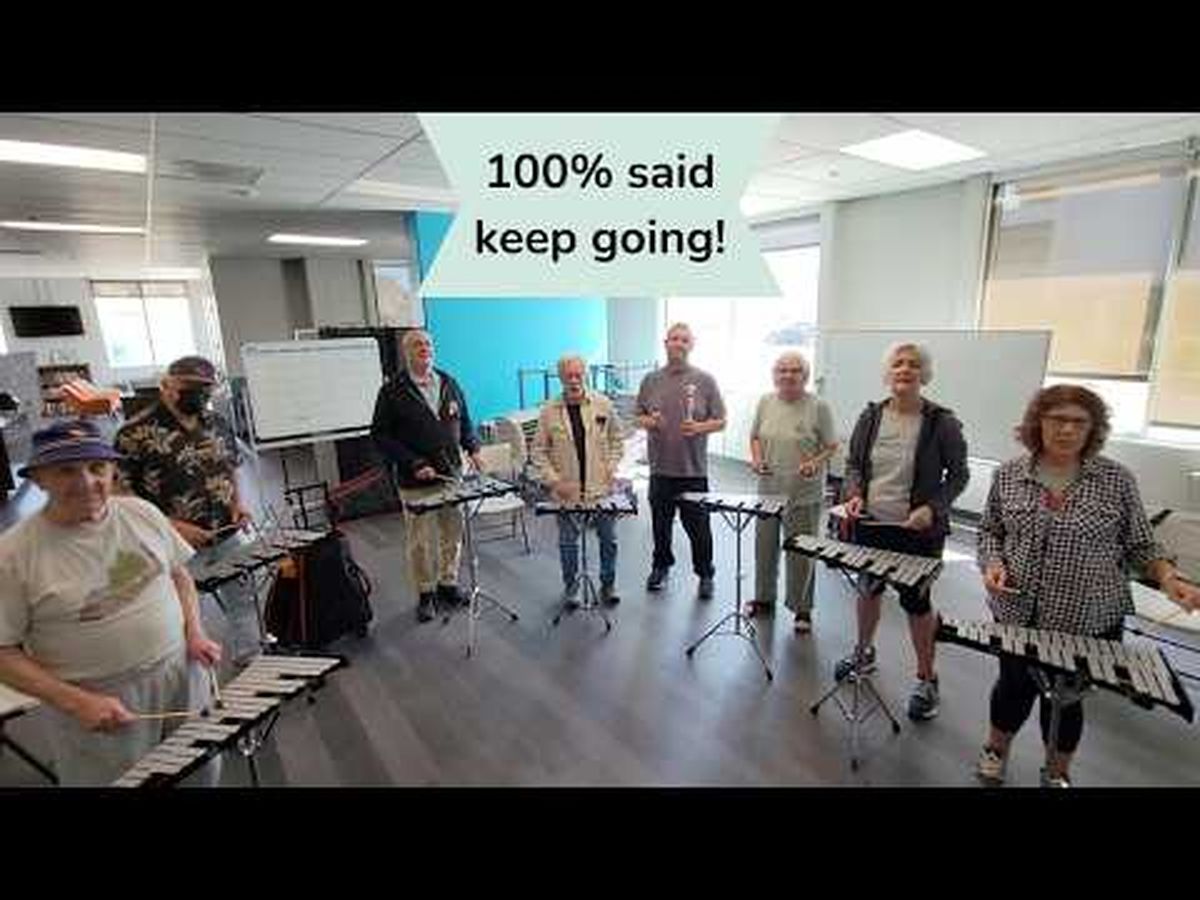
Our experience tells a completely different story. Over 9 years, 2,821 educators across 90+ countries have trusted our platform to teach their students music and create new practicing musicians. Our video lessons have a 66% completion rate, nearly double the industry average. And when we piloted our program at the Copley-Price Family YMCA in San Diego, 100% of surveyed participants said they wanted to keep going. People don't just enjoy learning music when it's taught well. They don't want to stop. The question is whether we can reach them before AI convinces them they don't need to try.
The science behind why playing music matters
Here's what's actually at stake. Neuroscience has identified playing a musical instrument as one of the most cognitively demanding activities the human brain can undertake (Zatorre et al., Nature Reviews Neuroscience, 2007). Nothing else forces your brain to simultaneously coordinate movement, vision, hearing, emotion, memory, and real-time adaptation at this level of precision. That's why playing music improves academic outcomes in children, protects cognitive function in seniors, and builds emotional regulation and social connection across all ages. Those benefits don't come from listening to music. They come from the act of playing it. And that's what AI aims to eliminate.
A generation at risk
Meanwhile, 65% of AI users are Millennials or Gen Z (Digital Silk, 2026), and 64% of U.S. teens already use AI chatbots, with about a third doing so daily (Pew Research, 2025). A generation is growing up being told that the hard, beautiful, deeply human work of making music is a problem to be solved by software.
Sting put it differently: "The building blocks of music belong to us, to human beings. That's going to be a battle we all have to fight in the next couple of years: Defending our human capital against AI."
This is bigger than a music program
That's why we're not just building a music education program. We're defending something that matters. And we have exactly 35 days to turn our proof into partnerships.
What We're Asking For:
The gap is massive
Music education improves academic performance and confidence in kids, slows cognitive decline in seniors, and builds community across all ages. Despite that, almost none of the 10,000+ community wellness centers in the U.S. offer it. Imagine your local community center (like a YMCA) offering drum lessons for seniors, violin for kids after school, and guitar for anyone who's ever wanted to learn. You can help make that real. Your donation gets our team to the conference where these partnerships start.
The opportunity is now
This May, we're exhibiting at the premier community wellness philanthropy conference in North America. Our booth is secured. Over 500 executives who signed our petition last year will be there, along with hundreds more who will see our pilot results for the first time. The conference also puts us in front of development directors and donors with the capacity to fund this at scale for their communities. Your donation funds the marketing materials, team presence, and follow-up infrastructure we need to turn that room full of interest into signed partnerships with community centers across the country. But only if we're ready before May 6th.
Every partnership creates something permanent
We've already proven the model works. Now we need the resources to close the deals. Every partnership we sign launches a music program that generates enough revenue for the community center to sustain on their own within three years. Your donation isn't funding a program forever. It's planting a seed that grows on its own. A 73-year-old picks up drumsticks for the first time. A kid stays after school to learn the trumpet instead of going home to an empty house. That's what each partnership creates. Permanently. The first step is getting our team to the conference with everything we need. That's where you come in.
What Happened When We Tested It:
San Diego pilot results
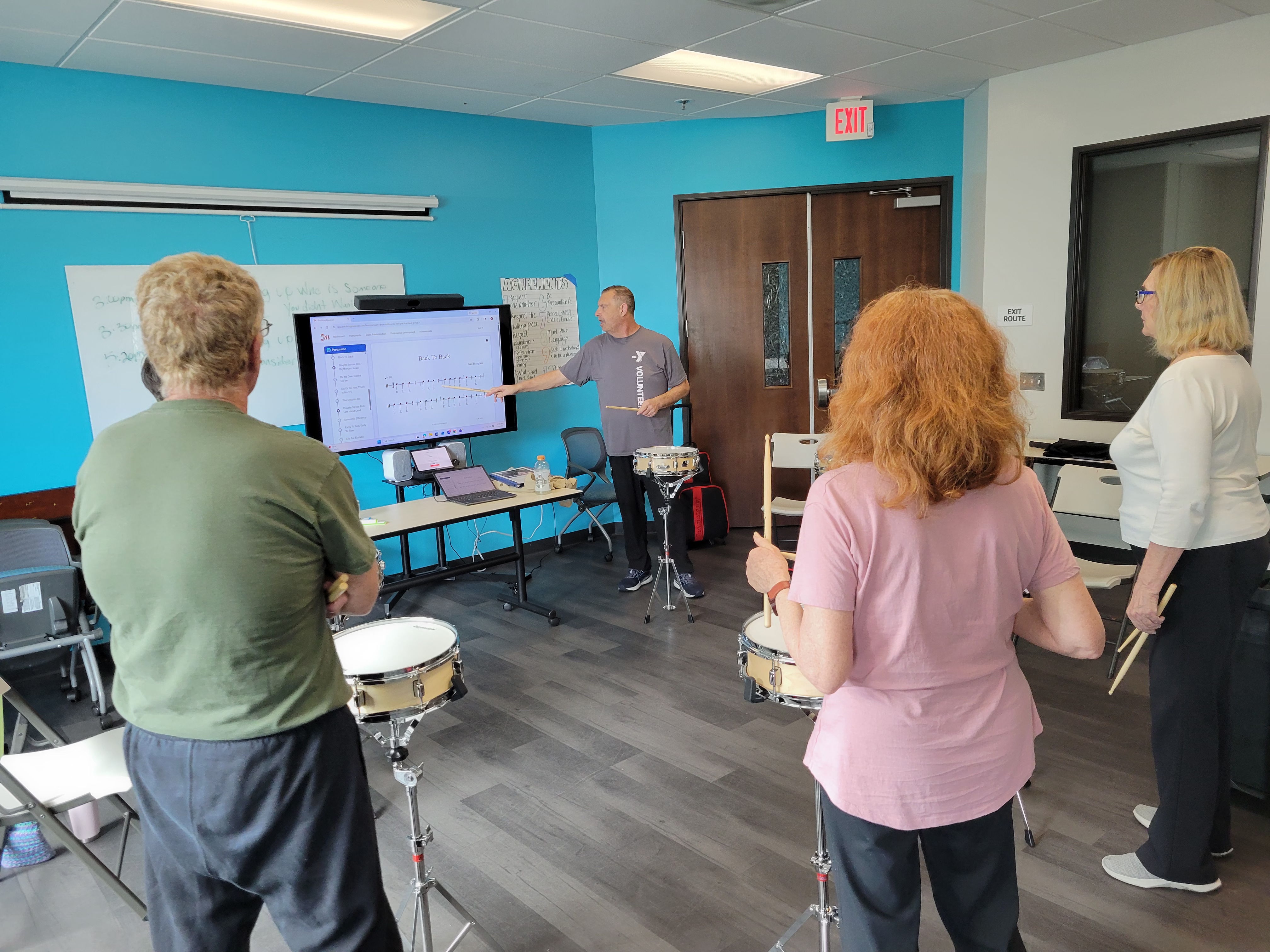
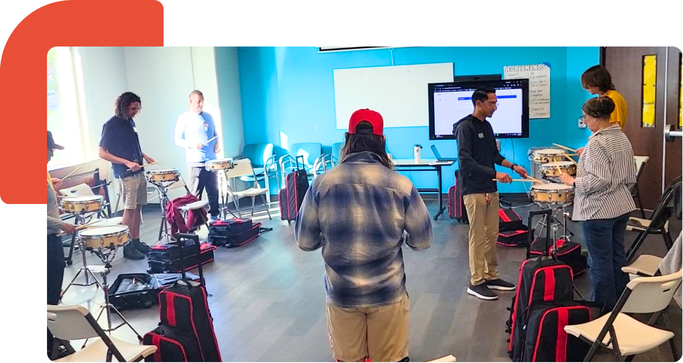
In February 2026, we ran a four-week pilot at the Copley-Price Family YMCA in San Diego. One instrument (percussion), one location, zero paid marketing budget. Here's what happened:
- 32 participants with a waitlist, ages 30 to 83
- 100% said they would continue paying for the program
- 89% said they would refer friends and family
- 83% rated the program as mission-critical to continue
- 57% purchased or rented their own instruments for use at home, even though we provided them to use in class for free
- Participants cited Alzheimer's prevention, cognitive health, and community connection as reasons they valued it
In four weeks, 89% said they'd refer friends and family, and 83% rated the program as mission-critical to continue. That was one instrument at one location. We teach fifteen.
What the staff said
"In my eight and a half years working with adult programming at the YMCA, this is by far the most interest I've ever seen for a first-time program!"
- Ann Conway, Adult Programming Director, Copley-Price Family YMCA
“If the YMCA is listening to this, you gotta keep this going.”
- Alicia, Walk-in Participant (new to the YMCA)
Hear it from them
Watch the YMCA program coordinator, volunteer facilitator, and adult programming director describe their experience working with Practicing Musician during the San Diego pilot:
Who We Are
Practicing Musician is a Social Purpose Corporation based in Seattle. For 9 years, we've provided free online music education, covering 15 instruments through over 3,500 video tutorials. We're trusted by 2,821 educators across 831 school districts in 90+ countries. Our video completion rate is 66%, nearly double the industry average. We didn't build a product and go looking for a market. We spent a decade proving it works in classrooms, and now we've proven it works in community centers too. We're bringing music to the places where the people who need it most already go, but where it's never been offered at scale. Your donation helps us get there before the window closes.
What Your Donation Funds
Every dollar moves us closer to bringing music education to community centers nationwide. Here's what we unlock together as donations add up:
- First $5,000 — Conference Ready: Professional marketing materials for the premier national community wellness conference this May, where we'll be face-to-face with the decision-makers who can bring music to their centers.
- $25,000 - Full Team on the Ground: More team members at the conference means more partnerships started, more community centers reached, and more seniors and kids with access to music by the end of the year.
- $50,000 - Follow-Through Funded: The materials and infrastructure to turn conference conversations into signed partnerships in the weeks that follow.
- $75,000 - Team Sustained Through Launch: Keeps our core team funded through the conference and the critical partnership-building window after it.
- $100,000 - Summer Runway: Keeps operations running through summer 2026 while partnerships move from handshake to signed agreement.
- $150,000 - Platform Ready to Scale: The technical infrastructure to onboard multiple community centers at once.
- $200,000 - National Rollout Ready: Everything in place to launch music programs at community centers across the country.
What happens after $200K
Beyond $200K, every additional $235,000 fully funds everything Practicing Musician provides to launch and support a music program at a new community center for three years, after which the community center generates enough revenue from the program to sustain it on their own, permanently. Don't take our word for it. Hear what the pilot staff had to say about working with us in the video above.
The San Diego pilot ended four weeks ago on February 28th, 2026. The conference starts on May 6th, 2026. The window between proof and scale is right now, and it won't stay open. Every day we wait is a day another community center doesn't have music.
The building blocks of music belong to human beings. Help us make sure they stay that way.
Sources
- Digital Silk. (2026). AI Statistics and Trends for 2026. https://www.digitalsilk.com/digital-trends/ai-statistics/
- Pew Research Center. (2025). Teens, Social Media and AI Chatbots 2025. https://www.pewresearch.org/internet/2025/12/09/teens-social-media-and-ai-chatbots-2025/
- Shulman, M. (2025). Interview on 20VC podcast with Harry Stebbings. https://www.thetwentyminutevc.com/mikey-shulman
- Sting. (2023). Interview with BBC News, as reported by CNN. https://www.cnn.com/2023/05/18/entertainment/sting-ai-songs-warning-intl-scli/index.html
- Zatorre, R. J., Chen, J. L., & Penhune, V. B. (2007). When the brain plays music: Auditory-motor interactions in music perception and production. Nature Reviews Neuroscience, 8(7), 547-558. https://doi.org/10.1038/nrn2152
YMCA® is a registered trademark of the National Council of Young Men's Christian Associations. Practicing Musician is not affiliated with, endorsed by, or sponsored by the YMCA. References to YMCA facilities and personnel reflect factual accounts of our pilot program.
Organizer