- Z
Fund Boston Lead Gardens' Lab Analysis
0% complete
$1,220 raised of $6K
25 donations

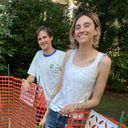
The Boston Lead Gardens pilot project is an independent, community-based art-science project. We are studying the potential of perennial garden plants to remediate a heavy metal in soil, lead, in the greater Boston-Cambridge metropolitan area.
As with many cities, the Boston area suffers from high levels of lead in the soil due to the use of lead paint, lead pipes, leaded gasoline, and industrial activity over decades of environmental degradation. Lead is toxic to humans and exposure is especially harmful to young children. In Boston and across the US, lead disproportionately affects Black communities due to historical, institutionalized, and environmental racism.
The use of plants for the reduction of heavy metal toxicity in soil through reducing their mobility/bioavailability, known as phytostabilization, is a promising method of soil remediation. However, much more work needs to be done both scientifically and socially to understand how and where this method might be an effective approach in communities like ours. This is why we initiated the Boston Lead Gardens pilot project in 2023.
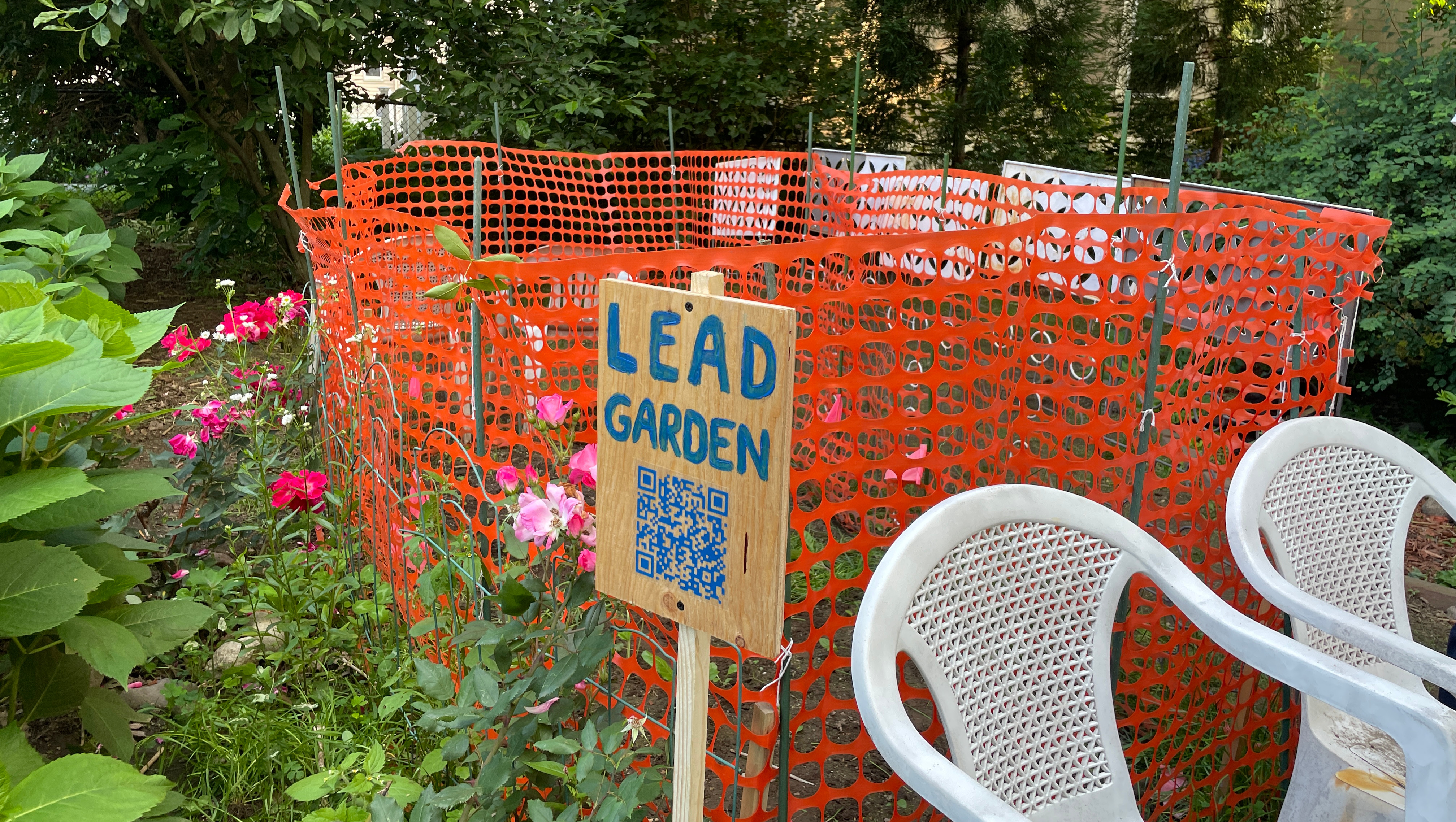
In 2023, a group of 11 volunteers across Boston, Cambridge, Somerville, and Chelsea offered their yards to plant experimental “Lead Gardens” across a network of ten different neighborhoods. Together with the Boston Lead Gardens team (Aubrie James, PhD, ecologist and artist, and Luca Senise, architect and artist), this BLG network has built a community effort to study the phytostabilization capacity of five common Massachusetts-native or naturalized perennial plant species. Now, our samples are collected and ready for analysis, and we need help raising money to complete our work.
As an artwork, the BLG pilot project proposes phytostabilization as an everyday gardening practice that can enact remediation and care. As a scientific study, it investigates the potential for common perennial garden plants to capture lead in their roots. With the money from this fundraiser we will be able to pay for lead analysis of the roots and soils that we sampled from the Gardens. Once this is done, we will analyze the data, write about the results, and share the information publicly and for free.
More information
We are interested to find out whether five common perennial plant species have the ability to "hold" lead in their roots.
Our pilot experiment took place in the summer of 2023 across eleven urban yards in the greater Boston metropolitan area. Each yard contains two experimental garden beds including five common perennial plant species. One of the beds has a compost addition to see whether compost affects the plants' abilities to phytostabilize lead.
Our initial measurements of soil lead showed that 10 out of the 11 yards exhibited elevated or highly elevated lead content. The average lead measurement in the initial soil sampleswas 538 parts per million, or ppm (standard deviation = 738). Values of lead over 400 parts per million are considered above the EPA level of concern and this soil should not be used to grow food.
Now, we are raising the funds necessary to pay for lab analysis of lead contents in the soils and roots of the plants from the experiment. The plant species we tested are: yarrow, echinacea, milkweed, dandelion, and red clover.
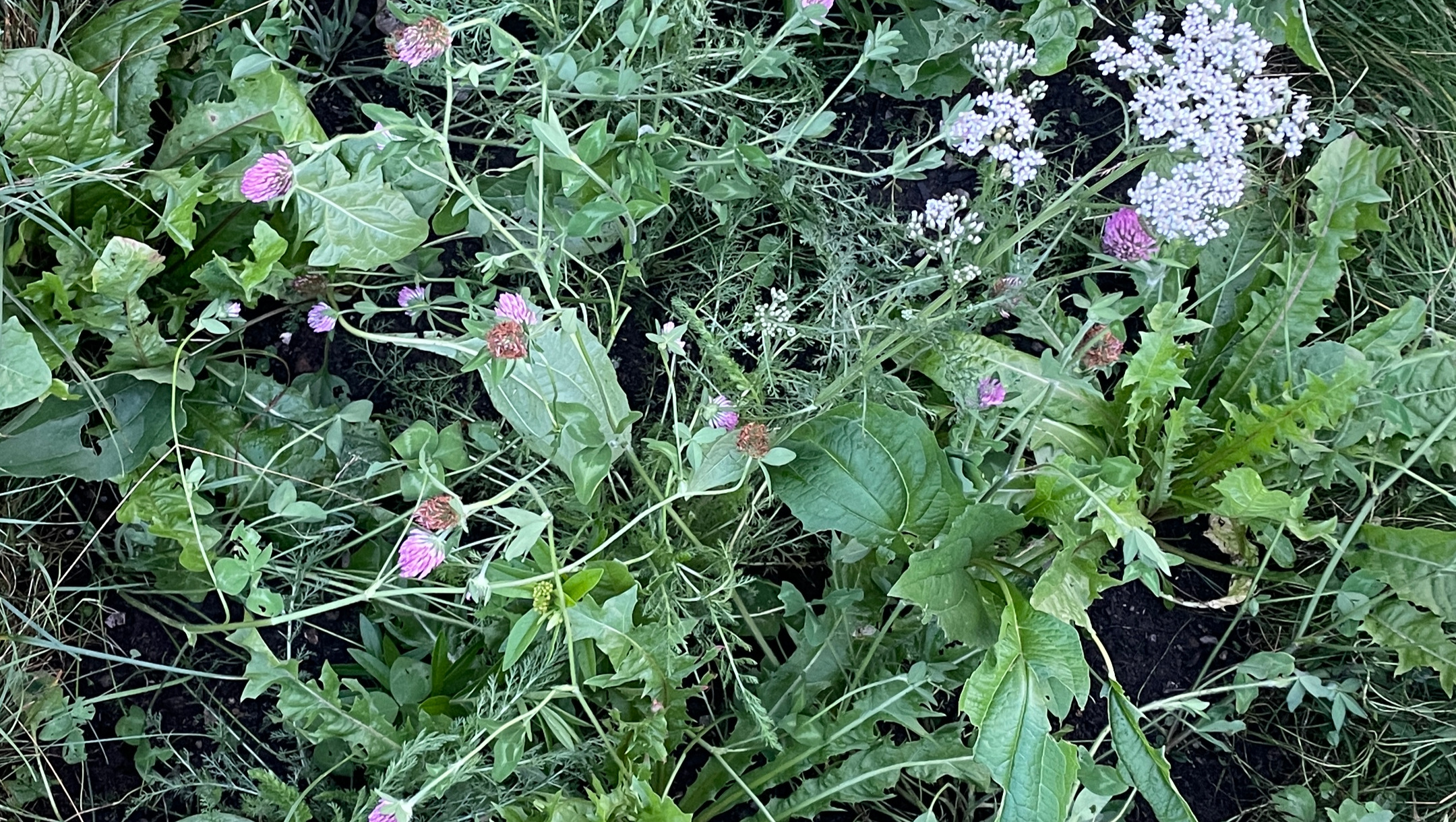
Your donation would go directly toward paying for the lab analysis that will tell us how the plants fared in taking up lead in their root tissues. Only then will we get to understand the full picture of how these plants might remediate our soils in a way that does not dump toxic materials somewhere else! Does red clover hold more lead in its roots than milkweed? If it turns out that Dandelions are good at trapping lead, would they be promoted from their status as an "undesired weed"? Does lead become easier to stabilize when the soil is mixed with compost?
This experiment is in collaboration with gardeners in Boston and exists as an independent, entirely grassroot effort to help illuminate our understanding of common urban plants and to challenge the prevailing cultural mindset of city as detached from ecology.
More information:
ig: @bostonleadgardens