- E
- A

Modernizing an African Village: Building Sustainable Futures in Mukaganga, Uganda
Help us bring power, water, education, and opportunity to one of the poorest regions on Earth — and prove a model that can transform East Africa.
My name is Charles, and I’m raising funds to support Omnibetek’s mission in Mukaganga, a rural village in Eastern Uganda.
We’re building sustainable, replicable development through poultry and fish farming, education, athletics, and community ownership — and we’re already doing it. Why Mukaganga. Why now. Eastern Uganda is one of the poorest regions in the country. According to Uganda’s most recent national household survey, the Eastern region has a poverty rate of 35.7% — nearly four times higher than the Central region. Roughly 8.3 million Ugandans still live below the poverty line, with nearly 60% of them concentrated in the Northern and Eastern regions, which only make up 38% of Uganda’s population. This is where Omnibetek operates. This is where we’re building the model.
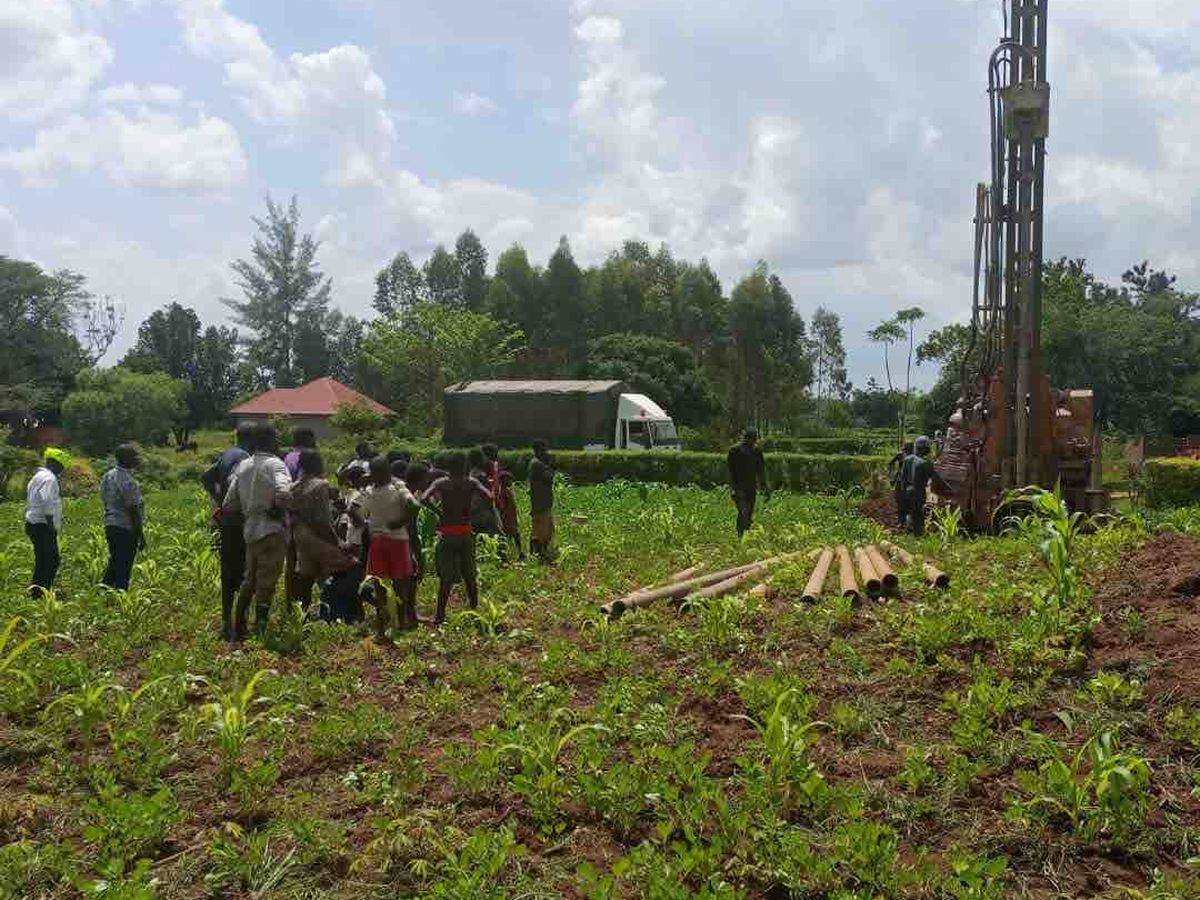
Before this fundraiser, our community pulled off what most rural Ugandan villages still consider impossible: • Brought electricity, clean water, and internet to Mukaganga village for the first time in its history • Built a poultry operation producing over 3,000 chickens weekly • Created paid jobs for 25+ community members • Put kids through school on scholarships funded by the farm That’s the proof of concept. Now we scale. Why poultry and fish farming actually work This isn’t charity. It’s economic infrastructure. In sub-Saharan Africa, 85% of all households keep poultry, and women own 70% of it — which is why poultry-based development hits poverty where it lives. Chickens are frequently managed by women, providing opportunity to enhance gender equality in resource management — and women are more likely to prioritize spending on health care, nutrition, and education. Every dollar that flows through MugaChiks becomes school fees, medicine, and food security for an entire household. Where your donations go Maize farm — We’re planting and maintaining a maize farm to feed the chicken operation directly, closing the sustainability loop so the business funds itself long-term. Cleats, equipment, and school fees — Local soccer and lacrosse programs are how we keep kids engaged, off the streets, and in school. We cover the gear and the tuition.
The first library in our district’s history — Not “a library.” The library. As of 2022, in sub-Saharan Africa, more than 1 in 3 adults cannot read and write, and over 40 million youths between 15 and 24 are illiterate. A library in Mukaganga is not symbolic — it’s the single highest-leverage investment we can make in the next generation.
The bigger vision If we make this work in Mukaganga, we replicate it. Village by village, across East Africa. A repeatable blueprint for modernizing rural communities using their own land, their own labor, and their own leadership. Every dollar gets us closer. Every share gets us in front of someone who can help. Join us. Build the model. Change the map.
— Charles & the Omnibetek Team
We’re building sustainable, replicable development through poultry and fish farming, education, athletics, and community ownership — and we’re already doing it. Why Mukaganga. Why now. Eastern Uganda is one of the poorest regions in the country. According to Uganda’s most recent national household survey, the Eastern region has a poverty rate of 35.7% — nearly four times higher than the Central region. Roughly 8.3 million Ugandans still live below the poverty line, with nearly 60% of them concentrated in the Northern and Eastern regions, which only make up 38% of Uganda’s population. This is where Omnibetek operates. This is where we’re building the model.
Before this fundraiser, our community pulled off what most rural Ugandan villages still consider impossible: • Brought electricity, clean water, and internet to Mukaganga village for the first time in its history • Built a poultry operation producing over 3,000 chickens weekly • Created paid jobs for 25+ community members • Put kids through school on scholarships funded by the farm That’s the proof of concept. Now we scale. Why poultry and fish farming actually work This isn’t charity. It’s economic infrastructure. In sub-Saharan Africa, 85% of all households keep poultry, and women own 70% of it — which is why poultry-based development hits poverty where it lives. Chickens are frequently managed by women, providing opportunity to enhance gender equality in resource management — and women are more likely to prioritize spending on health care, nutrition, and education. Every dollar that flows through MugaChiks becomes school fees, medicine, and food security for an entire household. Where your donations go Maize farm — We’re planting and maintaining a maize farm to feed the chicken operation directly, closing the sustainability loop so the business funds itself long-term. Cleats, equipment, and school fees — Local soccer and lacrosse programs are how we keep kids engaged, off the streets, and in school. We cover the gear and the tuition.
The first library in our district’s history — Not “a library.” The library. As of 2022, in sub-Saharan Africa, more than 1 in 3 adults cannot read and write, and over 40 million youths between 15 and 24 are illiterate. A library in Mukaganga is not symbolic — it’s the single highest-leverage investment we can make in the next generation.
The bigger vision If we make this work in Mukaganga, we replicate it. Village by village, across East Africa. A repeatable blueprint for modernizing rural communities using their own land, their own labor, and their own leadership. Every dollar gets us closer. Every share gets us in front of someone who can help. Join us. Build the model. Change the map.
— Charles & the Omnibetek Team