- A
- B
Support Volcán de Colima Monitoring
0% complete
$2,770 raised of $10K MXN
34 donations
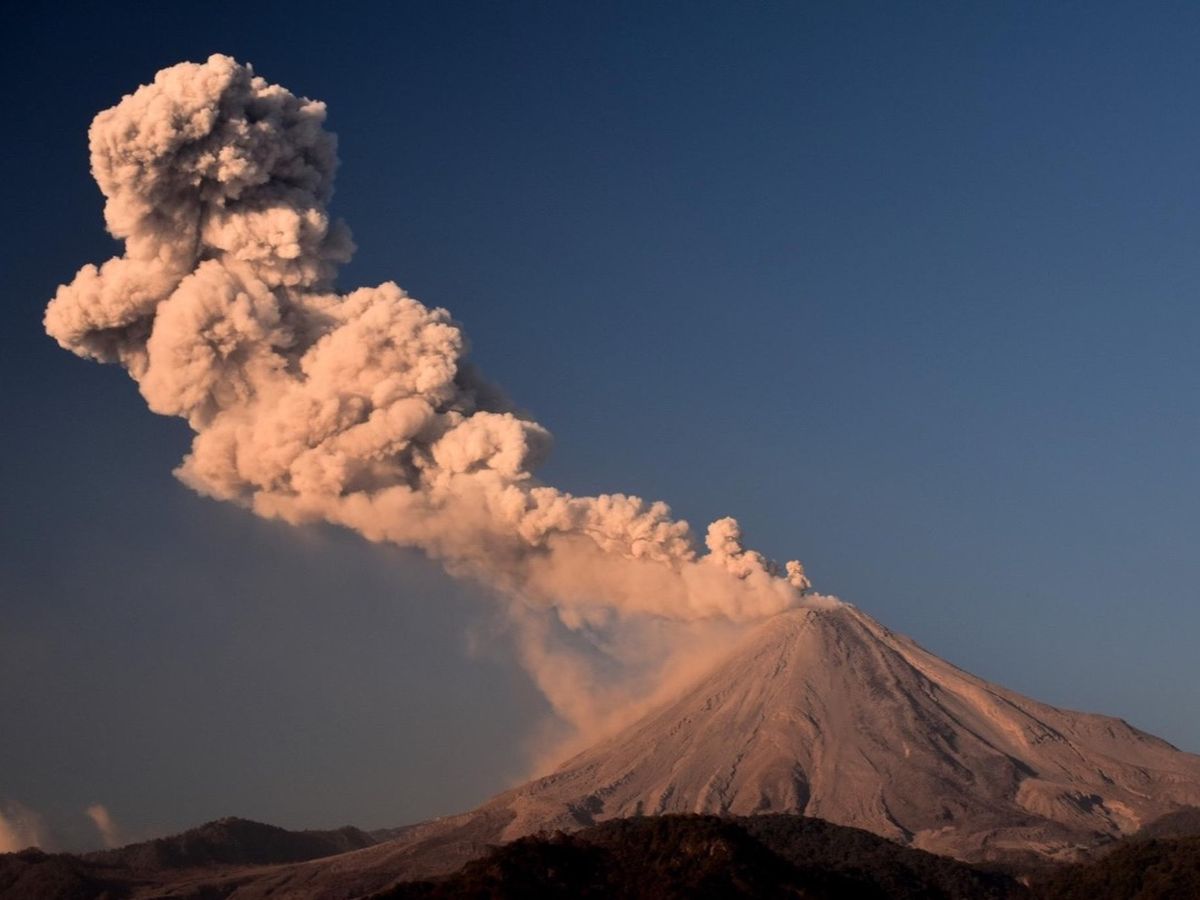
Due to a lack of funding the monitoring of Volcán de Colima is currently facing a dilemma. CIIV (Colima Intercambio e Investigación en Vulcanología) is a crucial contributor in mitigating the hazards of this dangerous volcano. The centre also receives large number of students as part of a volunteering/ internship program, which allows them to work on the active volcanoes of Mexico, principally, Volcán de Colima. The centre functions to provide the following:
- Research: projects to improve our understanding of volcanic systems
- Exchange: provide the opportunity for international students to assist with research projects based on active volcanoes. Facilitate the interaction between them and the local Mexican students
- Monitoring: Contribute to risk mitigation at Volcán de Colima (gas springs, thermal, acoustic, Doppler radar etc.) and the implementation of new techniques in this natural laboratory
- Education: provide opportunity for students to visit the natural laboratory provided by Volcán de Colima, learn various field techniques, appreciate some of the problems associated with risk assessment and hazard management and learn how to analyse various types of data.
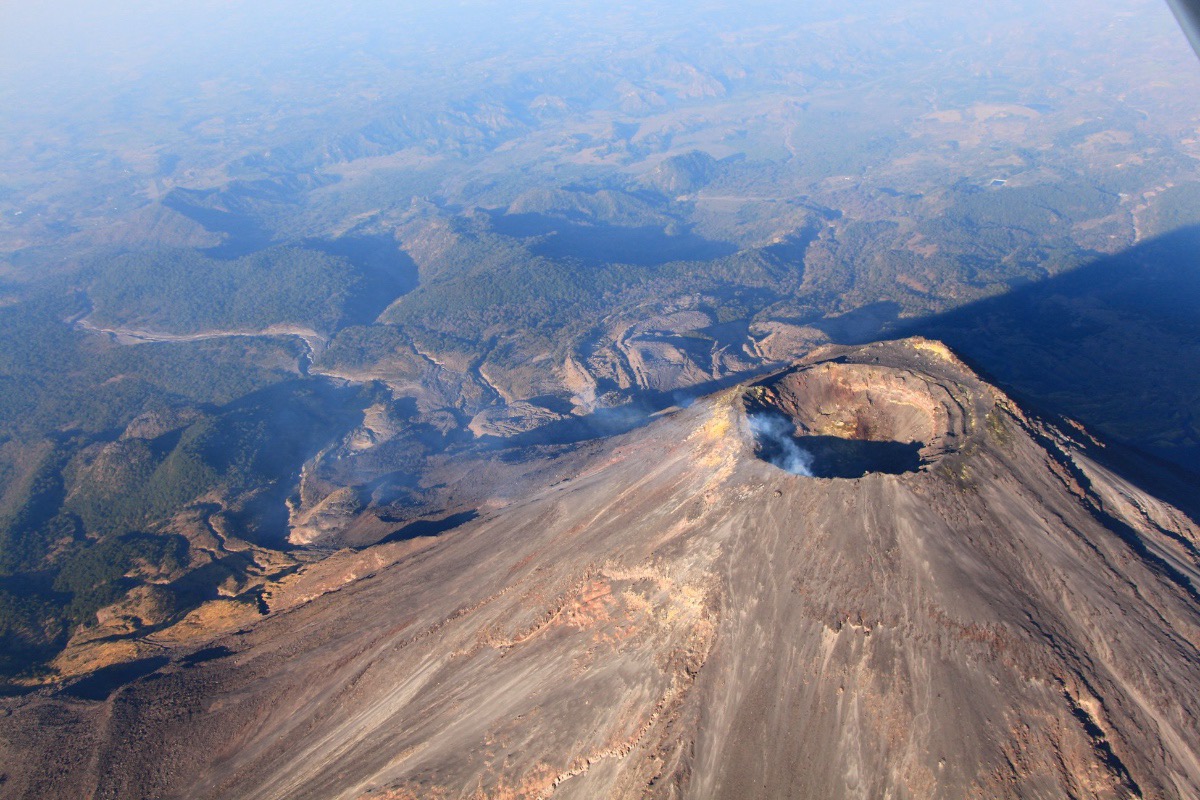 Image taken during one of the monthly flights over Volcán de Colima.
Risk Mitigation
Volcán de Colima is highly active with frequent eruptions of different styles (most recently a large collapse and pyroclastic density currents in 2015 and explosions in 2017). The risk to the local population is high and monitoring plays a vital role, if we want to prevent a disaster. Although the network of instruments is largely functioning, many types of monitoring are barely working due to the shortage of funding.
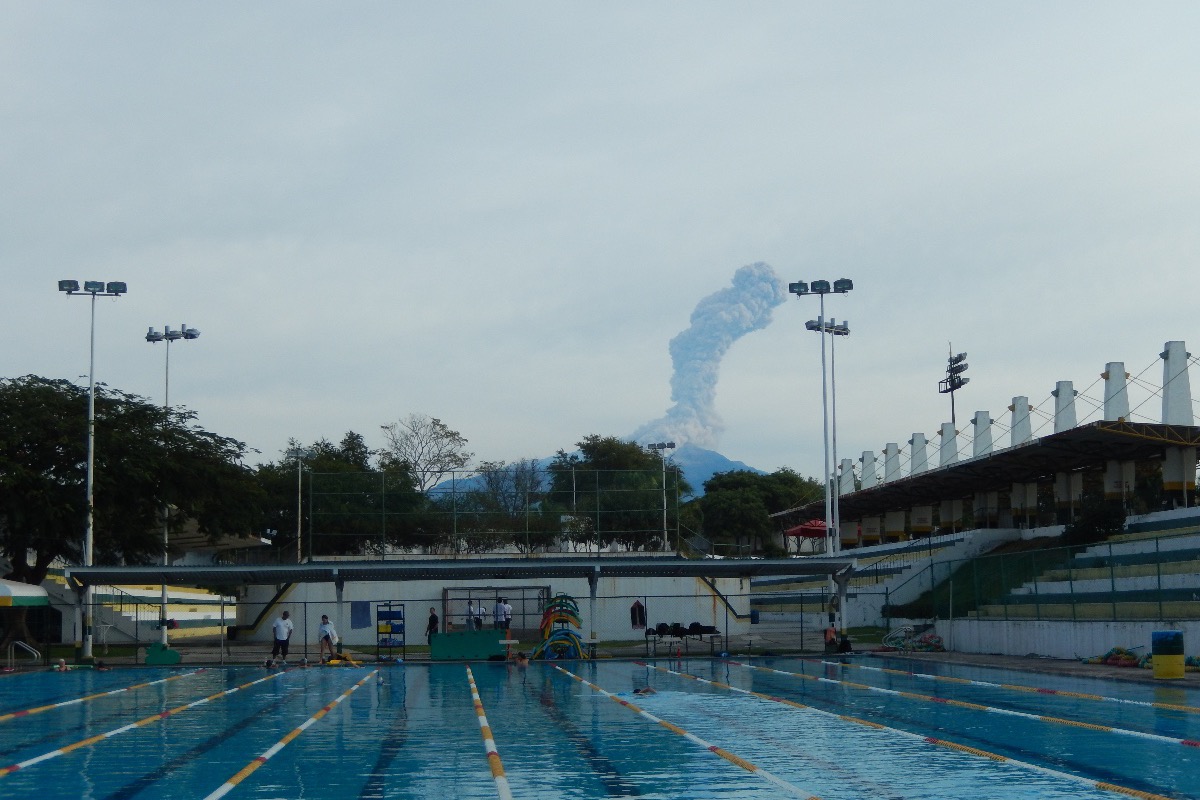 View of explosion from the university swimming pool.
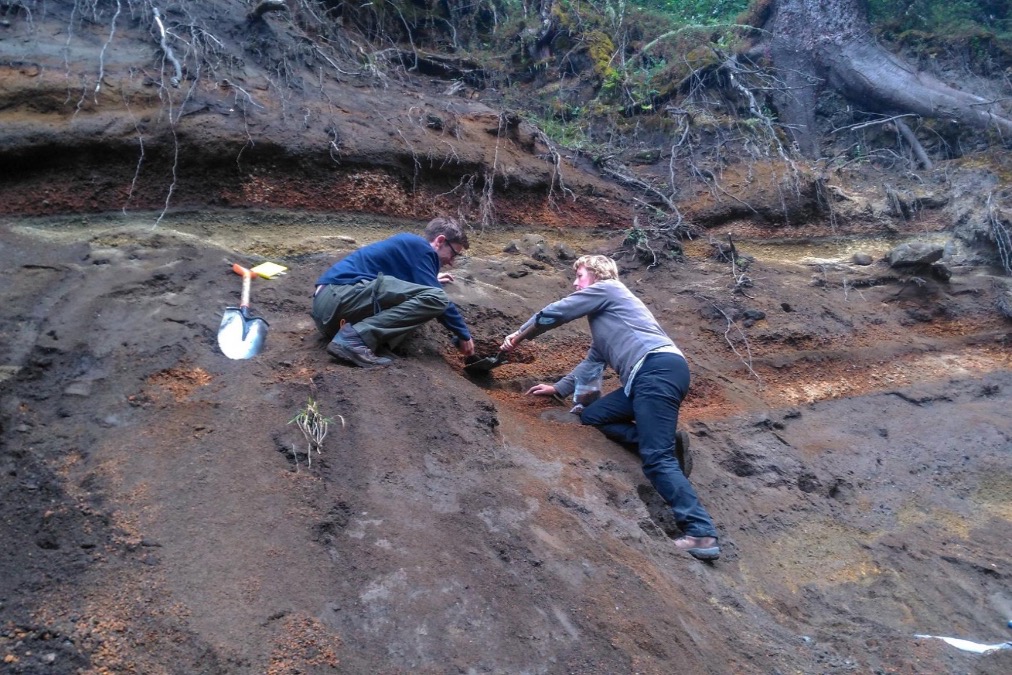 Looking at tephra deposited during some very large eruptions of Volcán de Colima. Something this large is possible in the future and it would devastate a huge area.
Exchange Programme
Since the start of the program in 2004, volunteers have come from all around the world: there have been more then 330 undergraduates and postgraduates from 30 different countries. Students have the opportunity to assist in the monitoring of an active volcano, as well as various research projects. Most work is at Volcán de Colima, but also further afield. Of course, they also get the chance to experience Mexican culture at first hand. The program is based within the Facultad de Ciencias of the Universidad de Colima.
Students go in the field on average once a week, depending upon the weather. Activities include: taking different measurements of the volcano, such as thermal images, SO2-flux readings, and collecting spring samples. Maintenance of the different instruments used is a critical aspect of the work.
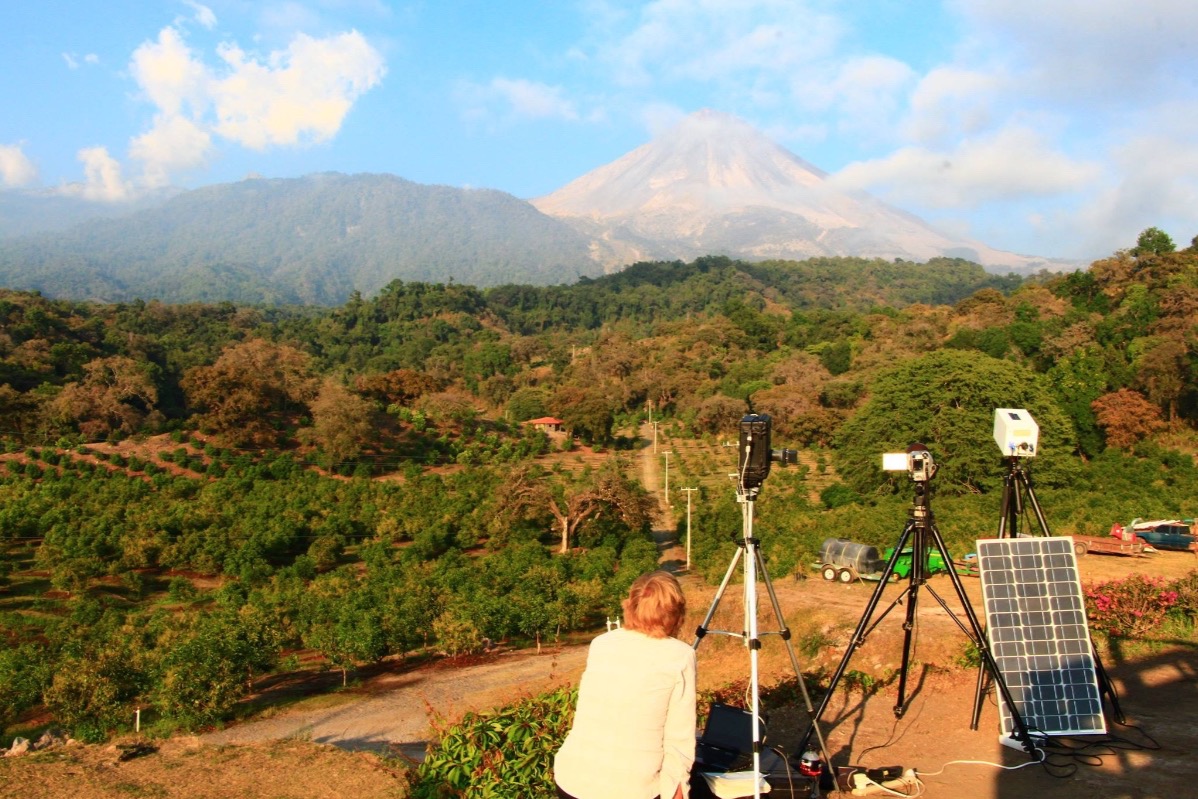 Using the FlySpec and IR SO2 Cam to measure SO2 and the thermal camera to measure temperatures at La Mesa.
Funding from the University or Government is virtually non-existent, which has resulted in a critical situation for CIIV. Without an external source of funding, it is impossible to continue the volcano monitoring. The detection of precursors is fundamental for reducing the risk to the local population. Being able to deliver timely warnings will permit the necessary recommendations to be issued. Furthermore, a greater understanding of the generation of the diverse hazards is critical to reduce their impact. Not only the CIIV students and their research, but also the locals will potentially prevent hundreds of people from losing their crops, land, houses and even their lives. For example, one of our locations for taking measurements during the dry season is the village Juan Barragan, which is located only 9 km from the volcano, which is therefore threatened by increased activity.
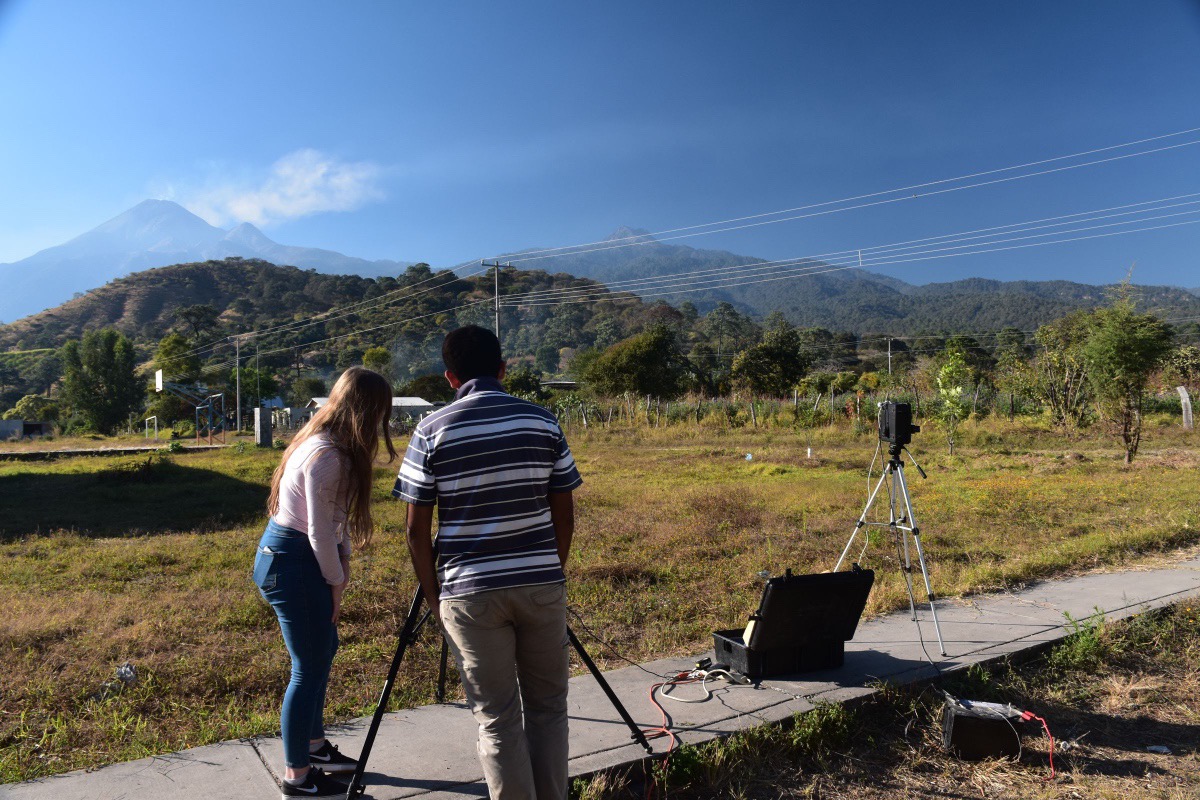 Photo taken from the village of Juan Barragan located only 9 km from the volcano. It is located between two ravines making it particularly vulnerable to a large eruption. The population has been evacuated several times during recent years. Monitoring is vital to obtain the warnings so the authorities can act in time to save lives and avoid a disaster.
Recent projects have included the detailed assessment of all evidence left by the important pyroclastic density current produced during the eruption of 2015.
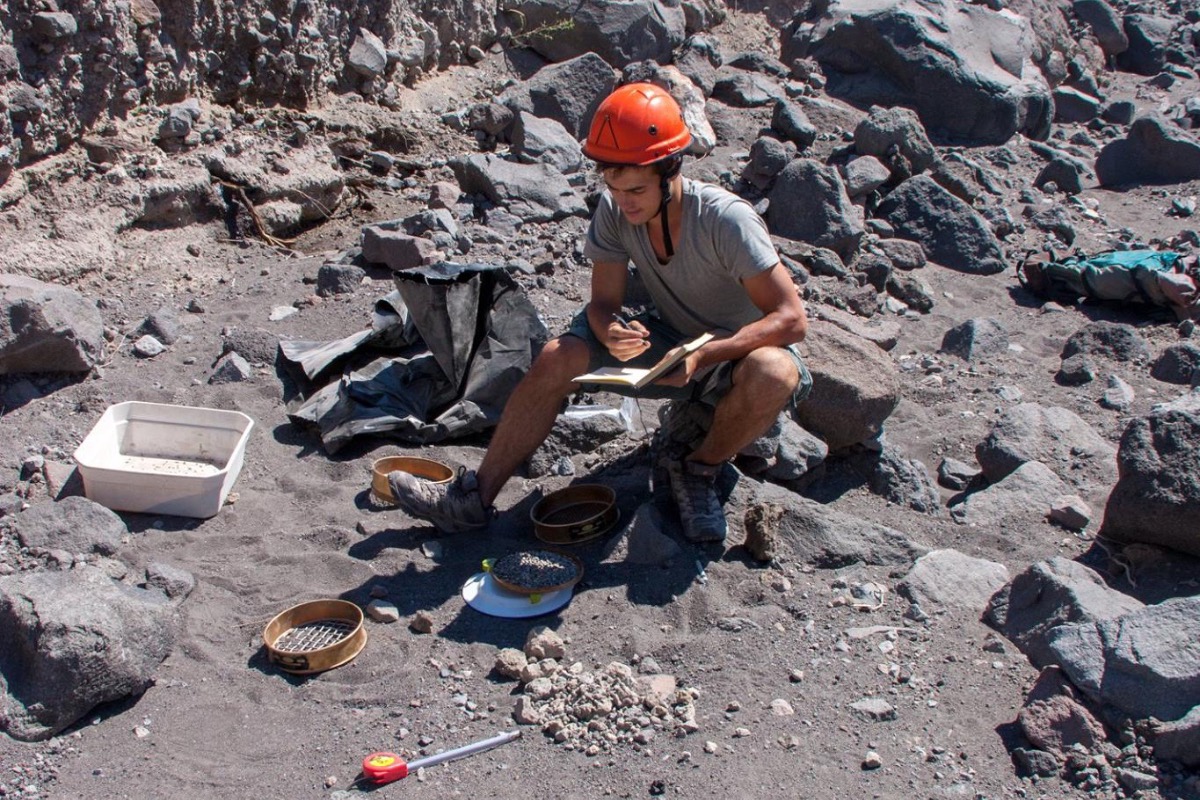 Here a student is investigating the deposit left by the large eruption in 2015. Nobody was hurt fortunately by this eruption, though various farm animals died in the hot pyroclastic density currents.
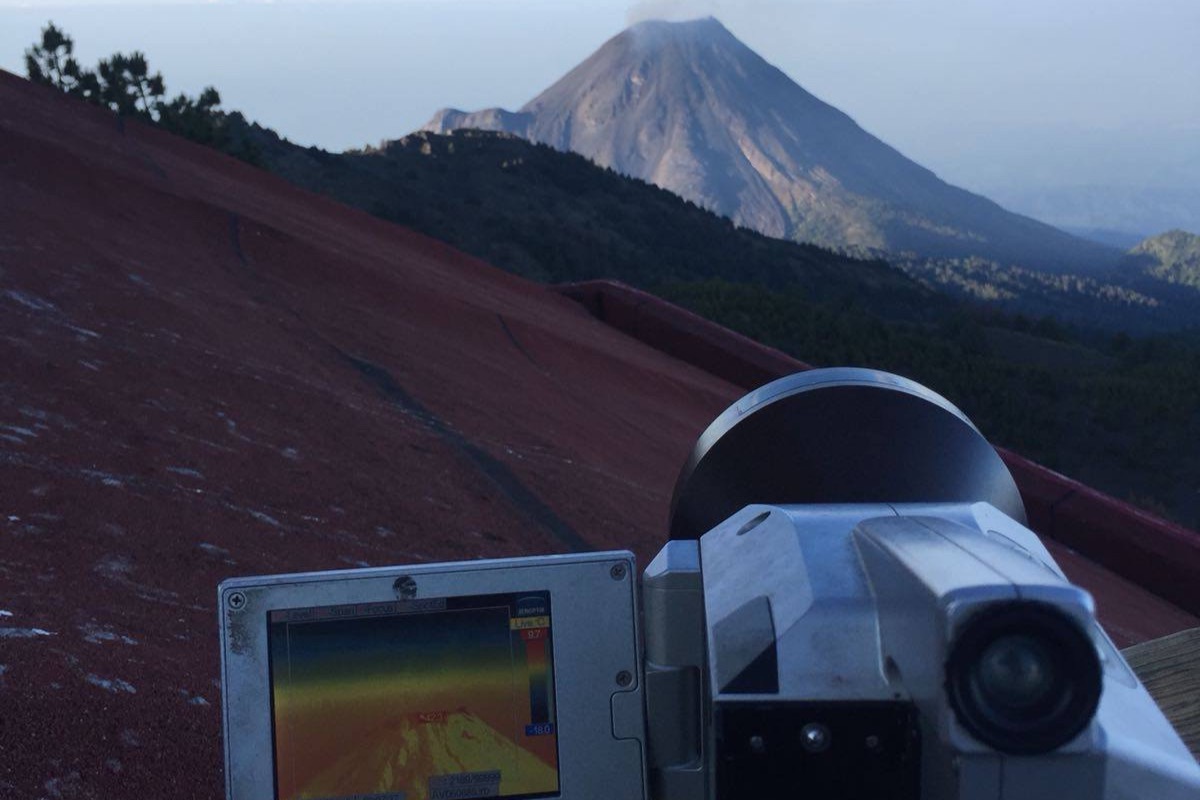 Using the Thermal Camera to measure the different temperatures of Volcán de Colima fumaroles.
But we need your help…
The funding for our operation is insufficient for the work we carry out, and some areas of the work are potentially becoming unsafe for the student participants. The financial deficit means the monitoring is not as efficient as it could be, which in turn impairs our capacity to mitigate the risk to the local population.
Our biggest current issue is the state of the centre’s vehicle. It is a 1996 Toyota Tacoma that has serves its purpose during the past 18 years, however, its time is coming to an end and a replacement must be sourced before a major accident takes place. During the past 6 weeks alone, the truck has suffered two ball joint failures, and a wheel falling off while transporting 6 students to a fieldtrip, with potential fatal consequences. We were promised a new vehicle 6 years ago and yet still we have received no word on that matter. This is becoming an issue of health and safety for our volunteers and would be our first use of your generous donations.
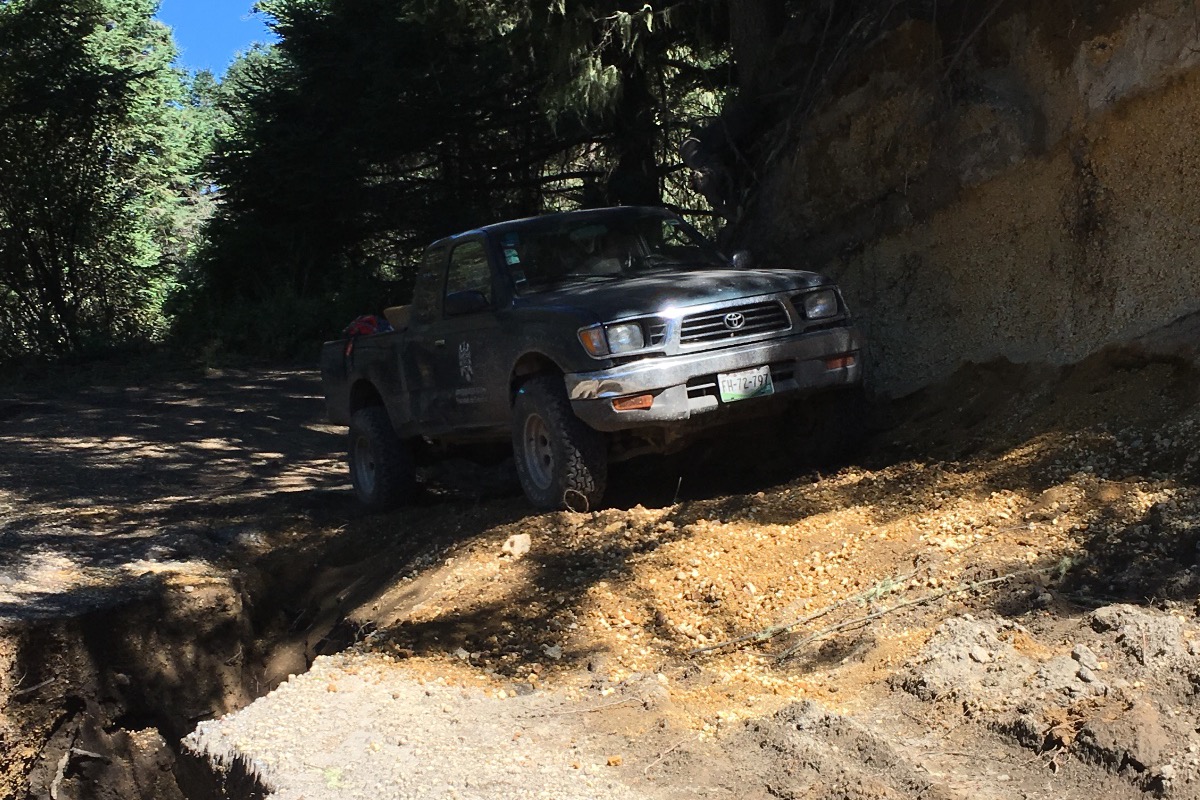 Truck negotiating freshly repaired road.
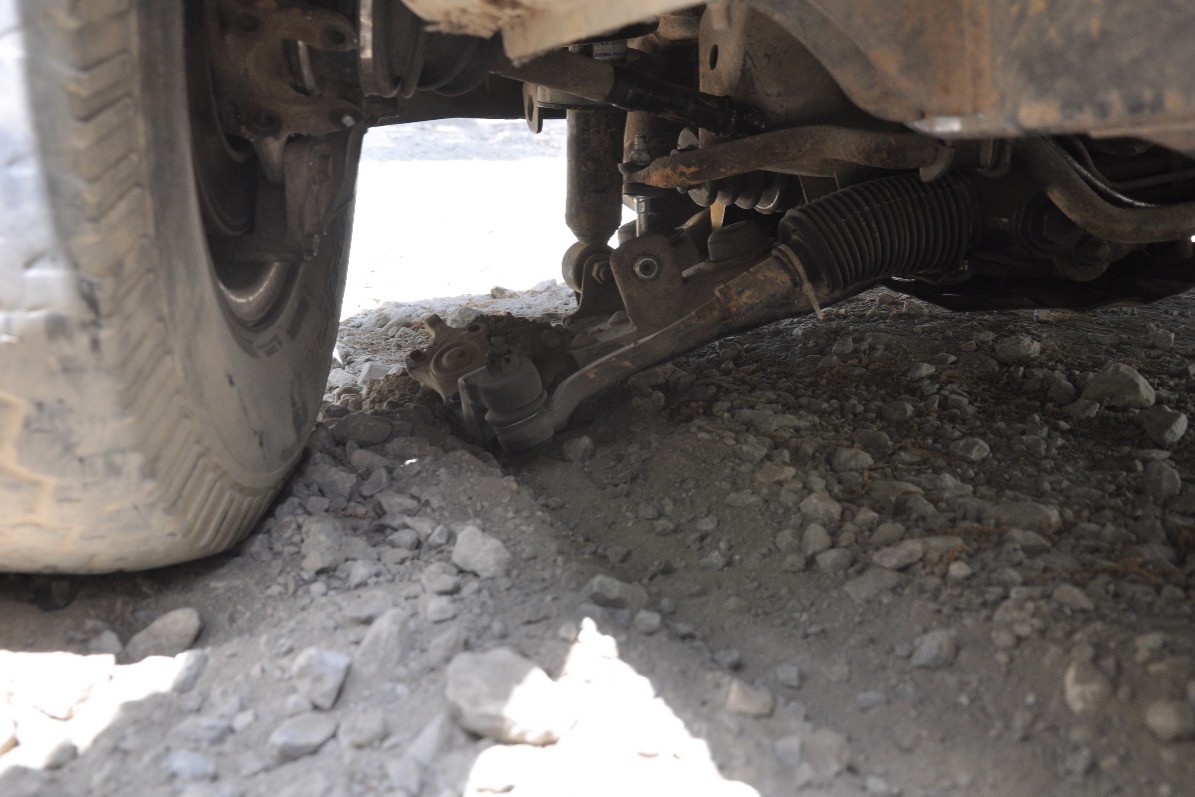 Example of vehicle problems. The terrain is rough and our old vehicle frequently doesn't make it.
Our secondary requirement for extra funding is the monitoring equipment itself. At CIIV we collect various types of data to be analysed in our laboratory, or through external collaborations, which include:
- Flux of SO2
- Thermal emission from fumaroles and the products of eruptions
- Monitoring of springs
- Diffuse gases
- Plume gas composition
- Geochemistry of lava
- Ash studies
These areas of monitoring have proved to be critical at Volcán de Colima. There have been some effusive periods that have not given any clear signal in the seismicity, but did produce geochemical anomalies prior to their onset.
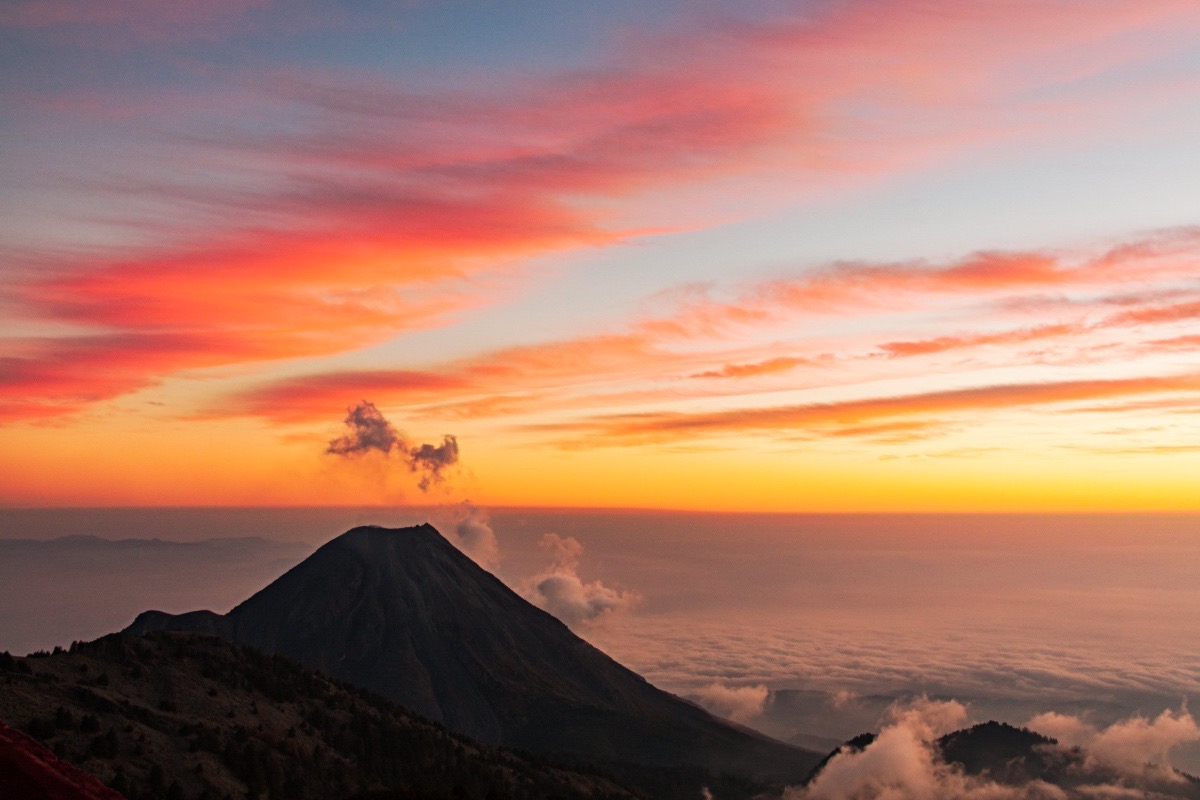 Amazing view from one of our locations, Nevado de Colima (4000m above sea-level), to take measurements of Volcán de Colima .
Costs
A suitable vehicle for our operations must have 5 seats for CIIV volunteers, a large enough truck bed for equipment, and be durable off-road. We estimate a reliable second-hand truck that satisfies these requirements would cost around GBP £16,000.
Several pieces of equipment are now over 12 years old and subsequently are frequently failing and in urgent need of replacement. The costs of these are:
- FlySpec: GBP £20,800
- Nikon camera with lens: GBP £1,200
Other items are in urgent need of repair or calibration and cannot be currently used. The costs are:
- VarioCAM thermal camera: GBP £5,400
- SO2-UV Camera: GBP £3,900
- Gem Systems Magnetometer: GBP £2,300
- DustTrack system – calibration: GBP £800
Even the smallest donation will have an impact. Many important pieces of equipment require maintenance, such as the SO2 camera, which is used to investigate the emission of gas from the volcano, and an infrared camera, which helps us to understand how magma is being extruded from the volcano and enables the monitoring of fumarole temperatures from a safe distance. The equipment needed to collect this data is very expensive. We are working on the cutting edge of science in many areas, therefore the equipment is not mass-produced and not as thoroughly tested as products in other areas. Instead, the equipment is often closer to being a prototype and so suffers from a less than perfect reliability. The maintenance costs of the equipment are therefore very high, and funding is needed to cover these costs.
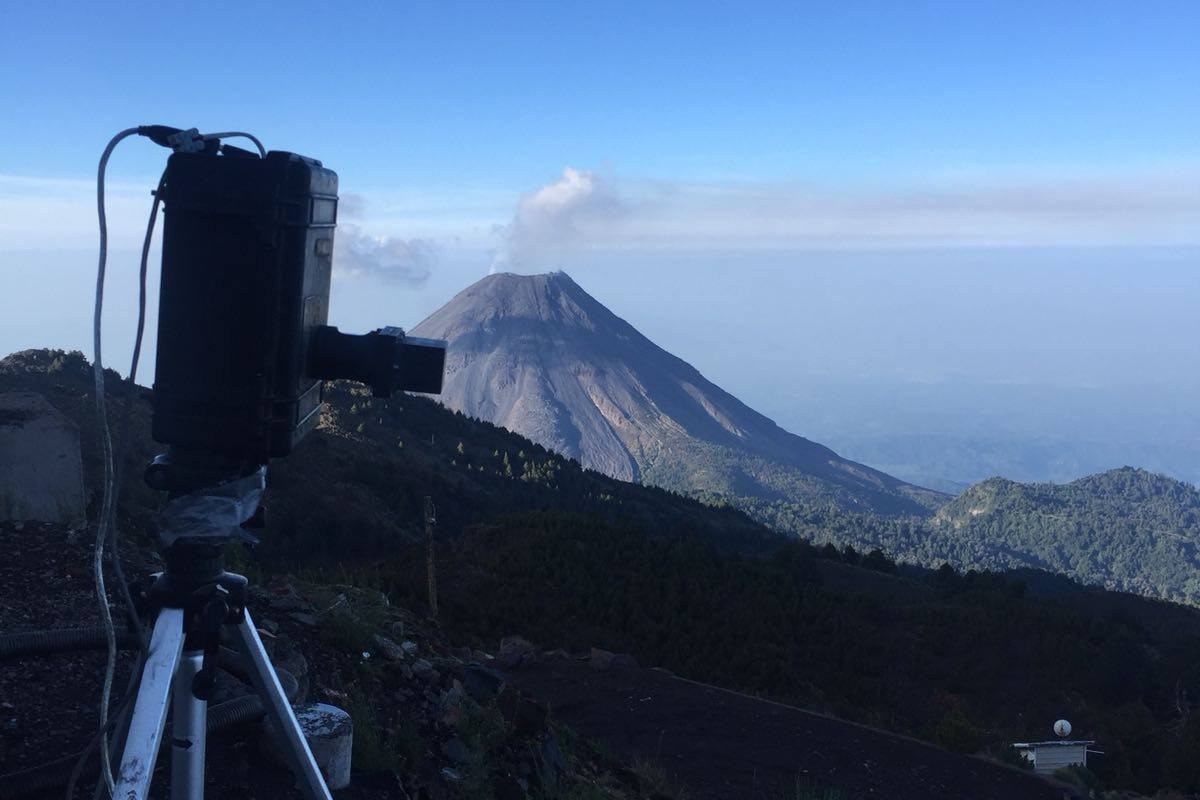 Using FlySpec to monitor SO2-flux at Volcán de Colima.
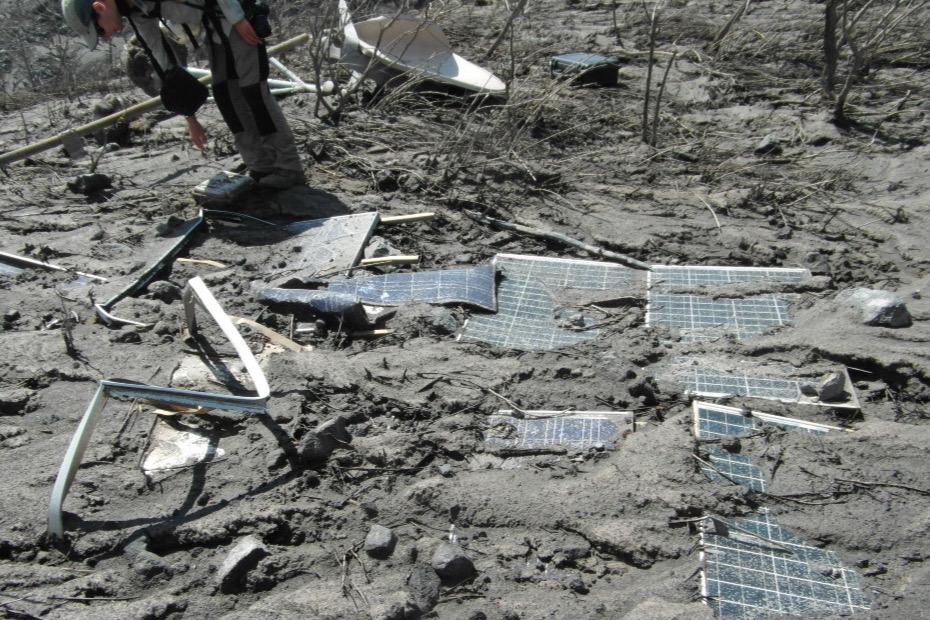 Destroyed Doppler Radar station after the 2015 eruption.
We would be very grateful for any donations large or small, or even a share on social media. This is a really worthwhile and unique project for science, risk mitigation and experience for young volcanologists. We will keep all donors updated with our fundraising and achievements.
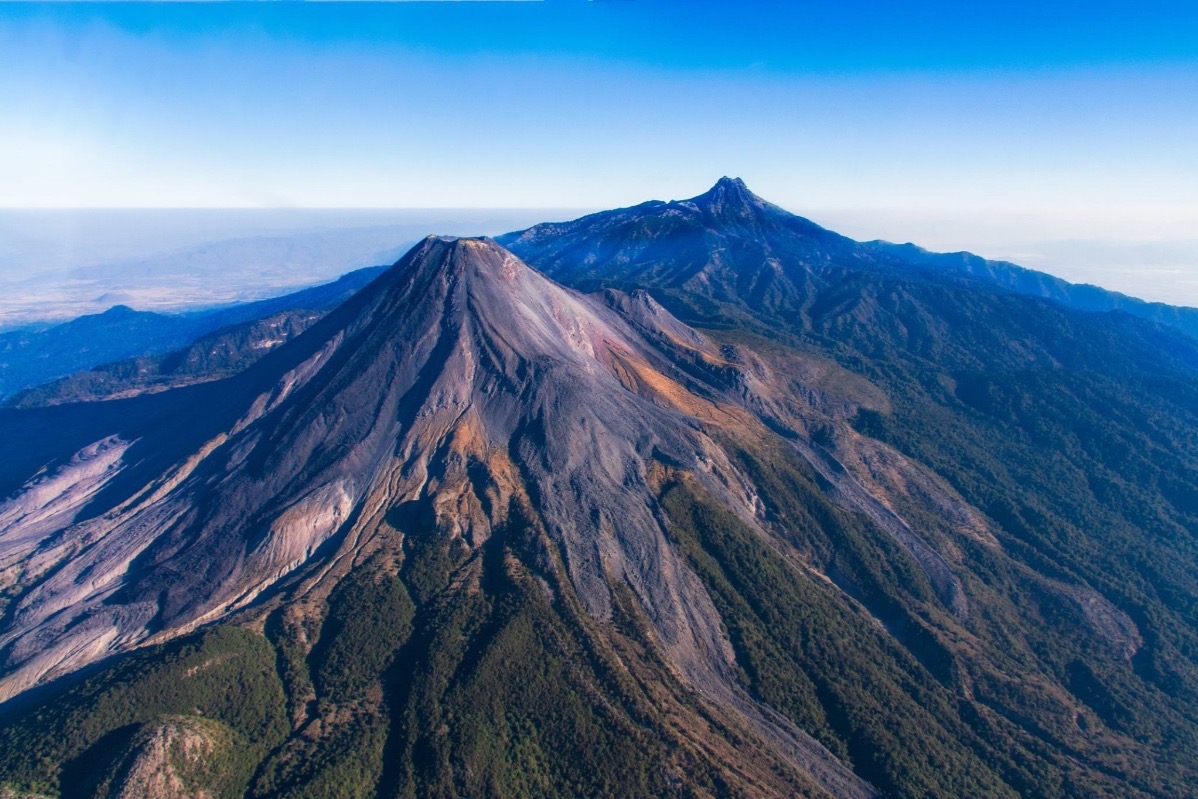 Image taken from one of the monthly flights of Volcán de Colima and the Nevado de Colima peak behind.
- Research: projects to improve our understanding of volcanic systems
- Exchange: provide the opportunity for international students to assist with research projects based on active volcanoes. Facilitate the interaction between them and the local Mexican students
- Monitoring: Contribute to risk mitigation at Volcán de Colima (gas springs, thermal, acoustic, Doppler radar etc.) and the implementation of new techniques in this natural laboratory
- Education: provide opportunity for students to visit the natural laboratory provided by Volcán de Colima, learn various field techniques, appreciate some of the problems associated with risk assessment and hazard management and learn how to analyse various types of data.
Image taken during one of the monthly flights over Volcán de Colima. Risk Mitigation
Volcán de Colima is highly active with frequent eruptions of different styles (most recently a large collapse and pyroclastic density currents in 2015 and explosions in 2017). The risk to the local population is high and monitoring plays a vital role, if we want to prevent a disaster. Although the network of instruments is largely functioning, many types of monitoring are barely working due to the shortage of funding.
View of explosion from the university swimming pool. Looking at tephra deposited during some very large eruptions of Volcán de Colima. Something this large is possible in the future and it would devastate a huge area.Exchange Programme
Since the start of the program in 2004, volunteers have come from all around the world: there have been more then 330 undergraduates and postgraduates from 30 different countries. Students have the opportunity to assist in the monitoring of an active volcano, as well as various research projects. Most work is at Volcán de Colima, but also further afield. Of course, they also get the chance to experience Mexican culture at first hand. The program is based within the Facultad de Ciencias of the Universidad de Colima.
Students go in the field on average once a week, depending upon the weather. Activities include: taking different measurements of the volcano, such as thermal images, SO2-flux readings, and collecting spring samples. Maintenance of the different instruments used is a critical aspect of the work.
Using the FlySpec and IR SO2 Cam to measure SO2 and the thermal camera to measure temperatures at La Mesa.Funding from the University or Government is virtually non-existent, which has resulted in a critical situation for CIIV. Without an external source of funding, it is impossible to continue the volcano monitoring. The detection of precursors is fundamental for reducing the risk to the local population. Being able to deliver timely warnings will permit the necessary recommendations to be issued. Furthermore, a greater understanding of the generation of the diverse hazards is critical to reduce their impact. Not only the CIIV students and their research, but also the locals will potentially prevent hundreds of people from losing their crops, land, houses and even their lives. For example, one of our locations for taking measurements during the dry season is the village Juan Barragan, which is located only 9 km from the volcano, which is therefore threatened by increased activity.
Photo taken from the village of Juan Barragan located only 9 km from the volcano. It is located between two ravines making it particularly vulnerable to a large eruption. The population has been evacuated several times during recent years. Monitoring is vital to obtain the warnings so the authorities can act in time to save lives and avoid a disaster. Recent projects have included the detailed assessment of all evidence left by the important pyroclastic density current produced during the eruption of 2015.
Here a student is investigating the deposit left by the large eruption in 2015. Nobody was hurt fortunately by this eruption, though various farm animals died in the hot pyroclastic density currents. Using the Thermal Camera to measure the different temperatures of Volcán de Colima fumaroles. But we need your help…
The funding for our operation is insufficient for the work we carry out, and some areas of the work are potentially becoming unsafe for the student participants. The financial deficit means the monitoring is not as efficient as it could be, which in turn impairs our capacity to mitigate the risk to the local population.
Our biggest current issue is the state of the centre’s vehicle. It is a 1996 Toyota Tacoma that has serves its purpose during the past 18 years, however, its time is coming to an end and a replacement must be sourced before a major accident takes place. During the past 6 weeks alone, the truck has suffered two ball joint failures, and a wheel falling off while transporting 6 students to a fieldtrip, with potential fatal consequences. We were promised a new vehicle 6 years ago and yet still we have received no word on that matter. This is becoming an issue of health and safety for our volunteers and would be our first use of your generous donations.
Truck negotiating freshly repaired road. Example of vehicle problems. The terrain is rough and our old vehicle frequently doesn't make it. Our secondary requirement for extra funding is the monitoring equipment itself. At CIIV we collect various types of data to be analysed in our laboratory, or through external collaborations, which include:
- Flux of SO2
- Thermal emission from fumaroles and the products of eruptions
- Monitoring of springs
- Diffuse gases
- Plume gas composition
- Geochemistry of lava
- Ash studies
These areas of monitoring have proved to be critical at Volcán de Colima. There have been some effusive periods that have not given any clear signal in the seismicity, but did produce geochemical anomalies prior to their onset.
Amazing view from one of our locations, Nevado de Colima (4000m above sea-level), to take measurements of Volcán de Colima .Costs
A suitable vehicle for our operations must have 5 seats for CIIV volunteers, a large enough truck bed for equipment, and be durable off-road. We estimate a reliable second-hand truck that satisfies these requirements would cost around GBP £16,000.
Several pieces of equipment are now over 12 years old and subsequently are frequently failing and in urgent need of replacement. The costs of these are:
- FlySpec: GBP £20,800
- Nikon camera with lens: GBP £1,200
Other items are in urgent need of repair or calibration and cannot be currently used. The costs are:
- VarioCAM thermal camera: GBP £5,400
- SO2-UV Camera: GBP £3,900
- Gem Systems Magnetometer: GBP £2,300
- DustTrack system – calibration: GBP £800
Even the smallest donation will have an impact. Many important pieces of equipment require maintenance, such as the SO2 camera, which is used to investigate the emission of gas from the volcano, and an infrared camera, which helps us to understand how magma is being extruded from the volcano and enables the monitoring of fumarole temperatures from a safe distance. The equipment needed to collect this data is very expensive. We are working on the cutting edge of science in many areas, therefore the equipment is not mass-produced and not as thoroughly tested as products in other areas. Instead, the equipment is often closer to being a prototype and so suffers from a less than perfect reliability. The maintenance costs of the equipment are therefore very high, and funding is needed to cover these costs.
Using FlySpec to monitor SO2-flux at Volcán de Colima.Destroyed Doppler Radar station after the 2015 eruption. We would be very grateful for any donations large or small, or even a share on social media. This is a really worthwhile and unique project for science, risk mitigation and experience for young volcanologists. We will keep all donors updated with our fundraising and achievements.
Image taken from one of the monthly flights of Volcán de Colima and the Nevado de Colima peak behind.Organizer
Nick Varley
Organizer