- S
HELP US SUPPORT CHILEAN RED CROSS RELIEF FUND
Chile: Story of one of the most unequal countries in Latin America
In early October, the Chilean government announced that the metro rush hour prices would rise by $30 CLP ($0.04 USD, from ~$1.12 USD to ~$1.16 USD). Even though this may not sound like a big amount, it is a significant percentage of the average Chilean household income. In Chile, a family with a single source of income, receiving the minimum wage of ~$301,000 CLP (~$413.00 USD) would spend about $4.64 USD per day or ~$139 USD per month (2 persons, 4 trips on public transportation every day for 30 days), which represents about ~33% of the total household income per month.
But people’s anger goes far beyond the cost of transportation. The inequality problem gets even more critical knowing that Senators’ salaries are almost 30 times the minimum wage (~$9.000.000 CLP or $12.300.00 USD per month).
People’s frustration was exacerbated by years of increasing cost of living, low wages, a perverse pension system, lack of affordable education, a poor public health system, forgiven industry collusion, and crippling inequality.
State of Emergency
Protests that spilled out into the streets last Friday, October 18th, escalated very quickly. Metro stations, supermarkets, and gas stations were lit on fire throughout the night, leading the president to call a state of emergency on Saturday morning. From then on, a nationwide movement began, seeing people occupy the streets, demanding a better society.
The president's decision to call a state of emergency so quickly, without addressing the public first, has been globally criticized and has sparked more confrontations between military forces and civilians. In statements, the Chilean president justified his decision to put the military on the streets, saying it was “to maintain public order against vandals and crime”.
On Sunday evening, he said the country was "at war against a powerful enemy, who is willing to use violence without any limits", an announcement which was widely criticized and condemned by most citizens. Late on Tuesday, he apologized for his lack of vision and announced a package of reforms aimed at ending the unrest. Those reforms included an increase in the minimum wage, state pension, and the stabilization of the costs of electricity. While some welcomed the reforms, most said they did not go far enough.
Since those declarations, the people kept organizing pacific protests all over the country in hopes to have the government reconsider the reforms and their decision of repressing people through military and police forces.
How many people have died? How many have been arrested?
Officials have said that 18 people have been killed, including 11 who had died in arson attempts, looting and rioting and two who were killed by military officials.
On Monday evening, the National Institute of Human Rights said more than 1,420 civilians had gone to hospitals with injuries from the unrest. At least 84 of those had wounds caused by weapons, according to the institute. More than 2,500 had been reportedly detained since the unrest began.
The Chilean Red Cross role during the crisis
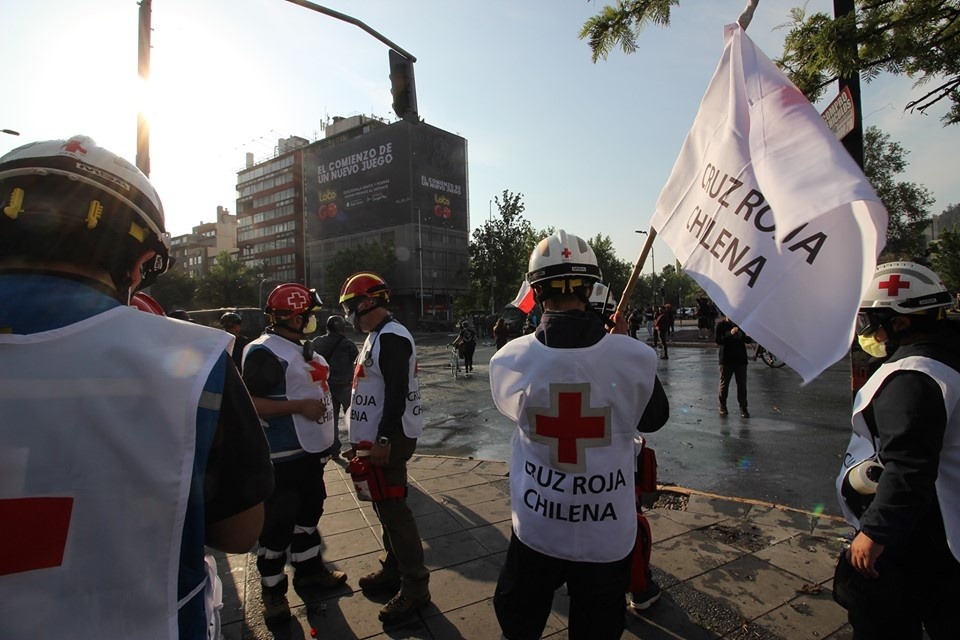
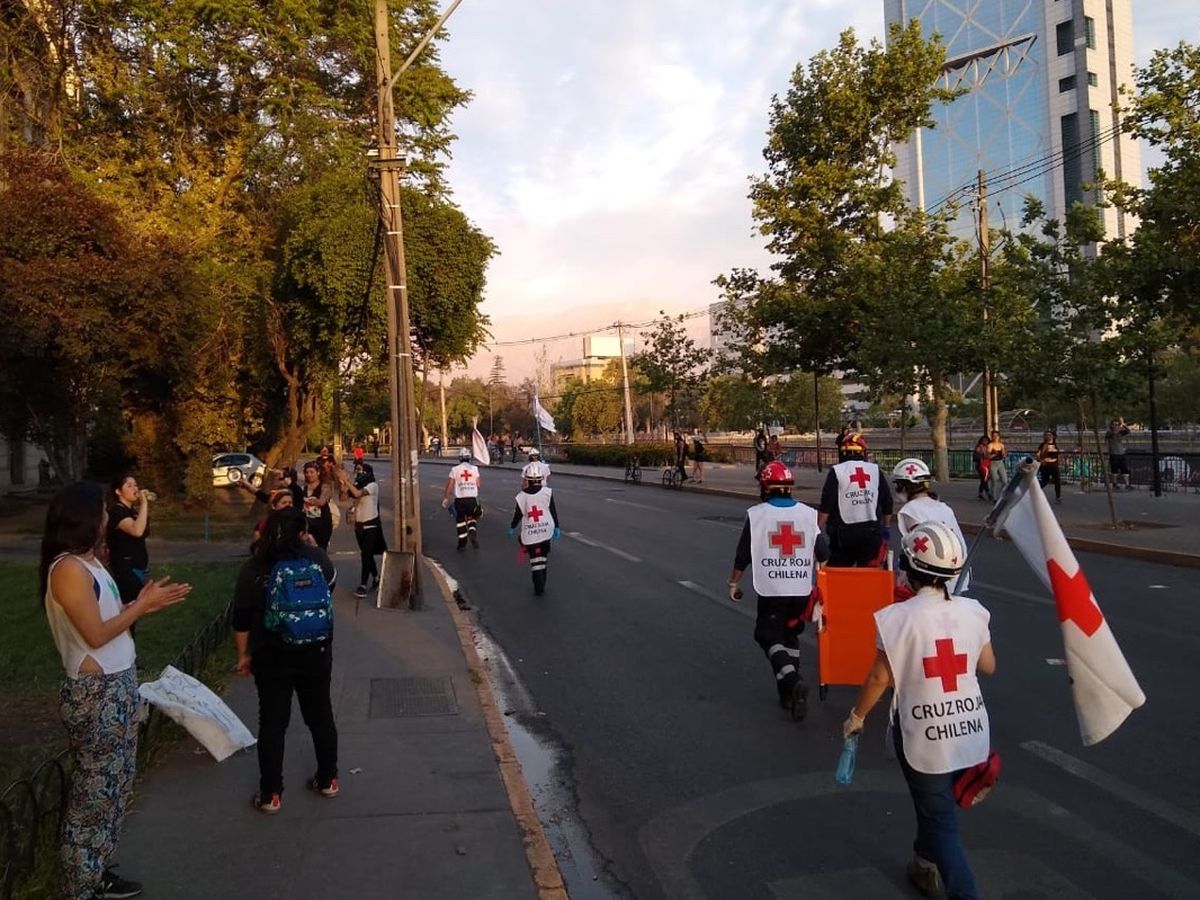
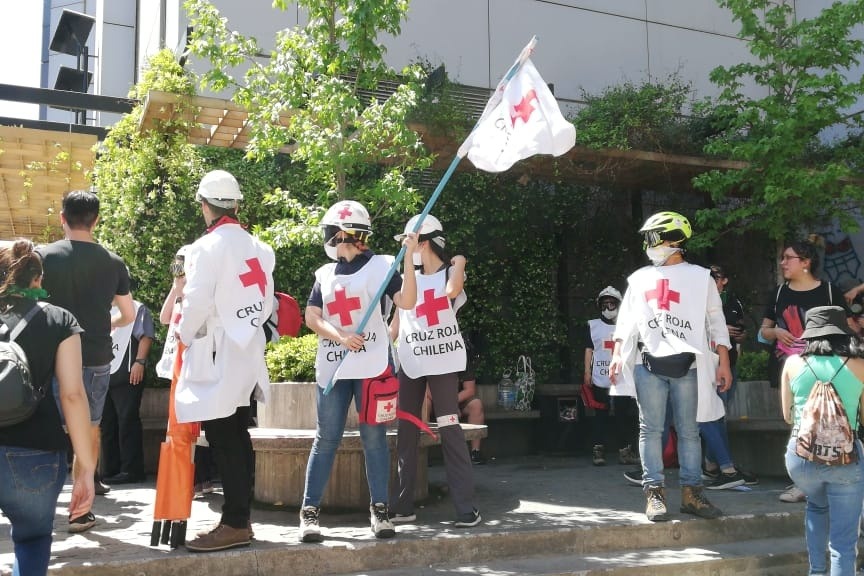
For the last couple of days, volunteers of the Chilean Red Cross (Cruz Roja Chilena) have risked their own lives by providing first aid to people and animals that have been injured in the streets, in accordance with their principles of neutrality, impartiality, and independence. More than ever, the Chilean Red Cross and its volunteers need our economic support. This is our opportunity to help, so that any person or animal that gets injured or needs psychological assistance during this moment of crisis, is treated promptly and with the right resources by the Red Cross.
Who we are and why do we want to help?
We’re a group of Chileans living outside our country and we would like to contribute to the people claiming for the right to live in a more equal, just, and sustainable Chile. We believe in the Red Cross mission and we feel truly thankful for putting their lives in danger to provide humanitarian aid during massive demonstrations.
The civil unrest and manifestations have shown widespread economic, social, and political dissatisfaction that needs to be addressed by the government. We fully support the right of people to demand and peacefully express themselves publicly without fear of censorship or punishment. We condemn any acts of violence and vandalism as a way of demanding changes, as we also repudiate any violation of human rights.
All contributions will be deposited directly into the official Chilean Red Cross International Bank account and will be accounted for. We’re in direct contact with Patricio Acosta, President of the Chilean Red Cross, who has provided us with their financial information for foreign donations. Unfortunately, donations to Chilean charitable organizations are not officially available in gofundme, and therefore, they’re not tax-deductible in the US.
We are grateful that you took the time to read until this point. Every donation counts and can help make a difference. We will continue posting updates throughout the next few days.
Thank you!
International Press Coverage:
Chile protests: What prompted the unrest? (Some of the information contained in this fundraiser was extracted from this article)
If Piñera wants to wage war in Chile he should fight the real enemy: inequality
Chile on edge as worst unrest in three decades claims 11 lives
Costo de vida en Chile (Spanish only)
Violent protests over economic inequality continue in Chile
* All photo credits to the Chilean Red Cross Facebook page.
Chile: Story of one of the most unequal countries in Latin America
In early October, the Chilean government announced that the metro rush hour prices would rise by $30 CLP ($0.04 USD, from ~$1.12 USD to ~$1.16 USD). Even though this may not sound like a big amount, it is a significant percentage of the average Chilean household income. In Chile, a family with a single source of income, receiving the minimum wage of ~$301,000 CLP (~$413.00 USD) would spend about $4.64 USD per day or ~$139 USD per month (2 persons, 4 trips on public transportation every day for 30 days), which represents about ~33% of the total household income per month.
But people’s anger goes far beyond the cost of transportation. The inequality problem gets even more critical knowing that Senators’ salaries are almost 30 times the minimum wage (~$9.000.000 CLP or $12.300.00 USD per month).
People’s frustration was exacerbated by years of increasing cost of living, low wages, a perverse pension system, lack of affordable education, a poor public health system, forgiven industry collusion, and crippling inequality.
State of Emergency
Protests that spilled out into the streets last Friday, October 18th, escalated very quickly. Metro stations, supermarkets, and gas stations were lit on fire throughout the night, leading the president to call a state of emergency on Saturday morning. From then on, a nationwide movement began, seeing people occupy the streets, demanding a better society.
The president's decision to call a state of emergency so quickly, without addressing the public first, has been globally criticized and has sparked more confrontations between military forces and civilians. In statements, the Chilean president justified his decision to put the military on the streets, saying it was “to maintain public order against vandals and crime”.
On Sunday evening, he said the country was "at war against a powerful enemy, who is willing to use violence without any limits", an announcement which was widely criticized and condemned by most citizens. Late on Tuesday, he apologized for his lack of vision and announced a package of reforms aimed at ending the unrest. Those reforms included an increase in the minimum wage, state pension, and the stabilization of the costs of electricity. While some welcomed the reforms, most said they did not go far enough.
Since those declarations, the people kept organizing pacific protests all over the country in hopes to have the government reconsider the reforms and their decision of repressing people through military and police forces.
How many people have died? How many have been arrested?
Officials have said that 18 people have been killed, including 11 who had died in arson attempts, looting and rioting and two who were killed by military officials.
On Monday evening, the National Institute of Human Rights said more than 1,420 civilians had gone to hospitals with injuries from the unrest. At least 84 of those had wounds caused by weapons, according to the institute. More than 2,500 had been reportedly detained since the unrest began.
The Chilean Red Cross role during the crisis
For the last couple of days, volunteers of the Chilean Red Cross (Cruz Roja Chilena) have risked their own lives by providing first aid to people and animals that have been injured in the streets, in accordance with their principles of neutrality, impartiality, and independence. More than ever, the Chilean Red Cross and its volunteers need our economic support. This is our opportunity to help, so that any person or animal that gets injured or needs psychological assistance during this moment of crisis, is treated promptly and with the right resources by the Red Cross.
Who we are and why do we want to help?
We’re a group of Chileans living outside our country and we would like to contribute to the people claiming for the right to live in a more equal, just, and sustainable Chile. We believe in the Red Cross mission and we feel truly thankful for putting their lives in danger to provide humanitarian aid during massive demonstrations.
The civil unrest and manifestations have shown widespread economic, social, and political dissatisfaction that needs to be addressed by the government. We fully support the right of people to demand and peacefully express themselves publicly without fear of censorship or punishment. We condemn any acts of violence and vandalism as a way of demanding changes, as we also repudiate any violation of human rights.
All contributions will be deposited directly into the official Chilean Red Cross International Bank account and will be accounted for. We’re in direct contact with Patricio Acosta, President of the Chilean Red Cross, who has provided us with their financial information for foreign donations. Unfortunately, donations to Chilean charitable organizations are not officially available in gofundme, and therefore, they’re not tax-deductible in the US.
We are grateful that you took the time to read until this point. Every donation counts and can help make a difference. We will continue posting updates throughout the next few days.
Thank you!
International Press Coverage:
Chile protests: What prompted the unrest? (Some of the information contained in this fundraiser was extracted from this article)
If Piñera wants to wage war in Chile he should fight the real enemy: inequality
Chile on edge as worst unrest in three decades claims 11 lives
Costo de vida en Chile (Spanish only)
Violent protests over economic inequality continue in Chile
* All photo credits to the Chilean Red Cross Facebook page.
Co-organizers9
Fernanda Mora
Co-organizer
Gaston LHuillier
Co-organizer
Nataly Menares
Co-organizer
Lheyla and Matias Arenas
Co-organizer