
- J
- A

Help pass the #Fairness4Vets bill!
0% complete
$5,220 raised of $7K
81 donations
"Bad Paper" Discharges have left tens of thousands of veterans struggling without access to care for service-related conditions. This is an issue that spans generations, and will require the entire veterans community to work together. Both Congress and the Department of Defense have shown that they are finally ready to act to address the problem of Bad Paper.
The Fairness for Veterans Act (S.1567/HR.4683) will help ensure that veterans diagnosed with Post-Traumatic Stress Disorder, Traumatic Brain Injury, or who have experienced Military Sexual Trauma receive a fair appeal process for less-than-honorable discharges. We hope to see this bill successfully passed, and follow-up with additional reforms.
Team #Fairness4Vets has spent most of 2016 working hard to build support for this bill. Check out what the media is saying about us:
Task & Purpose - These Vets Stormed the Hill to Fight for Service Members the Pentagon Left Behind
The Hill - Justice for our Heroes
Stars and Stripes - Veterans with "Bad-Paper Discharges" Seek Help from Congress
News12 Long Island - Benefit Battle
News12 Long Island (extended cut) - #Fairness4Vets Explained by Kristofer Goldsmith
Newsday - Veterans Urge Congress to Recognize PTSD as Cause for Improper Military Discaharges
Denver Post - Congressman Mike Coffman: The twin crisis of veterans' mental health and suicide
VICE News - After Being Punished for His Suicide Attempt, a US Veteran Is Fighting for Others with PTSD
New York Times - Veterans Want Past Discharges to Recognize Post-Traumatic Stress
The Takeaway / WNYC / NPR Radio - Vets Push for Discharge Upgrades and Acknowledgement of PTSD
Public Radio International - This veteran has spent nearly a decade trying to get the military to change its practices for discharging vets with PTSD
Military Times - Legislation would halt bad military discharges due to PTSD, TBI
Fox5NY - Legislation would help veterans get PTSD treatment
FiOS1 News - Lawmakers fight for bill that would help veterans with PTSD get treatment
Newsday - Fairness for Veterans Act introduced
News12 Long Island - Represenatives Peter King, Lee Zeldin, Kathleen Rice and Steve Israel cosponsor #Fairness4Vets Act
Fairness4Vets is now supported by all of these organizations:
Veterans of Foreign Wars
Disabled American Veterans
Military Officers Association of America
Iraq and Afghanistan Veterans of America
Paralyzed Veterans of America
United Soldiers and Sailors of America
Vietnam Veterans of America
American Legion
The Veterans Health Council
HR.4683 was introduced in a bipartisan coalition in the House of Represenatives led by Congressmen Coffman and Walz.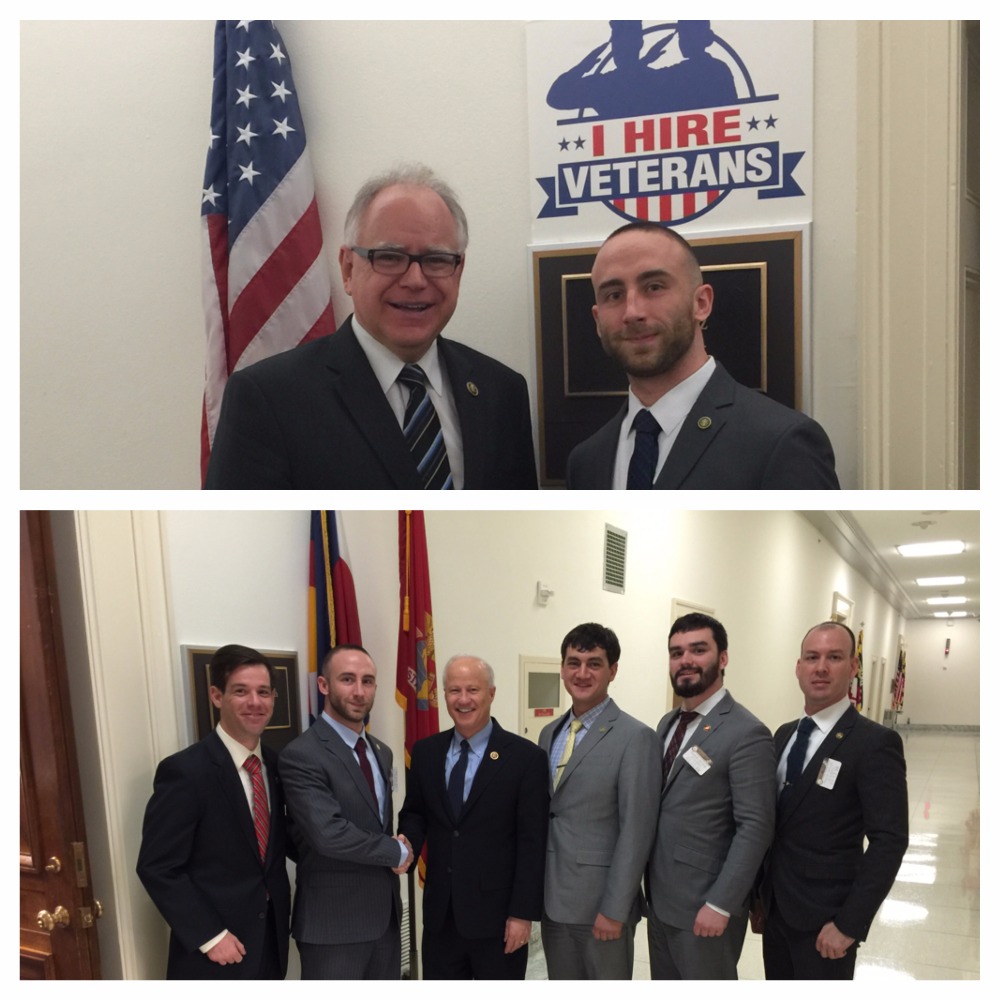
Thomas, Alex, David and Kris from Team #Fairness4Vets are returning to Washington DC for another push, and we could use your help getting there! This week, we're shifting focus to rallying the Community of Veteran Service Organizations in Washington to combine forces behind this bill so that we can see it passed this year.
Student Veterans of America has been gracious enough to host our second Fairness for Vets Coalition meeting, which will be a roundtable discussion over dinner at their National Headquarters in Washington, DC.
Here are the costs for this upcoming trip:
1. One Round trip Amtrak Coach Ticket - Hartford, CT to Washington, DC: $309
2. Two Round trip Amtrak Coach Tickets - New York, NY to Washington, DC: $352
3. Taxi/Uber fare estimates (3 days x 2 trips): $72
4. Catering costs for #Fairness4Vets Coalition Meeting: $350
Total: $1,083
If you would like to see our White Paper on Restoring Honor to Veterans with Inivisble Injuries which we will be presenting to members of Congress, please click here.
Meet the team!
Kristofer Goldsmith: 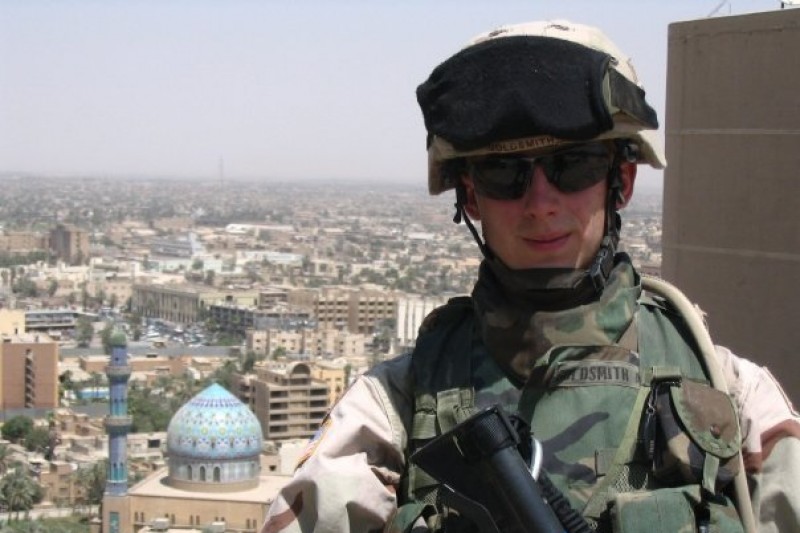 After returning from my yearlong deployment to Iraq in 2005, I suffered from severe post-traumatic stress disorder. A year later, the symptoms became so overwhelming that I attempted suicide as a means of escaping the mental anguish I was suffering.
After surviving my attempt, I was quickly kicked out of the Army with a less-than-honorable discharge. Despite years of treatment for PTSD from my time in Iraq, the Army Discharge Review Board continues to refuse my request for an upgrade so that I can use the veterans benefits I earned in combat .
I’m not alone.
The Army has discharged 22,000 soldiers with diagnoses of PTSD and Traumatic Brain injury since 2009 alone. With your support, in January 2016, veterans from across the country are going to Capitol Hill to send Congress a message.
It’s time for Congress to act to reform the military review boards process so veterans have a fair shot at receiving discharge upgrades that will provide them the VA benefits they earned serving their country.
As veterans, we have a commitment to be sure that no one is left behind.
Thomas Burke: 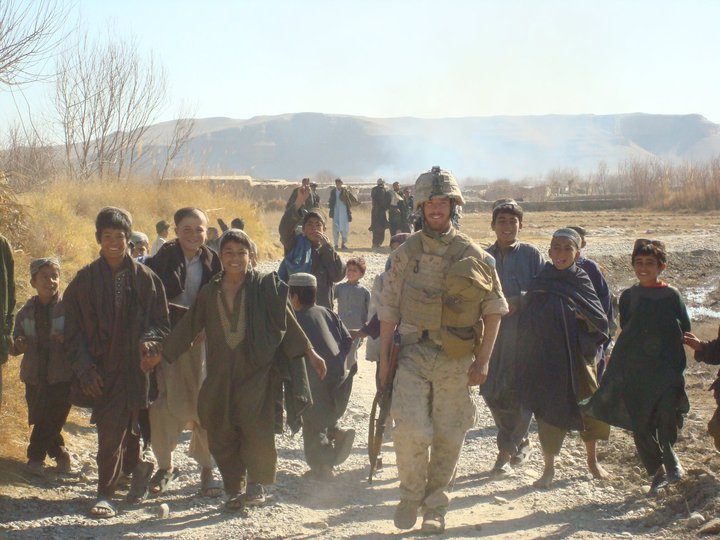 As I stood on a road next to my outpost in Afghanistan, I held the body parts of children I had played with the day before in my hands. Some part of me knew this morning; interrupted by the exploding sound of a rocket-propelled grenade detonating, would be a day that I would never forget. I was only 20 at the time but I knew my life was changed. The children were on their way to bring the unexploded ordinance to us. The local children were so proud to help our fight with the Taliban. I was able to strengthen these relationships because of the language training I received as an infantry Marine.
My unit deemed my service and abilities honorable enough to devote thousands of hours to training in both Arabic and Pashto from the Defensive Language Institute in preparation for my combat deployments to Iraq and Afghanistan. I was meritoriously promoted at boot camp, nothing made me prouder than fulfilling my lifelong goal of becoming a United States Marine.
But that day, with the blood of the children that had trusted me seeping into my skin, I knew everything would be different. It’s not like I had never seen combat or blood or even been blown up by the enemy. I had signed up as an infantry Marine to fight for my country. I didn’t sign up to hold the brains of eight year olds. Their lifeless bodies hold an eternal vigil in my mind’s eye.
When I got back home from Afghanistan I was finally able to see a psychiatrist. I had already received a diagnosis of PTSD following my service in Iraq but because of my language skills I was needed for the short work-up to Afghanistan, and I wanted to keep fighting. The psychiatrist without counseling me or learning my medical history prescribed me with Remeron. Remeron is an anti-depressant. The Navy psychiatrist decided to treat my PTSD, an anxiety disorder, with an anti-depressant. This, as with any treatment like this, exacerbated my symptoms and caused my to begin to self medicate.
I had never done drugs before but I found myself taking hallucinogens and cocaine, all in the attempts of making myself feel better. My unit was extremely lax in monitoring me because we had just gotten back from the Battle of Marjah and each Marine from private to colonel was dealing with the trauma they had experienced individually. While I may have been given an other-than honorable discharge because of these and subsequent actions, I am glad that my symptoms were so clear so early on. This allowed me to face my shame and trauma head on which has allowed me to come so far, unlike some of my brothers in arms who received honorable discharges yet have commit suicide since failing to reintegrate into society.
My actions were a direct symptom of the trauma I experienced during my time in Iraq and Afghanistan. I did not have an “adjustment disorder,” I thrived in combat. Upon my first evaluation at the VA doctors noted that my, “psychiatric conditions are caused by or the direct result of your military experience and combat exposure,” demonstrating that if I had not been exposed to combat I would have never exhibited this behavior. This should be all the burden of proof necessary for a veteran to have his discharge upgraded.
I had multiple diagnoses of PTSD prior to my administrative separation from the military that were not taken into consideration by my command. I cannot blame them for this. Our country was at war, commanders need to ensure that their units are combat operational, this includes finding ways of getting rid of non-deployable troops to make room for fresh, undamaged grunts. I am extremely proud of my service in Iraq and Afghanistan. I never lost one Marine. While at the end of the day bringing all my Marines home was the priority, now I am left full of shame that every second of my service was deemed no longer honorable because of my mental illness.
Today as a student at Yale University I am exploring the moral injury that service members face in war. More than anything I would love to return to the service as a chaplain after receiving my Master’s in Divinity at Yale Divinity School. However, because of my discharge this dream of ministering to men and women who are struggling with the same problems I did will never come to fruition. Since I was discharged I received an undergraduate diploma in only two years, was a successful Division 1 athlete, invited to speak throughout the Ivy League as to the benefits of veterans returning to the classroom, all while dealing with my own PTSD without the help of benefits I could have utilized with an honorable discharge.
About 300,000 other veterans just like me fight the scarlet letter they have been given every day by the institution they love the most. Veterans are an idealistic group, especially the ones that volunteered to fight for their country in a time when no one else would. Now these veterans are being punished for defending our great nation. We as a nation should be devoted to protecting this class of citizens rather than perpetuating the alienation they face from society.
Check out Thomas on TEDx talking about how school can help veterans recover from PTSD:
Steven Acheson: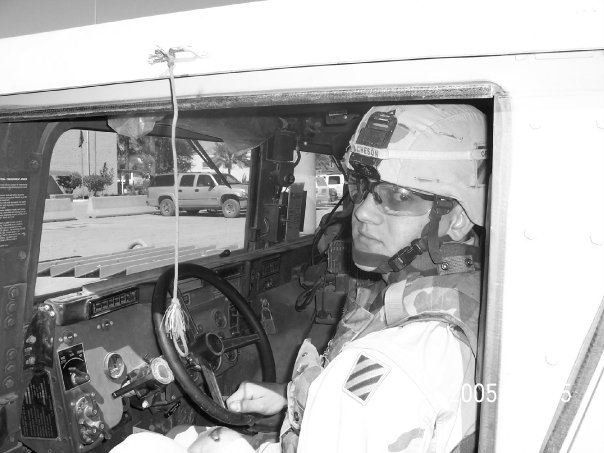 My name is Steve, and I grew up on a small family-owned dairy/beef farm in Wisconsin. I wrestled all throughout my childhood and adolescence, and was active in 4-H and other service organizations. In 2001, I watched the Twin Towers fall live on TV, ironically, in my American History class, when I was a junior in High School. With a predisposition to service, this event helped spur me to join the Army shortly after graduating.
In 2004, I completed basic training and AIT as a 13-F, “Fire Support Specialist” (aka Forward Observer), at Ft. Sill, OK as the Distinguished Honor Graduate of my class. I received Orders to join the 2nd Brigade Combat Team, 3rd Infantry Division, at Ft. Stewart, GA, and my first assignment was to a Combat Observation/Lasing Team (COLT) Platoon. In January of 2005, we deployed to Sadr City, Iraq as our Brigade Commander’s Personal Security Detail (PSD).
As the lead driver in a 3-truck PSD team, I was involved in over 400 escort missions in just over 11 months in-country. Roughly 6 months through the deployment, I suffered a non-combat related injury to my back which required two surgeries in 2007. This injury and subsequent surgeries led to being reassigned to a rear-detachment unit as a platoon sergeant during our Brigade’s next deployment to Iraq in 2007-2008.
My duties during this time varied greatly, ranging from new soldier integration, to barracks supervisor, and even escorting soldiers who had been convicted of crimes under the UCMJ to detention facilities all over the country. During this assignment, I was also the direct supervisor to many Soldiers who were facing various types of discharges from the Army. I helplessly witnessed numerous instances where these troops - many of whom had diagnosis of PTSD and TBI - were removed from military service on “other than honorable” discharges simply because it was faster and easier than a Medical Review Board or treatment for their conditions. This, in combination with my reduced physical capacity, were the leading factors in my decision to leave the Army, and in 2008, I received an honorable discharge after nearly five years of active duty service.
Since my honorable discharge, I have been heavily involved in veteran advocacy and reintegration work through student-veteran organizations and other veteran-specific social and political groups. I’ve served as an OIF/OEF veteran advisor to my US Congressman, and was awarded “Student of the Year” at my University in 2011. I utilized my GI Bill and Vocational Rehabilitation Benefits to earn my Bachelor’s Degree in Civil/Structural Engineering, and graduated with honors in 2013. Since that time, I have used my background in agriculture and my degree in engineering to start the first ever certified organic, veteran-led farm in my state, where we hire veterans to help feed other veterans and families in-need in our community.
Alex McCoy: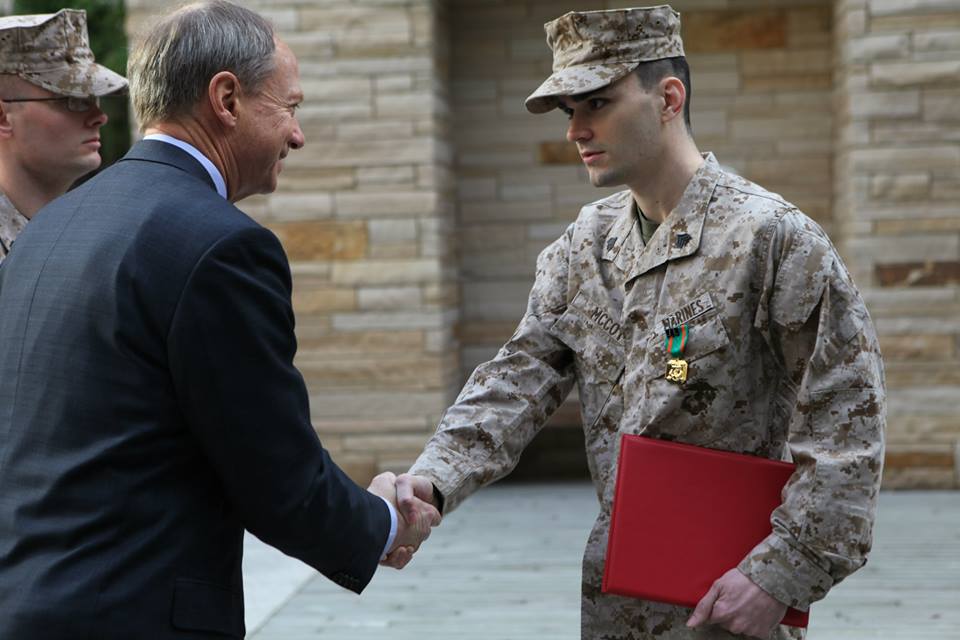 My name is Alex McCoy, and I grew up in a military family before settling in North Kingstown, Rhode Island. After graduating high school, I enlisted in the United States Marine Corps. After three years assigned to Headquarters & Headquarters Squadron, Marine Corps Air Station Cherry Point, I volunteered and was selected for embassy duty as an opportunity to deploy overseas. I completed year-long deployments in Saudi Arabia, Honduras, and Germany before being discharged honorably as a Sergeant after 6 years of service. Since separating from the military, I have engaged in passionate advocacy in support of other veterans. I have briefed elected officials in my home state of Rhode Island on how to adjust the policies and procedures of the public university system to better fit returning veterans' needs, particularly wounded veterans managing disabilities. As the Veterans Outreach Director for a Rhode Island gubernatorial candidate, I co-authored the candidate's veterans policy platform, including reforms specifically targeted towards veterans with less-than-honorable discharges. As a student at Columbia University, I've continued my advocacy, lobbying members of Congress for legislation which would result in better data on outcomes for transitioning veterans. I have worked for various organizations as a communications specialist, handling interactions with the press and developing effective messaging.
David Anderson: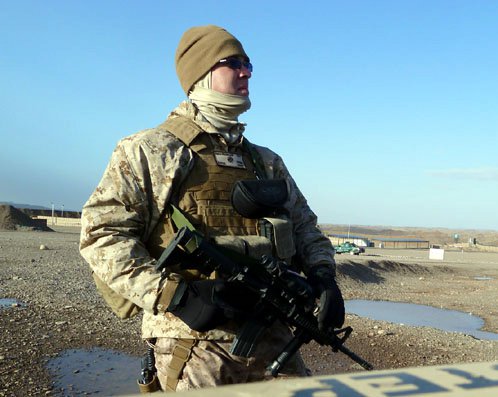 My name is David Anderson. I grew up in San Antonio, Texas. The son of a career police officer and US Air Force civil service employee, I was drawn to service. I enlisted in the Marine Corps Reserves and arrived at Marine Corps Recruit Depot in San Diego on Valentine's Day, 2001. I graduated from the School of Infantry one month before September 11th. Over the next ten years I served as a member of the Rifle Security Company at Guantanamo Bay, Cuba, conducted combat operations in Al-Anbar, Iraq, including the battle for Fallujah in November, 2004, and was the senior infantry adviser on a NATO training team in Afghanistan. I reached the rank of Staff Sergeant and served as a Platoon Commander of a Javelin anti-tank missile and demolitions platoon with the Weapons Company of 1st Battalion, 23rd Marines after returning from Afghanistan. I was both accepted to Columbia University and received an Honorable Discharge in 2013, marking my transition from military to civilian life. I have since graduated from Columbia and am now pursuing a Masters of Science in Foreign Service at Georgetown University. Since leaving the military I have been active in helping veterans pursue higher education, using the benefits afforded to them by the Post-9/11 GI Bill. I was active with the military veterans' organizations at Columbia and, now, at Georgetown. I am also a mentor for the organization Service 2 School that helps veterans best succeed in their goals for higher education. I have also advocated for increased access and better management of health care and re-integration services for veterans.