- m
- M
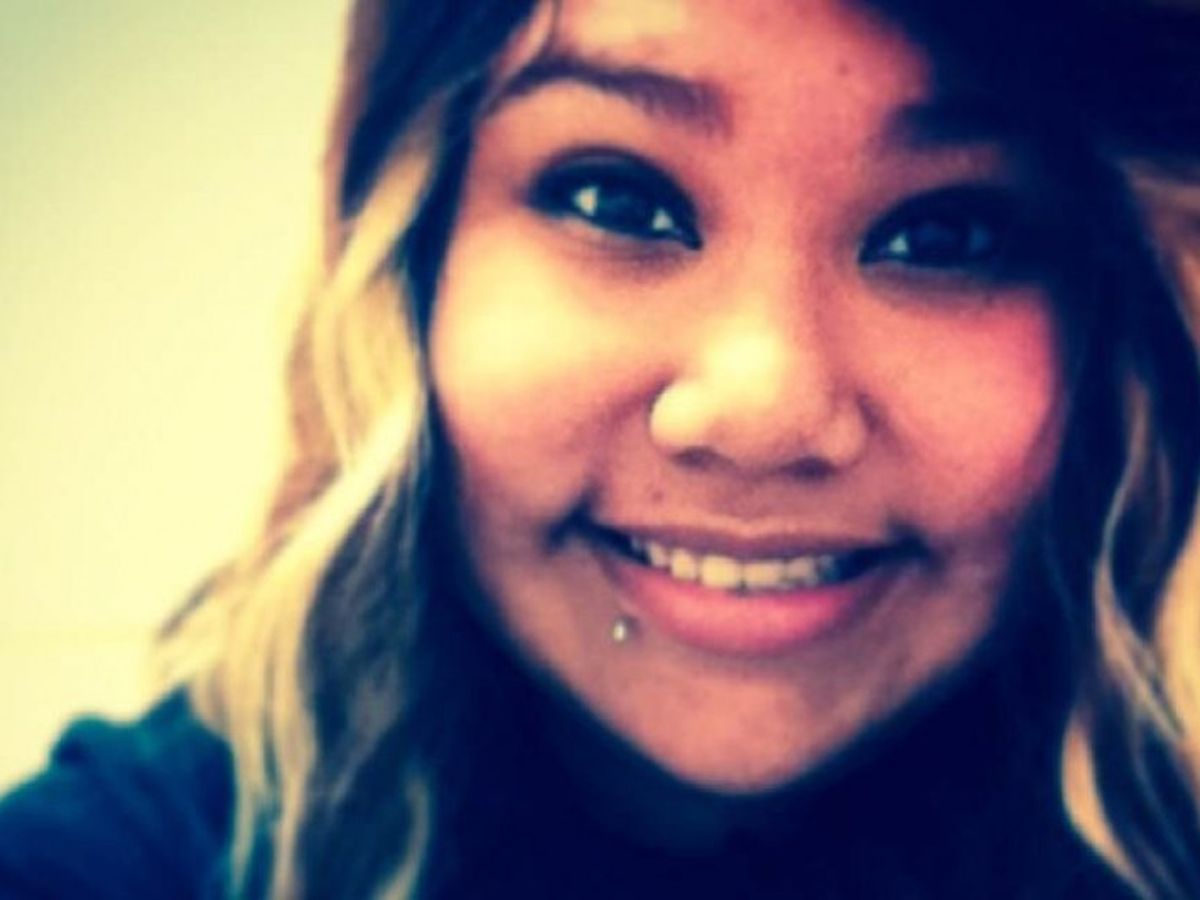
Please help Denise get to the Cleveland Clinic in Cleveland, Ohio. Please read her story of suffering and bravery through it all. Thank you.
On August 28, 2013 I received a call that no parent should have to get. I was told that my daughter, Denise, had collapsed at school and was en route to the hospital via ambulance. A million things ran through my mind all at once, "Is my daughter okay?" , "Am I going to get to the hospital and find that my daughter has died?" Despite all the negative things going through my head, I did what any sane parent would do, I drove by myself to the hospital not knowing what to expect. When I got there, the staff basically told me that my daughter had fainted and had some episode of a seizure. My first thought was, well my dad has epilepsy but why would epilepsy all of a sudden show up in a 17-year-old seemingly healthy teenager? After several more uncontrolled episodes and several hospitalizations and testing later, a neurologist was consulted and they found that the seizures were not of an epileptic nature and diagnosed my Denise with non-epileptic seizure disorder, or pseudoseizures. I did not like that term "pseudo" because of what it suggests. They began her on a regimen of medications that for the most part, because she was not epileptic, would not work long term. Short term they would control the convulsions, but they were not good for her. I still didn't buy the fact that they were telling us that her seizures were from stress, but alas, what could I do? I'm not a doctor, I had to go with what they were telling us.
Denise ended up having to drop out of her senior year at the suggestion of her neurologist, due to the seizures not being controlled. It was an upsetting time, my baby girl was supposed to graduate that year.
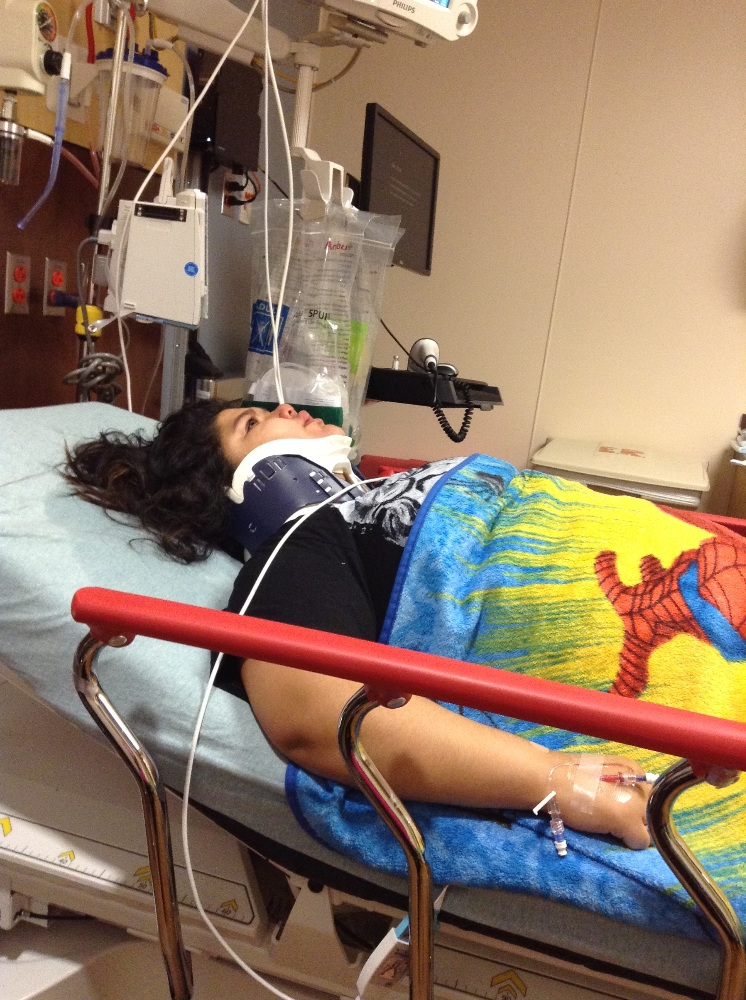 Fast forward to April 2014, as we were visiting a family member who was in the EC at Memorial Hermann NW Hospital, Denise went to the restroom. We noticed that she was taking a while and so I went to check on her. She had had a seizure and was convulsing on the restroom floor. I called for security to come open the door and their procedure was to admit her for observation.
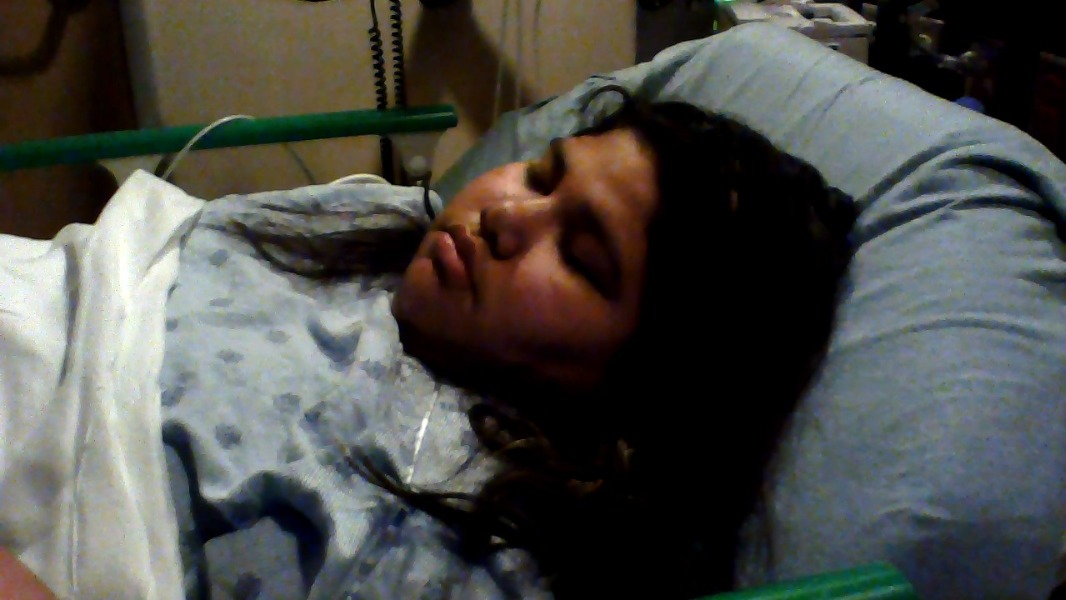 I begged and pleaded for the doctors to let her have her "episodes" and when she came out of them I would take her home. I told them that she had been tested before and that everything came back fine and that she was being seen by a neurologist. The doctor didn't believe that she merely had a non-epileptic seizure disorder, and so he admitted her for more testing. To my surprise, they admitted her to ICU under sedation and intubation, they said because they needed to rescue her airway. She was intubated for a good 24 hours before she developed a scary 104 fever and they found that she had developed aspiration pneumonia, which could be deadly if not treated immediately. She stayed sedated for 3 days and finally was released a week later. After about 3 weeks post intubation, we noticed that Denise had developed marked stridor and was having trouble breathing. I took her to a local emergency center thinking maybe she had left over contents in her lungs after the aspiration pneumonia and I just wanted to have her checked out. It was there that a CT scan showed that she had developed tracheal stenosis. She was only breathing at 3mm through her trachea. It became necessary to rush her in to see an ENT physician to have the issue resolved as soon as possible. Over the course of several months, Denise underwent several balloon and laser dilations and stent placements to no avail. She has also gained 50 + pounds due to having so much steroid treatments for the inflammation. The scar tissue kept coming back aggressively and at full force. In December 2014, she had a scary episode in which her stent became infected and she could not breathe, she was life-flighted to UTMB where she was almost given a tracheotomy. Thank God that they did not do it because she was scheduled for a bronchoscopy the next day at St. Luke's Hospital. Her pulmonologist, Dr. Donald Lazarus, removed the stent and decided to discuss further options. In January of this year, her team of doctors decided that it was time to discuss the need for a tracheotomy. To rule out a resection, which the ENT doctor did not think Denise was a candidate for, a Cardiothoracic surgeon consulted with her. We had already resolved that Denise was going to get a trach put in, but the following week the CT surgeon convinced us that Denise was a good candidate for resection and wanted her to have it done. We had done research and we were terrified at the thought that an inexperienced (in this type of surgery) surgeon was going to perform this risky surgery on her. After thinking about how tired she was of going through all of these surgeries, Denise decided to follow through and get the resection. We thought that this would be her saving grace and that she would finally be healed of the disease. Unfortunately, after the 7 hour long surgery and the doctor accidentally nipping her esophagus, Denise developed pneumonia and subcutaneous emphysema.
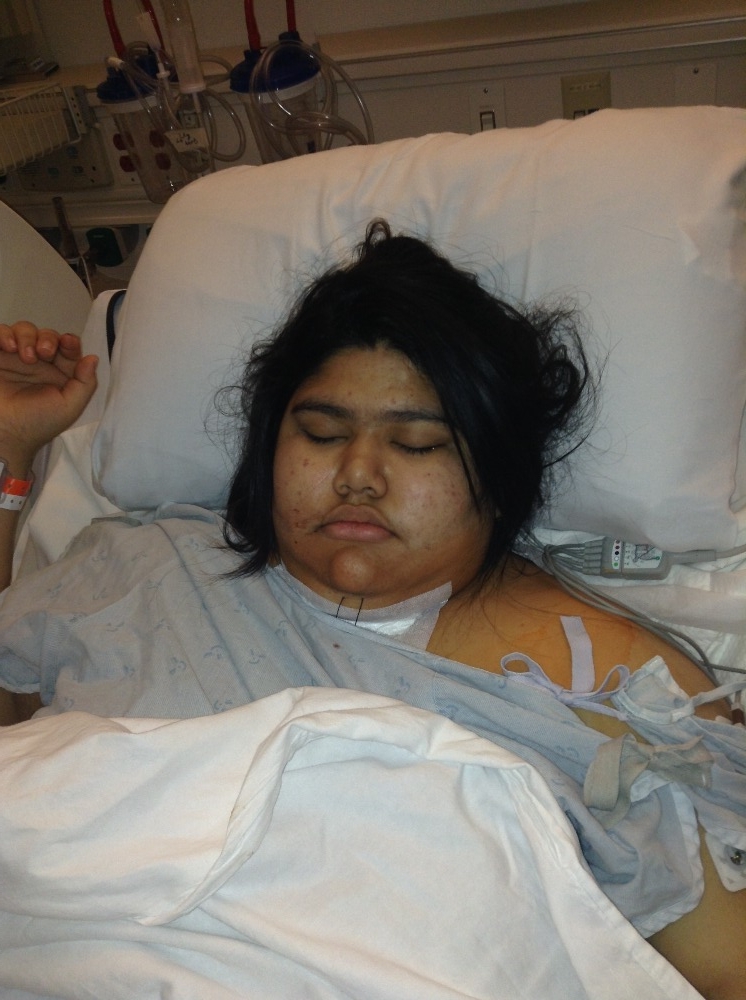 The doctors completely failed to recognize the symptoms and it took insufferable nagging on my part to get them to double check and find out for certain that she indeed had pneumonia. They had to initiate an emergency bronchoscopy at bedside in the ICU while she was wide awake and while all of the nurses held her down. They suctioned out so much gunk from her lungs that it seemed she was practically drowning. It was a nightmare! The experience for Denise was traumatizing. Since the resection, it has been discovered that Denise's scar tissue has returned. While the staff at the hospital has been phenomenal, we are disheartened that despite aggressive efforts she is still suffering. To date, along with the resection, she has had 34 surgical procedures including several rigid bronchoscopies with balloon dilations, and several failed stent placements. Currently, she has a stent in place which is sewn in through her neck. After a member of a group of women who have also suffered with this disease reached out to Denise and told her about her successful treatment and recovery with an excellent and experienced ENT physician, Dr. Robert Lorenz, at the Cleveland Clinic in Cleveland, Ohio who has helped her gain back her breathing and life, we are in the process of setting Denise up with an appointment to see him. This is where we are asking for help. I encourage you to please donate and help us reach our goal so that Denise can get the treatment she needs and get back to living and be able to get on with her life like a normal teenager. Denise has dealt with this ordeal with so much grace and patience. She would like to finish high school and go to college one day. No one should have to suffer like this. The donations are needed to go towards traveling, lodging for any where from three weeks to one month and any medical expenses incurred. No amount is too small. We appreciate your help and prayers.
On August 28, 2013 I received a call that no parent should have to get. I was told that my daughter, Denise, had collapsed at school and was en route to the hospital via ambulance. A million things ran through my mind all at once, "Is my daughter okay?" , "Am I going to get to the hospital and find that my daughter has died?" Despite all the negative things going through my head, I did what any sane parent would do, I drove by myself to the hospital not knowing what to expect. When I got there, the staff basically told me that my daughter had fainted and had some episode of a seizure. My first thought was, well my dad has epilepsy but why would epilepsy all of a sudden show up in a 17-year-old seemingly healthy teenager? After several more uncontrolled episodes and several hospitalizations and testing later, a neurologist was consulted and they found that the seizures were not of an epileptic nature and diagnosed my Denise with non-epileptic seizure disorder, or pseudoseizures. I did not like that term "pseudo" because of what it suggests. They began her on a regimen of medications that for the most part, because she was not epileptic, would not work long term. Short term they would control the convulsions, but they were not good for her. I still didn't buy the fact that they were telling us that her seizures were from stress, but alas, what could I do? I'm not a doctor, I had to go with what they were telling us.
Denise ended up having to drop out of her senior year at the suggestion of her neurologist, due to the seizures not being controlled. It was an upsetting time, my baby girl was supposed to graduate that year.
Fast forward to April 2014, as we were visiting a family member who was in the EC at Memorial Hermann NW Hospital, Denise went to the restroom. We noticed that she was taking a while and so I went to check on her. She had had a seizure and was convulsing on the restroom floor. I called for security to come open the door and their procedure was to admit her for observation.I begged and pleaded for the doctors to let her have her "episodes" and when she came out of them I would take her home. I told them that she had been tested before and that everything came back fine and that she was being seen by a neurologist. The doctor didn't believe that she merely had a non-epileptic seizure disorder, and so he admitted her for more testing. To my surprise, they admitted her to ICU under sedation and intubation, they said because they needed to rescue her airway. She was intubated for a good 24 hours before she developed a scary 104 fever and they found that she had developed aspiration pneumonia, which could be deadly if not treated immediately. She stayed sedated for 3 days and finally was released a week later. After about 3 weeks post intubation, we noticed that Denise had developed marked stridor and was having trouble breathing. I took her to a local emergency center thinking maybe she had left over contents in her lungs after the aspiration pneumonia and I just wanted to have her checked out. It was there that a CT scan showed that she had developed tracheal stenosis. She was only breathing at 3mm through her trachea. It became necessary to rush her in to see an ENT physician to have the issue resolved as soon as possible. Over the course of several months, Denise underwent several balloon and laser dilations and stent placements to no avail. She has also gained 50 + pounds due to having so much steroid treatments for the inflammation. The scar tissue kept coming back aggressively and at full force. In December 2014, she had a scary episode in which her stent became infected and she could not breathe, she was life-flighted to UTMB where she was almost given a tracheotomy. Thank God that they did not do it because she was scheduled for a bronchoscopy the next day at St. Luke's Hospital. Her pulmonologist, Dr. Donald Lazarus, removed the stent and decided to discuss further options. In January of this year, her team of doctors decided that it was time to discuss the need for a tracheotomy. To rule out a resection, which the ENT doctor did not think Denise was a candidate for, a Cardiothoracic surgeon consulted with her. We had already resolved that Denise was going to get a trach put in, but the following week the CT surgeon convinced us that Denise was a good candidate for resection and wanted her to have it done. We had done research and we were terrified at the thought that an inexperienced (in this type of surgery) surgeon was going to perform this risky surgery on her. After thinking about how tired she was of going through all of these surgeries, Denise decided to follow through and get the resection. We thought that this would be her saving grace and that she would finally be healed of the disease. Unfortunately, after the 7 hour long surgery and the doctor accidentally nipping her esophagus, Denise developed pneumonia and subcutaneous emphysema. The doctors completely failed to recognize the symptoms and it took insufferable nagging on my part to get them to double check and find out for certain that she indeed had pneumonia. They had to initiate an emergency bronchoscopy at bedside in the ICU while she was wide awake and while all of the nurses held her down. They suctioned out so much gunk from her lungs that it seemed she was practically drowning. It was a nightmare! The experience for Denise was traumatizing. Since the resection, it has been discovered that Denise's scar tissue has returned. While the staff at the hospital has been phenomenal, we are disheartened that despite aggressive efforts she is still suffering. To date, along with the resection, she has had 34 surgical procedures including several rigid bronchoscopies with balloon dilations, and several failed stent placements. Currently, she has a stent in place which is sewn in through her neck. After a member of a group of women who have also suffered with this disease reached out to Denise and told her about her successful treatment and recovery with an excellent and experienced ENT physician, Dr. Robert Lorenz, at the Cleveland Clinic in Cleveland, Ohio who has helped her gain back her breathing and life, we are in the process of setting Denise up with an appointment to see him. This is where we are asking for help. I encourage you to please donate and help us reach our goal so that Denise can get the treatment she needs and get back to living and be able to get on with her life like a normal teenager. Denise has dealt with this ordeal with so much grace and patience. She would like to finish high school and go to college one day. No one should have to suffer like this. The donations are needed to go towards traveling, lodging for any where from three weeks to one month and any medical expenses incurred. No amount is too small. We appreciate your help and prayers.