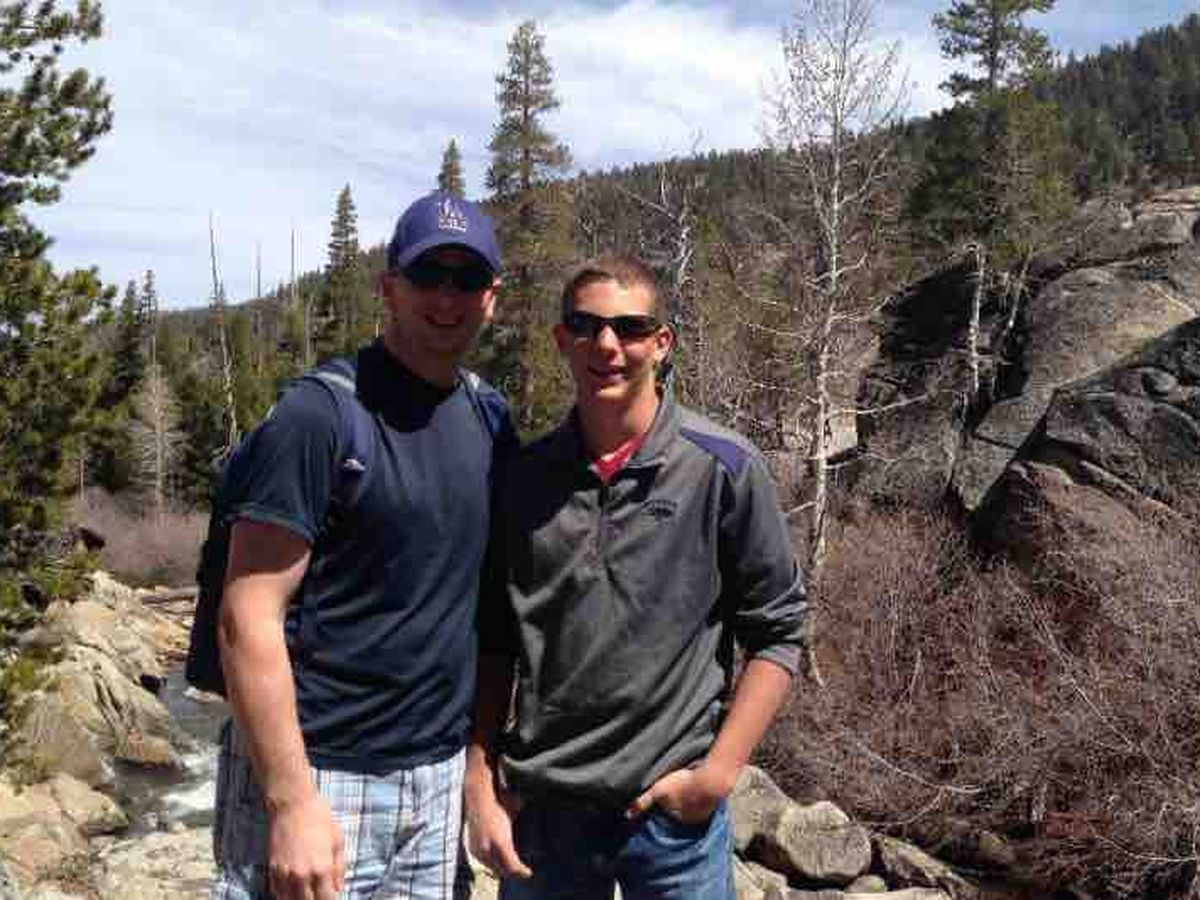
- g
- C
- A
My Diagnosis
On January 16th 2015, I went to the dermatologist about a spot on my forehead that initially looked like a blackhead. When the dermatologist first examined the spot, he initially thought it could be a large blackhead, but he also said it could be something more serious. The doctor also told me that it didn’t look like anything characteristic to any dermatologic disease. Which made me a little nervous, but I didn't expect the worst. He even brought in another doctor for a second opinion prior to taking a biopsy, and both thought the same thing. Once he took a biopsy of the lesion, he knew instantly that it was most likely melanoma. My first thought was, "no big deal, just get it removed and everyhting will be okay." I didn’t immediately realize the seriousness of what the dermatologist had just told me, until after I had left the office that day. When I was driving away from his office, I began to realize that I had a long bumpy road ahead of me. I thought for sure I would have to go through everything from surgery, to radiation, to chemotherapy, and maybe more. Later that day as I did more research on melanoma, I learned how deadly it is. About a week later, the pathology report confirmed that it was indeed melanoma. The worst possible diagnosis I coud receive!
Why was this the worst diagnosis I could receive? People have spots removed all the time right? Right, but melanoma is the most serious, aggressive and deadly of all skin cancers. Melanoma is a microscopic cancer in which cells of the body, (most often the skin, but can be in the eye, or even the small intestine) grow uncontrolled and unregulated. Once the melanoma cells take hold, they can grow, and metastasize to other distant parts of the body, just like any other cancer. The thing about melanoma that makes it so dangerous and scary, as compared to other forms of skin cancer, is its microscopic nature. Just one or two tiny cells left behind can quickly begin to grow and spread again, very aggressively.
Treatment
I have been treated with surgery, removing the lesion on my forehead, as well as the initial lymph nodes on the right side of my neck where the melanoma cells went to first. They removed a portion of the skin and underlying tissue up to an inch around the melanoma lesion. I had to go home with a bandage on my forehead due to the hole in the skin. I was to have reconstructive surgey the next week. During reconstructive surgery that next week, the edges were cleaned up, and a skin graft was taken from my hip area to fill the hole where the skin was missing on my forehead.
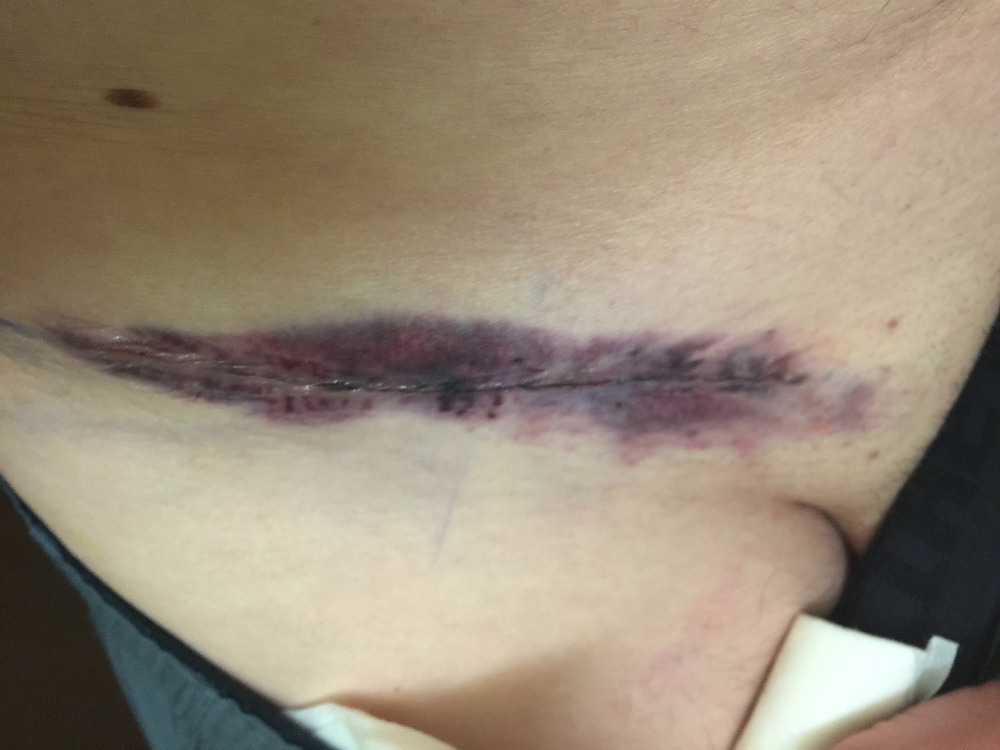 (The area the skin graft was taken from)
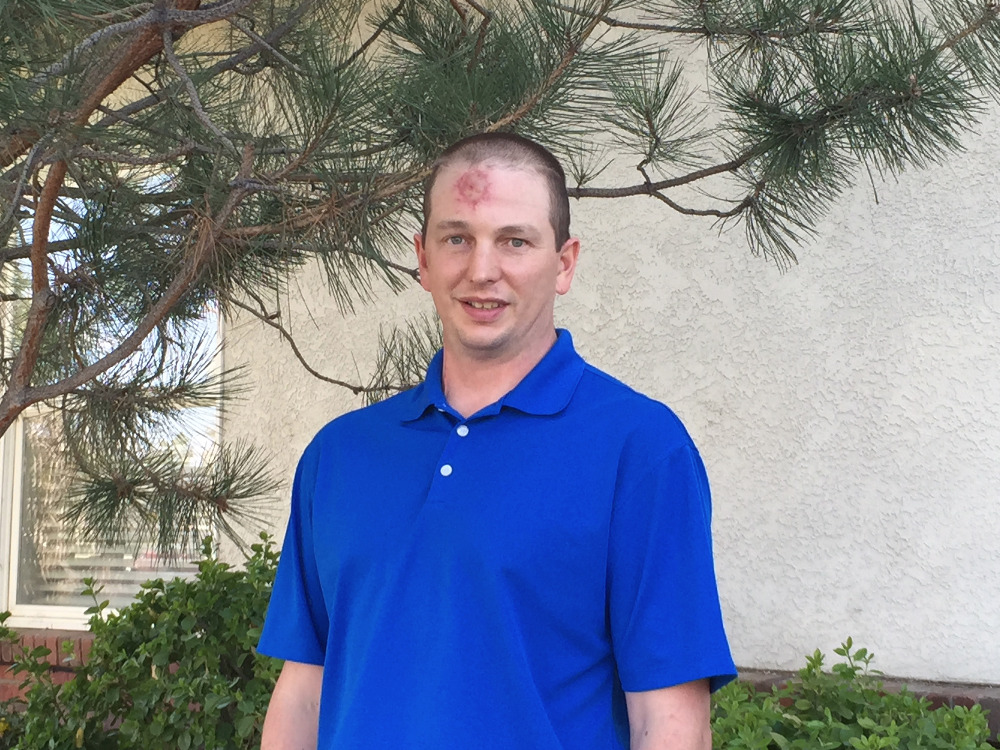 (A picture of where the graft was placed. This is about 2 months after it was done.)
When the pathology report regarding those initial lymph nodes came back positive, my oncologist decided that it would be best to further remove many more lymph nodes on the right side of my neck. That surgery was supposed to last only three hours, but due to the complexity of the structures in the area, as well as the scar tissue that had built up since the initial surgery, it took six hours, and another surgeon. I’m happy to report that the last pathology report was clear of melanoma. Being that melanoma is such a microscopic and scary disease, it was suggested that I add another therapy to my treatment. I am beginning another time intensive immune therapy treatment at the Huntsman Cancer Institute, which will last two years. Each treatment must be done in Salt Lake City, Utah, at the Huntsman Cancer Institute.
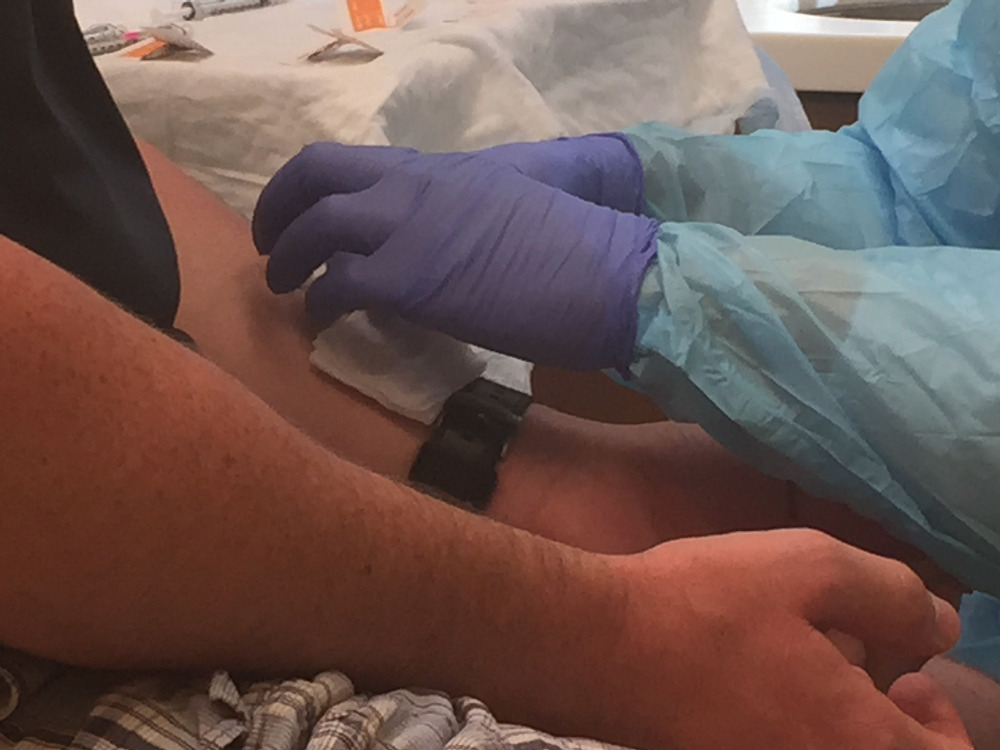 (Receiving a treatment)
Though they have taken very good care of me, and my insurance is covering most of the expenses, there have been other unforeseen expenses that still need to be covered. Some of those expenses include ancillary expenses such as travel to and from Salt Lake City, hotel stays in Salt Lake City, as well as food while there. In addition, there have been some labratory and immaging procedures that my insurance doesn’t cover. Also, I have had many, many missed days of work, because of surgeries, recovery from surgeries, or just simply driving between Salt Lake City and Gardnerville (which is an eight hour drive, each direction). Once I began receiving bills, I was thankful that my insurance was covering most of the expenses, but I was still in shock about how much wasn’t covered. Please help me pay those expenses?
I cannot express the gratitude I have for every donation received!
On January 16th 2015, I went to the dermatologist about a spot on my forehead that initially looked like a blackhead. When the dermatologist first examined the spot, he initially thought it could be a large blackhead, but he also said it could be something more serious. The doctor also told me that it didn’t look like anything characteristic to any dermatologic disease. Which made me a little nervous, but I didn't expect the worst. He even brought in another doctor for a second opinion prior to taking a biopsy, and both thought the same thing. Once he took a biopsy of the lesion, he knew instantly that it was most likely melanoma. My first thought was, "no big deal, just get it removed and everyhting will be okay." I didn’t immediately realize the seriousness of what the dermatologist had just told me, until after I had left the office that day. When I was driving away from his office, I began to realize that I had a long bumpy road ahead of me. I thought for sure I would have to go through everything from surgery, to radiation, to chemotherapy, and maybe more. Later that day as I did more research on melanoma, I learned how deadly it is. About a week later, the pathology report confirmed that it was indeed melanoma. The worst possible diagnosis I coud receive!
Why was this the worst diagnosis I could receive? People have spots removed all the time right? Right, but melanoma is the most serious, aggressive and deadly of all skin cancers. Melanoma is a microscopic cancer in which cells of the body, (most often the skin, but can be in the eye, or even the small intestine) grow uncontrolled and unregulated. Once the melanoma cells take hold, they can grow, and metastasize to other distant parts of the body, just like any other cancer. The thing about melanoma that makes it so dangerous and scary, as compared to other forms of skin cancer, is its microscopic nature. Just one or two tiny cells left behind can quickly begin to grow and spread again, very aggressively.
Treatment
I have been treated with surgery, removing the lesion on my forehead, as well as the initial lymph nodes on the right side of my neck where the melanoma cells went to first. They removed a portion of the skin and underlying tissue up to an inch around the melanoma lesion. I had to go home with a bandage on my forehead due to the hole in the skin. I was to have reconstructive surgey the next week. During reconstructive surgery that next week, the edges were cleaned up, and a skin graft was taken from my hip area to fill the hole where the skin was missing on my forehead.
(The area the skin graft was taken from)(A picture of where the graft was placed. This is about 2 months after it was done.)When the pathology report regarding those initial lymph nodes came back positive, my oncologist decided that it would be best to further remove many more lymph nodes on the right side of my neck. That surgery was supposed to last only three hours, but due to the complexity of the structures in the area, as well as the scar tissue that had built up since the initial surgery, it took six hours, and another surgeon. I’m happy to report that the last pathology report was clear of melanoma. Being that melanoma is such a microscopic and scary disease, it was suggested that I add another therapy to my treatment. I am beginning another time intensive immune therapy treatment at the Huntsman Cancer Institute, which will last two years. Each treatment must be done in Salt Lake City, Utah, at the Huntsman Cancer Institute.
(Receiving a treatment)Though they have taken very good care of me, and my insurance is covering most of the expenses, there have been other unforeseen expenses that still need to be covered. Some of those expenses include ancillary expenses such as travel to and from Salt Lake City, hotel stays in Salt Lake City, as well as food while there. In addition, there have been some labratory and immaging procedures that my insurance doesn’t cover. Also, I have had many, many missed days of work, because of surgeries, recovery from surgeries, or just simply driving between Salt Lake City and Gardnerville (which is an eight hour drive, each direction). Once I began receiving bills, I was thankful that my insurance was covering most of the expenses, but I was still in shock about how much wasn’t covered. Please help me pay those expenses?
I cannot express the gratitude I have for every donation received!