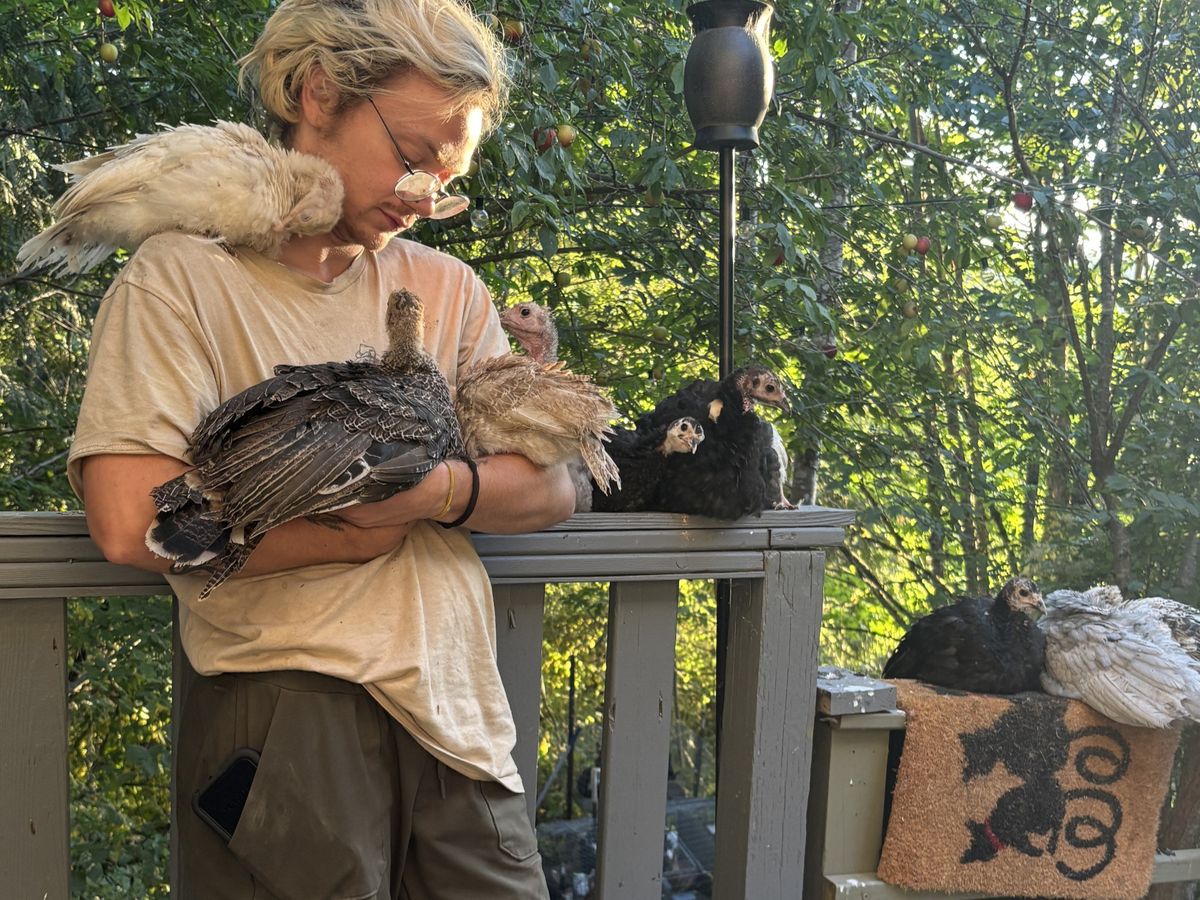
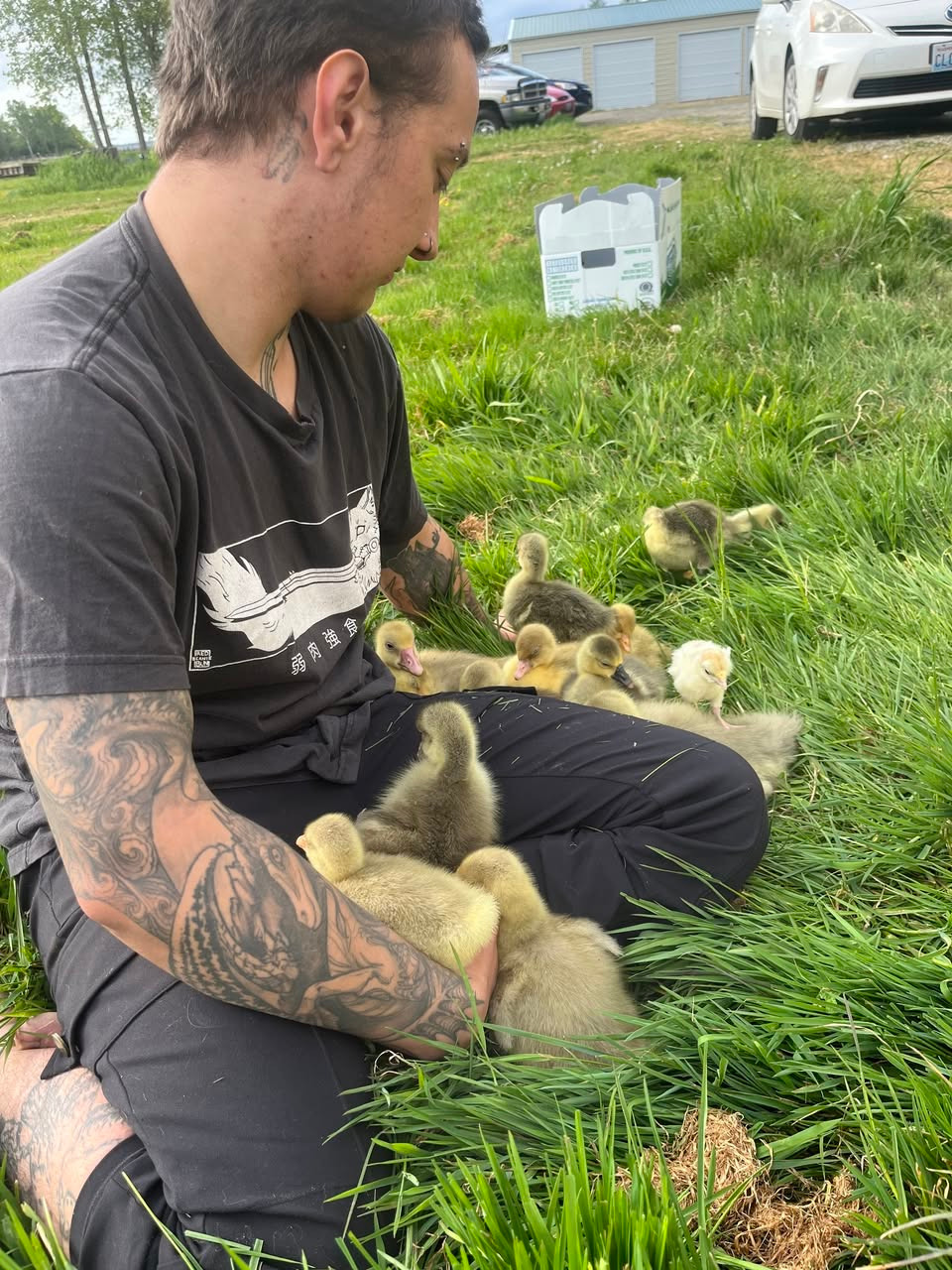

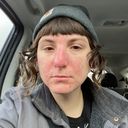
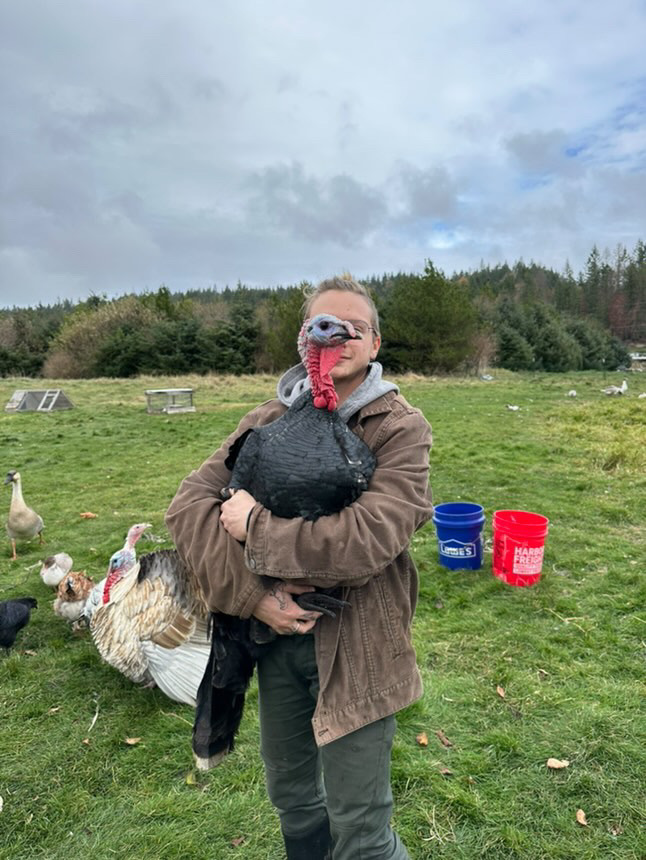
We are Ren and Dimitri, the two people behind Uphill Farmers , a micro-farm focusing on preserving endangered heritage species and breeding for improved animal welfare while integrating regenerative, ecology-focused practices. In our farming tenure, we've donated countless food products, raised almost $300,000 for a fellow farmer in our community, and raised hundreds of rare breed heritage animals for local farmers and homesteaders to integrate into their operations rather than going with low-welfare production animals. We share education on high-welfare livestock, integrative regenerative practices, and help teach our community about raising and processing their own food. In that time, we've also had to move our farm three times due to targeted harassment and unaffordable leases. It's time for us to put the love and care we've put into our community projects into setting ourselves up for success, which will in turn allow us to support the community and pursue our goals of promoting high-welfare livestock and thoughtful agroecological practices more consistently and robustly.
We have been offered a spectacular opportunity to set up our forever farm thanks to two beloved friends who have eight acres of overgrown, untended land in need of regenerative work. We have been hard at work over the past months clearing overgrown vegetation and planning to move our animals in to establish a silvopasture and food forest system that is free from the need of external fertilizer inputs, sustains the native ecology, and allows a humane and enriching environment for our animals. However, we need the funds to set up our fencing and housing for the animals. We were hoping to rely on grants, but we've been repeatedly rejected as nearly every grant program cites unprecedented numbers of applications - the need is great, and the resources accessible are minimal. So we're turning to community and asking you to please support us in our goals.
Heritage and high-welfare livestock, while being prioritized and recognized as vital in some other countries such as Norway and Canada, are still a niche topic in the USA. This means our access to resources is minimal - farm nonprofits have little understanding of the importance of high-welfare livestock, and there aren't resources oriented towards such projects. Additionally, as trans farmers, we've faced significant discrimination, including having to move due to harassment from neighbors. There are no dedicated programs to helping the heavily marginalized and low-access demographic of trans farmers, and so we have to rely on luck and hope to access the resources that many others have easily attained.
We love what we do, and we're doing good work for the future of farming - for high-welfare animal agriculture, for regenerative agriculture, and for local access to ethically-produced food. But with how often we've been displaced, it's been a struggle to keep afloat, and being able to move forward to work on our forever farm will set us on a path to keep doing this important work.
Organizer