- D
- J
- K
Refugees and Peace
People are turned into refugees by conflict. Yet even when refugees flee the physical manifestations of conflict in their countries of origin, they can be caught in a web of further conflict and trauma in their country of refuge. I want to enter into the second manifestation of conflict through my work in Kuala Lumpur, Malaysia. Achieving peace means constructing situations absent of violence and fear, in which, despite the conflict he or she has escaped, a person can access peace. I seek to educate refugees on how to protect themselves from exploitation, and, in partnership with a Malaysian NGO, construct legislative recommendations for achieving long-term peace and stability for Malysian refugee populations. I do believe that peace, as it is manifested in the realization of human rights, can be achieved.
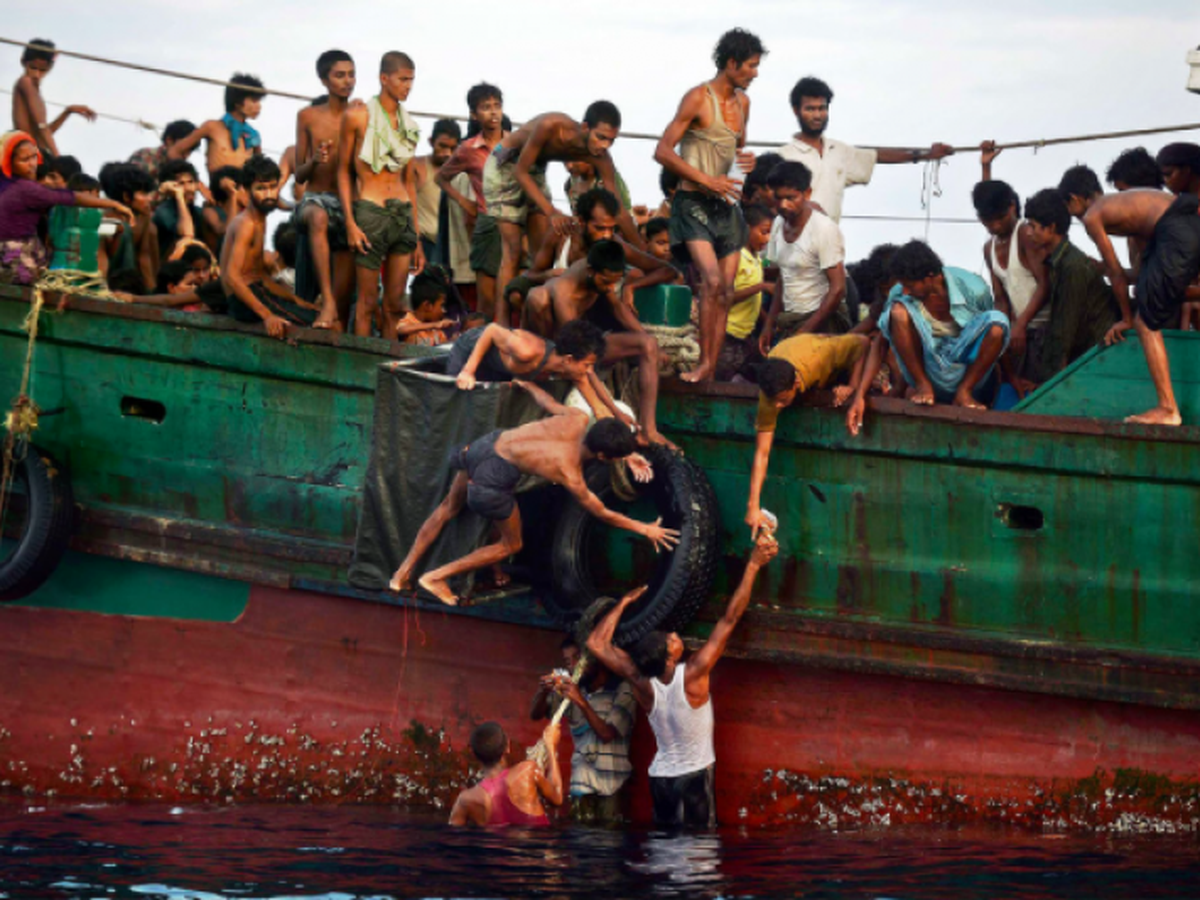
 Rohingya refugees, Langkawi Island (NY Times)
My personal investment
As Jews watching Europe hit the brink of disaster in 1939, my grandparents and their families all tried to escape Germany, Austria, and Poland, respectively. Country after country rejected their pleas for safe haven, unwilling or unable to take on the burden of millions of Jewish refugees fearing persecution or worse. Eventually, through the generosity of a Chinese ambassador working under the table, two of my grandparents ended up in Shanghai, China and because her father was an engineer whose construction skills were needed, my other grandmother followed him to a refugee camp for the families of the Polish army in Tanzania. I am personally rooted in the history of refugees-- refugees that were supported and taken in. Now it is my turn to do the supporting.
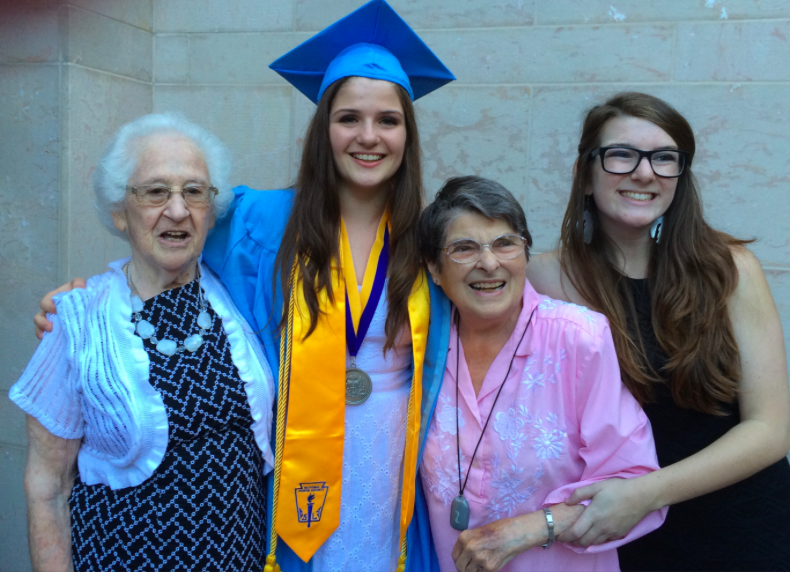 My sister and I with our powerful refugee grandmothers
Background of refugees in Malaysia
Article 14 of the Universal Declaration of Human Rights (UDHR) clearly states, “Everyone has the right to seek and to enjoy in other countries asylum from persecution.” The 1951 Convention on the Status of Refugees and its 1967 Protocol add legal specificity to this statement, protecting the rights of refugees.
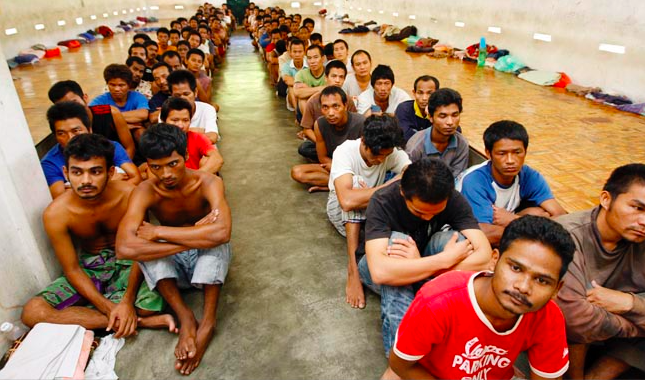 Chin refugees, read more about them here.
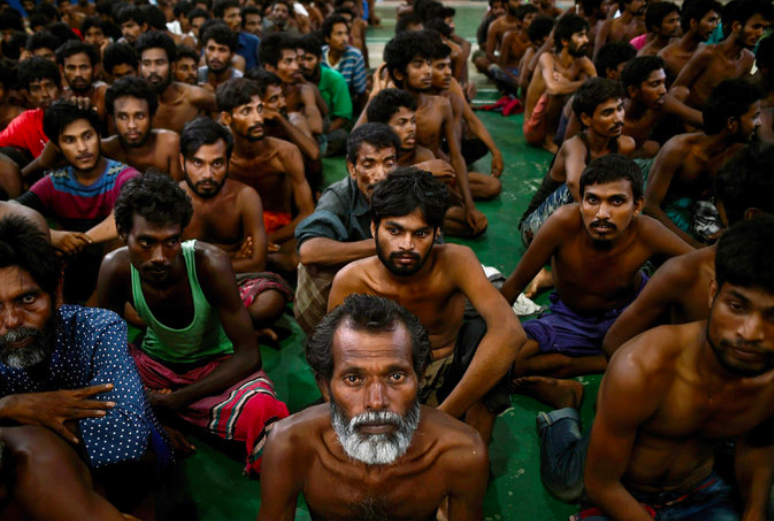
Malaysia has refused to sign the 1951 Convention on the Status of Refugees and its 1967 Protocol. Nevertheless, the UN High Commissioner on Refugees (UNHCR ) has registered over 150,000 refugees in Malaysia (including Rohingya and other Burmese minorities, Sri Lankans, Afghanis, and Syrians). Malaysian national law treats this population as illegal migrants, under constant risk of arrest, detention, deportation, and exploitation. Furthermore, as the 2016 US State Department Trafficking in Persons Report points out, because of their inability to gain formal status or work permits, these refugees and asylum seekers are vulnerable to human trafficking. The report specifically references how Malaysian traffickers exploit the debts of fleeing refugees by forcing them into labor. Malaysia's Bar Council and the Human Rights Commission of Malaysia agree that because the Malaysian government treats asylum seekers as illegal migrants, prohibiting labor market integration, they are forced to seek employment in unregulated and dangerous conditions, exposing themselves to exploitation and human trafficking, often in the form of forced labor.
Partnering Organization
 This is where Asylum Access Malaysia (AAM) comes in. A Malaysian-registered NGO, AAM is part of a network of Asylum Access organizations worldwide that advocate for refugee rights with the explicit goal of “transforming the human rights landscape for refugees in first countries of refuge,” (Asylum Access). AAM advocates for refugees’ rights in Malaysia, providing them legal services, helping them navigate the UNHCR screening process, and conducting know-your-options trainings.
I have developed a relationship with Deepa Nambiar, AAM’s founding director, who has expressed to me a need for training and research development on human trafficking. Thus, as an intern of the organization this summer, I will be conducting this project.
Project Objectives and Summary
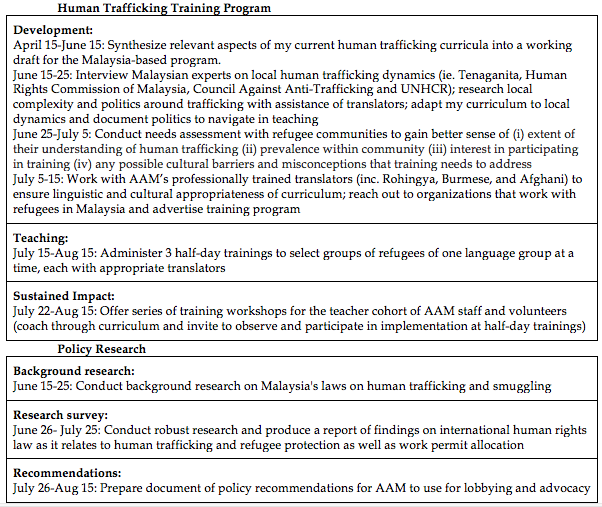
My primary objective is to increase the protections of refugees and asylum seekers in Malaysia from potential abuses and exploitation. I will achieve this two-fold--through community-based education and policy recommendations.
Recognizing that knowledge translates into empowerment, I will create a curriculum about human trafficking in Malaysia to pilot with a select number of at-risk refugee communities in Malaysia. My course will address:
- definitions of trafficking
- forms of trafficking
- methods of recruitment and entrapment
- means of protection
- available legal options and social support
I will work with refugee communities and experts on the ground to ensure local accuracy and cultural appropriateness. I will also collaborate with AAM’s strong staff translators for all in-community interaction as well as curriculum creation and provision. To ensure this curriculum's sustainability, I will train AAM staff to facilitate this curriculum in the future, providing them with the curriculum and an accompanying training guide, as well as stipends to compensate the extra time they spend learning. Given the pilot’s success, AAM commits to integrating this curriculum into their know-your-options trainings, increasing its impact.
I recognize, however, that while it is important to educate and empower refugees made vulnerable by their legal system, much of their vulnerability is tied to their inability to gain legal employment status. Thus, I will collaborate with Asylum Access Malaysia in their research about the new Malaysian law that provides freedom of movement and work permits to trafficking survivors, excluding refugees. I will research relevant components of international law that would support AAM’s argument that this law should apply equally to refugees, thus entering into a national conversation regarding giving refugees work permits.
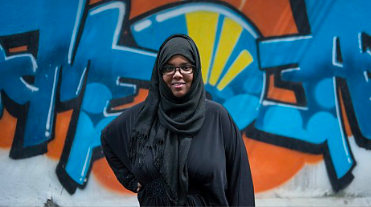 Somali refugee, read her story here
Project Approach and Timeline
Who am I and Why me?
I am a UC Berkeley student studying Peace and Conflict Studies with a focus in Politics, Conflict and Migration. As well as being the granddaugher of three refugees, I am from the Bay Area and have grown up in the midst of a strong refugee and immigrant community and know the strengths and the struggles of these communities. For the last six years, I have been engaged in the areas of anti-human trafficking and refugee work. As well as conducting human trafficking-based research for four Bay Area counties (including two district attorneys offices), I have written curriculum and taught about human trafficking for five years, in Bay Area middle and high schools, at conferences and talks, in a for-credit course at UC Berkeley, and as the head of a YWCA Anti-Trafficking Internship. I have also taken this work internationally, interviewing leaders in the anti-trafficking movements in Thailand (2015), Israel (2015), Panama (2016), and China (2017).
My refugee and asylum work includes East Bay Sanctuary Covenant (conducting intake assessments, preparing clients' declaration narratives for their asylum interviews) and the immigration department at International Rescue Committee (preparing clients’ applications for permanent residency, family petitions, work permits, and citizenship). In both positions, I have worked intimately with clients in vulnerable situations and gained a deep understanding of the continuum of refugee law.
Money stuff:
$1150: Staffing Costs
stipends for 15 teacher trainees [will train in the curriculum and will be the ones to continue program once I am gone] ($50 each)
stipends for 4 translators [who will translate any and all interviews with refugees who will contribute to creation of curricultum and as well as on the day of the training] ($100 each))
$300: Translator and Program participant and travel
compensating translators for any travel expenses
ie. interviewing communities, creating curriculum, program implementation (this is Asylum Access policy to compensate all travel expenses of their translators)
$50: Marketing and Event Support
advertising materials, room rental, refreshments
If you are inspired, please support me! As Trump closes off venue after venue of refugee support, we need be more commited than ever to these communities. Your donation could be the reason that a refugee doesn't fall into the grasps of trafficking-- through educational and legal means, together we can support refugees.
You can donate right here. Thank you!
People are turned into refugees by conflict. Yet even when refugees flee the physical manifestations of conflict in their countries of origin, they can be caught in a web of further conflict and trauma in their country of refuge. I want to enter into the second manifestation of conflict through my work in Kuala Lumpur, Malaysia. Achieving peace means constructing situations absent of violence and fear, in which, despite the conflict he or she has escaped, a person can access peace. I seek to educate refugees on how to protect themselves from exploitation, and, in partnership with a Malaysian NGO, construct legislative recommendations for achieving long-term peace and stability for Malysian refugee populations. I do believe that peace, as it is manifested in the realization of human rights, can be achieved.
Rohingya refugees, Langkawi Island (NY Times) My personal investment
As Jews watching Europe hit the brink of disaster in 1939, my grandparents and their families all tried to escape Germany, Austria, and Poland, respectively. Country after country rejected their pleas for safe haven, unwilling or unable to take on the burden of millions of Jewish refugees fearing persecution or worse. Eventually, through the generosity of a Chinese ambassador working under the table, two of my grandparents ended up in Shanghai, China and because her father was an engineer whose construction skills were needed, my other grandmother followed him to a refugee camp for the families of the Polish army in Tanzania. I am personally rooted in the history of refugees-- refugees that were supported and taken in. Now it is my turn to do the supporting.
My sister and I with our powerful refugee grandmothers Background of refugees in Malaysia
Article 14 of the Universal Declaration of Human Rights (UDHR) clearly states, “Everyone has the right to seek and to enjoy in other countries asylum from persecution.” The 1951 Convention on the Status of Refugees and its 1967 Protocol add legal specificity to this statement, protecting the rights of refugees.
Chin refugees, read more about them here. Malaysia has refused to sign the 1951 Convention on the Status of Refugees and its 1967 Protocol. Nevertheless, the UN High Commissioner on Refugees (UNHCR ) has registered over 150,000 refugees in Malaysia (including Rohingya and other Burmese minorities, Sri Lankans, Afghanis, and Syrians). Malaysian national law treats this population as illegal migrants, under constant risk of arrest, detention, deportation, and exploitation. Furthermore, as the 2016 US State Department Trafficking in Persons Report points out, because of their inability to gain formal status or work permits, these refugees and asylum seekers are vulnerable to human trafficking. The report specifically references how Malaysian traffickers exploit the debts of fleeing refugees by forcing them into labor. Malaysia's Bar Council and the Human Rights Commission of Malaysia agree that because the Malaysian government treats asylum seekers as illegal migrants, prohibiting labor market integration, they are forced to seek employment in unregulated and dangerous conditions, exposing themselves to exploitation and human trafficking, often in the form of forced labor.
Partnering Organization
This is where Asylum Access Malaysia (AAM) comes in. A Malaysian-registered NGO, AAM is part of a network of Asylum Access organizations worldwide that advocate for refugee rights with the explicit goal of “transforming the human rights landscape for refugees in first countries of refuge,” (Asylum Access). AAM advocates for refugees’ rights in Malaysia, providing them legal services, helping them navigate the UNHCR screening process, and conducting know-your-options trainings. I have developed a relationship with Deepa Nambiar, AAM’s founding director, who has expressed to me a need for training and research development on human trafficking. Thus, as an intern of the organization this summer, I will be conducting this project.
Project Objectives and Summary
My primary objective is to increase the protections of refugees and asylum seekers in Malaysia from potential abuses and exploitation. I will achieve this two-fold--through community-based education and policy recommendations.
Recognizing that knowledge translates into empowerment, I will create a curriculum about human trafficking in Malaysia to pilot with a select number of at-risk refugee communities in Malaysia. My course will address:
- definitions of trafficking
- forms of trafficking
- methods of recruitment and entrapment
- means of protection
- available legal options and social support
I will work with refugee communities and experts on the ground to ensure local accuracy and cultural appropriateness. I will also collaborate with AAM’s strong staff translators for all in-community interaction as well as curriculum creation and provision. To ensure this curriculum's sustainability, I will train AAM staff to facilitate this curriculum in the future, providing them with the curriculum and an accompanying training guide, as well as stipends to compensate the extra time they spend learning. Given the pilot’s success, AAM commits to integrating this curriculum into their know-your-options trainings, increasing its impact.
I recognize, however, that while it is important to educate and empower refugees made vulnerable by their legal system, much of their vulnerability is tied to their inability to gain legal employment status. Thus, I will collaborate with Asylum Access Malaysia in their research about the new Malaysian law that provides freedom of movement and work permits to trafficking survivors, excluding refugees. I will research relevant components of international law that would support AAM’s argument that this law should apply equally to refugees, thus entering into a national conversation regarding giving refugees work permits.
Somali refugee, read her story here Project Approach and Timeline
Who am I and Why me?
I am a UC Berkeley student studying Peace and Conflict Studies with a focus in Politics, Conflict and Migration. As well as being the granddaugher of three refugees, I am from the Bay Area and have grown up in the midst of a strong refugee and immigrant community and know the strengths and the struggles of these communities. For the last six years, I have been engaged in the areas of anti-human trafficking and refugee work. As well as conducting human trafficking-based research for four Bay Area counties (including two district attorneys offices), I have written curriculum and taught about human trafficking for five years, in Bay Area middle and high schools, at conferences and talks, in a for-credit course at UC Berkeley, and as the head of a YWCA Anti-Trafficking Internship. I have also taken this work internationally, interviewing leaders in the anti-trafficking movements in Thailand (2015), Israel (2015), Panama (2016), and China (2017).
My refugee and asylum work includes East Bay Sanctuary Covenant (conducting intake assessments, preparing clients' declaration narratives for their asylum interviews) and the immigration department at International Rescue Committee (preparing clients’ applications for permanent residency, family petitions, work permits, and citizenship). In both positions, I have worked intimately with clients in vulnerable situations and gained a deep understanding of the continuum of refugee law.
Money stuff:
$1150: Staffing Costs
stipends for 15 teacher trainees [will train in the curriculum and will be the ones to continue program once I am gone] ($50 each)
stipends for 4 translators [who will translate any and all interviews with refugees who will contribute to creation of curricultum and as well as on the day of the training] ($100 each))
$300: Translator and Program participant and travel
compensating translators for any travel expenses
ie. interviewing communities, creating curriculum, program implementation (this is Asylum Access policy to compensate all travel expenses of their translators)
$50: Marketing and Event Support
advertising materials, room rental, refreshments
If you are inspired, please support me! As Trump closes off venue after venue of refugee support, we need be more commited than ever to these communities. Your donation could be the reason that a refugee doesn't fall into the grasps of trafficking-- through educational and legal means, together we can support refugees.
You can donate right here. Thank you!