- C
- N
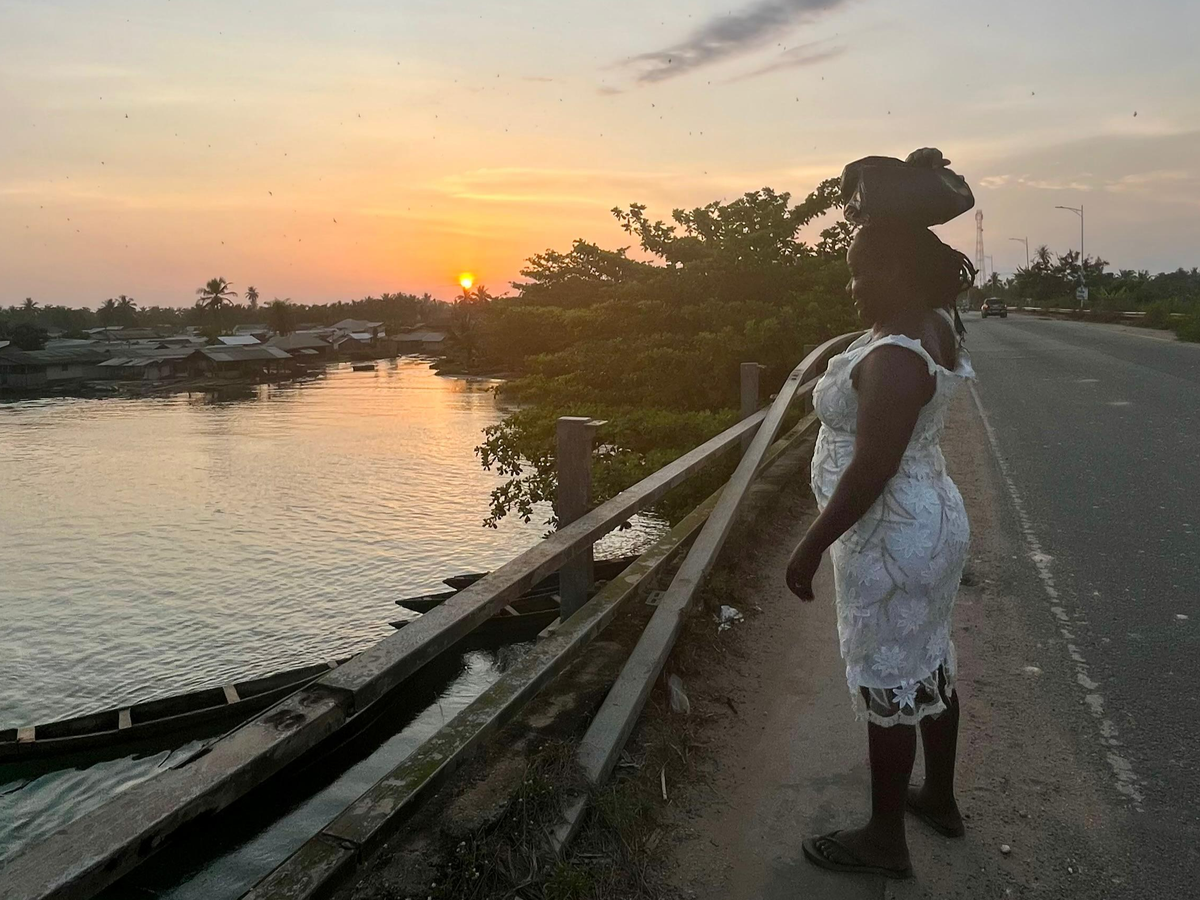
The stories of Grace & Mercy
0% complete
€305 raised of €2K
11 donations
In early 2025, I traveled to Ghana to conduct anthropological research in a small coastal community. My research focused on how local women interact with large-scale infrastructure and how these interactions shape their everyday lives and future visions.
During my time there, I met Grace and Mercy, two remarkable and promising women. I spent two months with them, and they offered me invaluable insights, generosity, and trust. When I returned to the Netherlands, I realized how much they had given me, and how little I had been able to give in return.
Here, I share the stories of Grace and Mercy as written in my master’s thesis. I hope you will be moved by their stories, which reflect their struggles, their dreams, and their resilience. If you’re able to donate, you can help turn their dreams into reality: education for one, a concrete home for the other. €1,000 each would make a meaningful, lasting impact.
I met Grace, a 19-year-old woman, at a small shop near the bridge, right on the border between the village and the highway. She works there, and I was immediately struck by her open, friendly expression and the warm hospitality with which she welcomed me. I spent a great deal of time with Grace in the shop, where she works every day of the week from 6 a.m. until 8 p.m., except on Sunday mornings when she attends a local Christian church. Her daily routine is marked by consistent bodily movements, opening the shop early to meet the morning demand from schoolchildren buying pencils and other materials, followed by a slower pace of sales after 10 a.m. Much of Grace’s day is spent waiting for buyers, scrolling through social media, chatting with visiting family, friends, or community children, watching the traffic pass by, occasionally making a small fire in front of the shop to fry yam for her guests, all while dreaming of one day becoming a midwife. She would often sigh and say, ‘Life is slow here'. The shop is owned by Grace’s 46-year-old single mother, who has long fulfilled the traditional gender role of smoking fish. However, she envisioned a different path for her three daughters. Abandoned by her husband when the children were young, she persevered and instilled in Grace the importance of economic independence, encouraging her to pursue education and ambition rather than rely on a man, as she herself had once been taught. Through years of saving, she was able to build the small shop where Grace now works, creating new opportunities beyond the customary roles. Grace is allowed to keep a small share of the shop’s income, which she carefully saves with the goal of attending university. She wants to become a midwife in a big city, where she hopes to work, earn well, and send remittances home, helping her family in the community to live more comfortably. This story illustrates a key finding of my research: even women engaged in traditional roles actively exercise agency to create better opportunities for their children. While many of these women may not wish to leave the village themselves, they nonetheless support and encourage their children’s aspirations to move beyond the community.
I met Mercy at the edge of the bridge, where she was selling fried yam, shrimps, and cold drinks to passing travellers .The bridge is an important object in Mercy’s life, it is her material workplace, it is where she meets potential customers, where she exchanges her goods for money that sustains her family and facilitates future dreams. I spent many days and hours with Mercy, observing the dedication she brings to her work: she is at the bridge every weekday from 10 a.m. to 6 p.m., carrying her lunch in a plastic container, despite living just 100 meters away in the village. Even though Mercy’s work is informal -an opportunity she identified and created for herself at the bridge- she approaches it with the structure, discipline, and commitment typically associated with formal employment. Mercy’s workday begins at home, where she packs a large cool box with bottled water from her fridge and fills an aluminium bowl with the yam and shrimp she fried the night before. She pays someone to help carry everything to the bridge. There, she transfers bottles into the bowl, keeping the rest chilled in the cool box, then balances the bowl on her head and holds plastic sandwich bags of yam and shrimp in her hands. Each time a vehicle slows for the speed bump before the bridge, Mercy hurries toward it, calling out the items she has for sale. Some days, Mercy’s sales go well; other times, she waits for hours with little success. I often saw her tired or bored, once mentioning stomach pain as she sat on a bucket, sweating under the harsh sun, but she never gave up. One day, not finding her at the bridge, I went to her house. She explained that the electricity had been out since the day before, leaving her unable to refrigerate water or prepare food, and therefore unable to work, stating: ‘I will lose a whole day of income’. Mercy's husband explained that the community relies on a single large generator for electricity. At times, the generator breaks down for several days, leaving the community without electricity as they wait for a technician to repair it, which can take one or two days. According to locals, this happens because the generator is not large enough to supply power to the growing number of houses and people, highlighting the need for additional generators in the village. Mercy told me: ‘Hopefully we will have electricity tomorrow’, a quiet expression of resilience and hope woven into her everyday struggle.
The rhythms of Mercy’s day are structured around her children’s school hours: while they are away, she works at the bridge; when they return, her energy shifts to domestic care: fetching water, cooking, washing clothes, and cleaning, all in a continuous cycle of movement to sustain her household. Mercy welcomed me into her home several times, where I met her extended family. She showed me the three wooden sleeping rooms, each with a concrete foundation: one for herself, her husband, and their two sons; one for her sister and niece; and one for their mother. The property also includes a kitchen, a storage room with fridges, and a small shop run by her sister at the front. Mercy explained that the property belongs to her mother and will one day be inherited by her and her sister. Nearby, I noticed an abandoned fish-smoking oven that once belonged to their mother, a reminder of the past. Unlike their mother, Mercy and her sister have chosen different paths, each building their own businesses with their mother’s support, moving away from traditional roles toward new forms of livelihood. They have a younger brother studying engineering at the university, financially supported by both sisters. They take pride in him and hope he will become successful and support them in return later. He is expected to marry outside the community, just like Mercy’s husband, who comes from another city. Mercy once told me, ‘I have a problem. I inherited land from my uncle, but I don’t have the money to build a house with running water and a toilet’, revealing a profound longing for basic comforts that starkly contrast the promises of widespread infrastructural development embodied by the bridge. When I visited Mercy on my last day, she asked me to take her with me so she could find a job and send money to her family, so they could build a concrete house and lead a more comfortable life. After I explained that I could not bring her with me, she remained silent for the rest of our time together.
Organizer

Zaby Sadhoe
Organizer