- M
- X
- K
I'm helping Dr. Homeira Qaderi, an accomplished writer, humans rights activist, teacher, Harvard Radcliffe Fellow, and Founder and Director of the Golden Needle Literary Association, raise money to help support the countless Afghan girls being denied an education since the Taliban took control of Afghanistan in 2021. I met Homeira because our children attend the same school.
The Golden Needle Literary Association was established in September 2021 with the goal of promoting women’s rights, inclusion, freedom of expression and thought. The Association also offers support to those from disadvantaged groups. The Literary Association has actively worked to empower Afghan women since the beginning of the first Taliban regime, but the recent ascendency of the Taliban has meant that the freedoms of both women and men are being further impinged upon.
Motivation
The oppressive actions of the Taliban have resulted in youth losing hope and motivation. During the first occupation by the Taliban, self-immolations in Herat, Afghanistan were very common among girls. In other cities, girls were forced into marriages with little opposition or resistance. Under these incredibly difficult circumstances, it becomes essential to provide mental and emotional support for girls and an opportunity to seriously pursue an education so that girls and their community can survive such a crisis and minimize the amount of damage incurred. By giving girls the opportunity to learn about art and express themselves creatively, the Golden Needle Literary Association aims to empower women to regain some control of their lives and provide hope for a brighter future.
Art has the power to change society in the long term. After the Taliban stopped all painting courses in 1996, many art enthusiasts could be seen reviving painting and breathing new life into society when the Taliban fell in 2001. Our goal is to keep art alive in different provinces with the help of those who took part in the art revolution that flourished in the post-Taliban period. Specifically, art professors and artists from all over the country have offered to teach students privately and secretly to reaffirm the critical importance of keeping art a part of the Afghan world.
Main Activities
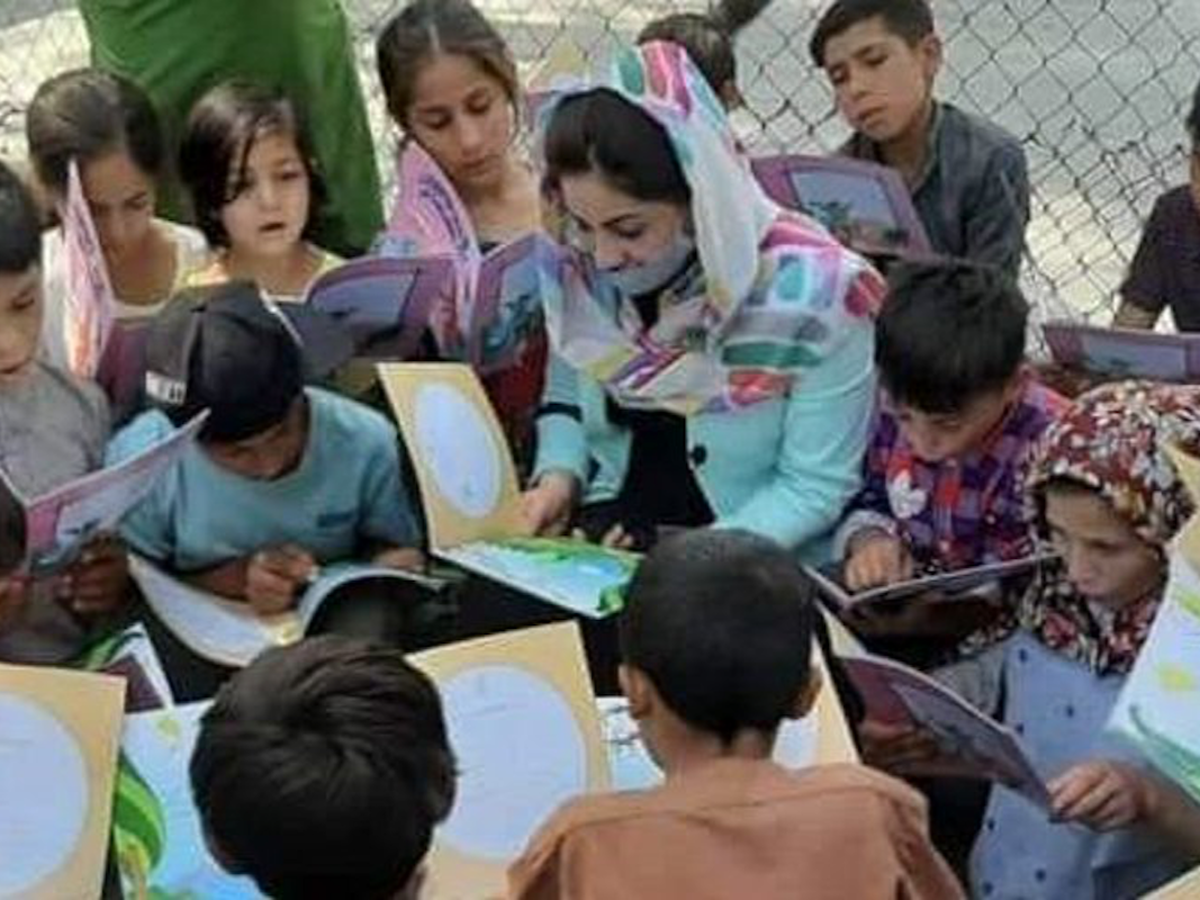
The main activity of the Golden Literary Association is to teach creating writing classes for young women and girls in Afghanistan and provide them with literary skills.
In the last two decades, stories, poetry and all forms of literature have found both audiences and creators in Afghanistan. Many festivals were held, and many works were created and published. When the Taliban returned, the literary vitality and writing of the Afghan community has severely stagnated as the majority of poets and writers were expelled from the country. “The Golden Needle Institute” is keeping this field alive by organizing creative writing classes for girls inside Afghanistan. Besides teaching classes, we have held memoir writing competitions and offered awards at national level, which helped us to discover new talents and motivated girls to write.
As of right now, we have more than 270 students from all over Afghanistan. We teach online classes two to three times a week.
Your donation will go to help compensate art teachers and therapists who are teaching Golden Needle Literary Association classes remotely.
The Golden Needle Literary Association was founded by Dr. Homeira Qaderi, an Afghan writer and university professor. Before coming to the US, she published 7 books and numerous articles in Farsi, all of which received critical acclaim. You can read more about how she courageously taught Afghan girls and boys to read while growing up in Taliban-controlled Herat in her incredible memoir, “Dancing in the Mosque: An Afghan Mother's Letter to Her Son.” Her memoir is beautifully written and unforgettable - I cannot recommend it more highly. It has gathered international recognition and multiple awards including A People Book of the Week and Kirkus Best Nonfiction of the Year. The positive reviews (The Guardian, The New York Times) led to the book being translated into multiple languages.
You can find articles describing her work here :
Organizer and beneficiary
Homeira Qadari
Beneficiary