- C
- B
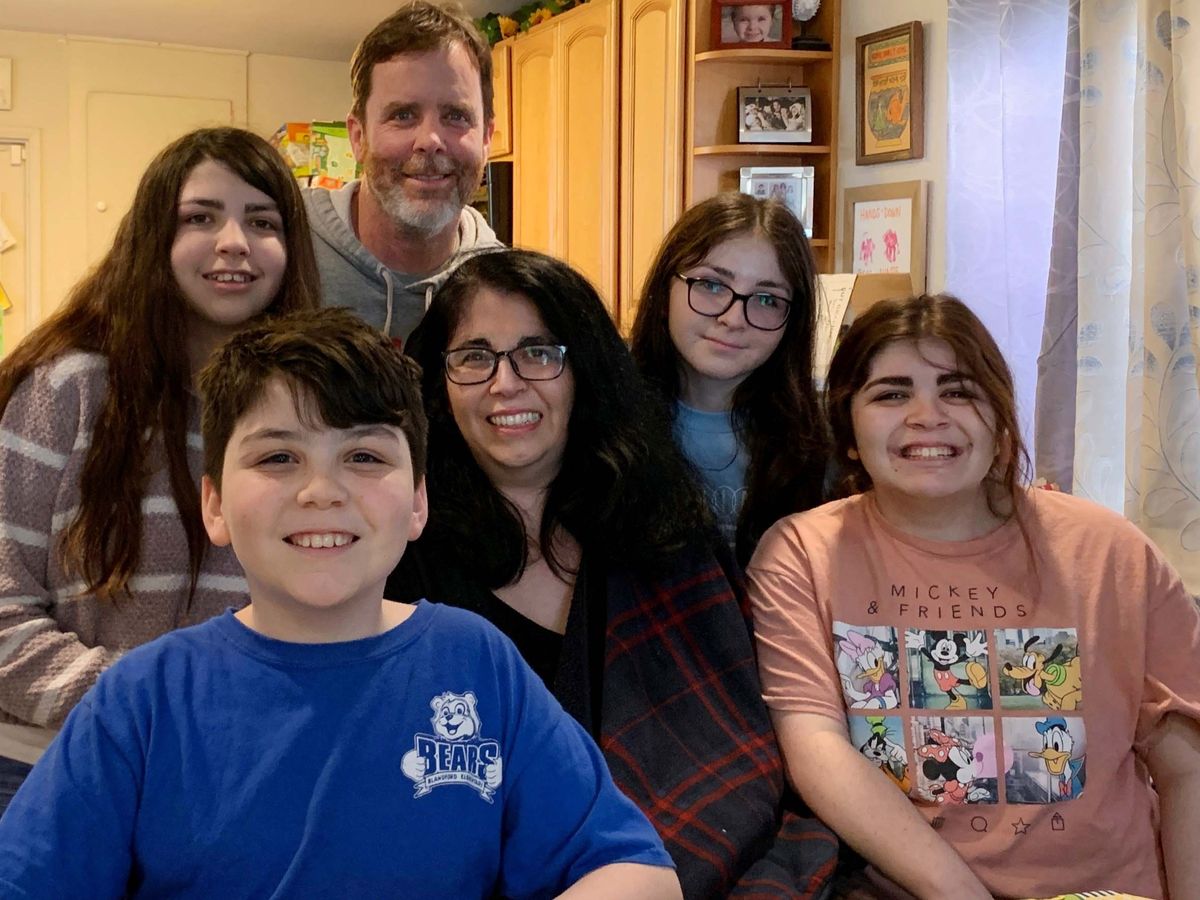
The Awalt Family is one of the nicest families you’d ever want to meet and they are dealing with Lou Gehrig’s disease, or ALS, with as much dignity and love as possible. We at Roland DGA, would like to help them be able to spend their remaining time with Sonia without the additional burden and stress of medical expense debt. We’d also like to help provide funds so that when the kids are ready, they can go to college.
The world is finally beginning to emerge from the pandemic, but Jim and Sonia’s journey is very much a work in progress. In spite of all the recent advances in medical care, to date, no one has survived an ALS diagnosis. In addition to asking for your contribution, we ask that you keep them in your thoughts and prayers.
Jim and Sonia kept the news quiet as they dealt privately with this devastating diagnosis and the radical changes it requires. As Sonia’s symptoms grew worse and the effects of her disease became more pronounced, I and others reached out to Jim to ask how we could help. We started this page to raise funds to help with Sonia’s increasing medical expenses, and to help Jim and Sonia pay for college for their four children, now ages 10-18.
Sonia’s diagnosis seemed to come out of the blue, but as it turns out, it was typical of how many cases of ALS begin. A former high school soccer player, Sonia was an active mom, working full time in a local school office as an administrator. Then one day she fell down. Jim said that because there was no injury, they all just sort of laughed it off. A few weeks later, at one of her daughter Jessica’s soccer games, Sonia fell again – tripping over a little tree root. Again, she was unhurt, so they shrugged it off and kept living their busy lives. The third time, Jim dropped Sonia and Carissa off at a softball field where Jim’s sister was going to take photos of Carissa. Sonia fell right on the street in front of the family’s van. “Clumsy me” she said. But in July 2019, Sonia went to see her doctor and was referred to a local neurologist. He told them that what was causing the falls was “foot drop” - when you can’t pick up your toes as you walk. He said he didn’t want to jump the gun, however he thought it might be ALS. He referred them to the expert team at UC Irvine’s hospital in Orange.
It took a while to get in to see a doctor there, and the team at UCI ran their own set of exhaustive tests. When the tests came back and the diagnosis of ALS was confirmed, the UCI neurologist offered some hope, telling Jim and Sonia that they would support them throughout their journey, and there are always treatments and medications in the pipeline. But she also walked them through the terrifying reality of ALS: Without a cure or effective treatment (of which there are currently none) Sonia would quickly begin to lose function. She also told them that most patients with ALS live only 3-5 years.
Sonia’s symptoms began in her left foot. Jim, who develops jigs for printing for a living, went looking for a solution. He found Sonia a special boot to keep her foot up, but it was not comfortable to wear. Then he found a cuff that she could place around her ankle with wires that attached to the eyelets of her shoelaces, keeping her toes at the same level as her heel. That worked for a while. Then Sonia needed a cane, and soon she needed a walker. In June 2020, just 9 short months after her diagnosis, Sonia needed a power wheelchair. Jim and Sonia were able to borrow one from the ALS of Orange County Chapter. Jim describes that chair as a true gift, because with it, Sonia could move herself around much more easily. Sonia had the ability to lift herself out of the chair for another six months – then it became too difficult for her. In January 2021 they had to get a custom wheelchair through insurance that would help lift Sonia. Because Sonia cannot bear any weight on her arms or legs, Jim transfers her from the chair to the toilet and back. They had to get a power recliner for her to sleep in because lying flat in a bed is no longer comfortable for her.
Jim is her primary caregiver, doing the heavy lifting – literally – transferring Sonia from chair to chair. They also have help from their family. Sonia’s mom comes over to help with cleaning, cooking, caring for the kids and helping Sonia shower. Her dad and brother George also help. Sonia and her brother are very close. George and his fiancée have a two-year-old girl that they bring over to see Sonia as often as they can. They are getting married on September 25, 2021 – an event the whole family is looking forward to.
Jim and other family members have also done what they can around the house to accommodate Sonia’s changing situation. He and his brother-in-law, George, put in a new door so that Sonia’s wheelchair can fit into the restroom. They are also redoing the master bath with a roll-in shower and wheelchair-level counters, etc. All these expenses are not covered by insurance, and although family members help out, the costs add up. They are doing the project as time and money allow.
Jim and Sonia’s kids have been super helpful and pitch in with whatever they can do. Elena is 18 and a junior in high school, Jessica is 15 and a sophomore, Carissa is 11 and will enter middle school next year, and Zach is 10 and in fifth grade. Jim described the COVID epidemic as a blessing in disguise for their family because the kids have been mostly home and able to spend time with their mom. Sonia has a strong mental state, and the family is determined to make the best of whatever time they are allowed.
At first Sonia was able to continue working from home, but for the past several months, she has been on “catastrophic leave” from her job. She is receiving 50% of her typical income, however those benefits run out soon.
Jim runs his own business out of the home, which means if he’s not working, there’s no income. He’s had to take an increasing amount of time off to care for Sonia and for the children. He gets Sonia up and takes her to the restroom, then makes her breakfast and brings her coffee and her medications. This process goes on throughout the day with lunch and dinner. He drives the kids to school on the days that they go and with two in high school and two in elementary, there’s a lot of time in the car. In the evenings, he cleans up from dinner and then heads back out to his shop to do more work. So far, by staying up late, he’s managed to keep most of his clients happy, but Sonia had taken care of all the bookkeeping and administrative tasks, and he’s not been able keep up with invoicing. He said that as busy as he felt all the time, he recently added up his sales for 2020 and they were half of what they were the previous year. Some of that was the pandemic, but some of it was just not having the time to devote to his job.
As Jim says, “This disease takes everything.” Sonia’s care is getting more complex and more difficult for the family to manage, and unless a treatment or cure is found, things will continue to get increasingly difficult as Sonia’s remaining capabilities are gradually taken from her by this horrid disease.
As of now, Sonia can use her right hand and some of her right arm. She can also still move her head. She’s still eating but her food choices are limited – she can only eat foods that are easy to swallow. They are going back to UCI in early June for a consult about implanting a feeding tube.
Sonia has also begun to lose her ability to speak. Her voice is softer now and her pronunciation is less clear - it’s hard for people outside the immediate family to understand her. UCI’s team is also talking to her about a speaking device.
I asked Jim to tell me about how he met Sonia. “Sonia and I met through a group of friends out to dinner in Fullerton. We had a common person that we knew, but we didn’t know it at the time. She worked for a group of attorneys in Fullerton. Her boss, Tom Leonard, was a good friend of my stepdad, who is also an attorney. So before she’d met me she’d talked many times with my stepdad, and I think that helped her feel more secure with me.
“And then from there we just started seeing each other. We took a few vacations – really our only vacations – to Jamaica, New Orleans and New York. We were in New York City on August 7, 2001. We still have the ticket stubs from our visit up the World Trade Center. We were married in 2002.”
Jim told me that Sonia had played soccer through AYSO growing up and later played in high school and for a short time while in college. She played goalie. Her whole family loves soccer. When they first married, Jim and Sonia coached a youth AYSO team that had five family members on it – all cousins. One of those players has now gone on to play in college as well.
This is one of the nicest families you’d ever want to meet and they are dealing with this disease with as much dignity and love as possible. We’d like to help them be able to spend their remaining time with Sonia without the additional burden and stress of medical expense debt. We’d also like to help provide funds so that when the kids are ready, they can go to college.
The world is finally beginning to emerge from the pandemic, but Jim and Sonia’s journey is very much a work in progress. In spite of all the recent advances in medical care, to date, no one has survived an ALS diagnosis. In addition to asking for your contribution, we ask that you keep them in your thoughts and prayers.
The world is finally beginning to emerge from the pandemic, but Jim and Sonia’s journey is very much a work in progress. In spite of all the recent advances in medical care, to date, no one has survived an ALS diagnosis. In addition to asking for your contribution, we ask that you keep them in your thoughts and prayers.
Jim and Sonia kept the news quiet as they dealt privately with this devastating diagnosis and the radical changes it requires. As Sonia’s symptoms grew worse and the effects of her disease became more pronounced, I and others reached out to Jim to ask how we could help. We started this page to raise funds to help with Sonia’s increasing medical expenses, and to help Jim and Sonia pay for college for their four children, now ages 10-18.
Sonia’s diagnosis seemed to come out of the blue, but as it turns out, it was typical of how many cases of ALS begin. A former high school soccer player, Sonia was an active mom, working full time in a local school office as an administrator. Then one day she fell down. Jim said that because there was no injury, they all just sort of laughed it off. A few weeks later, at one of her daughter Jessica’s soccer games, Sonia fell again – tripping over a little tree root. Again, she was unhurt, so they shrugged it off and kept living their busy lives. The third time, Jim dropped Sonia and Carissa off at a softball field where Jim’s sister was going to take photos of Carissa. Sonia fell right on the street in front of the family’s van. “Clumsy me” she said. But in July 2019, Sonia went to see her doctor and was referred to a local neurologist. He told them that what was causing the falls was “foot drop” - when you can’t pick up your toes as you walk. He said he didn’t want to jump the gun, however he thought it might be ALS. He referred them to the expert team at UC Irvine’s hospital in Orange.
It took a while to get in to see a doctor there, and the team at UCI ran their own set of exhaustive tests. When the tests came back and the diagnosis of ALS was confirmed, the UCI neurologist offered some hope, telling Jim and Sonia that they would support them throughout their journey, and there are always treatments and medications in the pipeline. But she also walked them through the terrifying reality of ALS: Without a cure or effective treatment (of which there are currently none) Sonia would quickly begin to lose function. She also told them that most patients with ALS live only 3-5 years.
Sonia’s symptoms began in her left foot. Jim, who develops jigs for printing for a living, went looking for a solution. He found Sonia a special boot to keep her foot up, but it was not comfortable to wear. Then he found a cuff that she could place around her ankle with wires that attached to the eyelets of her shoelaces, keeping her toes at the same level as her heel. That worked for a while. Then Sonia needed a cane, and soon she needed a walker. In June 2020, just 9 short months after her diagnosis, Sonia needed a power wheelchair. Jim and Sonia were able to borrow one from the ALS of Orange County Chapter. Jim describes that chair as a true gift, because with it, Sonia could move herself around much more easily. Sonia had the ability to lift herself out of the chair for another six months – then it became too difficult for her. In January 2021 they had to get a custom wheelchair through insurance that would help lift Sonia. Because Sonia cannot bear any weight on her arms or legs, Jim transfers her from the chair to the toilet and back. They had to get a power recliner for her to sleep in because lying flat in a bed is no longer comfortable for her.
Jim is her primary caregiver, doing the heavy lifting – literally – transferring Sonia from chair to chair. They also have help from their family. Sonia’s mom comes over to help with cleaning, cooking, caring for the kids and helping Sonia shower. Her dad and brother George also help. Sonia and her brother are very close. George and his fiancée have a two-year-old girl that they bring over to see Sonia as often as they can. They are getting married on September 25, 2021 – an event the whole family is looking forward to.
Jim and other family members have also done what they can around the house to accommodate Sonia’s changing situation. He and his brother-in-law, George, put in a new door so that Sonia’s wheelchair can fit into the restroom. They are also redoing the master bath with a roll-in shower and wheelchair-level counters, etc. All these expenses are not covered by insurance, and although family members help out, the costs add up. They are doing the project as time and money allow.
Jim and Sonia’s kids have been super helpful and pitch in with whatever they can do. Elena is 18 and a junior in high school, Jessica is 15 and a sophomore, Carissa is 11 and will enter middle school next year, and Zach is 10 and in fifth grade. Jim described the COVID epidemic as a blessing in disguise for their family because the kids have been mostly home and able to spend time with their mom. Sonia has a strong mental state, and the family is determined to make the best of whatever time they are allowed.
At first Sonia was able to continue working from home, but for the past several months, she has been on “catastrophic leave” from her job. She is receiving 50% of her typical income, however those benefits run out soon.
Jim runs his own business out of the home, which means if he’s not working, there’s no income. He’s had to take an increasing amount of time off to care for Sonia and for the children. He gets Sonia up and takes her to the restroom, then makes her breakfast and brings her coffee and her medications. This process goes on throughout the day with lunch and dinner. He drives the kids to school on the days that they go and with two in high school and two in elementary, there’s a lot of time in the car. In the evenings, he cleans up from dinner and then heads back out to his shop to do more work. So far, by staying up late, he’s managed to keep most of his clients happy, but Sonia had taken care of all the bookkeeping and administrative tasks, and he’s not been able keep up with invoicing. He said that as busy as he felt all the time, he recently added up his sales for 2020 and they were half of what they were the previous year. Some of that was the pandemic, but some of it was just not having the time to devote to his job.
As Jim says, “This disease takes everything.” Sonia’s care is getting more complex and more difficult for the family to manage, and unless a treatment or cure is found, things will continue to get increasingly difficult as Sonia’s remaining capabilities are gradually taken from her by this horrid disease.
As of now, Sonia can use her right hand and some of her right arm. She can also still move her head. She’s still eating but her food choices are limited – she can only eat foods that are easy to swallow. They are going back to UCI in early June for a consult about implanting a feeding tube.
Sonia has also begun to lose her ability to speak. Her voice is softer now and her pronunciation is less clear - it’s hard for people outside the immediate family to understand her. UCI’s team is also talking to her about a speaking device.
I asked Jim to tell me about how he met Sonia. “Sonia and I met through a group of friends out to dinner in Fullerton. We had a common person that we knew, but we didn’t know it at the time. She worked for a group of attorneys in Fullerton. Her boss, Tom Leonard, was a good friend of my stepdad, who is also an attorney. So before she’d met me she’d talked many times with my stepdad, and I think that helped her feel more secure with me.
“And then from there we just started seeing each other. We took a few vacations – really our only vacations – to Jamaica, New Orleans and New York. We were in New York City on August 7, 2001. We still have the ticket stubs from our visit up the World Trade Center. We were married in 2002.”
Jim told me that Sonia had played soccer through AYSO growing up and later played in high school and for a short time while in college. She played goalie. Her whole family loves soccer. When they first married, Jim and Sonia coached a youth AYSO team that had five family members on it – all cousins. One of those players has now gone on to play in college as well.
This is one of the nicest families you’d ever want to meet and they are dealing with this disease with as much dignity and love as possible. We’d like to help them be able to spend their remaining time with Sonia without the additional burden and stress of medical expense debt. We’d also like to help provide funds so that when the kids are ready, they can go to college.
The world is finally beginning to emerge from the pandemic, but Jim and Sonia’s journey is very much a work in progress. In spite of all the recent advances in medical care, to date, no one has survived an ALS diagnosis. In addition to asking for your contribution, we ask that you keep them in your thoughts and prayers.

Organizer and beneficiary
James Awalt
Beneficiary