- K

Care For The Giver
0% complete
$5,382 raised of
44 donations
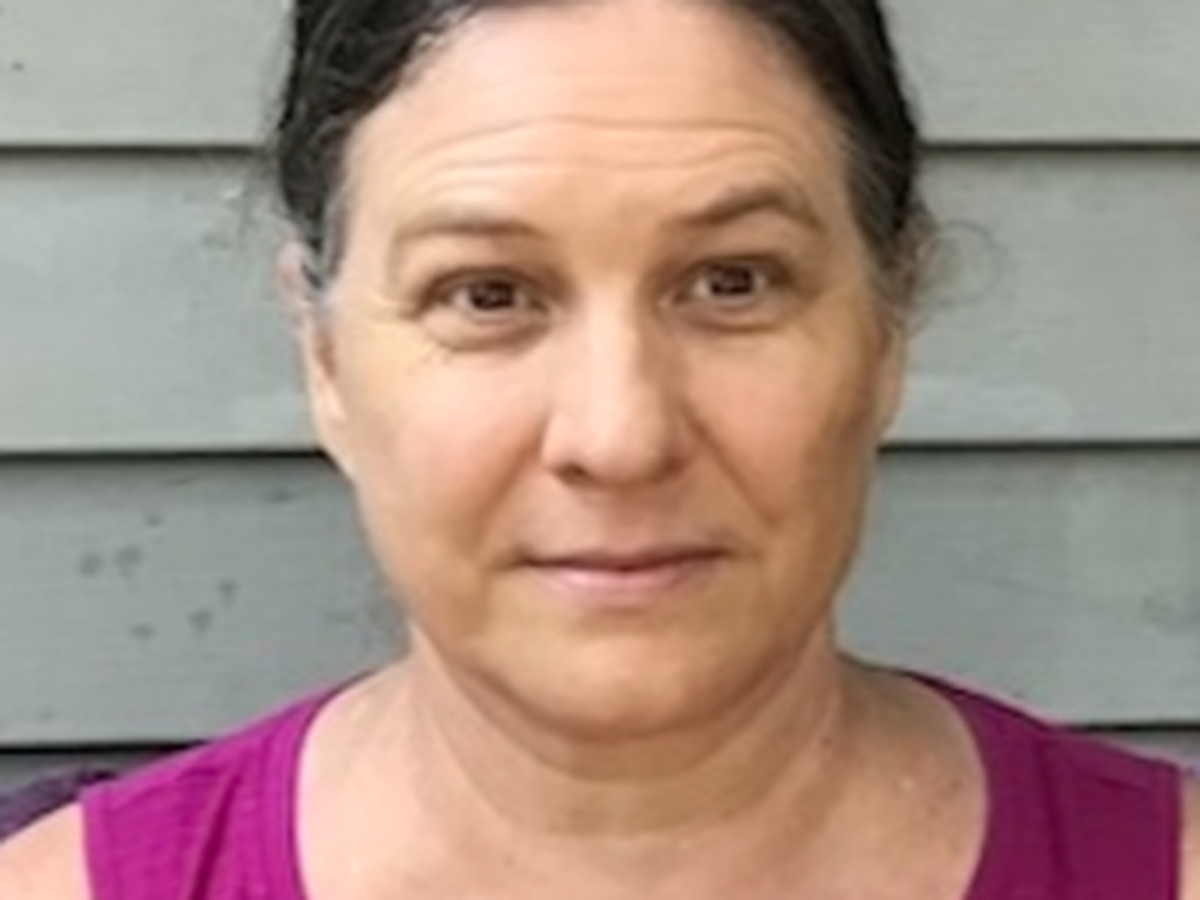
Suzanne showed up at my doorstep in a beautiful colored dress with dangly earrings and an obsession with frogs. Her smile and wit were unmatched. Her energy lit up what was otherwise a very dark situation for my son. Suzanne would say "that's the job", but it wasn't. Her job was to ask me some clarifications about my son's disability and get my signature, but instead, I encountered a life-long friend and ally.
You wouldn't recognize Suzanne today. The woman she was is hidden behind a mired of physical issues and brain fog. For the past four years, Suzanne has battled the devastating effects of Long-Covid - a role reversal she never expected.
For much of Suzanne’s life, she dedicated her purpose to empowering others. I have seen her work first hand as she fought six months advocating for my son’s care. His need was severe, but lost amongst a medical system that did not value care for those with developmental or mental health disabilities. When Suzanne became too sick to facilitate care for our family, we faced the failures of a system that does not put families first, only numbers. Institutionalization is often a sad reality for those who do not receive proper advocacy.
On the days Suzanne is well enough for me to visit, I still get the pleasure of hearing her rant and rave about the injustices of the world. Her desire to help others is still strong. To this day, Suzanne uses that gift with her former clients and wishes to reach out even further, providing emotional support by telephone with hospice patients and those affected by agoraphobia. She is not able to spare the energy at this time.
Due to Suzanne’s condition, it is difficult for her to have visitors, but she insists I do so. Her spirit is still there and relationships are good for her mental health, so I always “oblige”. I am one of few who understand that it is difficult for her to maintain many relationships in her condition.
She cannot readily climb the stairs when I ring the bell, but that’s ok. I announce my presence knowing full well I am always welcome. Suzanne shuffles to the top of the stairs in a new dress. She has had to purchase clothing more adaptable to her limited mobility and subsequent weight gain. She excitedly explains how there are no buttons or zippers to hinder her from dressing and undressing, so it is less painful and mentally straining. She fusses over the tea she’s made, wanting it to be just right (I like it strong). She pulls out some cookies and promises a healthy lunch later. She asks me to throw a table cloth over her little glass table outside and brings out beautiful cloth napkins so we can sit and take in some sun. It’s these little things that remind Suzanne of her humanity. I see the tablecloth and napkins as another thing she has to wash later, but she sees them as a gesture of respect and connection. We sit and catch up, but I can hear her becoming short of breath and begin to see her slouching. She tries to stay upright for as long as possible, but admits it feels good to rest on the table. I joke that her body has failed her, but she still won’t shut up about suggestions regarding my son’s care. She will never not be "that" person…an unsung humanitarian. I leave with all her advice and a full stomach, knowing I should give 24 hours before a check-in. Recovery-time is essential. It will take a couple of days for Suzanne to recover from our short meeting: dishes to be done, personal hygiene, extra rest and sleep. These tasks must be done in short spurts with time in-between to rest. Able-bodied individuals might not consider how the body and brain have to work in tandem to complete most anything.
Suzanne grew up in California with parents who loved life, each other, and art. Many of the woodwork pieces built by her father still remain in the home Suzanne hopes to continue living in. Suzanne lost her father as a teenager, and filled the role of best friend and life-partner to her mother, Bili. That bond remained strong until Bili’s death in 2019.
In the earlier years of her education and career, Suzanne obtained significant higher education- a Masters in Microbiology and Phd in Cell Biology - teaching at both UVA and Sweet Briar College. She worked as a microbiologist in the Department of Agriculture, a career that valued precision and attention to detail. Despite the pay disparage, Suzanne loved the work. She took pride in the livelihoods and well-being of others and their animals depending on her accuracy. Suzanne has never shied away from such responsibility.
However, Suzanne's mother was diagnosed with Dementia in 2014. Bili needed financial assistance and caregiving; Suzanne fulfilled those roles nobly. It helped that they already shared a home together. Suzanne had bought their home in 2000 in preparation for her aging mother since Bili’s husband and Suzanne’s father passed away in 1987.
Suzanne still lives there today and hopes to keep her home as finances will allow. “Mom is this house,” she says to me. She points out pictures of her parents hung on the fridge, different art pieces they made together, and the incredible woodwork her father left behind. She lets me get up close to examine the craftsmanship and even touch things that I know are fragile and priceless to her. I view this as a sign of trust with her "life" - past, present, and future. I know these relics tell stories, but Suzanne tells them best, and I quickly realize that this eclectic little house in all its eccentricities is a part of her. ‘I just want some quality of life - I want to be safe, and I want to stay with my family; my childhood is all here, and it was a lovely time'. I try to shake my head loose at the thought of foreclosure…a massive and devastating loss. Suzanne has already experienced loss on so many levels - personally, professionally, medically. How much more can one person lose?
When Bili fell ill, Suzanne downsized her professional aspirations for familial responsibility - an honor she still looks upon fondly. It was always in Suzanne’s nature to do some kind of social work. Hence, she became a Medicaid Service Facilitator. This way, she could make an impact while also maintaining a flexible schedule. Bili required much physical, and management of care, especially for her safety. However, Suzanne still worked full-time the best she could. This is where our paths crossed.
As a Service Facilitator, Suzanne helped navigate families with disabled loved ones. She helped them find the care they deserved to live fulfilling lives. However, the job description didn’t match the reality of a community forgotten. Suzanne had to make many sacrifices, work extra hours, and advocate for many. Most personally, she unyieldingly advocated for my son so he could continue to live at home. Without Suzanne’s help, I believe many of her clients would have been institutionalized. She fought against a broken system that separated families because disability inconveniences our societal norm - a great injustice that Suzanne fought with ferocity. Suzanne believed that just as she had the pleasure of loving and caring for Bili till her final breaths, so did her clients deserve a peaceful and dignified life and passing.
Before Bili died, I had the pleasure of meeting her. I soaked up as much wisdom as I could from the woman who raised the most intelligent and compassionate woman I know. After Bili’s death, Suzanne became very isolated. Grieving her mother and best friend, the loss of her own health, and her will to pursue the things she loved in the wake of her grief.
I lost Suzanne professionally in 2021 due to complications with her PTSD, crushing fatigue, and what we now know was the beginning of her battle with Long-Covid.
Perpetually exhausted and isolated, Suzanne lives a much different life than she did before. The emotional toll of fighting for her health has caused severe depressive episodes and psychological distress. Her cognitive functioning goes in and out, her mental focus varying day to day. Tasks that used to be simple are now insurmountable challenges. Cleaning, household chores, driving, running errands, working, obtaining medical care, human interaction, and other basic needs are now captive to Suzanne’s symptoms. They hinder her ability to obtain the appointments, treatments, and care that would otherwise benefit her condition. The woman who once loved to create and socialize lies in wait for the next “good day,” which continues to dwindle as her condition worsens. Suzanne’s “career” these days is taking care of herself (getting dressed, preparing food, using the restroom, bathing, environmental upkeep for her body and home, etc.), continuing to fight for disability, and care for her animals - though she admits she can hardly preform those tasks to completion.
As can be expected in a situation like this, Suzanne’s financial state is dire. Even treatments that may alleviate pain or services that might assist, have had to be postponed because bankruptcy is imminent. Suzanne has been in the process of applying for disability for over a year now (September 2025) with very little movement and many obstacles. However, very recently, Suzanne received the news that she was denied. This is no surprise. Well over half applicants are denied during their first attempt for benefits.
The recognition of Long-Covid is fairly new in the medical community. Many doctors are simply unaware about this condition for which there is no standard practice or treatments yet. Knowing that, Suzanne brought some research materials to her brief disability exam, where the Doctor was surprised to find that Long-Covid is a mitochondria disorder per Suzanne's reputable sources. Medical Professionals are still in the early stages of acknowledgment of Long-Covid, which leaves many sufferers without help.
Suzanne has begun the process of "round two" in her fight for benefits. However, money is running out. Lest I forget the loans and credit card debt Suzanne has used to survive. Even still, Suzanne has been creative in the ways she has tried to keep afloat (like selling personal items on multiple online platforms), but nothing practical or consistent enough to provide her basic needs. With both parent’s gone, no marriage, partner, children, familial support, or savings, Suzanne and I resort to the one thing that feels most foreign to her - asking for help. Her illness and her financial future hang in an indefinite amount of time. The lack of stability is distressing at best.
Here are some of the needs your contributions will fulfill for my dear friend: everyday expenses, overdue bills, mortgage payments, utilities, medical treatments, adaptive materials, and when the time comes, a caregiver of her own.
During her career, Suzanne always requested the most difficult cases, no matter what it took from her. She wanted to give the most to the least, even as she was sick. Willfully underemployed, Suzanne saw a social need and had the integrity to fill it. Now, the giver requires care - a position/role that is hard for my friend to accept. Suzanne’s journey has been physically, emotionally, and financially exhausting. Now, I fight for her in making this page and sharing her story.
Suzanne idolized her mother to the end and has many “Bili quotes” she provides for me in times where I need empowerment. The following is my favorite:
“The only real sin in this life is not using one’s gifts and abilities to help others.”
Suzanne has made Bili proud a hundred times over. Now it’s our turn.
Organizer and beneficiary

Suzanne Ziesmann
Beneficiary