- O
- C
- A
Support the African Chronometric Dating Fund (ACDF)
0% complete
$3,282 raised of
35 donations
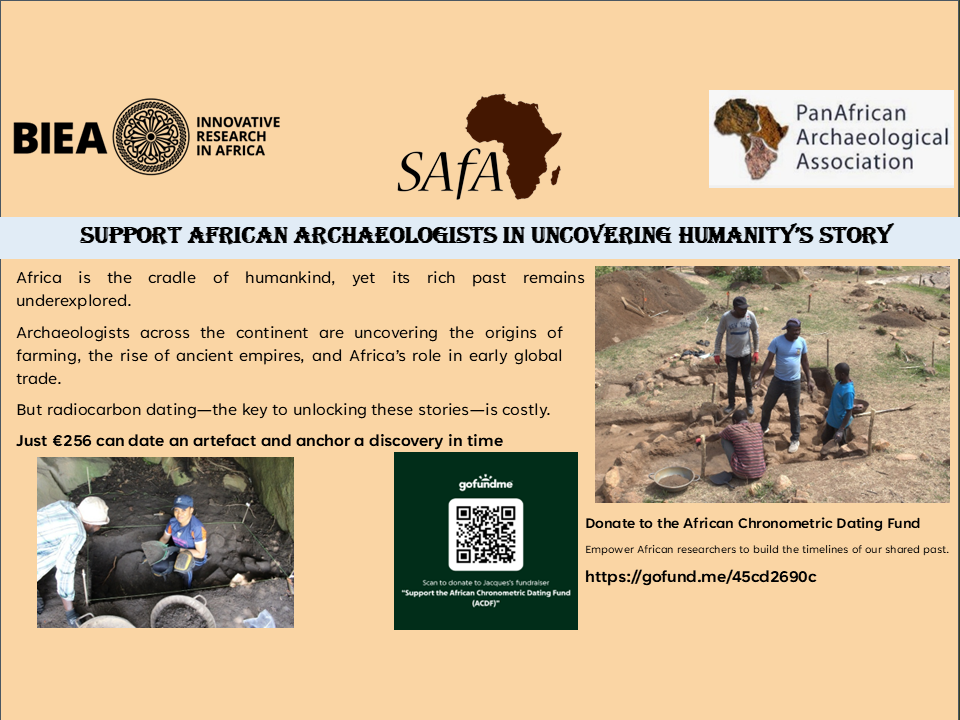
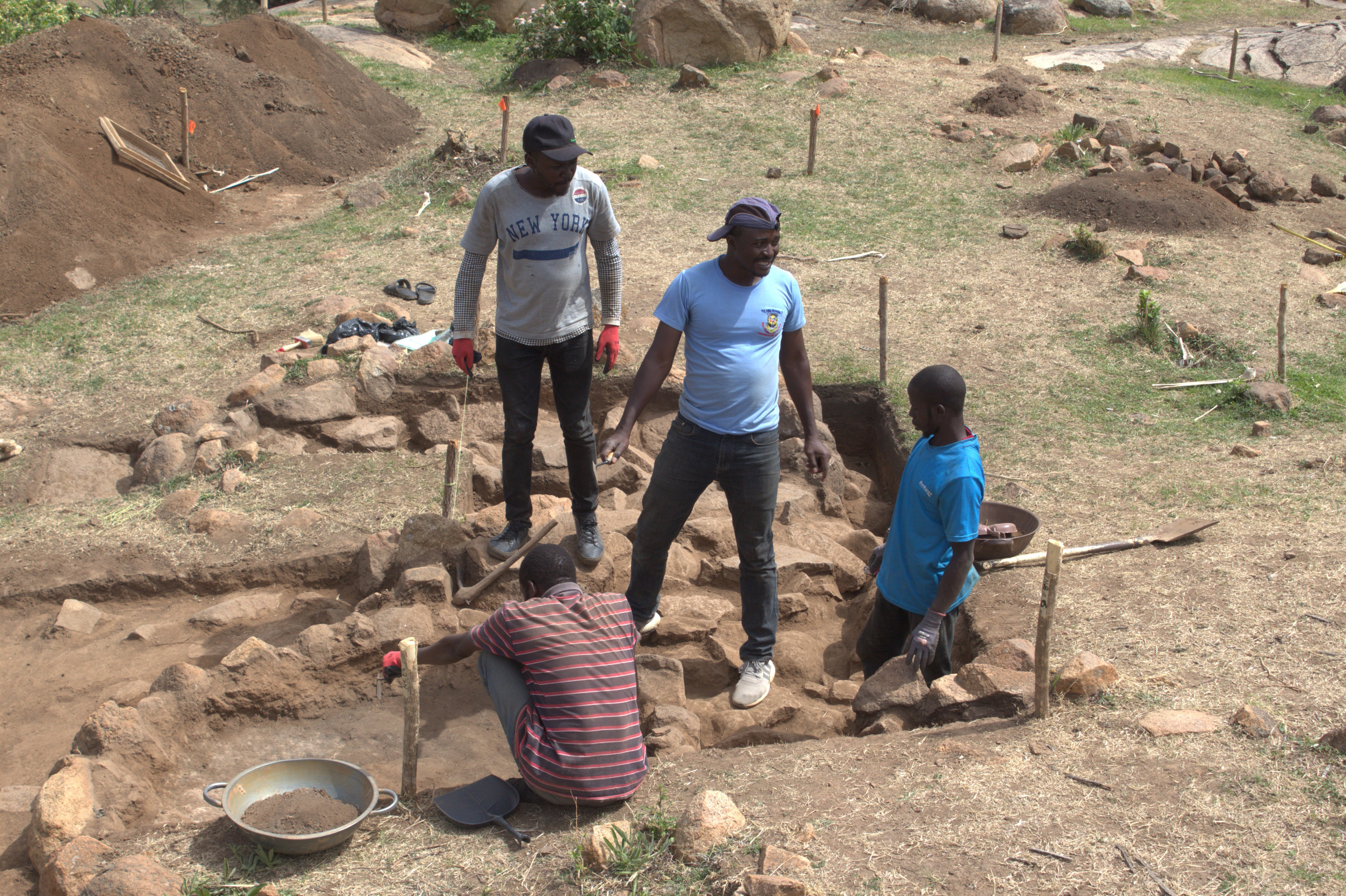
Africa is the cradle of humankind, where our species first evolved and developed the cultural innovations that continue to define us. African history is the foundation of human history, and yet the rich past of diverse peoples across the continent is still critically underexplored. Archaeology - the study of the material remains left behind by ancient peoples - is one of our most powerful tools for revealing the stories of Africa’s deep past. Africanist archaeologists working across the continent are uncovering evidence for the unique origins of farming, the rise and fall of dozens of complex civilizations and empires, Africa’s key role in early global trade, and the roots of the African diaspora.
More and more, this vital work is being led by African scholars who are combining archaeological science, oral history, and community engagement to challenge widespread perceptions that Africa is a “continent without history”. Reconstructing ancient history is like investigating a mystery—to solve it, archaeologists need to know the order of events. Whether it's telling how old an artifact is, when a village was inhabited, or when the pyramids were built, archaeologists rely on a scientific method called “radiocarbon dating” to date things in the past. Each date can anchor a site in time, challenge old assumptions, and help build richer, more accurate stories about Africa’s diverse and dynamic pasts
Unfortunately, radiocarbon dating requires highly specialized laboratories with complex instrumentation and so obtaining radiocarbon dates can be very expensive. A single date can cost over $350, making it difficult for archaeologists based in Africa (especially students) to develop the kind of precise chronologies that are being developed everywhere else in the world. Supporting radiocarbon dating for African-led projects empowers researchers to build robust timelines, refine regional chronologies, and contribute directly to global debates about the human past. We ask for your donations to support new generations of African scholars in dating their archaeological discoveries and demonstrating, in measurable terms, how Africa has been at the heart of human history.
The African Chronometric Dating Fund is an initiative of the Society of Africanist Archaeologists, the PanAfrican Archaeological Association, and the British Institute in Eastern Africa, which is working to address these problems and expand our knowledge of the African past. Since 2023, the Fund has supported dozens of African researchers across all career stages across 11 countries with small grants for radiocarbon dating of archaeological sites. Applications for small dating projects are invited annually and reviewed by a diverse panel of archaeologists with radiocarbon-dating expertise. The funding has also contributed to the completion of several master's and doctoral theses. Even these relatively small grants have a significant impact on the development of a new generation of African archaeologists.
To continue this work, we are seeking donations and fundraising support from those who care about African histories. We hope to support another cohort of applicants each year, for which we need to raise more than €7,500 annually. Even small donations from individual members can help cover the cost of a single date—the Poznan Radiocarbon Laboratory has generously offered us a heavily discounted rate of €256/date for this scheme.
Co-organizers4
S
Society of Africanist Archaeologists
Beneficiary