- R

Jason and I had been interested in having a child for years before we found out that we were going to have a baby girl. Before she was born, we decided to name her Madelyn and call her Maddie for short. Maddie was born shortly after midnight on a night in late September. She cried a little, but what we most remember was her peaceful smile and bright blue eyes when we first held her. There are no words to describe the amazement and love we felt after getting to meet her and welcome her into the world. Maddie is our first child. It felt like a miracle to hold this small, sweet person in the spaces we’d created for her.
Maddie appeared healthy at birth. She weighed 7 pounds 5 ounces, and all of her blood work indicated no cause for concern. Her feet were turned in, but this was common, and many babies’ feet naturally straighten out over time. Maddie’s had not straightened after a few months, which meant she had a condition called clubfoot. To correct it, she wore casts for a few months and had heel cord lengthening surgery. During her 18-month doctor appointment, the pediatrician shared her concerns about Maddie’s head shape and a possible connection with the fact that she was born with clubfoot. The doctor had recently read studies that linked head shape (high forehead) and clubfoot with an increased likelihood of certain genetic conditions. Maddie had been a trooper during her casting and we had never thought anything about her head shape, other than that she was a beautiful girl. The qualities in Maddie that we loved and gave her individuality suddenly had red flags.
We booked an appointment with the genetics department at Arkansas Children's Hospital. After Maddie’s full-body skeletal x-ray results were in, it was apparent that she had some issues that were affecting her bones and causing abnormalities. Her urinalysis and blood work confirmed that she had the most severe form of mucopolysaccharidosis (MPS) I, Hurler Syndrome. This is a progressive disorder with no cure that, if left untreated, can greatly limit the quality and duration of life. Fortunately, Maddie is still under the age of two and there is a treatment available that can increase her quality of life. More research is being done all the time that may also lead to improved solutions in her lifetime as she becomes an adult. You can read more about MPS-I Hurler Syndrome here.
Maddie began enzyme replacement therapy this week. Her next step will be to undergo a bone marrow/stem cell transplant. She will have this procedure done at the Fairview Center in Minneapolis, Minnesota as soon as a donor match is found. Clinicians at this center have performed over 200 transplants for children with MPS-I.
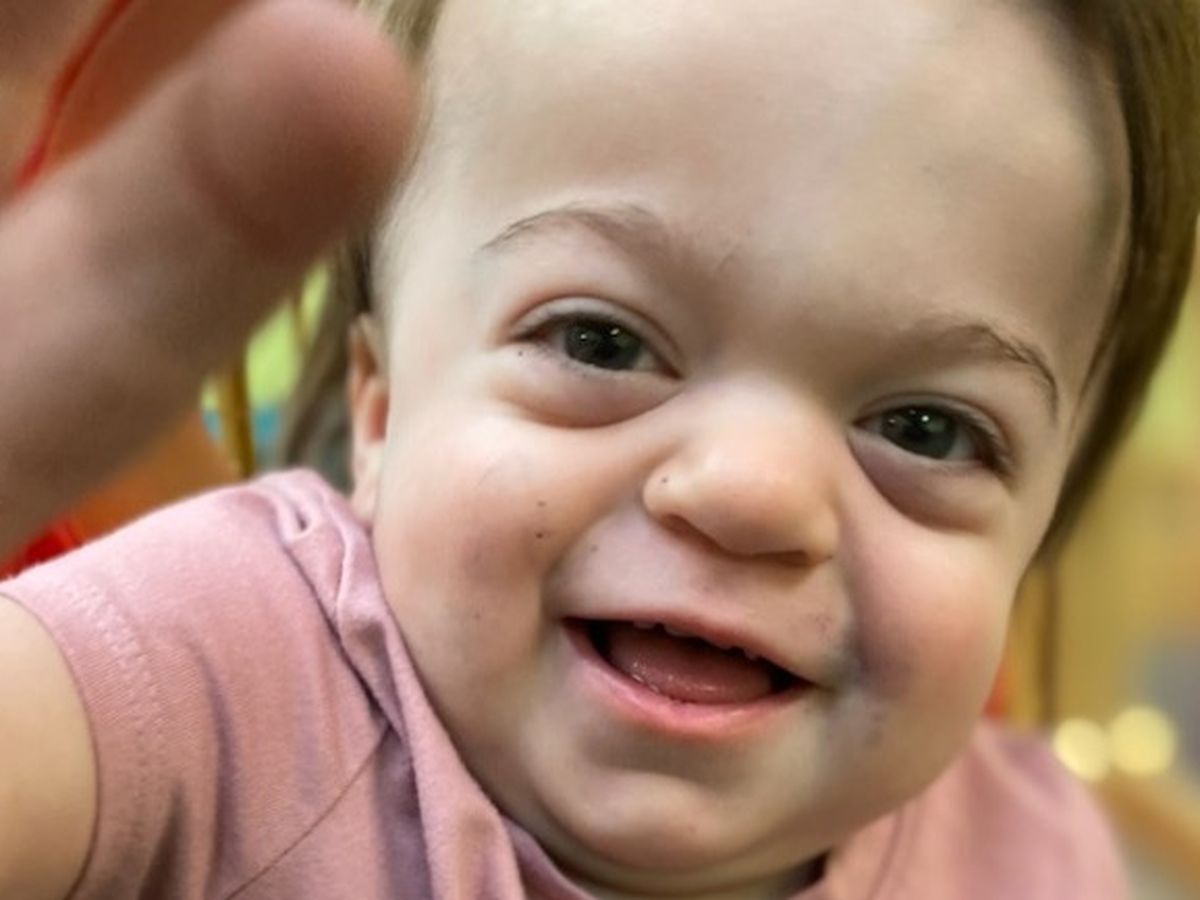
Although insurance will cover most of her direct medical expenses, the transplant will require us to be in Minnesota for roughly 100 days before we return to our home in Arkansas. During this time, I will need to take unpaid leave. We are seeking over $20,000 to offset this lack of income while Maddie undergoes treatment. In the 21 months that we have had Maddie in our lives, she has fully wrapped her way into our hearts. She is in the fun toddler stage and is constantly reaching for our hands to help her walk from place to place. She has the most open and friendly heart. When we take her to our neighborhood park, she doesn’t hesitate to walk up to older kids with an enthusiastic “Hi!” that makes them smile. Every time we leave, she makes certain to say “Bye!” and often blows kisses. Maddie helps us to take ourselves less seriously and enjoy lighthearted, playful moments every day. When she goes to sleep each night, we give her affirmations and pray that she knows how much she is loved, that she always loves herself and that she surrounds herself with love her whole life. We pray that she has the fullest expression of life. We are asking for your help as we get Maddie the best treatment every child deserves so the brightness of her future will reflect the brightness we get to enjoy in her every day.