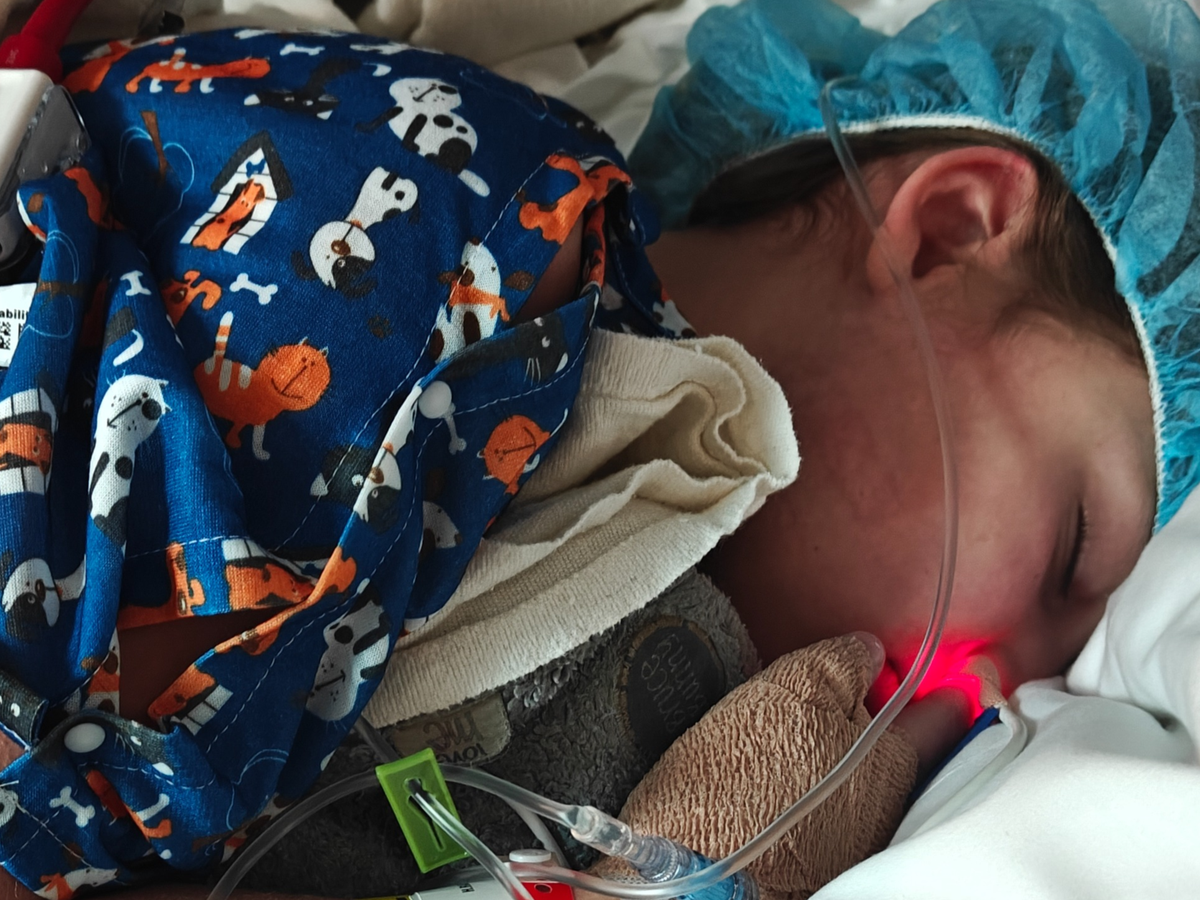
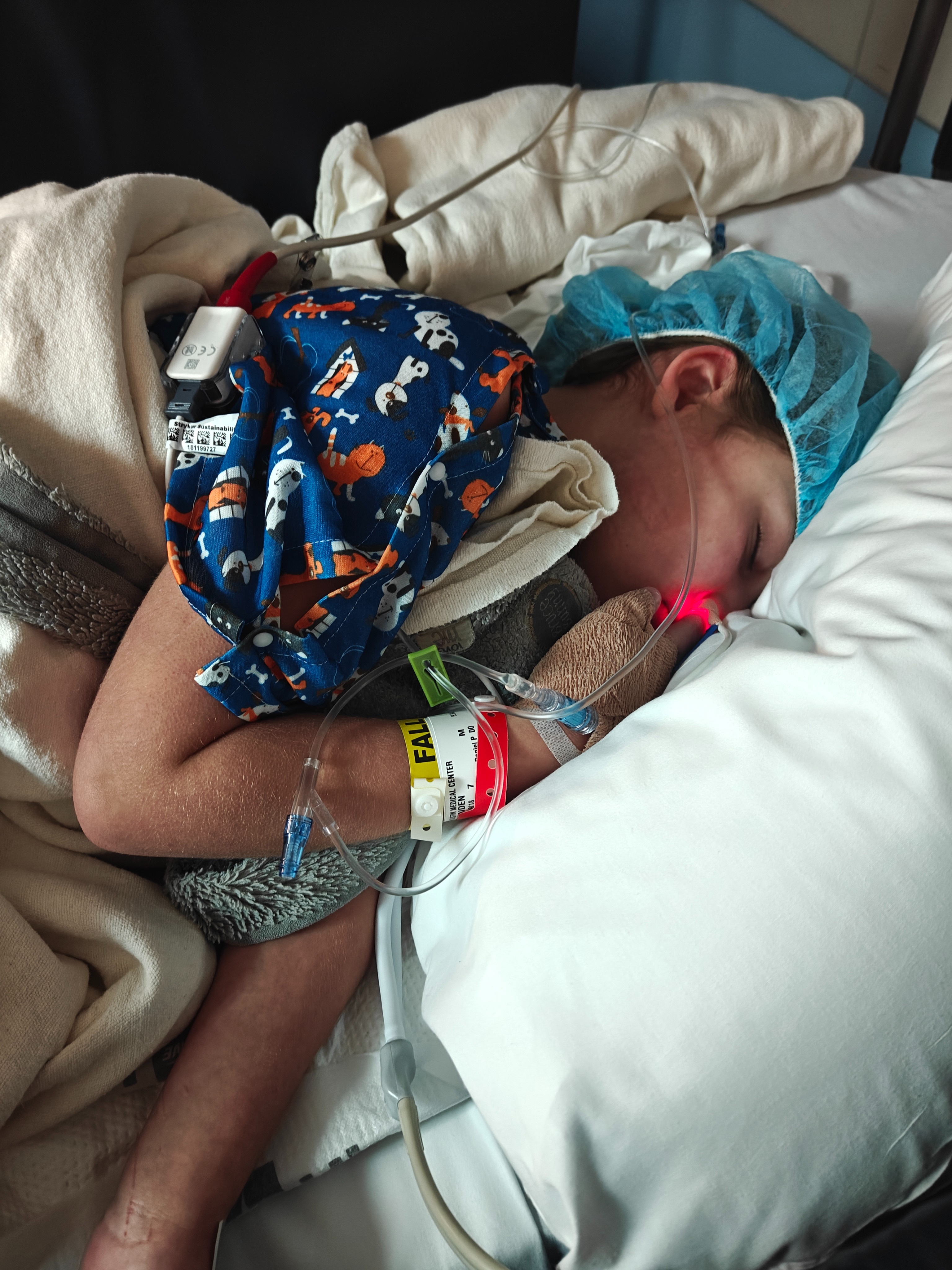
Layla’s journey with epilepsy began just days after her first birthday. After waking from a nap, she was crawling and kept falling over. I thought her arm might be asleep, but within ten minutes, she was in a fully convulsive seizure. I’ll never forget carrying her into the hospital, crying and begging for help. After several rounds of rescue medication and an MRI, we learned she has focal cortical dysplasia—a malformation of the brain that happens randomly in utero. That day, she seized for over 20 minutes, and we went home with daily anti-seizure medications.
Over the next year, Layla had three more long seizures, each requiring ambulance trips and hospital care. Then, for no known reason, her seizures stopped. After two years seizure-free, she was able to wean off all medications. We truly believed she would be the exception. Sadly, after almost five years of freedom, her seizures returned in June 2025. Over the past eight months, they’ve increased to multiple times a day, every day. She’s tried more than ten medications, is currently on three, and has endured side effects so severe they made her suicidal, aggressive, and left her with daily debilitating stomach pains. She went from being carefree to needing constant supervision, as her seizures now happen at all hours.
Despite all efforts, her seizures persist, and she’s at risk of cognitive decline and memory loss. Recent MRIs, a PET scan, and long-stay EEGs revealed her brain is having near constant misfirings—well over 30 seizures in a day. Her FCD covers her entire right temporal lobe and extends into her frontal and parietal lobes, with her insula involved. The only option left is to seek care at Stanford Children’s Hospital in San Francisco, where she’ll undergo a neuropsych exam, updated MRI, CT scan, and a SEEG procedure. We’ve received multiple second opinions, and California offers the shortest wait. The SEEG will be her first brain surgery—drilling burr holes and placing EEG wires directly on her brain, requiring her to be bed bound for seven nights. This is necessary to map the seizure area and plan next steps.
Following the SEEG, Layla will still need additional brain surgery. The testing will determine if she’s a candidate for resection (the riskiest, but only shot at true seizure freedom) or if she’ll need an RNS device implanted. We’ll continue to update here with her latest details. Layla and I will travel from central Texas to San Francisco, sleeping in our car to save money, and we’ll be alone on this journey without family nearby. We are both scared. The financial burden—medical bills, travel, and living expenses—is more than we can manage alone. Every dollar raised will go directly toward her care, and any extra will be used to brighten her days during this difficult time.
We are deeply humbled and incredibly grateful for the support of our community. Kind wishes, thoughtful messages, and sharing our story helps shine the light on the 1 in 26 living with epilepsy. Thank you for standing with us and helping us fight for Layla’s health and hope.
Over the next year, Layla had three more long seizures, each requiring ambulance trips and hospital care. Then, for no known reason, her seizures stopped. After two years seizure-free, she was able to wean off all medications. We truly believed she would be the exception. Sadly, after almost five years of freedom, her seizures returned in June 2025. Over the past eight months, they’ve increased to multiple times a day, every day. She’s tried more than ten medications, is currently on three, and has endured side effects so severe they made her suicidal, aggressive, and left her with daily debilitating stomach pains. She went from being carefree to needing constant supervision, as her seizures now happen at all hours.
Despite all efforts, her seizures persist, and she’s at risk of cognitive decline and memory loss. Recent MRIs, a PET scan, and long-stay EEGs revealed her brain is having near constant misfirings—well over 30 seizures in a day. Her FCD covers her entire right temporal lobe and extends into her frontal and parietal lobes, with her insula involved. The only option left is to seek care at Stanford Children’s Hospital in San Francisco, where she’ll undergo a neuropsych exam, updated MRI, CT scan, and a SEEG procedure. We’ve received multiple second opinions, and California offers the shortest wait. The SEEG will be her first brain surgery—drilling burr holes and placing EEG wires directly on her brain, requiring her to be bed bound for seven nights. This is necessary to map the seizure area and plan next steps.
Following the SEEG, Layla will still need additional brain surgery. The testing will determine if she’s a candidate for resection (the riskiest, but only shot at true seizure freedom) or if she’ll need an RNS device implanted. We’ll continue to update here with her latest details. Layla and I will travel from central Texas to San Francisco, sleeping in our car to save money, and we’ll be alone on this journey without family nearby. We are both scared. The financial burden—medical bills, travel, and living expenses—is more than we can manage alone. Every dollar raised will go directly toward her care, and any extra will be used to brighten her days during this difficult time.
We are deeply humbled and incredibly grateful for the support of our community. Kind wishes, thoughtful messages, and sharing our story helps shine the light on the 1 in 26 living with epilepsy. Thank you for standing with us and helping us fight for Layla’s health and hope.