- M
- T
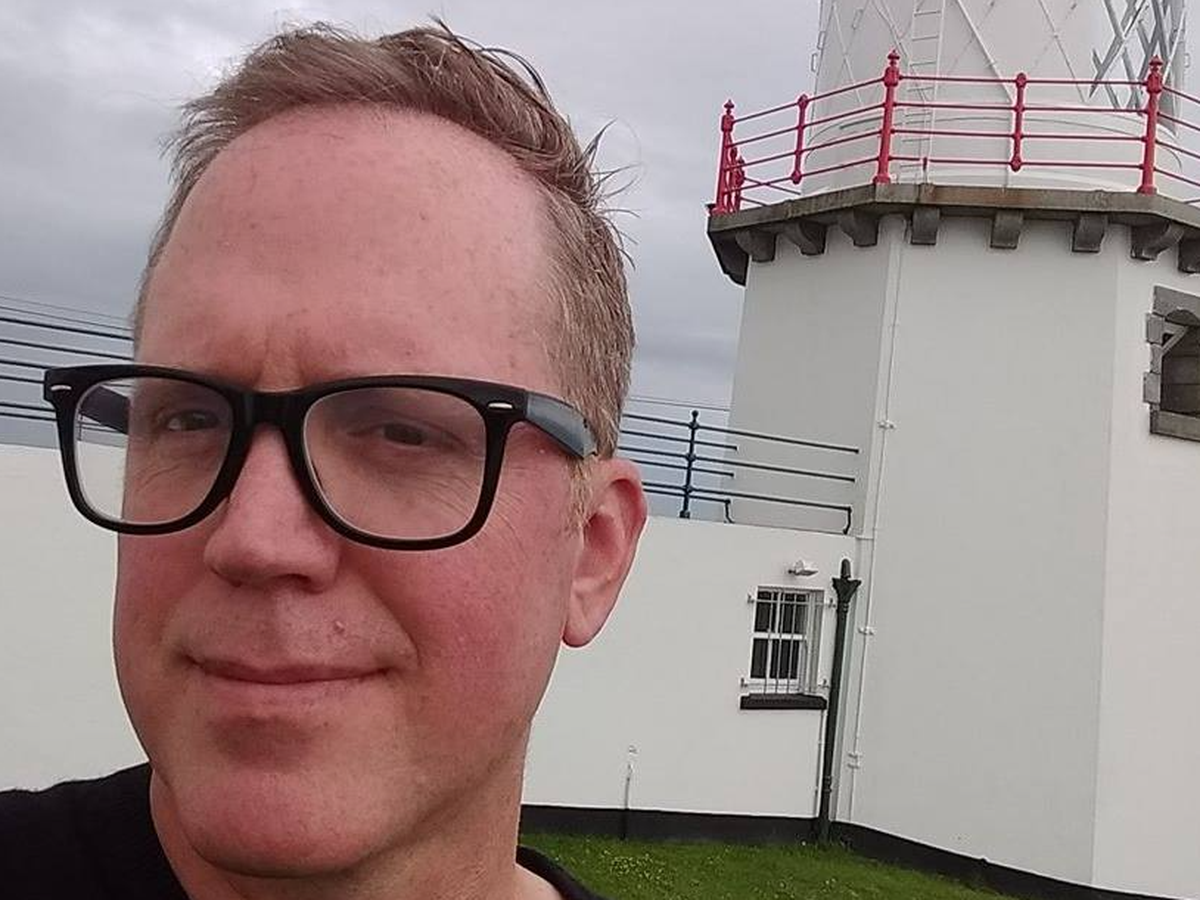
Support Jeff Sweat's Battle Against Lymphoma
0% complete
$21,130 raised of $25K
168 donations
Once again, our dear Sweat family is facing a major health challenge, and our collective help is needed to support them during this time.
After his death-defying brush with COVID, Jeff was going strong. He and his family made some quality of life changes, moving to Fort Bragg, CA to run their Bed and Breakfast. Those of us in Los Angeles, have missed them very much, but looked forward to Jeff's Facebook updates.
The other day, Jeff posted about his recent diagnosis. Family and friends are stunned at how quickly our lives can change. Let me share it with you in Jeff's own words.
"I didn't think I would be writing a diary from a hospital bed so soon.
My neck is swollen. Linebacker swollen. It's hard to tell at first glance what's wrong with it. It just sort of bulges, bulges everywhere.
I’ll save you the two weeks of questions it took to get to the answer: I have cancer.
At first I thought I had a cold. The underside of my jaws would ache at night like my tonsils were eight again, and I assumed I was about to get sick. And then I assumed that somehow my immune system had fought it off. Other infections and inflammations confused the issue; oral surgery and pulled muscles. But the lumps edged into my consciousness over the weeks, not always in even pulses.
Until one day, four weeks after the first swelling, they were two hard lumps on either side of my trachea, egg-shaped and hard at the edges. I went into a local clinic, and the 70-something-year-old doctor put his hand on both sides of my neck and said, “I’ve never seen this before.”
“That makes two of us,” I said. “Yeah, but I'm supposed to,” he said.
The swelling continued to bulge until Labor Day morning. The hard egg shape stayed put on the right side of my face, but the left side was no longer an egg. It was that if it had been building pressure on the dike, and finally jumped over the dam. It wrapped around my neck. The cells themselves, from my shoulder to my neck, felt red and raw. They seemed to pulse in time.
“I think it's time to go to the emergency room,” Sunny said. But they couldn't do anything for me, not in Fort Bragg. I waited in the Fort Bragg ER for 10 hours while they took two CAT scans. But there was no one who could act on the information. No one to draw a sample from that splattered egg on my neck.
They wanted to fly me to a bigger city. I didn't want to be put on a life flight unless it was dangerous, because we don't have life flight insurance yet and we don't have the money to pay for it. And who would even take me out?
Finally we checked ourselves out with a copy of a blood test and a DVD of the scans, a paper that said we were leaving against medical advice and a wink from every one of those medical advisors that said, the only way to get answers is to go to San Francisco. On Tuesday, September 2, we checked into UCSF Medical Center, and 11 days later, we’re still here.
The first days of thinking you have cancer are the hardest, because the hospital moves at a glacial pace. It took us two days to get our first test, and another 36 hours to get any results. It only made our fears worse.
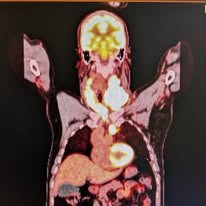
A tiny part of me thought “cancer” when I saw the swelling, and my experience with COVID has taught me to take that intuition seriously. And what I knew, in those moments before I had detailed results, is that an infection would be localized. These growths seemed to be everywhere. Which means that it was likely lymphoma.
Which means it had spread.
The worst night was the one before I left for San Francisco. I thought of how that trip to UCLA Medical Center for what was supposed to be a few nights turned into two months. I knew that entering a hospital didn’t guarantee that you’d leave it. I picked my way through the wandering chain of what-ifs to a point where I had discovered the cancer too late, where it had spread into parts of my body that couldn’t fight it off. I considered what it would look like if I couldn’t fight it off, and I allowed myself to feel it all. Sobs choked me as I looked up into the fog-lit sky. “It’s OK if you don’t want to die,” I said. Then I went to bed.
The more answers we were learning about this disease, though, the more we’ve liked them. If you have to have a cancer, the saying goes, have lymphoma. This is lymphoma, which means it will respond to chemo, and shouldn’t require more intensive intervention. It’s a diffuse large B-cell type lymphoma, which is the reason it took over my neck in the space of a week – but also means it really responds to chemo, and fades quickly. The goal for this cancer is not remission, our oncologist said. It’s a cure.
So, here we are: I’m embarking on the six rounds of chemo, in 21-day cycles. Most of the rounds can be done in Fort Bragg. For those of you conversant in chemo chat, this is R-CHOP, which is a mixture of monoclonal antibodies, chemicals, and prednisone. I should have any reactions to the meds in the first seven days, and weakness from low blood cell counts in the second seven. I have no idea how hard the effects will hit me; I’m hoping my general ox-like build will shield me from the worst of it, but I’m prepared. I’ve been sick before.
I finished my first round of chemo last night. I wasn’t sure what to expect. When you spend time on an IV, you know that you can feel and smell things moving through your system. I watched as the chemo oozed through the IV tube, watched it move into my skin. I expected a burning, the way lidocaine seems to cauterize your nerve endings. I didn’t feel anything. I’m hoping that continues a while longer.
In just 24 hours, I can see the treatment is already working. The swelling has backed off, the cells have quieted down. The edges of the tumors are softer. The circumference of my neck dropped two centimeters in just a few hours. One of the most dangerous side effects of this lymphoma treatment is Tumor Lysis Syndrome, where the cancer cells die so quickly the body can’t remove the waste products in time. It can kill people if you’re not medicating for it. I am, of course, medicating for it, but it gives me a perverse sort of pleasure that one of the most dangerous things about the treatment is it working too well. I like to imagine my neck and see those cells just being ripped apart like clumps of pudding.
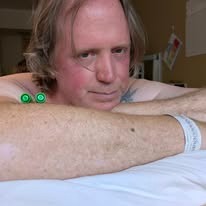
The big difference between this time and Covid isn’t just the mechanics of a disease. It’s Sunny. She spent the first two nights away from me, sleepless in a hotel, and finally gave up and pulled out the chair next to me into a bed. She only leaves my side to run errands, and I only leave to go get scans. She takes notes on all the meds when the doctors come in, she makes sure I remember to ask for my pain meds before it gets overwhelming.
It has the feel of a sleepover party. When I was dragged down by cancerish fatigue and regularish fatigue in August, I said to Sunny, “We need to go away, just the two of us, right after Labor Day.” Apparently, this is what it takes to get a staycation.
There’s a long way to go, and some uncertainties. I have a lacy web of numbness on the left side of my face, everywhere served by cranial nerve number 7. Lymphoma doesn’t explain it, so they’re looking into extra white blood cell types showing up in my spinal column. The fear is that cancer cells have traveled into my brain, which would take this up to a Stage IV cancer. Sunny and I tend to take the Occam’s Razor approach: there’s all sorts of swelling going through my shoulders to my face. It wouldn’t take much to block that nerve.
The biggest uncertainty is financial. Last time, Sunny was a teacher with the best insurance you can imagine. Now we’re on Covered California, and our pension is a Victorian hotel going into the off season. My day job depends on me being there to do it. There’s a whole world riding on my shoulders, and one misstep can bring it all crashing down.
Tomorrow we should be checking out of the hospital, returning home for the first time in 12 days. We will probably write about this in the way we did with Covid, but the journey looks different. Calmer, I hope. Cancer is a well laid-out road, the mile markers are clear. I’m optimistic about the destination. Our time along it should allow for lots of living."
Organizer and beneficiary
Jeff Sweat
Beneficiary