- M
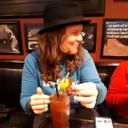
It’s an understatement to say Elyot has been sick for a long time. In her case, “sick” means an extraordinary confluence of debilitating conditions. “Sick” doesn’t convey the suffering of multiple complex traumas, but there’s really no one word that describes Elyot has or is. For the past ten years she has been in and out of hospitals, ICU’s, and surgeries. The problems are many, complicated, and some unknown. Most recently, there is at least one illness manifesting as formations on her lungs that remains a mystery. Her kidneys function below 50%, she’s lightheaded, nauseous, exhausted, chronically dehydrated, wreaked and weakened.
It’s debilitating, stressful, and normal for her. Since 2013 she has been repeatedly struck down and diagnosed with multiple ailments but never fully cured of any. Since rheumatoid arthritis ended her career as a carpenter, she’s had 6 eye surgeries, 2 tendon surgeries, 2 foot operations, Pancreatitis 4 times, a hysterectomy, Crohn’s, Diabetes, dozens of hospital stays and little work in addition to understandably incredible stress and a complete loss of her savings.
But she has not lost her humour. She sums up the situation as a case of being Elyot, which is essentially Murphy’s Law for chronic illnesses. Her multiple conditions, known and unknown, conflict with each other as much as her. The medication for Crohn’s lowers her immune system and this vulnerability complicates her Diabetes and flares her arthritis. Recently she found some relief with biologic drugs, but then these lung formations occurred and nearly killed her. Another routine near fatal emergency and hospital stay.
Elyot has also retained her love of writing. Without the ability to work, Elyot restarted her studies to become a writer. And she’s very good. You can read a recent sample of her work linked on this page which describes her life with chronic illnesses.
Elyot’s plan is to write as a career, to study, and to manage her illnesses medically and holistically. Medication helps but supplementary therapies like acupuncture, a naturopath, a nourishing diet, and counselling also help. Vision correction, travel to appointments, as well as rent and tuition, are all beyond her means.
And Elyot has her community. We’re asking for support so she can write and heal and one day get back to work. Donations can remove the stress of poverty and let Elyot work at healing and writing. Elyot has always been a hard worker, proud and private, and it took 10 years to ask. We know many of you have been waiting for a way to help. Please donate and as a community take up the burden of managing her pain and recovery.
Exceptional by Elyot McCrae
For most of my life, I wanted to be famous, or exceptional in some way, but I was never
particularly confident regarding how I would become exceptional. Still, we have these
ideas of how things will go. A relationship, a career, the trajectory of our lives.
Periodically, we imagine ourselves in photographs yet to be taken. The sun is shining,
and we are looking towards a camera we cannot see. Maybe one of our hands is
holding onto someone else’s and we are open-mouthed, laugh-shouting. Maybe we are
holding a coffee cup, a cocktail, a puppy’s leash, a baby. Maybe we are crouching–the
lower rung of a group photo, or sprinting down a dock bare-foot and preparing to dive in.
We are holding a spatula and manning a barbeque, the host of a party. Always smiling.
Always caught in one of life’s precious moments.
Imaginary photographs are filled wih assumptions. That I will be able to thread my
fingers through someone else’s, for example. That I will be able to crouch on the ball of
my feet and smile at the same time. That I will be wearing glasses from which I can see
out of both eyes with relative clarity. None of my imaginings prepared me for the rare
–one might say exceptional–and aggressive form of rheumatoid arthritis that I
developed just before my thirty-sixth birthday. None of the photographs caught the two
canes at rest beside the couch, or the bed, at the ready for the hoisting and
straightening of my crinkled body. There were no images in which the photographer,
hesitating, had caught the instant my smile disintegrated under the grip of a firm
handshake. Not one image showed me in an ICU bed yet again, full of IV lines, side
effects, and mysteries.
As it turns out, I have earned the title of exceptional. Other adjectives include rare,
unique, and (literally) one in a million. Almost exclusively, these descriptors are applied
by health professionals regarding medical anomalies and my ability to recover from
them. I’ve even had doctors greet me with great enthusiasm, assuring me of little more
than the fact that I am a fascinating case.
These are not the sorts of exceptionality I’d anticipated when I was ten. I did not
imagine that I would spend the better part of a decade adapting to a body whose decay
I could track visibly from one week to the next. I had not prepared myself to field
questions from friends and acquaintances at every social encounter. One of the most
refreshing and blunt reactions to my sudden deterioration came from a man who worked
at the building supply store I used to frequent in my life as a carpenter. We found
ourselves side by side in the dairy section of the local grocer. His wife had recently died
quite suddenly of cancer, and in that regard, we were comrades-in-arms, both subjects
of murmuring curiosity and unspoken remarks. I was cradling two cartons of coffee
cream in one hand while carrying a cane and, of course, eggs, in the other. His wide-
eyed abruptness as he stumbled to save the doomed eggs that had slipped loose of my
lobster-like grip was truly refreshing. Under normal circumstances, people have time to
hide their discomfort at seeing me in this state before speaking to me. “Fuck sakes.
What happened to you?”
I could see he was hurried and lacked the time required for an adequate response to
this question, or find someone to clean up the eggs. “Well, Dave,” I begaan, as I stared
down at the puddle of embryotic yellows and umbilical whites edging their way under a
cooler holding non-dairy non-milks. His face was still curled like a question mark and
unable to hide his disdain–either at the mess of eggs, the state of my body, or life at
large–when I lifted my eyes to meet his. “Genetics, mostly.”