- L
- E

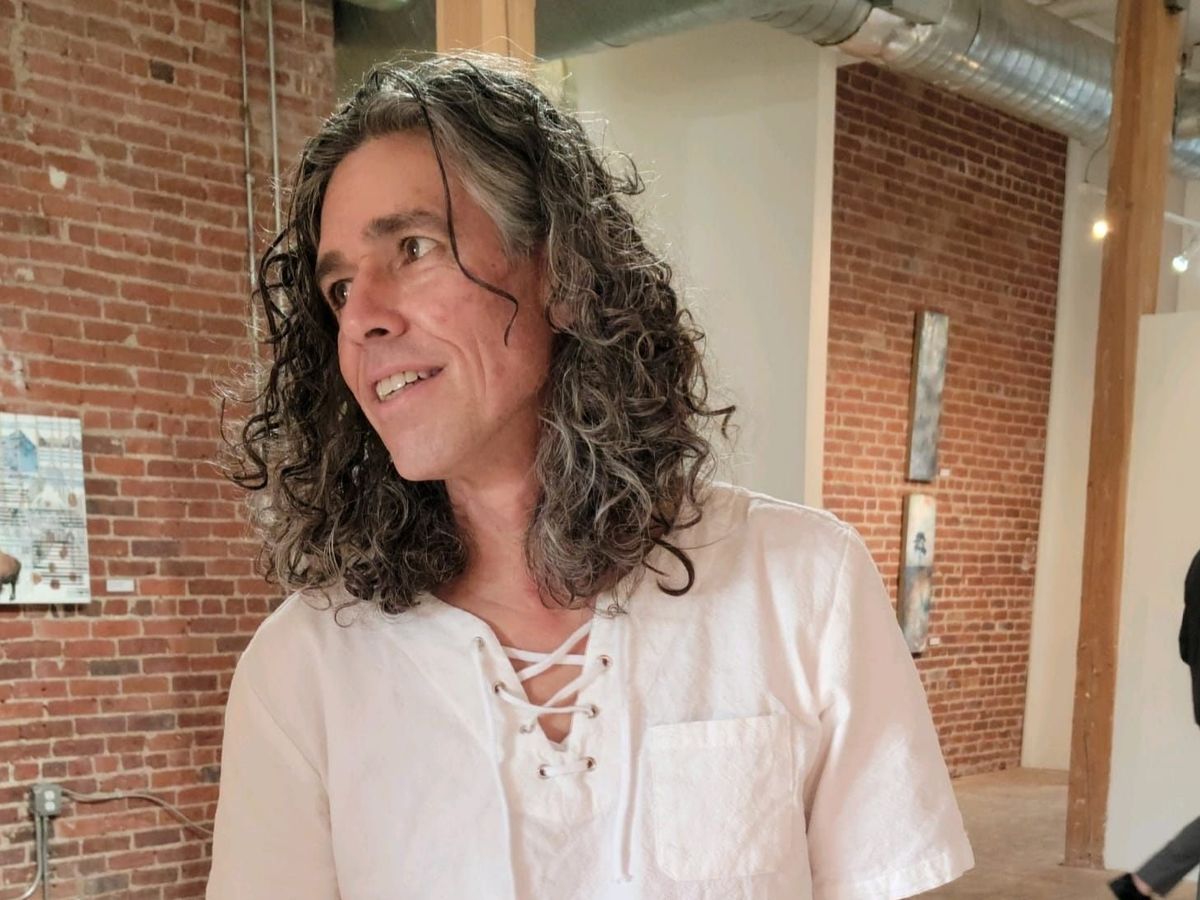
Support Charles Livingston's Healing Journey
0% complete
$17,830 raised of $64K
141 donations
We recently received some horrible news about one of our favorite and most devoted members, Charles Livingston. Charles suffered severe physical injuries and a traumatic brain injury in a bicycle collision with a truck on May 11 on Highway 74. After hospitalization, he will transition through an acute care facility, a rehabilitation center, and eventually receive home care at a family member’s home. Funds raised will be deposited into a trust for Charles and used to assist his family with day-to-day care expenses, including home health care during his recovery.
When Charles first came to Pirate, he was making drawing based on the repetition of a mark. Drawing a line or a circle over and over again until they filled the paper. He would keep track of how many marks he made and put that number in the corner. He moved on to other media while keeping this mindset. Cutting bicycle innertubes into one-inch pieces until he had over two million. A little OCD? Maybe, but that’s all part of Charles’s charm and commitment to a deeply considered and innovative practice. After several years as a Pirate member, he felt it was time to move on. That he had done all he could at Pirate. Six months later, he asked if could come back. I think he missed us. Of course, we excitedly said yes and Charles, always with another surprise up his sleeve, asked to come back under an alias and so we added Charles Dürer to our roster. Didn’t fool anyone and we love him for it. His latest artistic venture can best be described in his artist statement:
"For over thirty years I have been recording urban and natural landscapes based on my travels and where I live. I have taught drawing and painting for over a decade at universities and community colleges in the Denver area. These observational documents are part of a visual journal. In the context of a journal the objects and spaces recorded are in response to things that caught my attention, resonated, and sparked my need to visually explore further. How I display the work is a unique process of grouping that is meant to challenge conventional ways of how art is viewed. Ascribed methods of display, especially of representational or figurative art, are most often about viewer convenience that allows easy accessibility and judgement. Art becomes comfortable and familiar, reduced to a product in a store display. If the art is expressive, an emotional and intellectual gesture, the display should confirm and support this expressiveness and be just as inventive and creative. The idea behind my displays is to reduce the inherently market supported exclusivity of representational art, to bring it down (literally hung lower, on the floor, or in a heap), to pair it with popular and fun images or objects, to obscure or not show the art but allude to its presence, to use or pair it with sketches made with non-archival materials, to show it in second hand frames (art as a sustainable endeavor) all in response to relinquishing some of the ego that elevates and drives its exclusivity."
JULY UPDATE: Charles is making excellent progress in his recovery at the rehabilitation hospital. We hope he’ll be able to begin standing and bearing weight on his severely injured leg later this week. He’s been gaining strength and we’re all very pleased with how far he’s come. Our family and Charles deeply appreciate everyone who has kept him in their thoughts, donated to this Go Fund Me page, contributed artwork to the Pirate fundraiser, and/or attended the event which was a great success!
A heartfelt thank you to all the members of Pirate Contemporary Art for going above and beyond in organizing the fundraiser, bringing the community together, their friendship and support—your dedication has truly made a difference and means so much to us. This art co-op is a remarkable place, and if you’ve never attended an art opening or show here, we highly encourage you to experience one in the future. Here’s the link to their website: https://www.pirateartonline.org/
Thank you.
The Family of Charles Livingston
Organizer and beneficiary
Colleen Russell
Beneficiary