
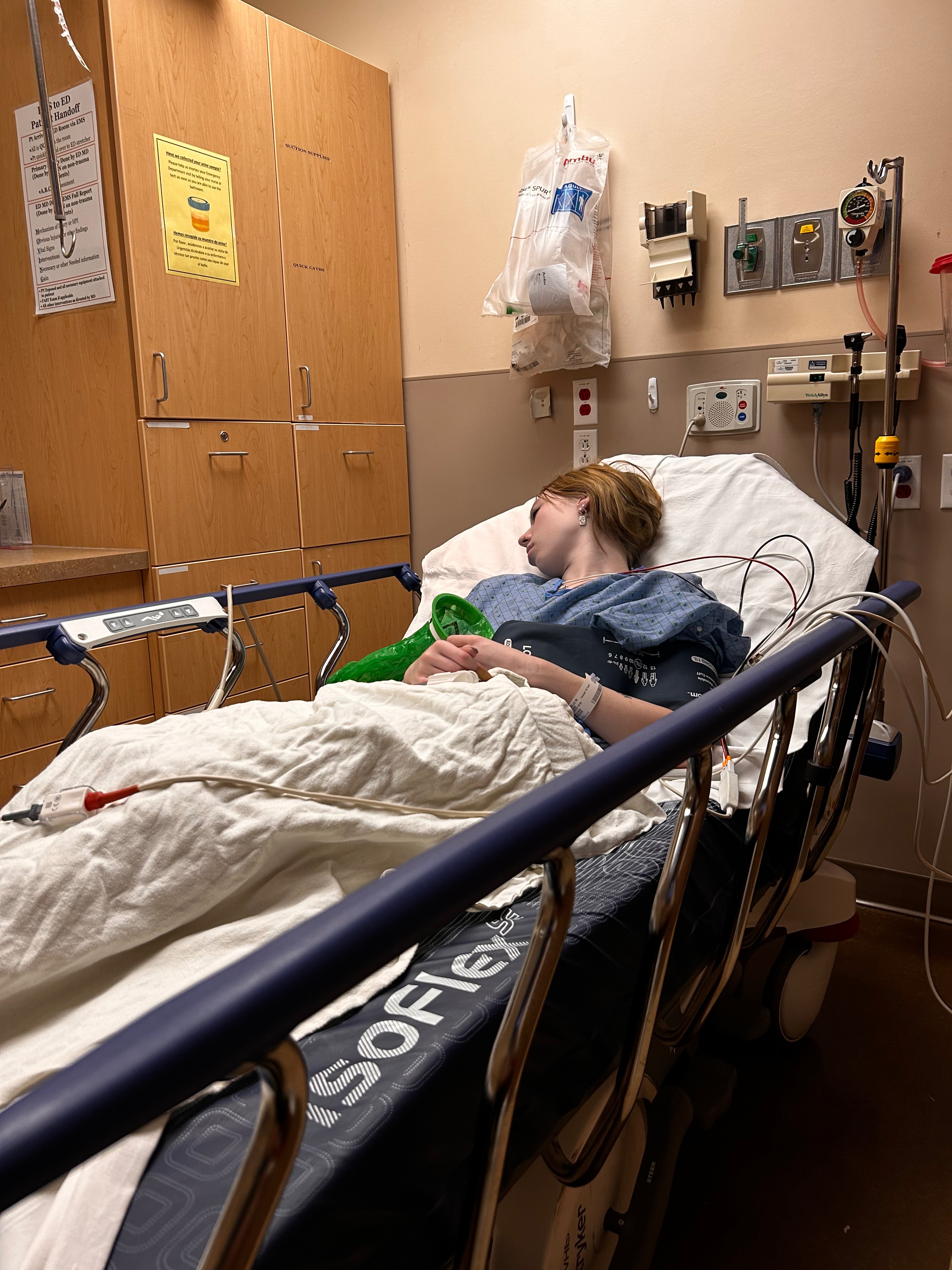
Brielle was diagnosed with Juvenile Myoclonic Epilepsy a couple of years ago. This diagnosis came as a shock because of no previous seizures and the sudden onset. Epilepsy has been quite the challenge, resulting in many hospital visits, ambulance rides, a broken nose, a couple of car crashes, concussions, scrapes and bumps, losing the ability to drive, having to move back home and stop working for a period of time and the loss of security and independence every 21 year old deeply hopes for. She has had to miss out on vacations, events, and regular things young adults should be doing. Her neurologist has worked hard at trying to stabilize her, however it has been a constant battle as she was also recently diagnosed with hypoglycemia and has to wear a blood sugar monitor at all times. Her current doctor has reached the end of his ability and maxed out the doses of medication she is currently on. He has now had to refer Brielle out to a more advanced epilepsy specialist, which we are hopeful can maybe get some more stability for her. But currently even with the maximum dose of multiple medications and managing hypoglycemia, Brielle still experiences a grand mal seizure on average of at least once a month, plus multiple aura's (the feeling of a seizure coming where she has to leave work or stop what she's doing to lay down and hope a seizure doesn't happen) and dozens of low blood sugar alerts daily.
At this time, Brielle is looking to get a trained epilepsy service dog—something that would truly change her daily life. Living with seizures means constantly facing uncertainty, from sudden episodes to the limitations they place on independence and safety. A service dog can be trained to recognize early warning signs, provide physical support during and after a seizure, and even alert others when help is needed. She would also be able to have the dog trained to support her hypoglycemia by alerting her to low levels, bringing her snacks etc. If epilepsy weren't enough, low blood sugar can also trigger seizures for her, so any dip in blood sugar can be extremely dangerous and her body seems to live in the low end at all times. Beyond the medical benefits, this dog would give Brielle a sense of confidence and freedom that’s hard to put into words. She would feel more confident to be out in public. As her family, we wouldn't be so concerned when we aren't with her knowing a dog could help her and alert us if she needs something when she's alone.
Unfortunately, the cost of training and placement of a medical service dog is significant, which is why we're reaching out for support. Any contribution, no matter the size, brings her one step closer to greater stability, safety, and independence.
Brielle has found a local training program in Utah that can pair her with a breeder and walk through the program from early puppy training on through the specialized medical service dog training. The costs are as follows:
Puppy: $2,000-3,000 (from a select breeder with the training company helping select the ideal puppy)
Medical service dog training: $12,000
While these costs are jarring - this is half the cost of other programs around the US.
Brielle deserves to gain some independence and ease of mind back in her life.
Organizer and beneficiary

Brielle Davis
Beneficiary