- J
- V
We are living in an era in which world leaders use models of the climate and ecology to help them make decisions that impact everyone’s future. These data-driven tools have a wide influence, guiding policy agendas, media coverage, and they even make their way into the classroom.
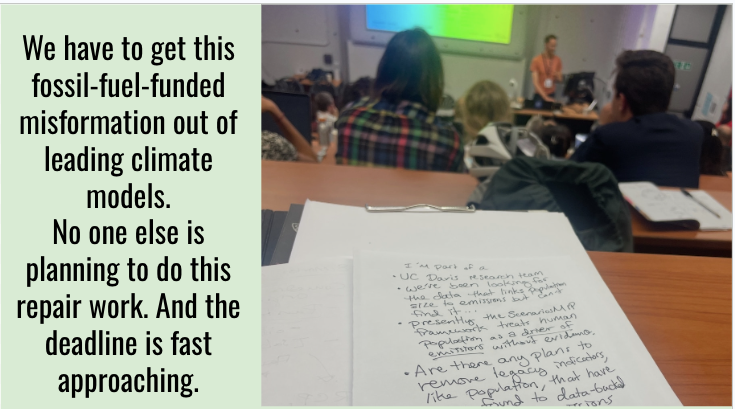
Here's the problem: Our research team has identified forms of fossil fuel funded misinformation that has become congealed into leading climate models. Right now, we are the only research team that is "in process" to remove the broken, fossil-fuel-funded metrics from the models, and due to IPCC deadlines, we have a matter of weeks to do it. If we don't remove these metrics now, the deadline will pass, and these models will be locked in as they are for the next 7 years, meaning we won't be able to change them again until the early 2030s.
Some of the changes that urgently need to be made:
- Adjust leading socio-economic climate models to better factor in the impact of fossil fuel companies upon GHG emissions.
- Remove metrics rooted in fossil-fuel-funded misinformation, including metrics that inaccurately tie human population numbers to emissions in ways that obfuscate the possibility of energy transitions.
- Remove metrics from socio-economic climate "meta-models" that have no basis in evidence. (These meta-models are often what cause fossil-fuel-funded misinformation to get into leading climate models due to standardization protocols.)
- Advocate for the inclusion of indicators designed by youth researchers, including indicators that track the emissions impacts of war, income inequality, fossil fuel lobbying, and mass displacement.
Right now is a rare window in which it's possible to make repairs to leading climate models. Soon that window will close, and after that, the leading climate models will get "locked in" and we won't be able to repair them again for another 7 years. This is the last chance to make these repairs before the early 2030s. These changes urgently need to happen to leading climate models, and our research team is the only one in the running to do it in time for the deadline.
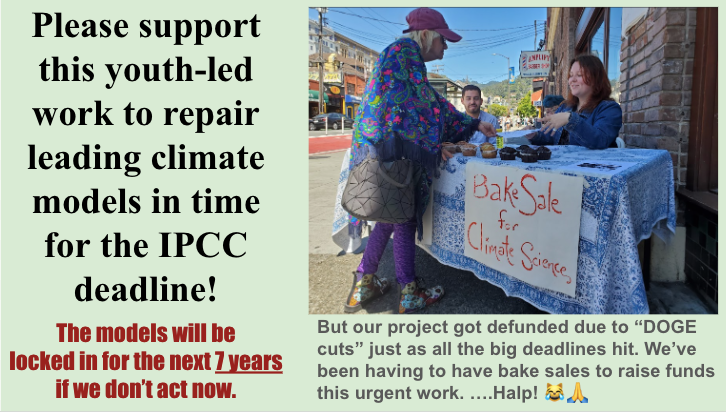
But here's our problem: Due to budget cuts, including and especially those initiated by DOGE, our research funding has vanished. Without funds, there is no way we can get this work done.
Reasons we need funds:
- To attend key meetings and gathering during this deadline cycle.
- Pay key researchers and advisors who are playing a supporting/advisory role.
Who are we? We are a team of researchers affiliated with BasedMIP, a project at UC Davis to develop better models of climate and environment. You can learn more about our team here: basedmip.ucdavis.edu.
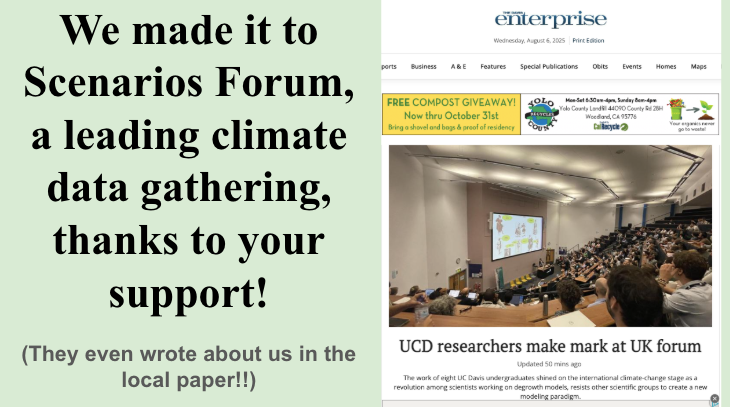
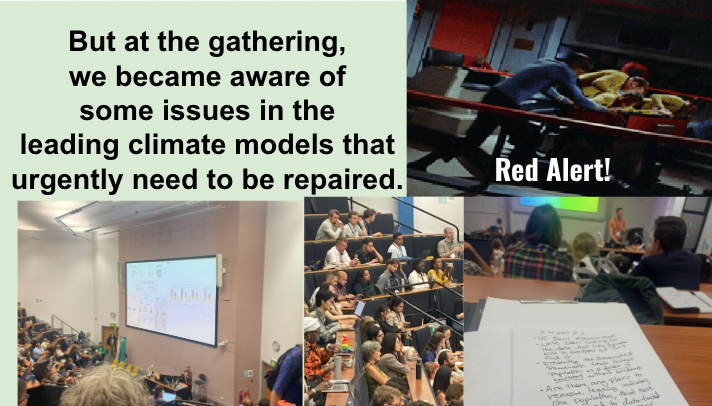
In July, thanks to the generous support of everyone who donated to our crowdfunding campaign, we were able to attend a leading climate data gathering in the UK and present our research. We thought this meeting was the finish line, however, while we were there, we learned some fossil-fuel-funded misinformation is about to be congealed into many leading climate models. If our work from July is going to matter, we need to get the misinformation out of these models, but we only have a matter of weeks to raise the funds we need to stay in the running to do it.
Over the last 6 years, a team of researchers as UC Davis has taken the lead in uncovering forms of fossil-fuel-funded misinformation that's gotten into leading climate models. These researchers have begun to organize youth-led efforts to repair the models. It seemed like everything was on track to make sure these repairs would happen. However, early this year, a wave of federal "DOGE" cuts sent our university spiraling into chaos, with key budgets being eliminated or put into limbo. Suddenly, the ability to find things like a quarter's worth of GSR funding or a travel budget vanished. We'd hoped things would clear up by now, but they haven't. The belt has tightened into a tourniquet. All funding sources have vanished, and we actually do need funds if these repairs to climate models are going to happen.
The truth of the matter is this: We need a full time graduate assistant who knows the ropes to help guide this project. Right now, there are no instruction manuals, and doing this work means navigating a whole bunch of ad hoc systems (both in the code/data, and in the institutions that manage the data), and there's no way to navigate them without a person who knows the ropes. If we don't have this guidance, this project will be cooked.
What the funds are going towards:
- To pay for a "buy out" of a GSR from BasedMIP who will guide this project.
- Help pay for the costs of traveling to a key gathering in September that will help keep us in the running within the IPCC's internal deadline structure.
- Food budget for youth-led climate data hack-a-thons.
- Various other helpful things for if we raise more than that.
The Updated Plan
- In late September, thanks to the help of everyone who donated to this fundraiser---along with last-minute travel funding from UC Berkeley and from the Feminist Research Institute at UC Davis that came through due in part to excitement y'all generated by donating--we were able to attend a gathering of a leading IPCC-affiliated modeling community.
- This gathering was on Sept 28-29 in the UK, and there, we were given a chance to make a short presentation to the IPCC-affiliated scientists about some of the key issues we've found with the climate models, with a focus on forms of fossil-fuel-funded misinformation that got congealed into the models in a really sneaky & nefarious way.
- Since that time, we've become part of ongoing efforts to repair leading climate models in time for internal IPCC deadlines in April.
- So, this is bit of change from our original timeline for this project: We're planning to stay the course and make sure this vital model repair work can happen while also making sure youth have a seat a the table.
These climate model repairs are urgent, and we believe that once they are made, it will greatly help world leaders and the public better organize efforts to combat climate change.
Current climate models contain fossil-fuel-funded misinformation that distracts policymakers at best, and that cause coalitions to fall apart at worse, which forestalls policy.
We have got to get the fossil-fuel-funded misinformation out of leading climate models. Will you help us? Please consider donating. Even just $5 goes a long way.
-
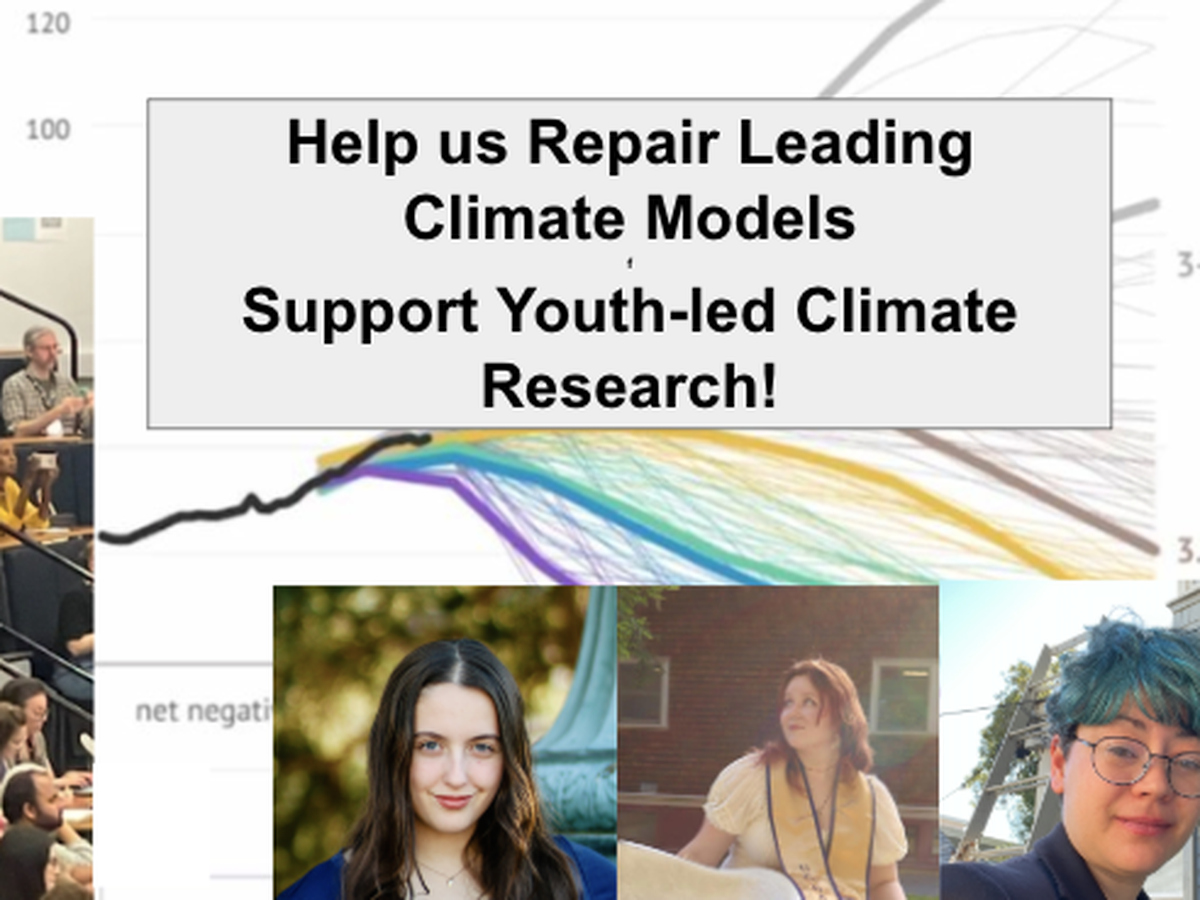
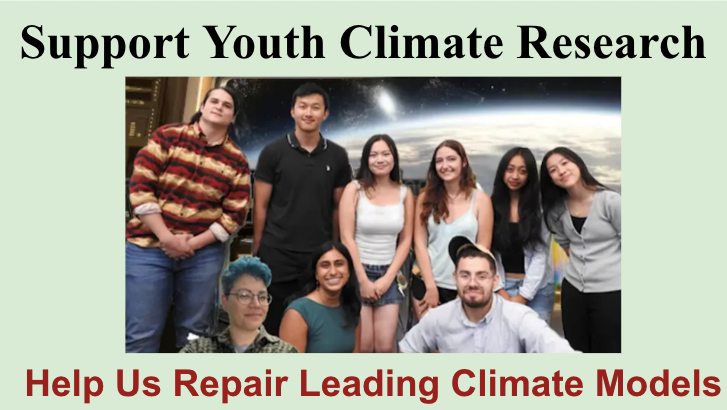
Who's part of this research team? We are youth researchers from UC Berkeley, UC Davis, and youth climate movements. Some of our bios are up at https://basedmip.ucdavis.edu/people. This work includes teams undergrad-led research groups at UC Berkeley and at UC Davis.
Here is a bit more about some key players on this project:
Harlin/Hayley Steele, Graduate Student Research (GSR) in Science and Technology Studies - they have led several researcher groups at UC Davis in investigating the structure of leading climate models since 2019. They have worked at NASA, and is a climate modeler affiliated with the IPCC. Steele will serve as the GSR for this project, helping youth organizers navigate the deadlines and stay on top of ad hoc processes in the coming weeks.
Kolan Moco, Post-Bacc Researcher, UC Davis - is a recent UC Davis graduate who was part of D3C, the student-led data justice organization on campus, and studied design and computer science minor, alongside experience as a biomedical engineering student. She is serving as a climate communications researcher intern as part of this effort.
Mryoslava Rose Fusin, Undergraduate Researcher, UC Berkeley - Myro has taught a climate media literacy student-led "DeCal" class for 4 quarters at UC Berkeley, she has serviced as the Lead Student Researcher of the Sustainable Development Goal Undergraduate Research Group at UC Berkeley since 2023, and she is a former youth climate organizer.
More profiles of student organizers and researchers involved with this project can be found at basedmip.ucdavis.edu/people.
What kinds of impact will this project have?
This project has the potential to remove some fossil-fuel-funded misinformation from leading climate models that is currently distracting world leaders and the public from taking measures to tackle climate change with the urgency and precision it deserves. But we have no hope of getting these things implemented during this 7-year assessment cycle unless we have the support we need to do the work before the deadlines pass.
This work will not only help us remove forms of fossil-fuel-funded misinformation from leading climate models, but it will also help us do much-needed onboarding to train the next generation of climate modelers. Currently youth are deeply under represented in climate modeling research. This is in large part due to lack of onboarding and opportunities for youth to get hands-on training working on leading climate models. Youth have the most to lose from climate change - it's time for us to be pat of the process of developing and repairing leading climate assessment tools.
Youth researchers also frequently bring fresh eyes to old problems, helping researchers come up with strategies that might have otherwise been overlooked. As part of our summer project, a group of youth researchers helped alert leading climate modelers about things left out of leading models - such as the emissions impact of war, of fossil fuel lobbying, and of wealth inequity. This project helped showcase how youth voices really do make a difference: we ask questions that other generations often forget to ask. We're more likely to question old patterns, and this leads us to spot gaps in the models that those from past generations seem to have overlooked.
This project not only will help us make urgent repairs to leading climate models, but this is a way of helping youth researchers gain much-needed experience and hands-on training in climate modeling. This is how we will steer the planet to the best outcome that's still possible.
Do you need your donation to be made with 501c3 status? (For example, some employers offer matching funds if you do it that way). To get 501c3 status on your donation, here's what to do:
Step 1) Donate at this link: https://give.ucdavis.edu/FERI
Step 2) Send an email to Dr. Sarah McCullough to let her know that the donation is for "BasedMIP." Here is her email: smcc[at]ucdavis[dot]edu.
Thank you so much for helping out!
These climate models will soon be locked in, and there won't be another changes to change them until the early 2030s. We hope to be able to remove this misinformation from these models this time around, instead of having to wait another 7 years.
Milestone goals:
- $1500 - Travel budget. This will help make sure our travel expenses are covered for the September internal climate modeling gathering
- $ 12,649.25 - Travel budget + 1/2 time GSR buyout. This will ensure we do a half-time buy out for our GSR, helping make sure we have the support we need to navigate the deadline process and stay on top of everything
- $ 18,223.86 -Travel covered + 3/4 time GSR buyout. This will ensure we have travel covered and a 3/4-time buy out for our GSR.
- $ 23,223.86 -Travel covered + 3/4 time GSR buyout + Hack-a-thon Budget. This will ensure we have travel covered and a 3/4-time buy out for our GSR and cover our food costs during the hack-a-thons.
- $28,798.51 -Travel covered + full time GSR buyout + Hack-a-thon Budget. This will ensure we have travel covered and a fulltime buy out for our GSR and cover our food costs during the hack-a-thons.
- $30,498.51 -Full expenses covered + full time GSR buyout + Hack-a-thon Budget. We estimate the actual expenses for this work to be a big higher than want we are listing here. This amount will help ensure we have full expenses covered and a fulltime buy out for our GSR and cover our food costs during the hack-a-thons. (Note: there were some extra travel expenses occurred so we could ensure that a student researcher would get back in time to take a midterm; this extra amount will largely go towards comping for that).
- $35,000 -Full expenses covered + full time GSR buyout + Hack-a-thon Budget + Comm Intern Salary + Other expenses. This would allow us to also offer a salary to our communications intern, and would provide funds to cover other possible expenses, such as open access fees when we publish our work in academic journals, grant writing fees, funds left over can be used to support future efforts.
Every little bit helps. Even just $25 would go a long way! Sharing also helps too!
This is an intense moment in history. There are a lot of fires that need to be put out. We want to do all we can to reduce the number of fires in the future, and to steer towards the best future that's still possible. But how can we do that if there are broken, fossil-fuel-funded metrics in leading climate assessment tools?
Thank you so, so much for your consideration of this project!
Let's steer the planet towards the best outcome that's still possible.