- T
- A
- M
Our story
My name is Joskaudė, but everyone calls me Yoshi for short. I work full-time in Higher Education, where I support students and staff to achieve their goals. I also recently passed my PhD viva in illustration and design. I live with my partner Alex and our children, Anika and Henry, in the South West of the UK. My world was turned upside down when my daughter Anika was diagnosed with FND — a neurological condition I had never heard of before.
What is FND?
Functional Neurological Disorder (FND) causes issues in how the brain sends and receives signals within the human body. This is something outside of the patient’s control and cannot be consciously managed. This specific disorder can include limb weakness, seizures, and other symptoms such as fatigue and pain.
After Anika’s FND diagnosis, every medical professional we spoke to used a software/hardware example to explain it. In this case, the brain acts as a computer: there is no damage to the brain’s hardware, but the software is malfunctioning and not working properly.
Anika’s FND journey
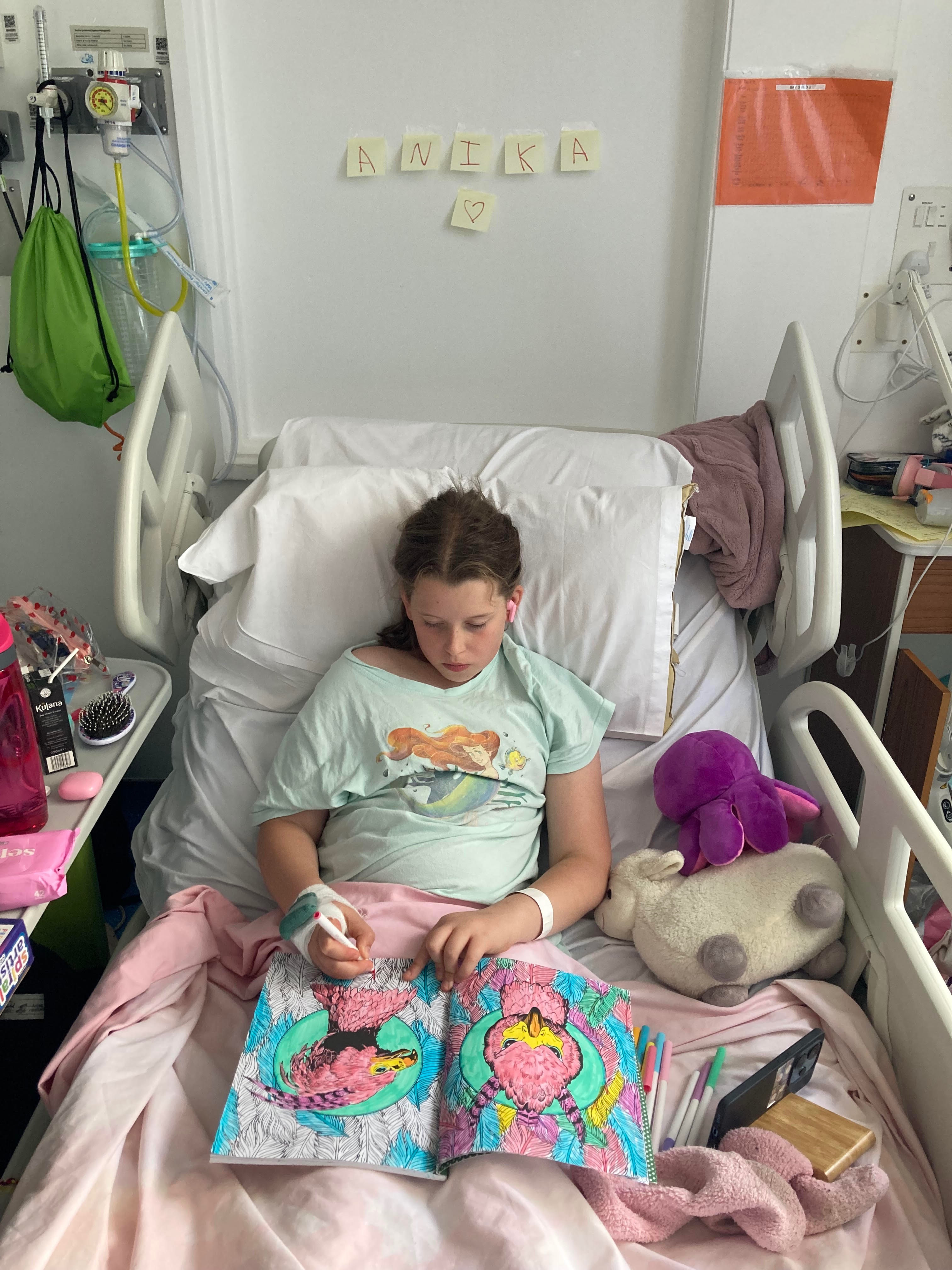
We spent the whole summer of 2025 in and out of GP appointments and the local hospital due to Anika’s variety of symptoms. Anika’s worsening condition was dismissed and not taken seriously. Due to the severity of her symptoms, Anika was finally admitted to hospital on 15th August 2025.
After a medical procedure under general anaesthetic, Anika lost sensation in her legs and was unable to walk or stand at the local hospital — just one day before her 11th birthday on 19th August 2025. She was then transferred to another hospital, where she was officially diagnosed with FND and discharged home on 29th August 2025.
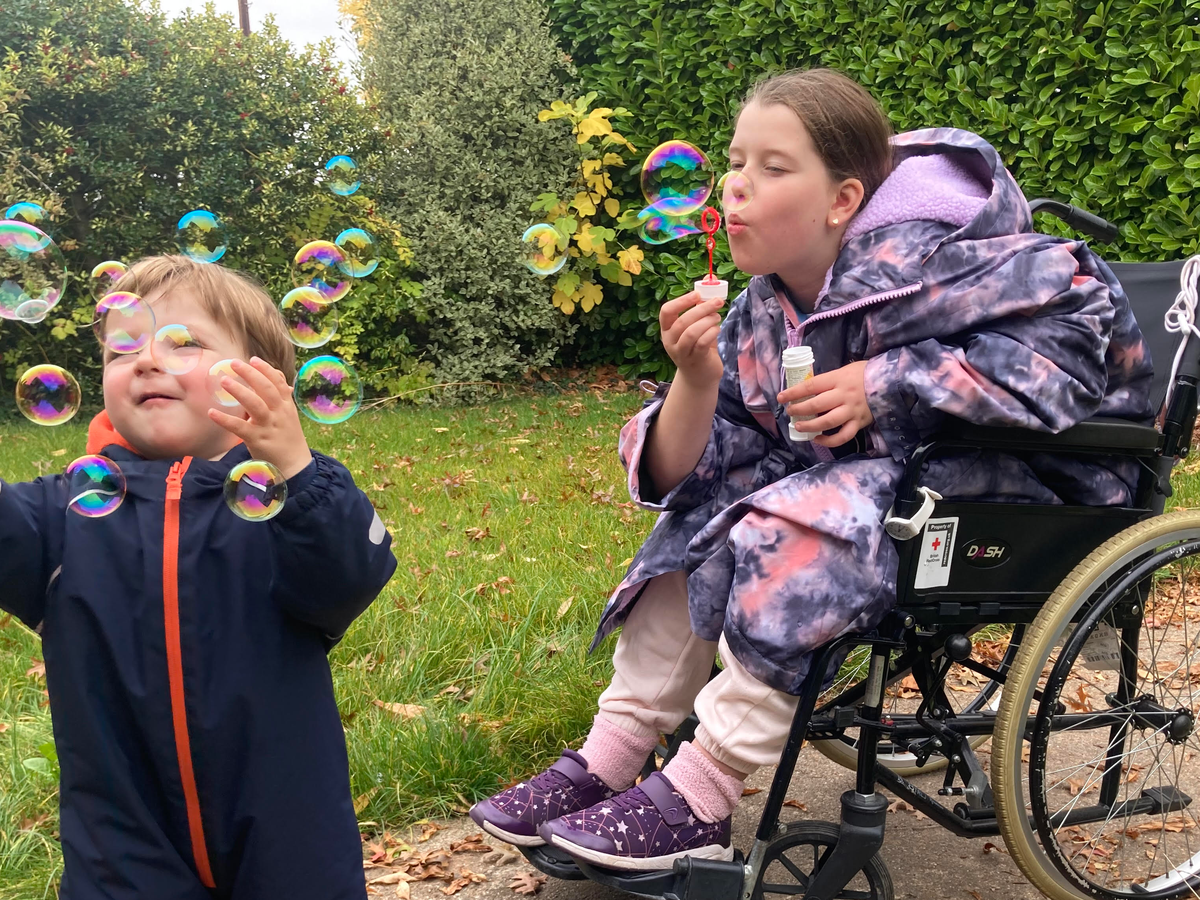
She experiences a wide range of symptoms related to FND; however, the inability to stand or walk is the most debilitating and disabling for Anika. She was previously a gifted member of the local swim club, where she was famous for her dolphin kick swimming technique. She enjoyed playing with her baby brother at the local playgrounds, as well as playing netball, swimming, and walking. However, she has now lost the ability to enjoy the life she once had. She has become a full-time wheelchair user and must use a wheelchair to move around.
Despite this, she started secondary school in Year 7 and now attends full-time. She dreams and hopes every day to be able to stand, walk, run, jump, and swim again like before.
Current challenges
To recover from FND, Anika needs a multidisciplinary approach and input from both a paediatric neurological physiotherapist and a neuropsychologist. Once discharged, she was promised an urgent referral to NHS physiotherapy, but we waited six weeks just to get Anika’s initial assessment. She now attends weekly 45-minute physiotherapy sessions.
While waiting for NHS physiotherapy, I reached out to a local private neurological physiotherapist to assess Anika. Upon their assessment, it was identified that Anika needs an intensive course of robotics and hydro pool specialist physiotherapy as the next step for her gait recovery, so she can stand and walk again. Unfortunately, NHS community physiotherapy is unable to facilitate and provide Anika with this type of treatment.
In terms of neuropsychological support, Anika is currently awaiting specialist FND 1:1 support from the hospital. She is currently on the waiting list, and it is a 12-month wait to access it. As this service is exclusively provided by the hospital, it is not possible to choose another provider to outsource it via the NHS.
Anika has also been referred to CAMHS (Child and Adolescent Mental Health Services); however, the expected waiting time for this service is nine months. We were promised a letter in the post with the appointment date a few weeks ago, but the letter still hasn’t arrived. She also can’t access mental health support at school because she has already been referred to CAMHS.
Anika needs neuropsychological support now, not in nine or twelve months. Since our discharge from hospital, I feel that Anika has not had the adequate support she desperately needs to recover from FND.
Overcoming the last hurdle
After contacting several private neurological physio rehabs, Hobbs Rehabilitation was the only place that carefully considered Anika’s diagnosis and case. After a few weeks of discussions, Hobbs Rehab offered to assess Anika. She had her assessment there last Tuesday, where her physiotherapy recovery plan was made, and they accepted her as an outpatient. Her recovery will start on 27th October.
This rehabilitation will begin with hydrotherapy and the use of robotic-assisted gait training in the form of the Lokomat. The Hobbs physiotherapists are also working to find a paediatric neuropsychologist who would be able to join Anika’s treatment team and provide neuropsychological 1:1 support.
Expression of gratitude
I would like to raise donations to fund this treatment now, as stagnation and untreated FND lead to the condition becoming chronic, with longer recovery times and poorer outcomes. The quicker Anika can access FND treatment, the shorter her recovery time will be. Her recovery is being prolonged the more we wait and delay it. The funds raised will be used solely to cover treatment fees and any costs associated with travelling to and from the rehab facility, as there is no public transport to get there.
Thank you so much for donating to this fundraiser. This will allow Anika to proceed with the much-needed treatment and recovery from her FND. Please also share the fundraiser’s link with your family and friends who may be keen to support our cause. Thank you so much for supporting my daughter Anika with her FND recovery. Your help means a lot to me during this difficult and stressful time.
Organizer