- J
- A
- T
Support Amber’s Recovery from Stevens-Johnson’s
0% complete
$7,837 raised of $2.5K
104 donations
When I began feeling extreme irritation in a new tattoo, I couldn’t have imagined the diagnosis and subsequent experiences I would go through in multiple hospitals over the coming month.
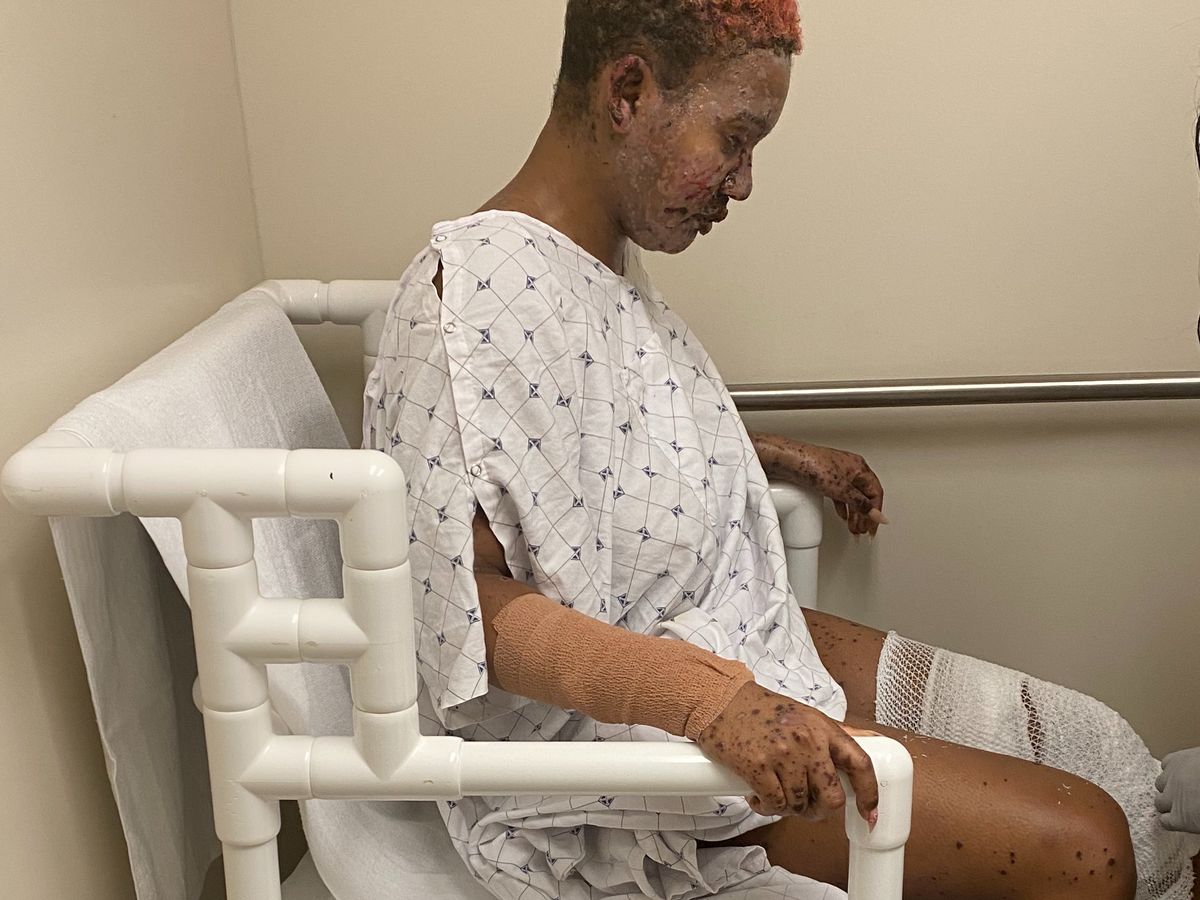
On February 24th, I began what would become one of the toughest physical and psychological battles of my 27-year life. After 2 days, a doctor at a learning hospital was the first to realize that I may have a disease so rare that it only affected 1 in 2 million people per year and I was admitted to Prince George's County Hospital. Even with this early identification, it would still take time before I could begin to be treated. In order to be officially diagnosed, a skin biopsy was needed and many other possible illnesses needed to be ruled out. By the time the skin biopsy results came back, I was unable to eat most solid foods and my body had swollen to the point that I was barely recognizable. I had been suffering from Stevens-Johnson syndrome but it had escalated to toxic epidermal necrolysis, meaning there was a 50% chance of fatality.
According to MedlinePlus -- the online resource for the National Library of Medicine, Stevens-Johnson syndrome/toxic epidermal necrolysis (SJS/TEN) is a severe skin reaction that can be triggered by prescribed medications. SJS spreads to affect about 10% of the skin on the body; however, it may not stop there. If the reaction continues to spread to cover over 30% of the body it becomes TEN. The disease often begins with a fever and flu-like symptoms. Within a few days, the skin begins to blister and peel, forming very painful raw areas called erosions that resemble a severe hot-water burn. The skin erosions usually start on the face and chest before spreading to other parts of the body. In most affected individuals, the condition also damages the mucous membranes, including the lining of the mouth and the airways, the urinary tract and genitals, as well as the eyes. Severe damage to the skin and mucous membranes makes SJS/TEN a life-threatening disease. About 10 percent of people with Stevens-Johnson syndrome die from the disease, while the condition is fatal in up to 50 percent of those with toxic epidermal necrolysis. Among people who survive, long-term effects of SJS/TEN can include changes in skin coloring (pigmentation), dryness of the skin and mucous membranes (xerosis), excess sweating (hyperhidrosis), hair loss (alopecia), and abnormal growth or loss of the fingernails and toenails. Other long-term problems can include impaired taste, difficulty urinating, and genital abnormalities. A small percentage of affected individuals develop chronic dryness or inflammation of the eyes, which can lead to increased sensitivity to light (photophobia) and vision impairment.
Miraculously, my body responded amazingly to the treatment and I pulled through in tremendous time. On March 15th, I was released from the hospital. Even though I only spent 21 days in the hospital -- which is relatively short, my hospital bills were a shock. From 3 ICU stays across 3 different hospitals, they totaled over $150,000. Insurance has been able to cover most of it; however, I will still be responsible for at least $2,500 in fees, more if it turns out that any of my providers were out of network. Though I am usually very determined to deal with these matters on my own, the added stress of these medical bills is overwhelming on top of my everyday cost of living.
While I was treated and am physically recovering, the psychological toll has been crushing. Some days are bearable; but, other days I look in the mirror and I can't get past the scars covering my entire body. Every day I try to look in the mirror and love what I see but it is very difficult. My friends try to encourage me and remind me that the beauty I have shines from deep within; yet, it doesn't make it any easier. Though monetary donations would be highly cherished, I would also love and appreciate words of encouragement and grace in this time.